Four dated federal changes are already scheduled for HVAC between 2027 and 2036, and the two that matter most to residential contractors are December 18, 2028 and January 1, 2029.
The first requires 95% AFUE gas furnaces. The second halves HFC production allowances. They land eleven days apart.
Date
What happens
Citation
January 1, 2027
End of the VRF sell-through for systems whose components were built before January 1, 2026.
40 CFR 84.54(c)(2)
January 1, 2028
Extended VRF sell-through ends where a building permit issued before October 5, 2023 specified the refrigerant.
40 CFR 84.54(c)(2)
December 18, 2028
Non-weatherized and mobile home gas furnaces must meet 95% AFUE, up from 80%.
10 CFR 430.32(e)
January 1, 2029
HFC production and consumption allowances drop from 60% to 30% of baseline.
40 CFR 84.7
2034 and 2036
Allowances step down again to 20%, then 15% of baseline.
40 CFR 84.7
Why the two 2028-29 dates interact
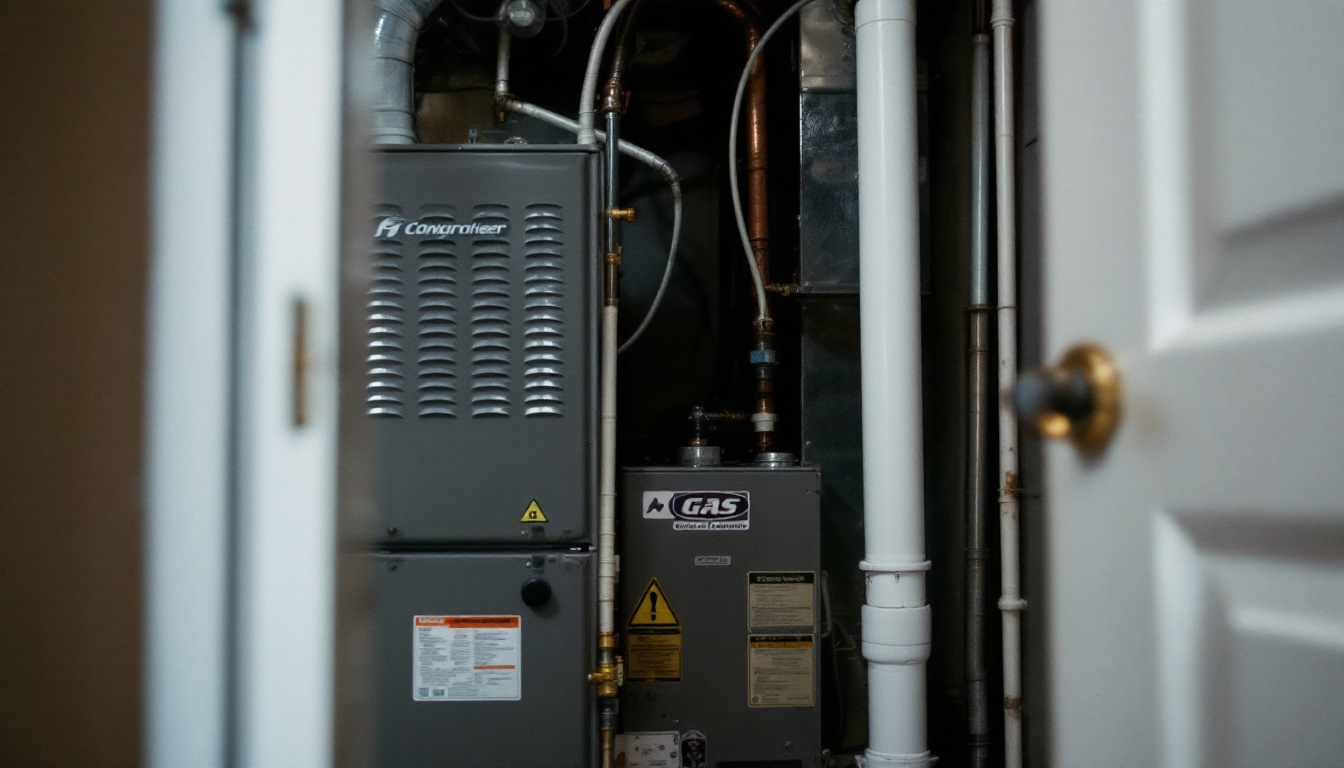
A contractor replacing a gas furnace after December 2028 is installing condensing equipment, which vents through plastic pipe to a sidewall rather than up a chimney. In houses where the furnace shared a chimney with an atmospheric water heater, that leaves the water heater on an oversized flue. See why the venting change is the real problem.
Two weeks later, refrigerant allowances halve. A business planning capital equipment, training and stock for that period is planning for both at once. See our phasedown schedule.
What is not on this calendar
No federal end date exists for installing pre-2025 R-410A residential inventory. EPA removed that cutoff effective July 27, 2026. State rules can differ, and several states run their own HFC programmes that are stricter than the federal position.
Frequently asked questions
What HVAC rules are coming in 2028 and 2029?
Two significant ones eleven days apart. Non-weatherized and mobile home gas furnaces manufactured on or after December 18, 2028 must meet 95% AFUE, up from 80%. On January 1, 2029, HFC production and consumption allowances drop from 60% of baseline to 30% under 40 CFR 84.7.
When does the VRF sell-through end?
January 1, 2027 for systems whose components were manufactured or imported before January 1, 2026, extending to January 1, 2028 where a building permit issued before October 5, 2023 specified the restricted refrigerant, under 40 CFR 84.54(c)(2).
Is there a deadline for installing R-410A equipment?
Not federally. EPA removed the installation cutoff effective July 27, 2026, so equipment manufactured or imported before January 1, 2025 may continue to be installed with no federal end date. Several states operate stricter programmes.
Sources
US Environmental Protection Agency, 40 CFR 84.7 and 40 CFR 84.54.
US Department of Energy, 10 CFR 430.32(e), furnaces and boilers.
The HVAC Brief is an independent trade publication. We do not sell equipment, take manufacturer advertising, or accept payment for placement in our research. Corrections welcome.
Four federal changes affecting HVAC took effect during 2026, and one of them removed a deadline rather than imposing one. Each is dated below with its citation.
The pattern is worth noting: the year tightened equipment efficiency and refrigerant handling for larger systems while loosening the installation constraint on existing residential inventory.
Date
What changed
Citation
January 1, 2026
Refrigerant leak repair requirements begin for appliances with 15 or more pounds of charge. Residential and light commercial AC and heat pumps are explicitly excluded.
40 CFR 84.106
January 1, 2026
Variable refrigerant flow systems using refrigerant with GWP of 700 or greater restricted, with sell-through provisions.
40 CFR 84.54(c)(2)
May 26, 2026
New room air conditioner efficiency minimums apply to units manufactured from this date, rising 19% to 50% by class.
10 CFR 430.32(b)
July 27, 2026
EPA rule takes effect allowing pre-2025 R-410A residential inventory to continue being installed, removing the previous cutoff.
91 FR 31284
The one that removed a constraint
The July 27 rule is the outlier. It allows equipment manufactured or imported before January 1, 2025 to continue being installed, with no federal end date. A large amount of published guidance still describes the deadline it removed. See what the rule actually says.
The one most often misread
The leak repair requirements are frequently reported as applying to homes. They do not. The section applies at 15 or more pounds of charge and explicitly excludes residential and light commercial air conditioning and heat pump equipment. See who is actually covered.
What did not change
SEER2 minimums for central equipment, in force since January 1, 2023, were unchanged during 2026. The federal 25C tax credit did not return; it expired for property placed in service after December 31, 2025. And EPA Section 608 certification requirements were unchanged despite the shift to A2L refrigerants.
Frequently asked questions
What HVAC regulations changed in 2026?
Four federal changes: refrigerant leak repair requirements began January 1 for appliances with 15 or more pounds of charge, VRF restrictions began January 1, new room air conditioner efficiency minimums applied from May 26, and an EPA rule effective July 27 removed the installation cutoff for pre-2025 R-410A residential inventory.
Did the R-410A installation deadline go away?
Yes, federally. An EPA final rule effective July 27, 2026 allows residential and light commercial equipment manufactured or imported before January 1, 2025 to continue being installed, with no federal end date set. Some states impose stricter rules.
Do the 2026 leak rules apply to home air conditioning?
No. 40 CFR 84.106 applies at 15 or more pounds of charge and explicitly excludes residential and light commercial air conditioning and heat pump equipment. Venting and recovery rules under 40 CFR part 82 apply regardless.
Sources
40 CFR 84.106 and 40 CFR 84.54; EPA final rule 91 FR 31284, effective July 27, 2026.
10 CFR 430.32(b), room air conditioner standards.
The HVAC Brief is an independent trade publication. We do not sell equipment, take manufacturer advertising, or accept payment for placement in our research. Corrections welcome.
The Department of Energy has proposed changes to the methodology it uses to set appliance efficiency standards, in a notice of proposed rulemaking published July 7, 2026 at 91 FR 42034. Comments closed August 21, 2026 after an extension published July 28 at 91 FR 47155.
This is process rather than a standard, and that is precisely why it matters. The methodology governs how every future HVAC standard is justified, including the ones already scheduled.
The rulemaking updates DOE’s “Procedures, Interpretations, and Policies for Consideration of New or Revised Energy Conservation Standards and Test Procedures for Consumer Products and Certain Commercial/Industrial Equipment”, commonly called the process rule. DOE published a companion proposal the same day reviewing its analytic methods for setting standards.
Why a process rule matters to HVAC
Efficiency standards for HVAC equipment are set through this framework. The SEER2 minimums at 10 CFR 430.32(c), the room air conditioner increase that took effect May 26, 2026, and the 95% AFUE furnace standard scheduled for December 18, 2028 were all produced by it.
Changing how DOE analyses and justifies standards therefore affects the pipeline of future rules rather than any single existing requirement. Standards already in the CFR remain in force unless separately amended.
What this does not do
A process rulemaking does not repeal or delay existing standards. The SEER2 minimums, the new room air conditioner levels and the 2028 furnace standard all sit in the Code of Federal Regulations and are unaffected by a proposal about methodology. Anyone reading this as a rollback of current requirements is reading it wrong.
Frequently asked questions
What is DOE’s process rule?
The methodology DOE uses when considering new or revised energy conservation standards and test procedures, formally titled “Procedures, Interpretations, and Policies for Consideration of New or Revised Energy Conservation Standards and Test Procedures for Consumer Products and Certain Commercial/Industrial Equipment”. DOE proposed updating it on July 7, 2026 at 91 FR 42034.
Does this change current HVAC efficiency standards?
No. It is a proposal about methodology for future rulemakings. Existing standards including SEER2 minimums, the room air conditioner levels effective May 26, 2026, and the 95% AFUE furnace standard scheduled for December 18, 2028 remain in the Code of Federal Regulations and are unaffected.
When did comments close?
August 21, 2026, following an extension published July 28, 2026 at 91 FR 47155. The original notice of proposed rulemaking was published July 7, 2026 at 91 FR 42034 with a comment period closing August 6.
Sources
US Department of Energy, “Energy Conservation Program: Procedures, Interpretations, and Policies for Consideration of New or Revised Energy Conservation Standards and Test Procedures,” notice of proposed rulemaking, 91 FR 42034, July 7, 2026; comment period extension 91 FR 47155, July 28, 2026.
US Department of Energy, 10 CFR 430.32, current efficiency standards.
The HVAC Brief is an independent trade publication. We do not sell equipment, take manufacturer advertising, or accept payment for placement in our research. Corrections welcome.
Non-weatherized gas furnaces manufactured on or after December 18, 2028 must achieve 95% AFUE, up from the 80% minimum that has applied since November 19, 2015. Mobile home gas furnaces move to 95% on the same date.
That jump effectively requires condensing furnaces, which vent differently from the 80% equipment most homes have. The venting change, not the efficiency change, is what makes this a retrofit problem.
The date is more than two years out, which is exactly why it is worth planning for now. Furnaces installed today will still be in service, and houses being re-piped or renovated in the meantime can be made ready cheaply.
The standard
Product class
Current minimum AFUE
From December 18, 2028
Non-weatherized gas furnaces
80.0%
95.0%
Mobile home gas furnaces
80.0%
95.0%
Weatherized gas furnaces
81.0%
unchanged in this step
Mobile home oil-fired furnaces
75.0%
unchanged in this step
AFUE is Annual Fuel Utilization Efficiency, the share of fuel energy delivered as useful heat across a heating season. An 80% furnace sends roughly a fifth of its fuel energy up the flue; a 95% furnace recovers most of that by condensing water vapour out of the exhaust.
Why condensing changes the installation
Exhaust is cooler and acidic. Condensing furnaces vent through plastic pipe rather than metal flue, because the exhaust no longer carries enough heat to drive a conventional chimney draught.
A condensate drain is required. The water condensed out of the exhaust has to go somewhere, which means a drain the old installation never needed.
Venting route may change. Plastic venting typically runs to a sidewall rather than up an existing chimney.
Shared chimneys become a problem. Where a furnace and a water heater share a flue, removing the furnace can leave the water heater venting into an oversized chimney, which is its own hazard.
The orphaned water heater problem
This is the failure mode that catches people. In houses where an 80% furnace and an atmospheric gas water heater share a chimney, switching the furnace to sidewall venting leaves the water heater alone on a flue sized for two appliances. That can cause draught problems and requires the water heater venting to be reassessed as part of the job, not afterwards.
What it means for planning
The standard applies at manufacture, so 80% units built before the date remain legal to sell and install afterwards. The practical horizon is longer than the date suggests. But any house with a chimney-vented furnace will eventually face the venting conversion, and the cheapest time to deal with it is during other work rather than as an emergency replacement in January.
Frequently asked questions
When does the 95% AFUE furnace standard take effect?
For non-weatherized gas furnaces and mobile home gas furnaces manufactured on or after December 18, 2028, per 10 CFR 430.32(e). The current minimum of 80% AFUE has applied to units manufactured since November 19, 2015.
Does this ban 80% furnaces?
It bars their manufacture from the effective date rather than their sale or use. Units built before December 18, 2028 remain legal to sell and install, and existing furnaces are unaffected. The practical transition is therefore longer than the date alone implies.
Why do condensing furnaces need different venting?
A 95% furnace extracts so much heat from the exhaust that the remaining flue gas is too cool to drive a conventional chimney draught, and it condenses into acidic water. That requires plastic venting, usually to a sidewall, and a condensate drain the older installation did not have.
What is AFUE?
Annual Fuel Utilization Efficiency, the proportion of fuel energy converted to useful heat across a heating season. An 80% furnace loses roughly a fifth of its fuel energy through the flue. A 95% furnace recovers most of that by condensing water vapour out of the exhaust stream.
Methodology and limitations
Standards and dates are quoted from 10 CFR 430.32(e), furnaces and boilers, retrieved from the electronic CFR.
The standard applies to manufacture date, not sale or installation date.
Venting descriptions state the mechanism. Specific venting requirements are set by manufacturer instructions and local mechanical code.
We publish no conversion cost. No federal series measures installed HVAC costs.
Nothing here is engineering advice for a specific installation.
Sources
US Department of Energy, 10 CFR 430.32(e), furnaces and boilers, via eCFR.
The HVAC Brief is an independent trade publication. We do not sell equipment, take manufacturer advertising, or accept payment for placement in our research. Corrections welcome.
New federal refrigerant leak repair requirements took effect on January 1, 2026, and residential and light commercial air conditioning and heat pumps are explicitly excluded from them.
The rules at 40 CFR 84.106 apply to appliances with a full charge of 15 or more pounds. Your house does not have one. Commercial refrigeration, chillers and industrial process systems do.
This distinction gets reported badly. Coverage of the leak rules often implies homeowners face new obligations. The regulation says otherwise, in terms, and knowing that saves arguments on both sides of a service call.
What the rule actually covers
Criterion
Requirement
Charge size
Full charge of 15 or more pounds of refrigerant
Substance
A regulated substance, or a substitute with a global warming potential above 53
Effective date
January 1, 2026
Excluded
Residential and light commercial air conditioning and heat pump equipment
Also excluded
Appliances containing solely an ozone-depleting substance as refrigerant
The exclusion is not an oversight or a grace period. It is written into the applicability paragraph at 40 CFR 84.106(a)(3)(ii).
What the rule requires where it does apply
Documentation on every service event. Anyone adding or removing refrigerant must give the owner or operator documentation meeting the rule’s requirements.
Leak rate calculation. The owner or operator must calculate the leak rate every time refrigerant is added, with exceptions for retrofits, new installations and seasonal variance.
Repair obligations triggered when calculated leak rates exceed thresholds set for the equipment type.
Record keeping sufficient to demonstrate compliance.
The part that does apply to a house
Venting refrigerant is prohibited regardless of charge size or equipment type, and recovery requirements under 40 CFR part 82 apply to residential work. The leak repair and record keeping regime is what excludes residential equipment, not the handling rules. A technician still cannot vent, and still needs certification.
Why a residential system that needs refrigerant still has a problem
Regulatory exclusion is not an engineering exemption. A sealed circuit does not consume refrigerant, so a residential system needing a top up has a leak, and repeatedly recharging it treats the symptom while the underlying fault persists and the refrigerant escapes. See what different AC symptoms mean.
Frequently asked questions
Do the new refrigerant leak rules apply to home air conditioning?
No. 40 CFR 84.106 applies to appliances with a full charge of 15 or more pounds, and paragraph (a)(3)(ii) explicitly excludes residential and light commercial air conditioning and heat pump equipment. The requirements took effect January 1, 2026 for the equipment they do cover.
What size system is covered by the leak repair rule?
Appliances with a full charge of 15 or more pounds of refrigerant, where the refrigerant is a regulated substance or a substitute with a global warming potential above 53. Residential and light commercial air conditioning and heat pumps are excluded regardless of charge.
Can a technician still vent refrigerant from a home system?
No. Venting prohibitions and recovery requirements under 40 CFR part 82 apply regardless of the leak repair rule’s applicability. The exclusion at 84.106 covers leak rate calculation, repair obligations and record keeping, not handling and venting rules.
When did the leak repair requirements take effect?
January 1, 2026, per 40 CFR 84.106(a)(4), for the equipment the section covers. Residential and light commercial air conditioning and heat pump equipment is excluded from the section entirely.
Methodology and limitations
Requirements are quoted from 40 CFR 84.106, leak repair, paragraph (a) applicability and paragraph (b) leak rate calculation, retrieved from the electronic CFR.
We summarise applicability rather than reproducing the full repair threshold and record keeping provisions.
Venting and recovery rules under 40 CFR part 82 are a separate regime and are not excluded for residential equipment.
Nothing here is legal advice on compliance for a specific installation or business.
Sources
US Environmental Protection Agency, 40 CFR 84.106, leak repair, via eCFR.
US Environmental Protection Agency, 40 CFR part 82 subpart F, refrigerant handling and recovery.
The HVAC Brief is an independent trade publication. We do not sell equipment, take manufacturer advertising, or accept payment for placement in our research. Corrections welcome.
US production and consumption of HFC refrigerants is capped on a declining schedule, and the next step is the largest: allowances halve from 60% of baseline to 30% on January 1, 2029. That is written into 40 CFR 84.7, not proposed.
For anyone servicing R-410A equipment, that date matters more than any refrigerant rule already in force. The equipment stays legal to run; the refrigerant that keeps it running gets scarcer on a published timetable.
The phasedown comes from the American Innovation and Manufacturing Act and is administered through an allowance system. Producers and importers may not exceed a set percentage of a fixed baseline, and that percentage steps down at defined dates.
The schedule
Period
Production (% of baseline)
Consumption (% of baseline)
Production cap (MTEVe)
2022-2023
90%
90%
344,299,157
2024-2028
60%
60%
229,521,263
2029-2033
30%
30%
114,760,632
2034-2035
20%
20%
76,507,088
2036 and after
15%
15%
57,380,316
The production baseline is 382,535,439 metric tons of exchange value equivalent and the consumption baseline is 302,538,316. MTEVe weights each substance by its global warming potential, so a high-GWP refrigerant consumes more of the cap per physical pound than a low-GWP one.
Why 2029 is the step that matters
The move from 90% to 60% in 2024 was a 33% reduction. The move from 60% to 30% in 2029 is a 50% reduction, and it lands on a market still servicing a very large installed base of R-410A equipment.
Because the cap is measured in exchange value equivalent rather than tonnes, high-GWP refrigerants are squeezed hardest. R-410A has a global warming potential of 2,088, so every pound produced consumes far more of the allowance pool than a pound of a low-GWP alternative.
What this means for an R-410A system
Nothing prohibits operating or servicing R-410A equipment, and pre-2025 inventory remains legally installable. What the schedule does is make the service refrigerant progressively scarcer against a fixed installed base. If you are advising a homeowner on a repair-or-replace decision for an R-410A system, the 2029 step belongs in the conversation. See what the installation rule actually says.
Frequently asked questions
When does the next HFC phasedown step happen?
January 1, 2029, when production and consumption allowances drop from 60% of baseline to 30%, per the schedule in 40 CFR 84.7. It is the largest single step in the schedule, halving available allowances, and it follows the 2024 reduction from 90% to 60%.
Will R-410A become unavailable?
The regulation caps production and consumption rather than banning the substance, so it becomes scarcer rather than unavailable on a date. Because the cap is measured in exchange value equivalent, high-GWP refrigerants like R-410A at a GWP of 2,088 consume disproportionately more of the allowance pool.
What is MTEVe?
Metric tons of exchange value equivalent. It weights each regulated substance by its global warming potential, so the cap constrains climate impact rather than physical tonnage. A pound of a high-GWP refrigerant uses more of the allowance than a pound of a low-GWP one.
Is it illegal to service R-410A equipment?
No. The phasedown restricts production and import of the substance, not the servicing or operation of equipment that contains it. Existing systems remain legal to run and service, and reclaimed refrigerant is unaffected by production caps.
Methodology and limitations
All figures are quoted from 40 CFR 84.7, phasedown schedule, paragraphs (a) and (b), retrieved from the electronic CFR. The R-410A global warming potential of 2,088 is the figure EPA used in the Technology Transitions rulemaking.
The schedule constrains production and consumption allowances, not equipment operation or servicing.
We make no price forecast. The relationship between allowance reduction and market price is not something the regulation states.
Reclaimed refrigerant is treated differently from newly produced material under the rules.
Sources
US Environmental Protection Agency, 40 CFR 84.7, phasedown schedule, via eCFR.
American Innovation and Manufacturing Act of 2020, as implemented at 40 CFR part 84.
The HVAC Brief is an independent trade publication. We do not sell equipment, take manufacturer advertising, or accept payment for placement in our research. Corrections welcome.
Federal minimum efficiency for window and through-the-wall air conditioners rose sharply on May 26, 2026, by between 19% and 50% depending on the equipment class. The standards that had applied since June 1, 2014 were replaced on that date.
The largest jump hits the most common household sizes. A cooling-only louvered unit between 14,000 and 19,900 Btu/h went from a minimum CEER of 10.7 to 16.0, an increase of 50%.
Room air conditioners are regulated separately from central systems, under 10 CFR 430.32(b), and rated on Combined Energy Efficiency Ratio rather than SEER2. The change took effect three months ago and applies to units manufactured from that date, so stock built earlier can still be sold.
The old and new minimums
Equipment class
CEER before
CEER from May 26, 2026
Change
Cooling only, with louvered sides , less than 6,000 Btu/h
11.0
13.1
+19%
Cooling only, with louvered sides , of 6,000 to 7,999 Btu/h
11.0
13.7
+25%
Cooling only, with louvered sides , of 8,000 to 13,999 Btu/h
10.9
16.0
+47%
Cooling only, with louvered sides , of 14,000 to 19,999 Btu/h
10.7
16.0
+50%
Cooling only, with louvered sides , of 20,000 Btu/h to 27,999 Btu/h
9.4
13.8
+47%
Cooling only, with louvered sides , of 28,000 Btu/h or more
9.0
13.2
+47%
Cooling only, without louvered sides, , less than 6,000 Btu/h
10.0
12.8
+28%
Cooling only, without louvered sides , of 6,000 to 7,999 Btu/h
10.0
12.8
+28%
Cooling only, without louvered sides , of 8,000 to 10,999 Btu/h
9.6
14.1
+47%
Cooling only, without louvered sides , of 11,000 to 13,999 Btu/h
9.5
13.9
+46%
Cooling only, without louvered sides , of 14,000 to 19,999 Btu/h
9.3
13.7
+47%
Cooling only, without louvered sides , of 20,000 Btu/h or more
9.4
13.8
+47%
Cooling and heating, with louvered sides, , less than 20,000 Btu/h
9.8
14.4
+47%
Cooling and heating, without louvered sides, , less than 14,000 Btu/h
9.3
13.7
+47%
Cooling and heating, with louvered sides, , of 20,000 Btu/h or more
9.3
13.7
+47%
Cooling and heating, without louvered sides, , of 14,000 Btu/h or more
8.7
12.8
+47%
Every class rose. Nothing was relaxed. The pattern is that mid-size cooling-only units, which dominate household sales, took the largest increases.
What CEER measures and why it is not SEER2
Combined Energy Efficiency Ratio expresses cooling output against electrical input, including standby power. It is a single-point measure, unlike SEER2, which is a seasonal average across a range of conditions. The two numbers are not interchangeable and a room unit cannot be compared with a central system by putting their ratings side by side.
“Louvered sides” in the equipment classes refers to units with side vents, typical of window installations. Units without louvered sides are generally through-the-wall products, and they carry lower minimums because the installation restricts airflow.
What this means in a shop
The standard applies at manufacture, not at sale or installation. Units built before May 26, 2026 remain legal to sell and install, so inventory will straddle the two standards for some time. If efficiency matters for a specific purchase, the manufacture date and the CEER on the label decide it, not the year you buy.
Frequently asked questions
Did window air conditioner efficiency standards change in 2026?
Yes. Under 10 CFR 430.32(b), the room air conditioner standards in effect from June 1, 2014 were replaced for products manufactured starting May 26, 2026. Minimum Combined Energy Efficiency Ratio rose across every equipment class, by between 19% and 50% depending on capacity and configuration.
What is the minimum CEER for a window air conditioner?
It depends on capacity and whether the unit has louvered sides and reverse cycle. For cooling-only louvered units manufactured from May 26, 2026, minimums run from 13.1 CEER below 6,000 Btu/h to 16.0 CEER in the 8,000 to 19,900 Btu/h range, per Table 7 to 10 CFR 430.32(b)(2).
What is the difference between CEER and SEER2?
CEER rates room air conditioners at a single operating point and includes standby power. SEER2 rates central air conditioners and heat pumps as a seasonal average across a range of conditions. They are different measures on different equipment and cannot be compared directly.
Can I still buy a window unit built to the old standard?
Yes. The standard applies to units manufactured from May 26, 2026, not to sale or installation. Stock built before that date remains legal to sell. Check the manufacture date and the CEER figure on the label rather than assuming the year of purchase determines the standard.
Methodology and limitations
All figures are quoted from the current text of 10 CFR 430.32(b), Table 6 to paragraph (b)(1) for the standards effective June 1, 2014 to May 26, 2026, and Table 7 to paragraph (b)(2) for products manufactured from May 26, 2026, retrieved from the electronic CFR. Percentage changes are ours, computed class by class.
These are federal minimums. Many products exceed them and utility programmes may require more.
Standards attach to manufacture date, not sale or installation date.
CEER and SEER2 are not comparable measures.
Nothing here is engineering or purchasing advice for a specific application.
Sources
US Department of Energy, 10 CFR 430.32(b), room air conditioner standards, Tables 6 and 7.
The HVAC Brief is an independent trade publication. We do not sell equipment, take manufacturer advertising, or accept payment for placement in our research. Corrections welcome.
SEER2 is the federal efficiency rating that replaced SEER for equipment manufactured on or after January 1, 2023. The national minimum is 13.4 SEER2 for split system air conditioners and 14.3 SEER2 with 7.5 HSPF2 for split system heat pumps.
Air conditioners also carry a regional minimum that is higher than the national one. In the Southeast and Southwest, a split air conditioner under 45,000 Btu/hr must be at least 14.3 SEER2, and a unit rated below that cannot legally be installed there even though it can be sold elsewhere.
The rating change is not cosmetic. SEER2 is measured under a higher external static pressure than SEER was, which better reflects real ductwork, so the same physical equipment scores lower on SEER2 than it did on SEER. A unit that was 14 SEER is not 14 SEER2.
The national minimums
Under 10 CFR 430.32(c)(5), central air conditioners and central air conditioning heat pumps manufactured on or after January 1, 2023 must meet these floors. HSPF2 applies only to heat pumps.
Product class
SEER2 minimum
HSPF2 minimum
Split system air conditioner, under 45,000 Btu/hr
13.4
n/a
Split system air conditioner, 45,000 Btu/hr and over
13.4
n/a
Split system heat pump
14.3
7.5
Single-package air conditioner
13.4
n/a
Single-package heat pump
13.4
6.7
Small-duct, high-velocity
12.0
6.1
Space-constrained air conditioner
11.7
n/a
Space-constrained heat pump
11.9
6.3
The regional minimums that catch people out
Air conditioners carry a second, higher standard tied to where the unit is installed, not where it is sold. Under 10 CFR 430.32(c)(6), split system air conditioners installed on or after January 1, 2023 in the Southeast or Southwest must meet these levels.
Product class
Southeast SEER2
Southwest SEER2
Southwest EER2
Split air conditioner, under 45,000 Btu/hr
14.3
14.3
11.7 or 9.8
Split air conditioner, 45,000 Btu/hr and over
13.8
13.8
11.2 or 9.8
Southeast covers Alabama, Arkansas, Delaware, Florida, Georgia, Hawaii, Kentucky, Louisiana, Maryland, Mississippi, North Carolina, Oklahoma, Puerto Rico, South Carolina, Tennessee, Texas, Virginia, the District of Columbia and the US territories. Southwest covers Arizona, California, Nevada and New Mexico. The regulation states that any outdoor unit model with a certified combination rated below the applicable regional level cannot be installed in that region.
In the Southwest the EER2 requirement is conditional: 11.7 EER2 applies to units certified below 15.2 SEER2, and 9.8 EER2 applies at 15.2 SEER2 and above, with 11.2 and 9.8 for the larger capacity class.
The practical consequence
Regional standards attach to installation, not sale. A distributor in a Northern state can legally stock a 13.4 SEER2 split air conditioner that cannot be installed in Texas or Arizona. Heat pumps do not carry the regional air conditioner standard, which is one reason the regional rules push some markets toward heat pumps.
What changed from SEER to SEER2
Before January 1, 2023, equipment manufactured from 2015 had to meet SEER 13 for split air conditioners and SEER 14 with HSPF 8.2 for split heat pumps. Those figures are not comparable with the SEER2 numbers above, because the test procedure changed.
Period
Split AC minimum
Split heat pump minimum
Manufactured 2015 to 2022
13 SEER
14 SEER, 8.2 HSPF
Manufactured 2023 onward
13.4 SEER2
14.3 SEER2, 7.5 HSPF2
Because SEER2 testing uses higher external static pressure, converting between the two is approximate at best. Compare SEER2 with SEER2, and treat any single conversion factor you see quoted as a rule of thumb rather than a standard.
Frequently asked questions
What is the minimum SEER2 rating allowed?
Nationally, 13.4 SEER2 for split system air conditioners and 14.3 SEER2 with 7.5 HSPF2 for split system heat pumps, for equipment manufactured on or after January 1, 2023, under 10 CFR 430.32(c)(5). Air conditioners installed in the Southeast or Southwest face a higher regional minimum of 14.3 SEER2 under 45,000 Btu/hr.
What is the difference between SEER and SEER2?
SEER2 replaced SEER for equipment manufactured from January 1, 2023 and is measured under higher external static pressure, which better represents installed ductwork. The same physical unit scores lower on SEER2 than on SEER, so the two ratings are not directly comparable and no exact conversion exists.
Which states have higher SEER2 requirements?
The Southeast region (Alabama, Arkansas, Delaware, Florida, Georgia, Hawaii, Kentucky, Louisiana, Maryland, Mississippi, North Carolina, Oklahoma, Puerto Rico, South Carolina, Tennessee, Texas, Virginia, the District of Columbia and the US territories) and the Southwest region (Arizona, California, Nevada and New Mexico) require split system air conditioners to meet 14.3 SEER2 under 45,000 Btu/hr and 13.8 SEER2 at or above that capacity. The Southwest adds an EER2 requirement.
Can I install a 13.4 SEER2 air conditioner in Texas?
No. Texas is in the Southeast region, where split system air conditioners under 45,000 Btu/hr installed on or after January 1, 2023 must be at least 14.3 SEER2. The regulation states an outdoor unit with a certified combination below the regional level cannot be installed there, even if it can be sold in other states.
Do heat pumps have regional efficiency standards?
The regional standards in 10 CFR 430.32(c)(6) apply to split system and single-package air conditioners, not heat pumps. Heat pumps meet the national minimum of 14.3 SEER2 and 7.5 HSPF2 for split systems nationwide.
Methodology
All figures are quoted from the current text of 10 CFR 430.32, Energy and water conservation standards and their compliance dates, paragraphs (c)(1) for the 2015 to 2022 standards, (c)(5) for the national SEER2 standards and (c)(6) for the regional standards, retrieved from the electronic CFR. We quote the regulation rather than paraphrasing it because the regional rules are the part most often reported incorrectly.
Limitations
This covers federal minimums only. Utility rebate programmes and some state codes set higher thresholds.
Minimums are floors, not recommendations. The efficient choice for a specific house depends on climate, ductwork and run hours.
SEER and SEER2 are not interchangeable and we do not publish a conversion factor.
Nothing here is engineering or legal advice. Confirm the current standard for your region before specifying equipment.
Sources
US Department of Energy, 10 CFR 430.32, Energy and water conservation standards and their compliance dates, via eCFR.
The HVAC Brief is an independent trade publication. We do not sell equipment, take manufacturer advertising, or accept payment for placement in our research. Corrections welcome.
The Section 25C credit expired for anything placed in service after December 31, 2025. A qualifying heat pump that would have earned up to $2,000 off a 2025 tax bill earns nothing federally in 2026.
Installation date controls, not purchase date. Equipment bought in late 2025 but installed in January 2026 does not qualify. State and utility rebates are separate and unaffected.
For homeowners this is a straightforward price increase of up to $2,000 on the same job, arriving in the same year equipment prices set new highs. For contractors it removes a closing tool that had been doing quiet work in a lot of proposals.
What the credit was
The Energy Efficient Home Improvement Credit under Section 25C covered qualifying energy efficiency improvements, with a maximum annual credit of $2,000 for heat pumps, heat pump water heaters and qualifying biomass equipment. The IRS states the credit applies to qualifying property placed in service on or after January 1, 2023 and before December 31, 2025.
The date that matters is when the equipment was placed in service. That is the installation, not the invoice and not the order. A system paid for in November 2025 and commissioned in February 2026 falls outside the credit.
If you installed before the deadline
A system placed in service on or before December 31, 2025 can still be claimed on the 2025 return. For 2025 specifically the IRS also requires that the item was produced by a qualified manufacturer and that the taxpayer reports the Qualified Manufacturer Identification Number, so keep that paperwork with the invoice.
What it means for a 2026 quote
Put the two changes together and the swing is larger than most homeowners realise. Equipment producer prices are up 60% since 2019 against 31% for consumer prices generally, and the federal credit that used to take up to $2,000 off the top is gone. A homeowner comparing a 2026 quote against a memory of their last replacement is comparing across both shifts at once.
Same job, different year
2025
2026
Federal 25C credit on a qualifying heat pump
Up to $2,000
$0
What controls eligibility
Placed in service by Dec 31, 2025
Not available
State and utility rebates
Unaffected
Unaffected
What still works
State and utility programmes are separate from the federal credit and did not expire with it. They are also routinely worth more than homeowners assume, and they vary enormously by utility rather than by state, so a neighbouring town can have a materially different offer. Check the specific utility before concluding there is no incentive available.
For contractors the practical move is to stop treating incentives as a footnote at the end of the proposal. If the federal credit is gone, the rebate research you do on the customer’s behalf becomes a differentiator rather than an afterthought.
Methodology
Credit terms and dates are taken from the IRS page for the Energy Efficient Home Improvement Credit. Price context uses BLS producer price index series PCU333415333415 for HVAC equipment manufacturing and CUUR0000SA0 for consumer prices, each indexed to its 2019 annual average.
Limitations
This is general information, not tax advice. Individual eligibility depends on circumstances a publication cannot see. Confirm with a tax professional.
We do not list state or utility programmes because they change frequently and vary by utility. Any list we published would be wrong somewhere within weeks.
The $2,000 figure is the maximum annual credit for qualifying heat pumps, not a guaranteed amount.
Frequently asked questions
Is there a federal heat pump tax credit in 2026?
No. The Section 25C credit applies to property placed in service before December 31, 2025.
I bought the equipment in 2025 but it was installed in 2026. Do I qualify?
No. Eligibility runs on the date the property was placed in service, which is the installation, not the purchase.
I installed in 2025 but have not filed yet. Can I still claim it?
Yes. A system placed in service by the deadline can be claimed on your 2025 return. For 2025 the IRS also requires a Qualified Manufacturer Identification Number to be reported.
Are rebates gone too?
No. State and utility rebates are separate from the federal credit and are unaffected by its expiry.
US Bureau of Labor Statistics, Producer Price Index by Industry, series PCU333415333415, and Consumer Price Index for All Urban Consumers, series CUUR0000SA0, retrieved via the BLS Public Data API v2.
The HVAC Brief is an independent trade publication. Nothing here is tax advice. Corrections welcome.
HVAC equipment prices have risen 60% since 2019, roughly twice the 31% rise in general consumer prices. That is the reason a replacement quote that read $6,000 to $8,000 a decade ago now commonly reads five figures. The gap is not local, and it is not your contractor’s margin: it is visible in federal producer price data for the factories that build the equipment.
Most of the increase happened before the refrigerant changeover. Equipment prices were close to flat through 2024 (+1.4%), then stepped up 3.9% between March and July 2025 as refrigerant surcharges moved through the supply chain, and have kept climbing since.
Separately, two rule changes matter in 2026: the federal 25C tax credit that paid up to $2,000 toward a heat pump expired for anything placed in service after December 31, 2025, and EPA has removed the installation deadline for R-410A equipment built before January 1, 2025.
This page tracks what HVAC equipment actually costs to buy at the factory gate, using the Bureau of Labor Statistics producer price index for air conditioning and heating equipment manufacturing. We update it as new BLS data is released. Everything below is sourced to primary federal data or to the Code of Federal Regulations, and the underlying series are named so you can reproduce every number.
+60%HVAC equipment producer prices, 2019 to July 2026
+31%All consumer prices over the same period
+22%Real increase after adjusting for general inflation
+40.2%Average hourly earnings, HVAC and plumbing contractors
The index: equipment prices against everything else
The cleanest way to see what happened is to index HVAC equipment producer prices and consumer prices to the same starting point. Set 2019 equal to 100 and the divergence is unmistakable. General prices rose about 31%. Equipment prices rose about 60%.
HVAC equipment producer price index (BLS series PCU333415333415, air conditioning, warm air heating and commercial refrigeration equipment manufacturing) against the consumer price index for all urban consumers (CUUR0000SA0). Both indexed to their 2019 annual average. 2026 points average the months published so far: equipment prices through August, consumer prices through July. Analysis by The HVAC Brief.
Stated plainly: after stripping out ordinary inflation, HVAC equipment costs about 22% more in real terms than it did in 2019. That is the part homeowners feel as unfairness, and it is real. It is also the part contractors cannot control, because it is priced upstream of them.
When the increase actually happened
The common story is that the 2025 refrigerant rule caused HVAC prices to spike. The monthly data supports a more specific version of that: the rule itself was not the trigger, and the increase arrived roughly three months late.
Monthly producer price index for HVAC equipment manufacturing, January 2024 through August 2026. Highlighted bars mark April to July 2025. Source: BLS series PCU333415333415, not seasonally adjusted.
Through all of 2024, equipment prices moved +1.4%. The EPA rule restricting high global warming potential refrigerants took effect on January 1, 2025, and for the first quarter of 2025 prices barely moved. The step up came between March and July 2025, a 3.9% rise in four months, which lines up with refrigerant producer surcharges reaching distributors rather than with the regulation’s effective date. From the month before the rule took effect through July 2026, equipment prices are up 9.0%.
Why this distinction matters
If you are a contractor being told the refrigerant rule doubled your costs, the federal data does not support that. The rule contributed a step change of several percent. The larger share of the 60% increase accumulated between 2021 and 2023, before A2L refrigerants entered the picture at all. Anyone selling you a strategy built on the refrigerant transition alone is solving the smaller problem.
What is driving the increase
Driver
What the evidence shows
Confidence
Equipment costs
Producer prices for HVAC equipment manufacturing up 60% since 2019, versus 31% for consumer prices generally. This is the dominant, directly measured driver.
High, primary federal data
Labor
Average hourly earnings for plumbing, heating and AC contractor employees rose from $30.39 in 2019 to $42.61 in July 2026, up 40.2%. Real but smaller than equipment, and it outpaced inflation only modestly.
High, primary federal data
Refrigerant transition
Visible as a 3.9% step between March and July 2025, plus ongoing A2L equipment premiums. Material but not the main event.
Moderate, inferred from timing
Loss of the 25C credit
Not a price increase, but a real out-of-pocket increase of up to $2,000 on qualifying heat pumps installed from January 1, 2026.
High, statutory
Tariffs and materials
Widely cited in trade press as a contributor. We have not been able to isolate a tariff-specific effect in the federal series, so we do not quantify it here.
Low, not independently verified
The headcount side is worth noting because it cuts against a common claim. Employment among plumbing, heating and air conditioning contractors rose from about 1,141,000 in 2019 to about 1,355,400 in July 2026, an increase of 18.8%. The trade added workers. A pure labor shortage story does not fit a workforce that grew by roughly a fifth.
What you can still install in 2026
This is the most misreported topic in the trade right now, and a large amount of published guidance is out of date. Here is what the regulation currently says.
Under 40 CFR 84.54(a)(1), effective January 1, 2025, no one may manufacture or import self-contained residential and light commercial air conditioning and heat pump products using a refrigerant with a global warming potential of 700 or greater. R-410A has a GWP of 2,088 and is therefore out for new production.
The installation question is separate. The original rule paired the manufacturing ban with an installation cutoff. On May 26, 2026, EPA published a final rule (91 FR 31284, RIN 2060-AW39, docket EPA-HQ-OAR-2025-0005, effective July 27, 2026) that, in EPA’s own words, “allows the inventory of residential and light commercial air conditioning and heat pump equipment that was manufactured in the United States or imported into the United States before January 1, 2025, to continue to be installed.”
Equipment
Federal status in 2026
R-410A residential split systems, components built before Jan 1, 2025
May continue to be installed. No federal end date currently set.
New R-410A residential or light commercial equipment
Cannot be manufactured or imported as of Jan 1, 2025.
Existing R-410A systems in service
Legal to operate and service. Service refrigerant remains legal to produce and sell.
Variable refrigerant flow (VRF), GWP 700 or greater
Restricted from Jan 1, 2026. Installable before Jan 1, 2027 where all components were built or imported before Jan 1, 2026, and before Jan 1, 2028 where a building permit issued prior to Oct 5, 2023 specifies the restricted refrigerant.
Check your state before you rely on this
The federal sell-through is not the whole picture. Several states run their own HFC programs that can be stricter than the federal rule, and New York’s 6 NYCRR Part 494 is the one most likely to catch contractors out. Reporting on the precise New York dates has been inconsistent, so confirm the current text with the state agency or your distributor rather than trusting a summary, including this one, for a job you are about to sell.
If you are a homeowner
Should you wait for prices to come down?
Nothing in the data suggests a decline. Equipment prices rose in 21 of the 31 month-over-month comparisons since January 2024, and the most recent reading, August 2026, is the highest in the series going back to 2019. Waiting has reliably cost money since 2021. If your system is functioning, waiting is still reasonable. If it is failing, waiting is a bet the data does not support.
Is the tax credit really gone?
For federal 25C purposes, yes. The IRS states the credit applies to qualifying property placed in service before December 31, 2025. Installation date controls, not purchase date, so equipment bought in late 2025 and installed in 2026 does not qualify. State and utility rebates are unaffected by this and are often worth more than people assume, so check your utility before assuming there is no incentive.
Is a cheaper R-410A system still an option?
Federally, yes, if the equipment was built before January 1, 2025 and your state allows it. Distributors are still moving that inventory and it is usually cheaper. The trade-off is that you are buying into a refrigerant that is being phased down, which will make service refrigerant progressively more expensive over the system’s life. For a system you expect to keep 15 years, that is a real cost. For a rental you plan to sell in three, it may not be.
How do you tell a fair quote from a padded one?
Ask the contractor to separate equipment cost from labor on the proposal. Equipment is the line that moved, and a contractor who can show you the invoice is usually the one not padding. A quote that is dramatically below the others in your market is more often a scope difference, for example reusing failing ductwork or skipping a load calculation, than a genuine bargain.
If you are a contractor
The number your customer is anchored to
A homeowner who last replaced in 2016 or 2017 is anchored to that price. The producer price index gives you a defensible way to explain the gap without sounding defensive, because it is a federal series that has nothing to do with your business.
“Before I show you the number, I want to explain what changed, because it is going to be higher than the last time you did this. The equipment I install is priced by the manufacturer, and federal producer price data shows that equipment has gone up about 60% since 2019 while general prices went up about 31%. That is not my markup, that is the factory. On top of that, the federal tax credit that would have taken up to $2,000 off this job expired at the end of last year. Here is what I can control, and here is where I can save you money.”
Where the margin actually is
If equipment is up 60% and your labor cost is up 40.2%, holding a fixed percentage markup on equipment has quietly inflated your equipment margin in dollar terms while your labor margin has compressed. Shops that have not re-cut their pricing model since 2019 are frequently winning on the box and losing on the truck. Price the labor line deliberately rather than letting it ride as a percentage of a number that tripled.
The R-410A inventory question
The federal installation deadline is gone, which means pre-2025 inventory is a legitimate offering again rather than a liability. Two cautions. First, confirm your state has not set its own rule. Second, put the refrigerant phasedown in writing when you sell it, because a customer who learns in year six that service refrigerant has become expensive will remember what you did and did not tell them.
Methodology
Equipment prices are the Bureau of Labor Statistics producer price index for NAICS 333415, air conditioning, warm air heating and commercial and industrial refrigeration equipment manufacturing, series PCU333415333415, retrieved from the BLS public API v2. General consumer prices are CUUR0000SA0, the consumer price index for all urban consumers, all items, US city average. Labor figures are BLS Current Employment Statistics for NAICS 238220, plumbing, heating and air conditioning contractors: series CEU2023822003 for average hourly earnings of all employees and CEU2023822001 for all employees in thousands.
Index values set each series to its own 2019 annual average, calculated as the mean of the twelve monthly observations. The real increase is the ratio of the two indexed series, which removes general inflation from the equipment figure. Where 2026 is shown as an annual point it is the average of the months available at publication: through August for equipment prices and July for consumer prices. Regulatory text is quoted from the current Code of Federal Regulations at 40 CFR 84.54 and from the Federal Register.
Limitations
Producer prices measure what manufacturers charge, not what a homeowner pays installed. Installed prices include distributor margin, contractor labor, permits and local market conditions, none of which this series captures. The direction is reliable; the exact pass-through to a specific quote is not.
PCU333415333415 covers commercial and industrial refrigeration alongside residential HVAC, so it is broader than residential equipment alone.
The series is not seasonally adjusted, so month-to-month moves carry some seasonal noise. Comparisons here use multi-month spans to reduce that.
Attributing the March to July 2025 step up to refrigerant surcharges is an inference from timing, not a decomposition of the index. BLS does not publish that breakdown.
We do not quantify tariffs. Trade press attributes part of the increase to them and that may well be correct, but we could not isolate it in the federal data and will not publish a number we cannot source.
Frequently asked questions
How much has HVAC equipment actually gone up?
Producer prices for HVAC equipment manufacturing rose 60% between the 2019 annual average and July 2026, according to BLS series PCU333415333415. Consumer prices generally rose 31% over the same period, so equipment has risen roughly twice as fast as inflation, or about 22% in real terms.
Did the refrigerant change cause HVAC prices to spike?
It contributed, but it is not the main cause. Equipment prices moved +1.4% across all of 2024 and then rose 3.9% between March and July 2025, which is a step change rather than a spike, and it arrived about three months after the rule took effect. Most of the cumulative increase since 2019 accumulated before A2L refrigerants entered the market.
Can R-410A systems still be installed in 2026?
Under federal rules, yes, if all components were manufactured or imported before January 1, 2025. EPA’s final rule published May 26, 2026 (91 FR 31284) allows that inventory to continue to be installed and removed the previous installation cutoff. New R-410A equipment cannot be manufactured or imported. Some states impose stricter rules, so confirm your state before relying on the federal position.
Is there still a federal tax credit for a heat pump in 2026?
No. The Section 25C Energy Efficient Home Improvement Credit, worth up to $2,000 for a qualifying heat pump, applies to property placed in service before December 31, 2025. Installation date controls rather than purchase date. State and utility rebates are separate and may still apply.
Will HVAC prices come down?
There is no sign of it in the data. August 2026 is the highest reading in the series and prices have risen in most months since early 2025. We take no position on forecasts, but nothing in the published federal data points to a decline.
Are contractors marking up more than they used to?
The measured drivers sit upstream of contractors. Equipment producer prices are up 60% and contractor hourly earnings are up 40.2%, both since 2019. Individual pricing varies, which is why comparing itemized quotes that separate equipment from labor is more useful than comparing totals.
Cite this analysis
The HVAC Brief. “HVAC Prices in 2026: The Data Behind the Sticker Shock.” Analysis of BLS producer price index series PCU333415333415 and consumer price index CUUR0000SA0. Published August 19, 2026. https://thehvacbrief.com/hvac-prices-2026/
Journalists and researchers may reproduce the charts and figures with attribution to The HVAC Brief. Underlying data is public and reproducible from the BLS public API using the series identifiers named in the methodology.
Sources
US Bureau of Labor Statistics, Producer Price Index by Industry: Air Conditioning, Warm Air Heating, and Commercial and Industrial Refrigeration Equipment Manufacturing, series PCU333415333415, monthly, January 2019 to August 2026. Retrieved via the BLS Public Data API v2, api.bls.gov.
US Bureau of Labor Statistics, Consumer Price Index for All Urban Consumers, All Items, US City Average, series CUUR0000SA0.
US Bureau of Labor Statistics, Current Employment Statistics, Plumbing, Heating and Air-Conditioning Contractors (NAICS 238220), series CEU2023822003 and CEU2023822001.
US Environmental Protection Agency, 40 CFR 84.54, Restrictions on the use of hydrofluorocarbons, current text via eCFR.
US Environmental Protection Agency, “Phasedown of Hydrofluorocarbons: Reconsideration of Certain Regulatory Requirements Promulgated Under the Technology Transitions Provisions of the American Innovation and Manufacturing Act of 2020,” final rule, 91 FR 31284, published May 26, 2026, effective July 27, 2026, RIN 2060-AW39, docket EPA-HQ-OAR-2025-0005.
New York State Department of Environmental Conservation, 6 NYCRR Part 494, Hydrofluorocarbon Standards and Reporting.
The HVAC Brief is an independent trade publication. We do not sell equipment, take manufacturer advertising, or accept payment for placement in our research. Corrections: if you find an error in this analysis, tell us and we will fix it and note the change.