Original data and independent reporting for the HVAC trade

Category: Refrigerants

The A2L transition, what is legal to install and service, and what it costs.

  • Your AC Does Not Need a Recharge. It Has a Leak.

    Your AC Does Not Need a Recharge. It Has a Leak.

    Last reviewed: September 2026 · By the HVAC Brief Editorial Team · Our sourcing and editorial standards

    The short answer

    Air conditioners do not consume refrigerant, so a system that needs recharging has a leak. Recharging without finding that leak restores cooling temporarily while the refrigerant escapes again.

    That matters more than it used to. Under the federal HFC phasedown, production allowances drop from 60% of baseline to 30% on January 1, 2029, so refrigerant for older systems gets scarcer on a published timetable.

    The phrase “needs a recharge” describes a symptom as though it were routine maintenance. It is not routine, and treating it that way is how a small leak becomes an annual bill.

    Why a sealed system should never need topping up

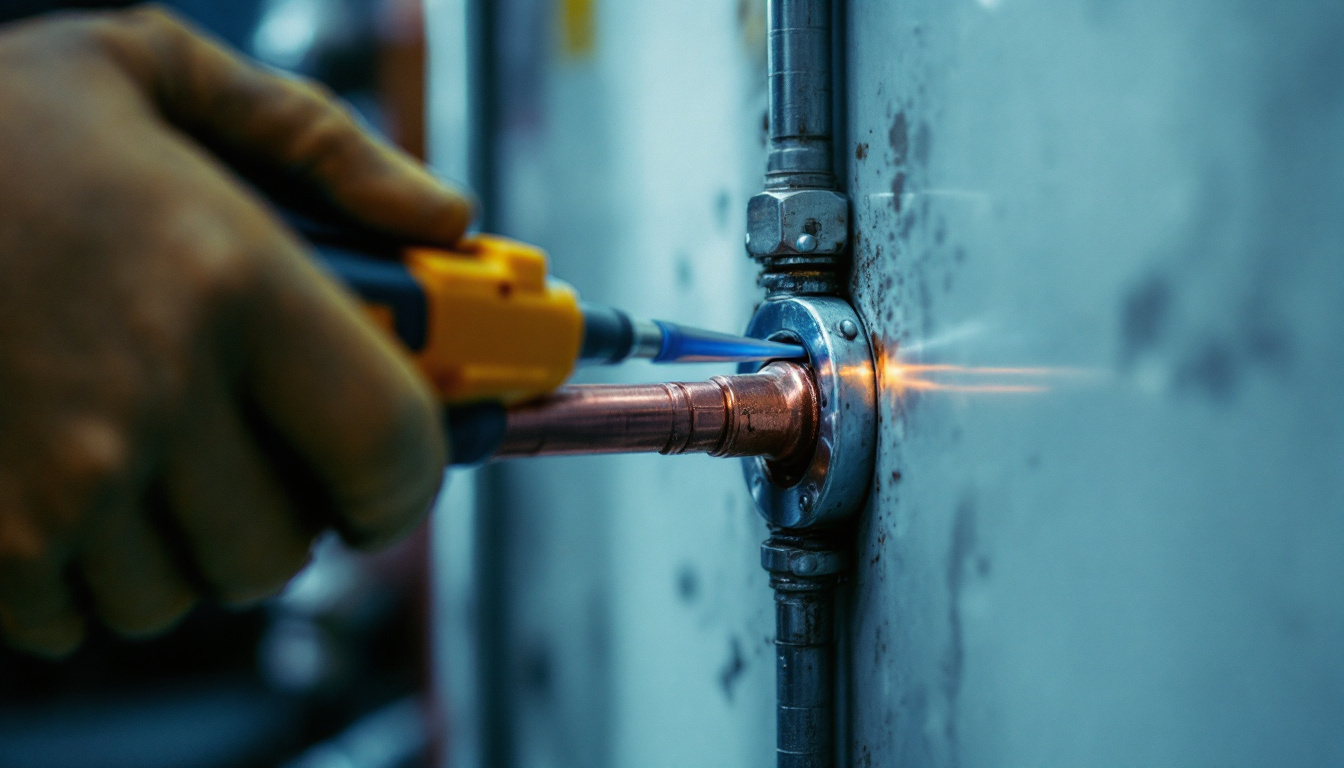
    Refrigerant circulates in a closed loop, changing state between liquid and vapour. Nothing in normal operation consumes it. If the charge is low, it left through a physical opening: a failed joint, a corroded coil, a service valve, or a crack.

    What you are told What it means
    “It just needs a recharge” The system has a leak that has not been located
    “It is low on Freon” Same, with a brand name that identifies nothing. See why Freon is not a type
    “They all lose a bit over time” Not true of a sealed circuit in normal operation
    “We topped it up last year too” An unrepaired leak, now with two charges vented

    What to ask before authorising a recharge

    1. Where is the leak? A leak search is a distinct diagnostic step, not something inferred from low pressure.
    2. How much refrigerant is going in? A large charge on a residential system indicates a significant loss.
    3. What refrigerant is it? R-22 has not been produced since January 1, 2020, so it comes from reclaimed stock. See what remains of R-22.
    4. What happens when it recurs? Get the plan in writing, including whether the repair is worth doing against replacement.
    5. Is the repair economic? A leaking evaporator coil on an older R-410A system often decides the replace-or-repair question by itself.
    The regulatory position

    Venting refrigerant is prohibited under 40 CFR part 82, and technicians handling it must hold EPA Section 608 certification. Notably, the 2026 leak repair rules at 40 CFR 84.106 apply at 15 or more pounds of charge and explicitly exclude residential equipment, so there is no federal record-keeping obligation on a home system. That is a regulatory exemption, not an engineering one. See who those rules actually cover.

    Frequently asked questions

    Does an air conditioner need refrigerant recharged regularly?

    No. Refrigerant circulates in a sealed loop and is not consumed by normal operation, so a system that is low has lost it through a leak. Regular topping up is not maintenance, it is an unrepaired fault being managed rather than fixed.

    How much does an AC recharge cost?

    No federal series tracks residential refrigerant or repair pricing, so any figure quoted is a vendor estimate rather than measured data. What is documented is that HFC production allowances drop from 60% of baseline to 30% on January 1, 2029, which constrains supply for older systems over time.

    Why does my AC keep losing refrigerant?

    Because the leak was never located and repaired. Common sites are the evaporator coil, brazed joints, service valves and line set connections. Each recharge restores cooling until enough has escaped again, and each one vents a controlled substance into the atmosphere.

    Is it worth repairing a refrigerant leak?

    It depends where the leak is and what the system is worth. An accessible joint is usually a straightforward repair. A leaking evaporator coil on an older R-410A system often decides replacement instead, because the part, the labour and the recovery and recharge all land together.

    Methodology and limitations

    Regulatory positions are from 40 CFR part 82 for venting and certification, 40 CFR 84.106 for leak repair applicability, and 40 CFR 84.7 for the phasedown schedule.

    • We publish no recharge or repair prices, as no federal series measures them.
    • Leak location and repair economics are system specific.
    • Refrigerant work requires EPA Section 608 certification and is not owner serviceable.

    Sources

    1. US Environmental Protection Agency, 40 CFR part 82 subpart F; 40 CFR 84.106; 40 CFR 84.7.

    The HVAC Brief is an independent trade publication. We do not sell equipment, take manufacturer advertising, or accept payment for placement in our research. Corrections welcome.
  • What Is Refrigerant, and Why Freon Is Not the Answer

    What Is Refrigerant, and Why Freon Is Not the Answer

    Last reviewed: September 2026 · By the HVAC Brief Editorial Team · Our sourcing and editorial standards

    The short answer

    Refrigerant is the working fluid that carries heat out of your house, and “Freon” is a brand name, not a type. Freon was DuPont’s trademark, applied across several different chemicals, which is why the word tells you nothing about what is actually in your system.

    What matters is which refrigerant you have. R-22 has not been produced in the US since January 1, 2020. R-410A cannot go into new residential equipment built after January 1, 2025. New systems use R-454B or similar.

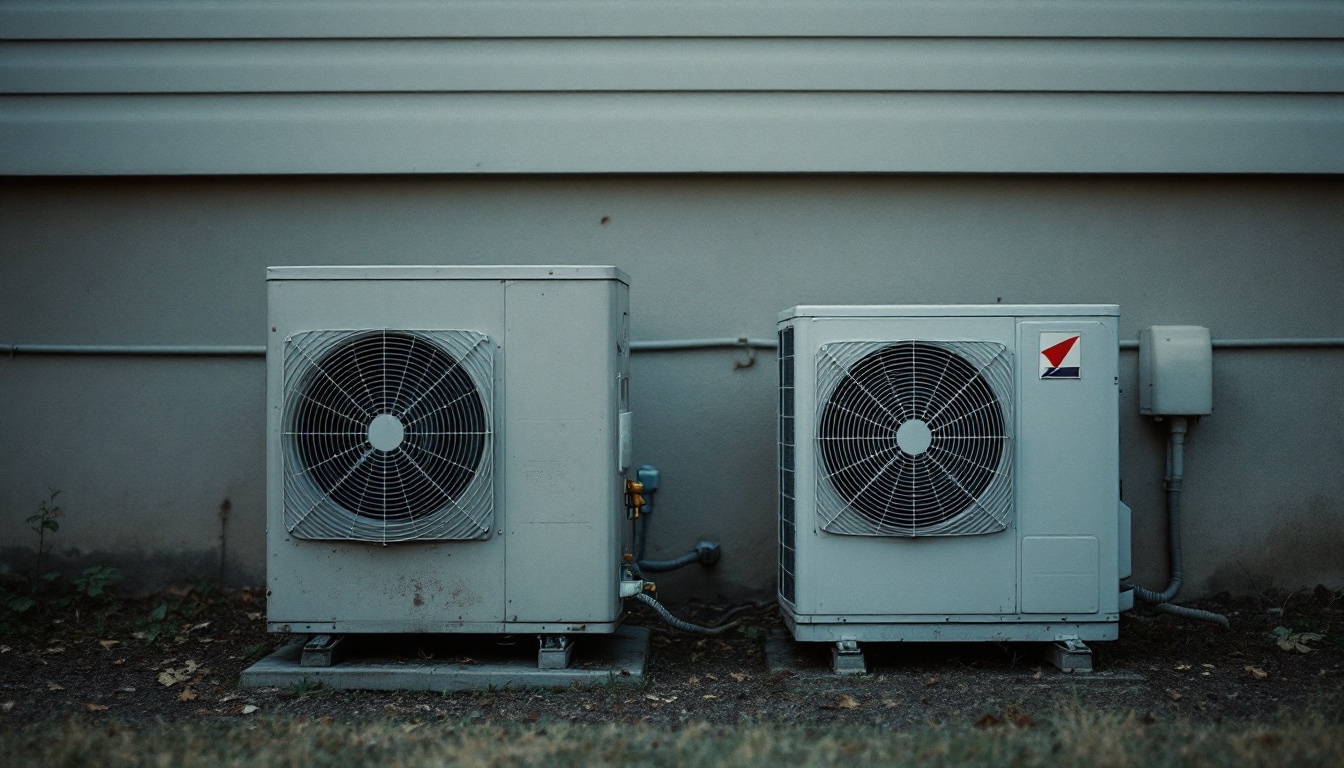
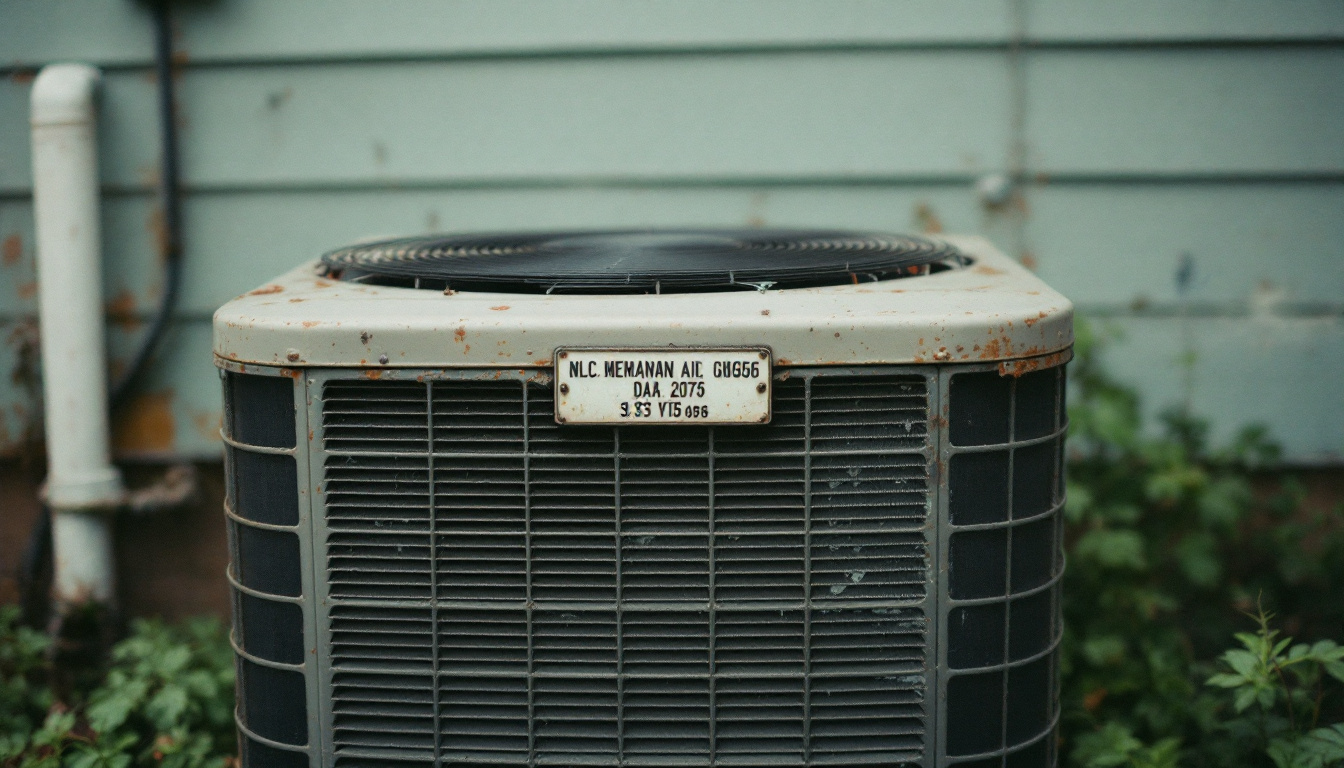
    Ask a technician what is in your system and the answer should be a designation like R-410A, not a brand. The data plate on the outdoor unit states it.

    What refrigerant actually does

    It does not create cold. It moves heat from inside your house to outside, by changing state. The cycle works because a fluid absorbs heat when it evaporates and releases heat when it condenses.

    1. Evaporator coil, indoors. Low pressure liquid refrigerant absorbs heat from indoor air and boils into vapour. The air leaving the coil is cooler and drier.
    2. Compressor, outdoors. Raises the pressure and temperature of that vapour.
    3. Condenser coil, outdoors. Hot high pressure vapour releases heat to outdoor air and condenses back to liquid.
    4. Metering device. Drops the pressure again, and the cycle repeats.

    The refrigerant is never consumed. It circulates in a sealed loop, which is why a system that needs topping up has a leak rather than an appetite.

    Which refrigerant is in your system

    Refrigerant Typical era Status
    R-22 Systems installed before about 2010 No US production or import since January 1, 2020. Reclaimed material only.
    R-410A Roughly 2010 to 2025 Cannot go in new residential equipment built after January 1, 2025. Servicing is legal.
    R-454B New equipment from 2025 Current. Classified A2L, mildly flammable.

    Our guides cover what remains of R-22 and what R-454B changes in more detail.

    Why “Freon” confuses the conversation

    Freon was a DuPont trademark covering a family of chemicals, not a single substance. A homeowner told their system “needs Freon” learns nothing about which refrigerant, what it costs to source now, or whether the underlying leak was found.

    A system that needs refrigerant has a leak

    A sealed refrigerant circuit does not consume refrigerant in normal operation. If a technician proposes adding refrigerant, the correct question is where the leak is and what happens when it recurs. Repeatedly recharging treats the symptom while venting a controlled substance, and under 40 CFR part 82 venting is prohibited regardless of system size.

    Frequently asked questions

    What is refrigerant in an air conditioner?

    The working fluid that carries heat from inside your house to outside by changing state between liquid and vapour. It absorbs heat when it evaporates at the indoor coil and releases it when it condenses at the outdoor coil. It circulates in a sealed loop and is not consumed in normal operation.

    Is Freon the same as refrigerant?

    Freon is a brand name, originally a DuPont trademark applied to several different chemicals, not a type of refrigerant. Saying a system needs Freon does not identify what is actually in it. The designation that matters is on the outdoor unit data plate, typically R-22, R-410A or R-454B.

    How do I know which refrigerant my system uses?

    Read the data plate on the outdoor unit, which states the refrigerant designation. As a rough guide by age, systems installed before about 2010 often use R-22, systems from roughly 2010 to 2025 use R-410A, and equipment manufactured after January 1, 2025 uses R-454B or a similar low global warming potential blend.

    Does air conditioning refrigerant run out?

    No. Refrigerant circulates in a sealed loop and is not consumed by normal operation. A system that is low has lost refrigerant through a leak. Adding more without locating the leak means the loss continues and the refrigerant escapes into the atmosphere.

    Methodology and limitations

    Refrigerant status dates are from 40 CFR 84.54 for the 700 GWP threshold effective January 1, 2025, and the Clean Air Act Title VI phaseout for R-22 production ending January 1, 2020. Venting prohibitions are in 40 CFR part 82.

    • We publish no refrigerant prices. No federal series tracks residential refrigerant pricing.
    • Era guidance by installation year is approximate. The data plate is authoritative for a specific system.
    • Refrigerant work requires EPA Section 608 certification and is not owner serviceable.

    Sources

    1. US Environmental Protection Agency, 40 CFR 84.54; 40 CFR part 82 subparts A and F.

    The HVAC Brief is an independent trade publication. We do not sell equipment, take manufacturer advertising, or accept payment for placement in our research. Corrections welcome.
  • The A2L Transition at 20 Months: Manufacturing Settled, Service Not

    The A2L Transition at 20 Months: Manufacturing Settled, Service Not

    Last reviewed: August 2026 · By the HVAC Brief Editorial Team · Our sourcing and editorial standards

    Status report

    Twenty months into the A2L transition, the manufacturing side is settled and the service side is not. New residential equipment moved to R-454B and similar blends on January 1, 2025. The installed base is still overwhelmingly R-410A, and will be for years.

    What changed most recently is the installation rule: EPA removed the cutoff on pre-2025 inventory effective July 27, 2026, so both refrigerants are being installed simultaneously.

    Where each piece stands

    Element Status
    New residential equipment manufacture Must be under 700 GWP since January 1, 2025
    Installing pre-2025 R-410A inventory Permitted federally, no end date, since July 27, 2026
    Servicing existing R-410A systems Legal, using produced or reclaimed refrigerant
    EPA 608 certification Unchanged. No A2L-specific federal certification exists
    Refrigerant supply Capped at 60% of baseline, dropping to 30% in 2029
    Trade measures on imported refrigerant Antidumping orders on HFC blends and R-32 maintained in 2026

    The gap nobody legislated

    EPA Section 608 requirements did not change when the refrigerants did. A technician certified in 2015 holds a valid certification that says nothing about A2L handling, storage or tooling. The regulatory framework treats certification as current while the field material has changed underneath it.

    That is not a compliance failure, it is a training gap, and it sits with employers rather than with the certification scheme. See what 608 actually covers and what A2L changes in practice.

    Both refrigerants, same van

    Because pre-2025 inventory remains installable with no federal end date, a contractor can be installing R-454B on Monday and R-410A on Tuesday. That means A2L-rated tooling and recovery equipment alongside the existing kit, not instead of it, for as long as the inventory lasts.

    Frequently asked questions

    Where does the A2L transition stand in 2026?

    New residential equipment has been under the 700 GWP limit since January 1, 2025, so it ships with R-454B or similar. Pre-2025 R-410A inventory remains installable federally with no end date after an EPA rule effective July 27, 2026. The installed base is still overwhelmingly R-410A.

    Do technicians need new certification for A2L?

    No federal A2L-specific certification exists. EPA Section 608 requirements were unchanged by the transition, so an existing certification remains valid. The gap is training rather than certification, and it sits with employers.

    Can contractors install both R-410A and R-454B equipment?

    Yes. Pre-2025 R-410A inventory remains installable federally with no end date, while new equipment ships with A2L refrigerant. That means carrying A2L-rated tooling and recovery equipment alongside existing kit rather than replacing it.

    Sources

    1. 40 CFR 84.54 and EPA final rule 91 FR 31284, effective July 27, 2026; 40 CFR 84.7 phasedown schedule.
    2. 40 CFR 82.161, technician certification.
    3. US Department of Commerce, 91 FR 48079 and 91 FR 51658, antidumping proceedings.

    The HVAC Brief is an independent trade publication. We do not sell equipment, take manufacturer advertising, or accept payment for placement in our research. Corrections welcome.
  • Three Federal Actions in Six Weeks All Squeeze Refrigerant Supply

    Three Federal Actions in Six Weeks All Squeeze Refrigerant Supply

    Last reviewed: August 2026 · By the HVAC Brief Editorial Team · Our sourcing and editorial standards

    Analysis

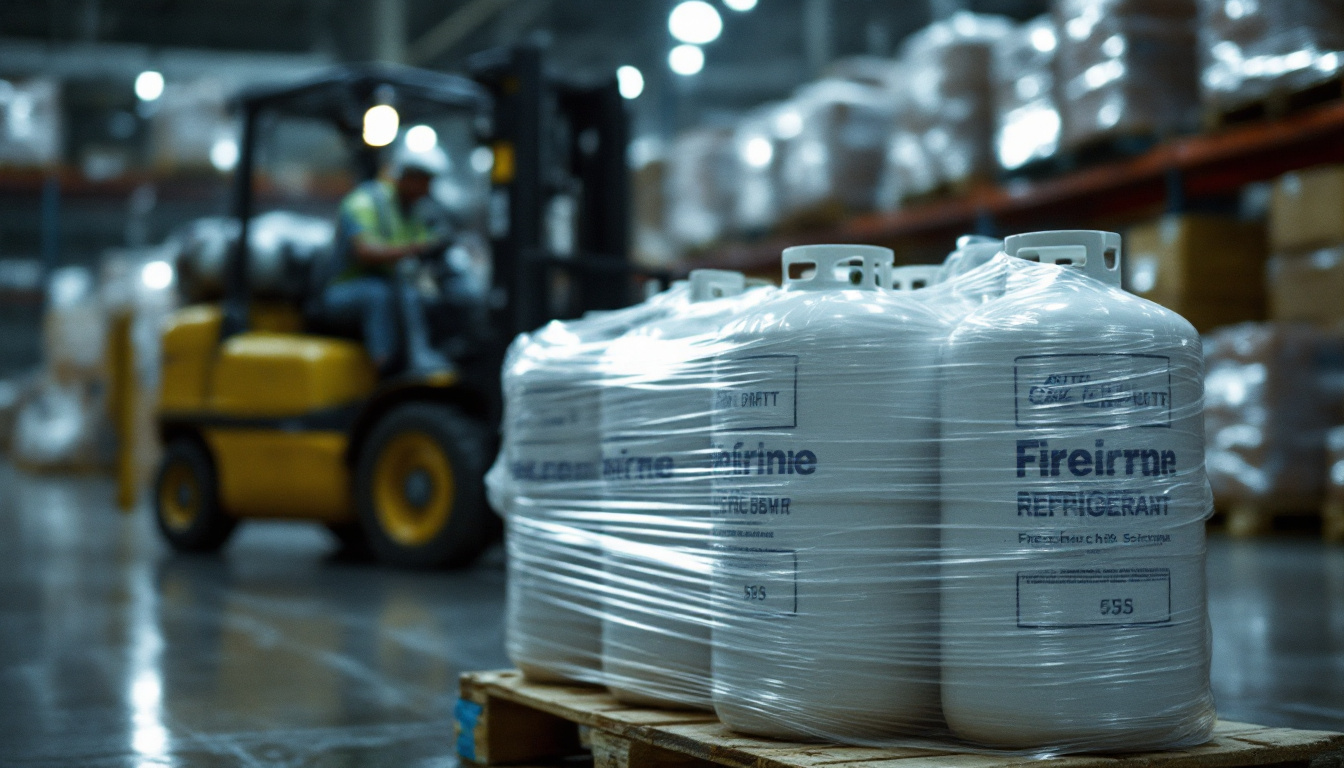
    Three separate federal actions in six weeks all point the same direction on refrigerant supply, and none of them is a refrigerant rule. Two are trade measures on Chinese imports and one is a scheduled production cap already in the CFR.

    Individually each is routine. Together they describe a market where imported supply stays constrained by duties while domestic production is capped and stepping down, at the moment demand shifts toward a molecule that sits at the centre of both.

    The three actions

    Date Action Citation
    July 30, 2026 Final results, antidumping review on HFC blends from China 91 FR 48079
    August 11, 2026 Continuation of antidumping order on R-32 from China 91 FR 51658
    Standing, in force HFC production capped at 60% of baseline, dropping to 30% in 2029 40 CFR 84.7

    Why R-32 is the pinch point

    R-32 is roughly two thirds of R-454B by weight and half of R-410A. The A2L transition moved new residential equipment onto a blend that is mostly R-32, while the installed base still runs on a blend that is half R-32. Demand for the same molecule sits on both sides of the transition.

    The phasedown compounds it. Because the cap is measured in exchange value equivalent, weighted by global warming potential, R-410A at a GWP of 2,088 consumes far more allowance per pound than lower-GWP alternatives. Servicing the existing base is expensive in allowance terms precisely when allowances are being reduced.

    What we are not saying

    We are not forecasting refrigerant prices. None of these documents contains a price projection and we do not publish one. What the documents establish is the direction of the constraints: import measures maintained, domestic production capped, next reduction dated January 1, 2029.

    What a contractor can actually do with this

    1. Treat refrigerant as a scheduled cost input rather than an incidental one, particularly on service agreements priced a year ahead.
    2. Put the phasedown in writing when selling R-410A inventory, which remains legally installable. See what the rule says.
    3. Find leaks rather than recharging. Every avoidable recharge draws on a constrained supply.
    4. Watch the 2029 step, when allowances halve. It is the dated event in this picture, not a forecast.

    Frequently asked questions

    Is there a refrigerant shortage in 2026?

    We do not claim one. What is documented is that antidumping measures on Chinese HFC blends and R-32 were maintained in July and August 2026, while domestic HFC production is capped at 60% of baseline under 40 CFR 84.7 and scheduled to drop to 30% on January 1, 2029. Those are constraints on supply, not an observed shortage.

    Why does R-32 matter so much?

    It is roughly two thirds of R-454B, the A2L blend now used in most new residential equipment, and half of R-410A, which the installed base runs on. Demand for the same molecule sits on both sides of the refrigerant transition.

    Will refrigerant prices go up?

    We make no forecast, and none of the underlying documents contains one. Commerce publishes duty determinations and EPA publishes allowance schedules, neither of which projects prices.

    Methodology

    This piece synthesises three primary documents named in the table above. The R-32 and R-454B composition figures are standard blend compositions. The R-410A global warming potential of 2,088 is the figure EPA used in the Technology Transitions rulemaking. No price data is used because no federal series tracks residential refrigerant pricing.

    Sources

    1. US Department of Commerce, 91 FR 48079, July 30, 2026, docket A-570-028; and 91 FR 51658, August 11, 2026, docket A-570-121.
    2. US Environmental Protection Agency, 40 CFR 84.7, phasedown schedule.

    The HVAC Brief is an independent trade publication. We do not sell equipment, take manufacturer advertising, or accept payment for placement in our research. Corrections welcome.

  • Commerce Publishes Final HFC Blend Duty Results for 2023-2024

    Commerce Publishes Final HFC Blend Duty Results for 2023-2024

    Last reviewed: August 2026 · By the HVAC Brief Editorial Team · Our sourcing and editorial standards

    The news

    Commerce has published final results of its antidumping duty administrative review on hydrofluorocarbon blends from China, finding that certain exporters sold at less than normal value during the period August 1, 2023 through July 31, 2024. The notice appeared July 30, 2026 at 91 FR 48079.

    Commerce also determined that Zhejiang Yonghe Refrigerant Co., Ltd. had no shipments of subject merchandise to the United States during that period.

    The docket is A-570-028. An administrative review recalculates duty rates for a defined past period rather than deciding whether an order exists, which is a different exercise from the sunset review that continued the separate R-32 order two weeks later.

    What an administrative review does

    1. Covers a defined period. Here, August 1, 2023 to July 31, 2024.
    2. Recalculates rates for reviewed exporters based on sales in that window.
    3. Determines no-shipment status where an exporter did not ship subject merchandise, as Commerce found for Zhejiang Yonghe.
    4. Does not decide whether the order continues. That is the sunset review process.
    Two proceedings, six weeks apart

    HFC blends and R-32 are separate orders with separate dockets, A-570-028 and A-570-121. Both saw Commerce action within six weeks. Taken together they signal that the trade posture on imported refrigerant is being maintained rather than relaxed, at the same time the domestic supply is capped by the HFC phasedown.

    Frequently asked questions

    What did Commerce find on HFC blends from China?

    That certain exporters sold subject merchandise at less than normal value during the review period of August 1, 2023 through July 31, 2024, published July 30, 2026 at 91 FR 48079, docket A-570-028. Commerce separately determined that Zhejiang Yonghe Refrigerant had no shipments to the United States during that period.

    What is an antidumping administrative review?

    A recalculation of duty rates for a defined past period based on an exporter’s sales during that window. It differs from a sunset review, which decides whether an order should continue at all. An administrative review assumes the order exists and sets rates within it.

    Are HFC blends and R-32 the same proceeding?

    No. They are separate antidumping orders with separate dockets, A-570-028 for HFC blends and A-570-121 for R-32. Both saw Commerce action within six weeks in mid-2026 but through different processes: an administrative review for blends and a continuation for R-32.

    Sources

    1. US Department of Commerce, “Hydrofluorocarbon Blends From the People’s Republic of China: Final Results of Antidumping Duty Administrative Review and Final Determination of No Shipments; 2023-2024,” 91 FR 48079, published July 30, 2026, docket A-570-028.

    The HVAC Brief is an independent trade publication. We do not sell equipment, take manufacturer advertising, or accept payment for placement in our research. Corrections welcome.
  • Commerce Continues Antidumping Duties on R-32 From China

    Commerce Continues Antidumping Duties on R-32 From China

    Last reviewed: August 2026 · By the HVAC Brief Editorial Team · Our sourcing and editorial standards

    The news

    Commerce has continued the antidumping duty order on difluoromethane, R-32, from China, in a notice published August 11, 2026 at 91 FR 51658. The order stays in force after Commerce and the International Trade Commission both found that revoking it would likely lead to continued dumping and material injury.

    R-32 is not a niche input. It is roughly two thirds of R-454B by weight, the refrigerant most manufacturers moved to for residential equipment, and half of R-410A.

    The docket is A-570-121. A continuation follows a sunset review, in which Commerce examines whether dumping would resume and the ITC examines whether injury would recur. Both answered yes, so the order remains rather than lapsing.

    Why an R-32 duty reaches residential HVAC

    R-32 is a component, not just a standalone refrigerant. It is the dominant constituent of R-454B, the A2L blend that replaced R-410A in most new residential equipment after the 700 GWP threshold took effect on January 1, 2025. It is also half of R-410A itself.

    That means a trade measure on R-32 touches both sides of the transition at once: the refrigerant going into new systems and the refrigerant keeping the installed base running.

    What we are not claiming

    Commerce publishes duty determinations, not price forecasts. A continued order maintains an existing constraint rather than adding a new one, and we make no prediction about what it does to what a cylinder costs. What is documented is that the constraint stays in place while demand shifts toward exactly this molecule.

    The wider supply picture

    The order continues while HFC supply is already capped and stepping down. Production allowances sit at 60% of baseline and drop to 30% on January 1, 2029 under 40 CFR 84.7. See our phasedown schedule and our explainer on what R-454B is.

    Frequently asked questions

    What did Commerce decide about R-32 duties?

    Commerce published a notice of continuation of the antidumping duty order on difluoromethane, R-32, from China on August 11, 2026, at 91 FR 51658, docket A-570-121. Commerce and the International Trade Commission both determined that revoking the order would likely lead to continuation or recurrence of dumping and material injury.

    Why does an R-32 duty matter for HVAC?

    R-32 is roughly two thirds of R-454B by weight, the A2L refrigerant most manufacturers adopted for residential equipment after January 1, 2025, and half of R-410A. A trade measure on R-32 therefore touches both new equipment and service of the existing installed base.

    Does this mean refrigerant prices will rise?

    Commerce publishes duty determinations, not price forecasts, and a continuation maintains an existing order rather than imposing a new one. We make no price prediction. What is documented is that the measure remains while HFC production allowances are separately capped and stepping down.

    Sources

    1. US Department of Commerce, International Trade Administration, “Difluoromethane (R-32) From the People’s Republic of China: Continuation of Antidumping Duty Order,” 91 FR 51658, published August 11, 2026, docket A-570-121.
    2. US Environmental Protection Agency, 40 CFR 84.7, HFC phasedown schedule.

    The HVAC Brief is an independent trade publication. We do not sell equipment, take manufacturer advertising, or accept payment for placement in our research. Corrections welcome.
  • Can You Still Get R-22? What Ended and What Did Not

    Can You Still Get R-22? What Ended and What Did Not

    Last reviewed: August 2026 · By the HVAC Brief Editorial Team · Our sourcing and editorial standards

    The short answer

    R-22 has not been produced or imported in the United States since January 1, 2020, under the Clean Air Act ozone-depleting substance phaseout. What remains available is recovered and reclaimed material from existing systems.

    Servicing an R-22 system is still legal. The supply is finite and no longer replenished by production, which is a different constraint from the HFC phasedown now affecting R-410A.

    Two separate regulatory schemes are involved and they get conflated constantly. R-22 was phased out because it depletes ozone, under Title VI of the Clean Air Act. R-410A is being phased down because of its global warming potential, under the AIM Act. Different laws, different mechanisms, different timelines.

    The two phaseouts compared

    R-22 R-410A
    Reason Ozone depletion Global warming potential
    Authority Clean Air Act Title VI AIM Act, 40 CFR part 84
    Mechanism Production and import ended Declining production allowances
    Status No new production since January 1, 2020 Capped and stepping down, next step 2029
    Servicing existing systems Legal, using reclaimed material Legal
    New residential equipment Long since unavailable Barred since January 1, 2025

    The practical difference matters. R-22 supply cannot grow, because nothing new is made. R-410A supply is being reduced on a schedule but still produced. See our phasedown schedule.

    What this means for an R-22 system

    1. It remains legal to operate and service. No rule requires replacing a working R-22 system.
    2. Refrigerant comes from reclamation. Recovered from decommissioned systems, cleaned to specification, and resold.
    3. A leak is a bigger decision than it used to be. Any repair opening the circuit means recharging from a finite supply.
    4. Retrofit refrigerants exist but change system behaviour and are not a drop-in equivalent in the way marketing sometimes implies.
    5. Age is the real signal. A system still on R-22 has been in service a long time, which bears on repair-versus-replace independently of refrigerant.
    The question to ask about a repair quote

    If a technician proposes recharging an R-22 system, ask whether the leak has been located and what the plan is if it recurs. Repeatedly recharging from a finite, unreplenished supply is the least defensible version of this decision, both economically and environmentally. See how to sanity check a repair quote.

    Frequently asked questions

    Can you still get R-22 refrigerant?

    Yes, but only recovered and reclaimed material. Production and import into the United States ended on January 1, 2020 under the Clean Air Act ozone-depleting substance phaseout, so the supply is finite and no longer replenished. Servicing existing R-22 systems remains legal.

    Is it illegal to run an R-22 air conditioner?

    No. No rule requires replacing a working R-22 system, and servicing one is legal using reclaimed refrigerant. What ended was production and import of the substance, not the operation or maintenance of equipment containing it.

    What is the difference between the R-22 and R-410A phaseouts?

    Different laws and mechanisms. R-22 was phased out for ozone depletion under Clean Air Act Title VI, with production and import ending January 1, 2020. R-410A is being phased down for its global warming potential under the AIM Act, through declining production allowances rather than an end date.

    Should I replace an R-22 system?

    The refrigerant is one input to that decision rather than the whole of it. A system still on R-22 has been in service a long time, and any repair opening the refrigerant circuit means recharging from a finite supply. Weigh the specific repair against replacement rather than treating the refrigerant alone as decisive.

    Methodology and limitations

    The R-22 production and import phaseout under Clean Air Act Title VI, effective January 1, 2020, is the established regulatory position. The R-410A phasedown figures are from 40 CFR 84.7 and the residential equipment restriction from 40 CFR 84.54.

    • We publish no refrigerant prices. No federal series tracks residential refrigerant pricing.
    • Retrofit refrigerant options are named as a category only. Suitability is equipment specific.
    • Nothing here is legal or engineering advice for a specific system.

    Sources

    1. US Environmental Protection Agency, Clean Air Act Title VI ozone-depleting substance phaseout, 40 CFR part 82 subpart A.
    2. US Environmental Protection Agency, 40 CFR 84.7, HFC phasedown schedule, and 40 CFR 84.54.

    The HVAC Brief is an independent trade publication. We do not sell equipment, take manufacturer advertising, or accept payment for placement in our research. Corrections welcome.
  • What Is R-454B? The A2L Refrigerant That Replaced R-410A

    What Is R-454B? The A2L Refrigerant That Replaced R-410A

    Last reviewed: August 2026 · By the HVAC Brief Editorial Team · Our sourcing and editorial standards

    The short answer

    R-454B is the refrigerant most manufacturers moved to for residential equipment after January 1, 2025, when federal rules barred new residential systems using refrigerant with a global warming potential of 700 or greater. R-410A has a GWP of 2,088.

    R-454B is classified A2L, meaning mildly flammable. That classification, not the GWP, is what changes how the refrigerant is stored, handled and installed.

    The transition is often described as a swap. It is not. The safety classification changed, and that has consequences for tooling, leak detection and equipment design that a like-for-like framing hides.

    What A2L means

    Refrigerant safety classification combines toxicity and flammability. The A denotes lower toxicity. The 2L denotes lower flammability with a low burning velocity, a category sitting between the non-flammable A1 refrigerants like R-410A and the more flammable A2 and A3 substances such as propane.

    Property R-410A R-454B
    Safety classification A1, non-flammable A2L, mildly flammable
    Global warming potential 2,088 Below the 700 threshold
    Permitted in new residential equipment No, since January 1, 2025 Yes
    Existing systems Legal to operate and service Not applicable

    What actually changes on a job

    1. Equipment is designed for it. A2L systems include mitigation features such as leak detection and airflow response. You do not convert an R-410A system by charging it with R-454B.
    2. Storage and transport requirements differ from A1 refrigerants, because the classification is different.
    3. Tooling and recovery equipment must be rated for A2L service.
    4. Training is the real gap. EPA 608 certification is unchanged, so a technician certified years ago remains certified without necessarily having A2L-specific training. See what 608 covers.
    5. Local code adoption varies. Building and mechanical codes govern where and how A2L equipment may be installed, and adoption is not uniform across jurisdictions.
    Mildly flammable is a classification, not a warning

    A2L refrigerants have a low burning velocity and require specific conditions to ignite, which is why they are permitted in occupied dwellings at all. The practical implication is procedural: rated tools, correct charge handling, and equipment designed with mitigation. It is a change in method, not a reason to avoid the equipment.

    What it does not change

    R-410A equipment already installed remains legal to operate and service, and pre-2025 inventory remains legally installable federally with no end date. Our summary of the installation rule covers that. What is changing on a published timetable is refrigerant availability, through the HFC phasedown.

    Frequently asked questions

    What is R-454B?

    The refrigerant most manufacturers adopted for residential air conditioners and heat pumps after federal rules barred new residential equipment using refrigerant with a global warming potential of 700 or greater from January 1, 2025. It is classified A2L, meaning lower toxicity and mild flammability, unlike the A1 classification of R-410A.

    Can I put R-454B in my R-410A system?

    No. A2L systems are designed with mitigation features and the equipment, tooling and charge characteristics differ. Retrofitting an R-410A system with an A2L refrigerant is not a supported procedure, and the existing system remains legal to service with R-410A.

    Is A2L refrigerant dangerous?

    A2L denotes lower toxicity and mild flammability with a low burning velocity, a class between non-flammable A1 refrigerants and more flammable A2 and A3 substances. It is permitted in occupied dwellings. The practical implication is procedural: rated tooling, correct handling and equipment with built-in mitigation.

    Do I need new certification for A2L refrigerants?

    EPA Section 608 certification requirements are unchanged, so an existing certification remains valid. What differs is training: A2L handling, storage and tooling requirements are not covered by a certification obtained before these refrigerants entered the market.

    Methodology and limitations

    The 700 GWP threshold and its January 1, 2025 date are from 40 CFR 84.54(a)(1). The R-410A global warming potential of 2,088 is the figure EPA used in that rulemaking. Safety classification descriptions follow the standard ASHRAE framework, which is a private standard we name but do not reproduce.

    • We do not publish a specific GWP figure for R-454B, only that it falls below the 700 threshold that governs eligibility.
    • Code adoption for A2L installation varies by jurisdiction and we do not summarise it.
    • Nothing here is engineering or safety guidance for a specific installation. Follow manufacturer instructions and local code.

    Sources

    1. US Environmental Protection Agency, 40 CFR 84.54, restrictions on the use of hydrofluorocarbons.
    2. US Environmental Protection Agency, 40 CFR 82.161, technician certification.

    The HVAC Brief is an independent trade publication. We do not sell equipment, take manufacturer advertising, or accept payment for placement in our research. Corrections welcome.
  • The 2026 Refrigerant Leak Rules Exclude Residential HVAC

    The 2026 Refrigerant Leak Rules Exclude Residential HVAC

    Last reviewed: August 2026 · By the HVAC Brief Editorial Team · Our sourcing and editorial standards

    The short answer

    New federal refrigerant leak repair requirements took effect on January 1, 2026, and residential and light commercial air conditioning and heat pumps are explicitly excluded from them.

    The rules at 40 CFR 84.106 apply to appliances with a full charge of 15 or more pounds. Your house does not have one. Commercial refrigeration, chillers and industrial process systems do.

    This distinction gets reported badly. Coverage of the leak rules often implies homeowners face new obligations. The regulation says otherwise, in terms, and knowing that saves arguments on both sides of a service call.

    What the rule actually covers

    Criterion Requirement
    Charge size Full charge of 15 or more pounds of refrigerant
    Substance A regulated substance, or a substitute with a global warming potential above 53
    Effective date January 1, 2026
    Excluded Residential and light commercial air conditioning and heat pump equipment
    Also excluded Appliances containing solely an ozone-depleting substance as refrigerant

    The exclusion is not an oversight or a grace period. It is written into the applicability paragraph at 40 CFR 84.106(a)(3)(ii).

    What the rule requires where it does apply

    1. Documentation on every service event. Anyone adding or removing refrigerant must give the owner or operator documentation meeting the rule’s requirements.
    2. Leak rate calculation. The owner or operator must calculate the leak rate every time refrigerant is added, with exceptions for retrofits, new installations and seasonal variance.
    3. Repair obligations triggered when calculated leak rates exceed thresholds set for the equipment type.
    4. Record keeping sufficient to demonstrate compliance.
    The part that does apply to a house

    Venting refrigerant is prohibited regardless of charge size or equipment type, and recovery requirements under 40 CFR part 82 apply to residential work. The leak repair and record keeping regime is what excludes residential equipment, not the handling rules. A technician still cannot vent, and still needs certification.

    Why a residential system that needs refrigerant still has a problem

    Regulatory exclusion is not an engineering exemption. A sealed circuit does not consume refrigerant, so a residential system needing a top up has a leak, and repeatedly recharging it treats the symptom while the underlying fault persists and the refrigerant escapes. See what different AC symptoms mean.

    Frequently asked questions

    Do the new refrigerant leak rules apply to home air conditioning?

    No. 40 CFR 84.106 applies to appliances with a full charge of 15 or more pounds, and paragraph (a)(3)(ii) explicitly excludes residential and light commercial air conditioning and heat pump equipment. The requirements took effect January 1, 2026 for the equipment they do cover.

    What size system is covered by the leak repair rule?

    Appliances with a full charge of 15 or more pounds of refrigerant, where the refrigerant is a regulated substance or a substitute with a global warming potential above 53. Residential and light commercial air conditioning and heat pumps are excluded regardless of charge.

    Can a technician still vent refrigerant from a home system?

    No. Venting prohibitions and recovery requirements under 40 CFR part 82 apply regardless of the leak repair rule’s applicability. The exclusion at 84.106 covers leak rate calculation, repair obligations and record keeping, not handling and venting rules.

    When did the leak repair requirements take effect?

    January 1, 2026, per 40 CFR 84.106(a)(4), for the equipment the section covers. Residential and light commercial air conditioning and heat pump equipment is excluded from the section entirely.

    Methodology and limitations

    Requirements are quoted from 40 CFR 84.106, leak repair, paragraph (a) applicability and paragraph (b) leak rate calculation, retrieved from the electronic CFR.

    • We summarise applicability rather than reproducing the full repair threshold and record keeping provisions.
    • Venting and recovery rules under 40 CFR part 82 are a separate regime and are not excluded for residential equipment.
    • Nothing here is legal advice on compliance for a specific installation or business.

    Sources

    1. US Environmental Protection Agency, 40 CFR 84.106, leak repair, via eCFR.
    2. US Environmental Protection Agency, 40 CFR part 82 subpart F, refrigerant handling and recovery.

    The HVAC Brief is an independent trade publication. We do not sell equipment, take manufacturer advertising, or accept payment for placement in our research. Corrections welcome.

  • EPA 608 Certification: Which Type HVAC Technicians Actually Need

    EPA 608 Certification: Which Type HVAC Technicians Actually Need

    Last reviewed: August 2026 · By the HVAC Brief Editorial Team · Our sourcing and editorial standards

    The short answer

    EPA Section 608 certification is federally required for anyone who maintains, services, repairs or disposes of appliances containing regulated refrigerants in a way that could violate the refrigerant circuit. Residential and light commercial HVAC work falls under Type II.

    There are four certifications, and they are defined by appliance pressure class rather than by job title. Apprentices are exempt while closely and continually supervised by a certified technician.

    The four certification types

    Certification Covers Typical residential relevance
    Type I Small appliances Window units, some packaged equipment
    Type II Medium, high and very high-pressure appliances, excluding small appliances and motor vehicle systems The one most residential HVAC work requires
    Type III Low-pressure appliances Chillers, rarely residential
    Universal All of the above Technicians working across equipment types

    Central residential air conditioners and heat pumps are medium or high-pressure appliances, which is why Type II is the practical requirement for most residential service work rather than Type I.

    Who is exempt, and who is not

    1. Apprentices are exempt while closely and continually supervised by a certified technician. Both the apprentice and the supervising technician carry responsibility for compliance.
    2. Disposal of small appliances and motor vehicle air conditioning does not require certification.
    3. Motor vehicle air conditioning service for consideration requires certification under 40 CFR part 82 subpart B, a separate scheme from 608.
    4. Everyone else performing work that could reasonably be expected to release refrigerant must hold the applicable certification.
    Certification is not a licence

    Section 608 is a federal environmental requirement about refrigerant handling. It is not a state contractor licence, does not authorise you to contract, and does not substitute for local licensing. The two are separate systems with separate requirements, and holding one says nothing about the other.

    Why the A2L transition raises the stakes

    The refrigerants replacing R-410A are classified A2L, meaning mildly flammable, which changes handling, storage and equipment requirements even though the certification framework is unchanged. A technician certified years ago holds a valid certification but may not have training on the refrigerants now shipping in new equipment. See our summary of the refrigerant rules.

    Frequently asked questions

    What EPA certification do HVAC technicians need?

    Type II for most residential and light commercial work, because central air conditioners and heat pumps are medium or high-pressure appliances. Type I covers small appliances, Type III covers low-pressure appliances, and Universal covers all three. The requirement is in 40 CFR 82.161.

    Do apprentices need EPA 608 certification?

    No, while closely and continually supervised by a certified technician. The regulation places responsibility for compliance on both the apprentice and the supervising technician. The exemption applies only during supervised work.

    Is EPA 608 the same as a contractor licence?

    No. Section 608 is a federal environmental certification covering refrigerant handling. Contractor licensing is set by states and municipalities and covers the right to contract for work. They are separate requirements and holding one does not satisfy the other.

    Does EPA 608 certification expire?

    The certification itself does not carry a federal renewal cycle in the way many state licences do. What changes is the equipment and refrigerants in the field: the A2L refrigerants now shipping have different handling requirements from R-410A, so currency of training matters separately from currency of certification.

    Methodology and limitations

    Requirements are quoted from 40 CFR 82.161, technician certification, paragraph (a), retrieved from the electronic CFR.

    • This covers the federal certification requirement only. State and local licensing is separate and varies.
    • We do not list exam providers, costs or study materials, as no federal source compiles them.
    • Nothing here is legal advice on compliance for a specific business.

    Sources

    1. US Environmental Protection Agency, 40 CFR 82.161, technician certification, via eCFR.

    The HVAC Brief is an independent trade publication. We do not sell equipment, take manufacturer advertising, or accept payment for placement in our research. Corrections welcome.