Last reviewed: September 2026 · By the HVAC Brief Editorial Team · Our sourcing and editorial standards
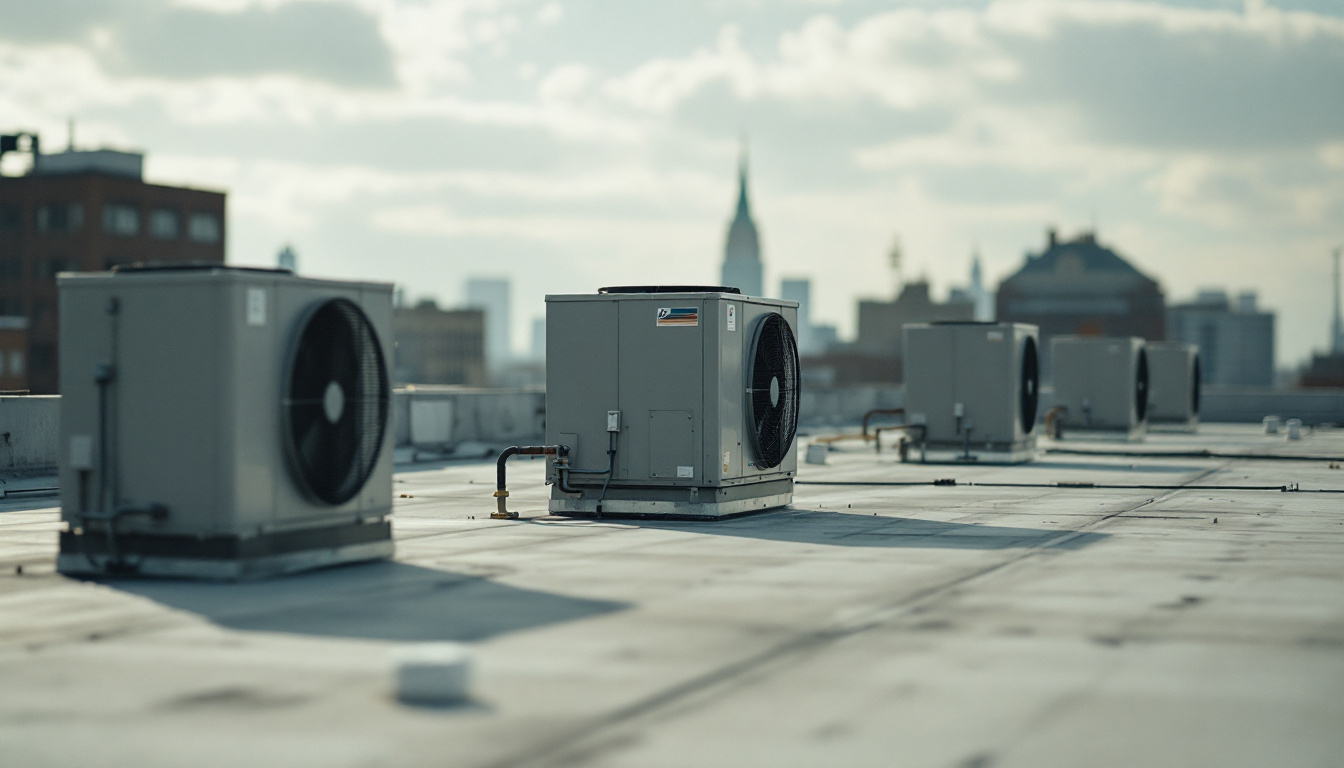
Commercial HVAC differs from residential in three ways that matter: equipment sits on the roof as packaged units, ventilation is code-driven rather than optional, and the regulatory treatment is different.
That last point is concrete. The 2026 refrigerant leak repair rules at 40 CFR 84.106 apply at 15 or more pounds of charge and exclude residential and light commercial equipment, so larger commercial systems carry obligations a house never does.
The three real differences
| Residential | Commercial | |
|---|---|---|
| Typical equipment | Split system, indoor and outdoor units | Packaged rooftop units, or chillers at larger scale |
| Ventilation | Often incidental, through envelope leakage | Specified outdoor air rates, code driven |
| Zoning | Optional, added with dampers | Usually inherent, multiple units or VAV |
| Refrigerant leak rules | Excluded from 40 CFR 84.106 | Apply at 15+ lb charge |
| Access | Ground level or basement | Roof, with access and safety implications |
| Downtime cost | Comfort | Often revenue, sometimes stock or process |
Why rooftop packaged units dominate
- No indoor plant space consumed, which is leasable floor area in a commercial building.
- Modularity. Several units serving zones is more resilient than one large machine, and a failure takes out part of the building rather than all of it.
- Service access without entering tenant space, which matters in multi-tenant buildings.
- Simpler outdoor air provision, since the unit is already outside.
The trade-off is exposure: rooftop equipment weathers harder, and access requires fall protection and often a lift.
The 15-pound charge threshold in 40 CFR 84.106 is what separates a system with leak rate calculation and record-keeping obligations from one without. Light commercial air conditioning and heat pumps are excluded alongside residential, but larger commercial and refrigeration systems are not. See who those rules cover.
Where the VRF dates matter
Variable refrigerant flow systems, common in commercial and light commercial work, have their own timetable under 40 CFR 84.54(c)(2): restricted from January 1, 2026, installable before January 1, 2027 where components were built before January 1, 2026, and before January 1, 2028 with a building permit issued prior to October 5, 2023. Our compliance calendar sets out the dated sequence.
Frequently asked questions
What is the difference between commercial and residential HVAC?
Equipment is typically packaged rooftop units rather than split systems, ventilation rates are specified by code rather than incidental, and larger systems carry refrigerant obligations residential equipment does not. The 2026 leak repair rules apply at 15 or more pounds of charge and exclude residential and light commercial air conditioning.
Why is commercial HVAC on the roof?
Because indoor plant space is leasable floor area, several modular units are more resilient than one large machine, service access does not require entering tenant space, and outdoor air provision is simpler when the unit is already outside. The trade-off is weather exposure and access requirements.
Do refrigerant leak rules apply to commercial systems?
To larger ones, yes. 40 CFR 84.106 applies to appliances with a full charge of 15 or more pounds, with leak rate calculation, repair obligations and record keeping. Residential and light commercial air conditioning and heat pumps are explicitly excluded from the section.
What is a VRF system?
Variable refrigerant flow, a system where one outdoor unit serves multiple indoor units with modulating refrigerant flow, common in commercial and light commercial buildings. It has its own restriction timetable under 40 CFR 84.54(c)(2), separate from the rules covering residential split systems.
Methodology and limitations
Regulatory positions are quoted from 40 CFR 84.106 and 40 CFR 84.54. Equipment descriptions are general architecture rather than any specific manufacturer’s product.
- Ventilation rate requirements are set by building and mechanical codes that vary by jurisdiction, and we do not summarise them.
- We publish no commercial equipment or service costs, as no federal series measures them.
- Nothing here is engineering or compliance advice for a specific building.
Sources
- US Environmental Protection Agency, 40 CFR 84.106 and 40 CFR 84.54.
The HVAC Brief is an independent trade publication. We do not sell equipment, take manufacturer advertising, or accept payment for placement in our research. Corrections welcome.
Leave a Reply