Last reviewed: August 2026 · By the HVAC Brief Editorial Team · Our sourcing and editorial standards
The common advice is annual servicing, once for cooling and once for heating on a system that does both, but no federal agency sets or measures a required interval. It is manufacturer and trade guidance, not regulation.
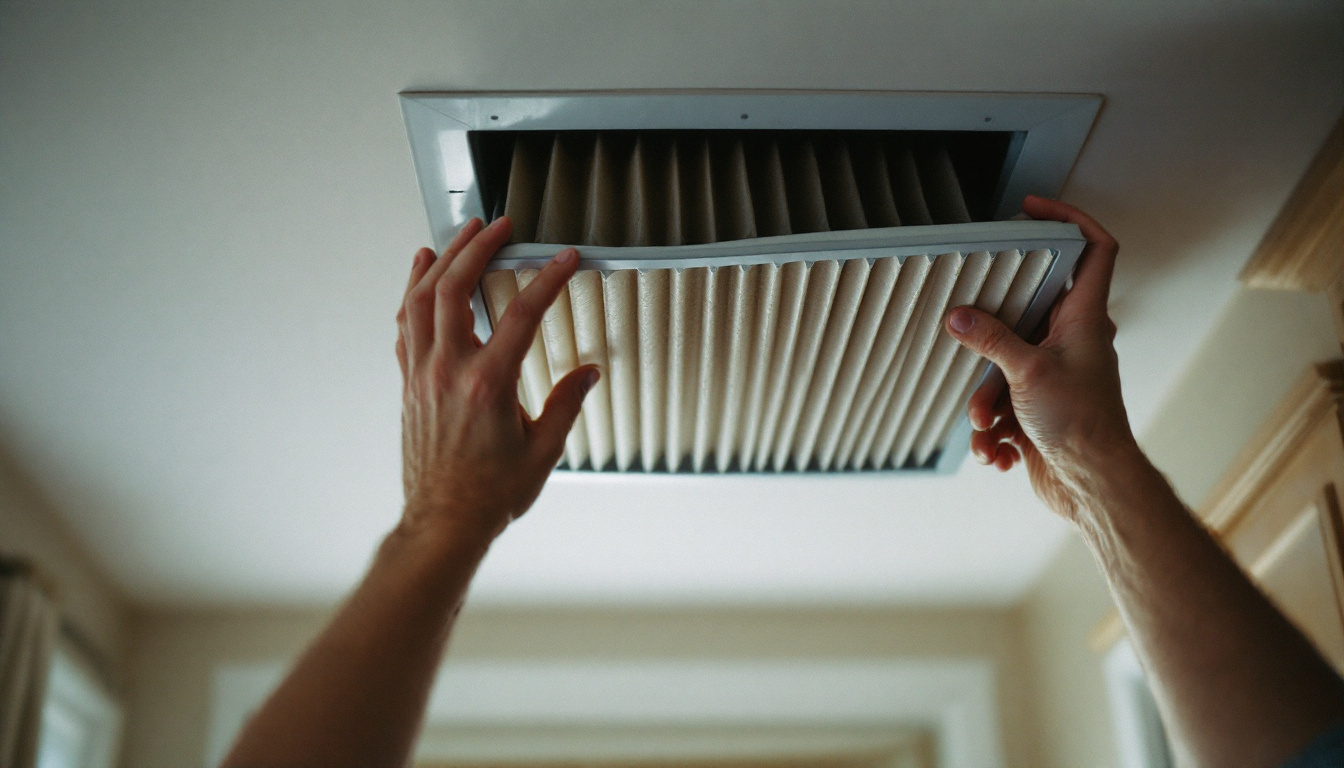
The one maintenance task with a clear mechanism behind it is the air filter. A restricted filter raises static pressure across the blower, which is exactly the condition SEER2 testing was changed to represent more honestly.
We separate what is actually established from what is repeated. That distinction matters here because maintenance advice is also a sales channel, and the interval you are told often matches a service plan rather than a measurement.
What is established and what is not
| Claim | Status |
|---|---|
| Restricted filters raise static pressure and reduce airflow | Established mechanism, and the reason SEER2 testing raised external static pressure |
| Refrigerant circuits should not lose charge in normal operation | Established. A system needing recharging has a leak |
| Annual professional servicing is required | Trade and manufacturer guidance, not federal requirement |
| Maintenance extends equipment life by a specific number of years | Not measured by any federal source |
| Maintenance saves a specific percentage on bills | Not measured by any federal source |
The tasks that have a mechanism behind them
- Change or clean the filter on schedule. The interval depends on filter type, pets and occupancy, not on the calendar alone. This is the one task with a direct, well understood effect on airflow.
- Keep the outdoor coil clear. Vegetation and debris restrict heat rejection, which the equipment cannot compensate for.
- Check the condensate drain. A blocked drain causes water damage, which is a failure mode independent of equipment performance.
- Have refrigerant charge verified rather than topped up. A system low on charge has a leak, and repeatedly adding refrigerant treats the symptom while venting a controlled substance.
- Have static pressure measured at least once. If ductwork is the constraint, no amount of servicing the equipment fixes it.
The percentage savings figures attached to maintenance plans are not from federal measurement. The defensible version is narrower: restricted airflow measurably degrades performance, and a refrigerant leak both costs money and worsens as refrigerant prices rise under phasedown. Those are mechanisms, not a percentage.
Frequently asked questions
How often should HVAC be serviced?
Common trade guidance is annually, or twice yearly on a system that both heats and cools, but no federal agency sets or measures a required interval. It is manufacturer and industry advice rather than regulation. Filter changes are the task with the clearest mechanism and should follow filter type and household conditions rather than a fixed calendar.
How often should I change my HVAC filter?
It depends on filter type, pets, occupancy and how much the system runs, so no single interval applies. The mechanism is well established: a restricted filter raises static pressure across the blower and reduces airflow, which is the condition SEER2 testing was revised to represent more accurately.
Does HVAC maintenance really save money?
The specific percentage savings quoted with service plans are not measured by any federal source. What is defensible is narrower: restricted airflow degrades performance, and a refrigerant leak costs more as prices rise under federal phasedown. Treat percentage claims as marketing unless a source is named.
Does my system need refrigerant topped up each year?
No. A sealed refrigerant circuit should not lose charge in normal operation. A system that needs refrigerant has a leak, and repeatedly adding refrigerant treats the symptom while venting a controlled substance. Ask for the leak to be found rather than the charge to be topped up.
Methodology and limitations
We publish no service interval or savings percentage because no federal source measures either. The static pressure point references the SEER2 test procedure change under 10 CFR 430.32. Refrigerant handling context is from 40 CFR 84.
- No federal requirement sets a residential HVAC servicing interval.
- Manufacturer warranty terms may require documented maintenance. That is a contractual matter between you and the manufacturer.
- Nothing here is engineering advice for a specific system.
Sources
- US Department of Energy, 10 CFR 430.32, efficiency standards and the SEER2 test basis.
- US Environmental Protection Agency, 40 CFR part 84, hydrofluorocarbon management.
The HVAC Brief is an independent trade publication. We do not sell equipment, take manufacturer advertising, or accept payment for placement in our research. Corrections welcome.
Leave a Reply