Original data and independent reporting for the HVAC trade

Category: News

Reporting on the rules, prices and companies shaping the HVAC trade.

  • HVAC Equipment Prices Hit a Record in July

    HVAC Equipment Prices Hit a Record in July

    Last reviewed: August 2026 · By the HVAC Brief Editorial Team · Our sourcing and editorial standards

    The news

    Producer prices for HVAC equipment reached their highest level on record in July 2026, at an index of 324.0. That is up 0.94% on June and 4.1% on July 2025, on revised figures.

    Against the 2019 annual average the series is up 60.0%. Consumer prices rose about 31% over the same period, so equipment continues to inflate at roughly twice the general rate.

    Correction, September 2026: BLS revised the July 2026 index to 323.984 from the first published 324.903, which cuts the monthly gain to 0.94% from 1.23%. July remained a series high at the time. August 2026, at 324.82, is now the highest reading. See our August report.

    The series is BLS producer price index PCU333415333415, covering air conditioning, warm air heating and commercial and industrial refrigeration equipment manufacturing. It measures what manufacturers charge, not installed prices.

    The reading in context

    Comparison Index Change
    July 2026 324.0 series high at the time
    June 2026 321.0 +0.94%
    July 2025 311.3 +4.1%
    2019 annual average 203.0 +59.6%

    The revised month-over-month move of 0.94% is the largest since February 2026. Prices have risen in 20 of the 30 month-over-month comparisons since January 2024, so the direction has been persistent rather than a single spike.

    Why this matters for Q4 quoting

    Equipment is the largest input a contractor cannot control, and it set a record in the month heading into the autumn replacement season. Anyone holding quoted prices for extended periods is absorbing the difference. Our price index analysis traces what drove the increase and shows the refrigerant transition is not the main factor.

    Frequently asked questions

    How much did HVAC equipment prices rise in July 2026?

    The BLS producer price index for HVAC equipment manufacturing rose 0.94% from June to a revised 323.98 in July 2026, the highest reading in the series at the time. Year over year the increase was 4.4%, and against the 2019 annual average the series is up 60.0%.

    Is this the highest HVAC equipment prices have been?

    Yes, in this series. July 2026, at a revised 323.98, was the highest monthly reading of BLS PCU333415333415 since 2019 until August 2026 set a new high. Prices have risen in 20 of the 30 month-over-month comparisons since January 2024.

    Does the producer price index tell me what a system costs?

    No. It measures what manufacturers charge at the factory gate. Installed prices add distributor margin, labour, ductwork and permits, none of which this series captures. The direction is reliable but the pass-through to a specific quote is not.

    Sources

    1. US Bureau of Labor Statistics, Producer Price Index by Industry, series PCU333415333415, monthly through July 2026, via the BLS Public Data API v2.
    2. US Bureau of Labor Statistics, Consumer Price Index, series CUUR0000SA0.

    The HVAC Brief is an independent trade publication. We do not sell equipment, take manufacturer advertising, or accept payment for placement in our research. Corrections welcome.


  • DOE Proposes Changing How It Sets Efficiency Standards

    DOE Proposes Changing How It Sets Efficiency Standards

    Last reviewed: August 2026 · By the HVAC Brief Editorial Team · Our sourcing and editorial standards

    The news

    The Department of Energy has proposed changes to the methodology it uses to set appliance efficiency standards, in a notice of proposed rulemaking published July 7, 2026 at 91 FR 42034. Comments closed August 21, 2026 after an extension published July 28 at 91 FR 47155.

    This is process rather than a standard, and that is precisely why it matters. The methodology governs how every future HVAC standard is justified, including the ones already scheduled.

    The rulemaking updates DOE’s “Procedures, Interpretations, and Policies for Consideration of New or Revised Energy Conservation Standards and Test Procedures for Consumer Products and Certain Commercial/Industrial Equipment”, commonly called the process rule. DOE published a companion proposal the same day reviewing its analytic methods for setting standards.

    Why a process rule matters to HVAC

    Efficiency standards for HVAC equipment are set through this framework. The SEER2 minimums at 10 CFR 430.32(c), the room air conditioner increase that took effect May 26, 2026, and the 95% AFUE furnace standard scheduled for December 18, 2028 were all produced by it.

    Changing how DOE analyses and justifies standards therefore affects the pipeline of future rules rather than any single existing requirement. Standards already in the CFR remain in force unless separately amended.

    What this does not do

    A process rulemaking does not repeal or delay existing standards. The SEER2 minimums, the new room air conditioner levels and the 2028 furnace standard all sit in the Code of Federal Regulations and are unaffected by a proposal about methodology. Anyone reading this as a rollback of current requirements is reading it wrong.

    Frequently asked questions

    What is DOE’s process rule?

    The methodology DOE uses when considering new or revised energy conservation standards and test procedures, formally titled “Procedures, Interpretations, and Policies for Consideration of New or Revised Energy Conservation Standards and Test Procedures for Consumer Products and Certain Commercial/Industrial Equipment”. DOE proposed updating it on July 7, 2026 at 91 FR 42034.

    Does this change current HVAC efficiency standards?

    No. It is a proposal about methodology for future rulemakings. Existing standards including SEER2 minimums, the room air conditioner levels effective May 26, 2026, and the 95% AFUE furnace standard scheduled for December 18, 2028 remain in the Code of Federal Regulations and are unaffected.

    When did comments close?

    August 21, 2026, following an extension published July 28, 2026 at 91 FR 47155. The original notice of proposed rulemaking was published July 7, 2026 at 91 FR 42034 with a comment period closing August 6.

    Sources

    1. US Department of Energy, “Energy Conservation Program: Procedures, Interpretations, and Policies for Consideration of New or Revised Energy Conservation Standards and Test Procedures,” notice of proposed rulemaking, 91 FR 42034, July 7, 2026; comment period extension 91 FR 47155, July 28, 2026.
    2. US Department of Energy, 10 CFR 430.32, current efficiency standards.

    The HVAC Brief is an independent trade publication. We do not sell equipment, take manufacturer advertising, or accept payment for placement in our research. Corrections welcome.
  • Commerce Publishes Final HFC Blend Duty Results for 2023-2024

    Commerce Publishes Final HFC Blend Duty Results for 2023-2024

    Last reviewed: August 2026 · By the HVAC Brief Editorial Team · Our sourcing and editorial standards

    The news

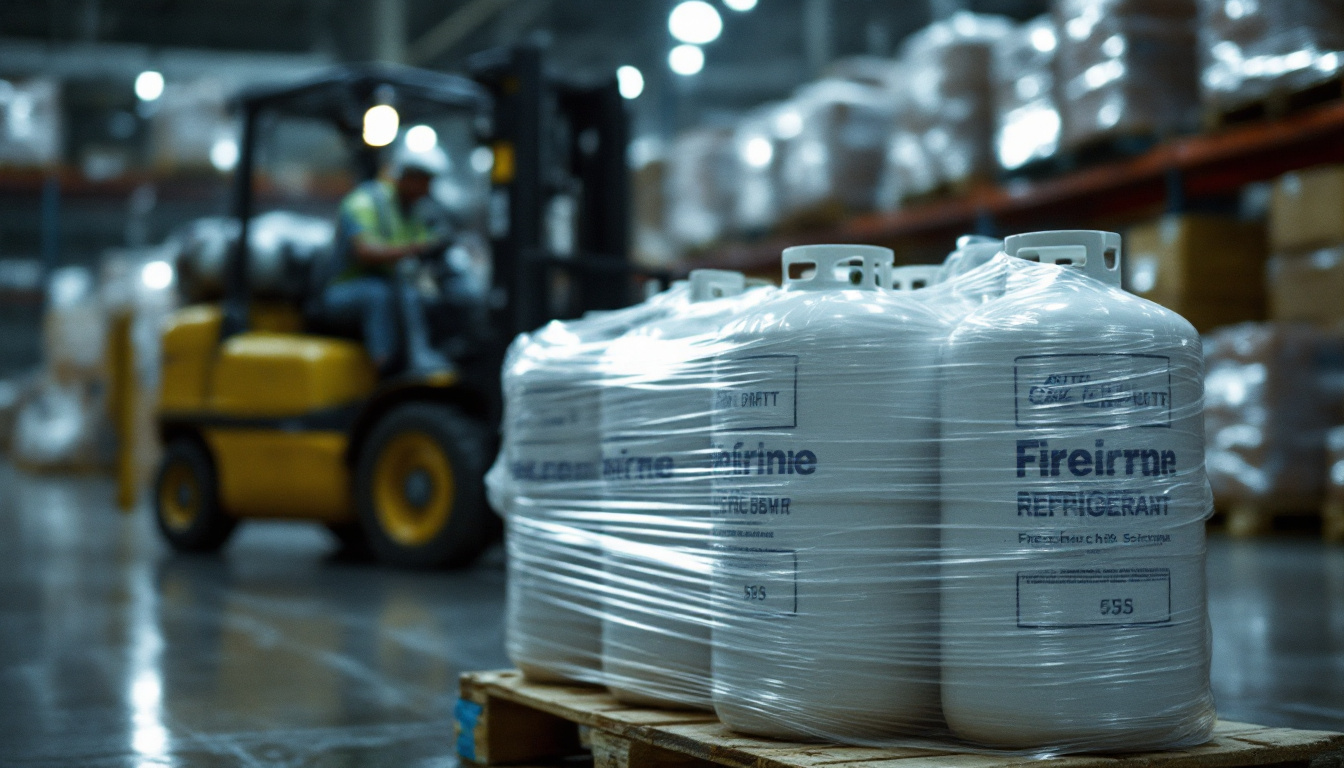
    Commerce has published final results of its antidumping duty administrative review on hydrofluorocarbon blends from China, finding that certain exporters sold at less than normal value during the period August 1, 2023 through July 31, 2024. The notice appeared July 30, 2026 at 91 FR 48079.

    Commerce also determined that Zhejiang Yonghe Refrigerant Co., Ltd. had no shipments of subject merchandise to the United States during that period.

    The docket is A-570-028. An administrative review recalculates duty rates for a defined past period rather than deciding whether an order exists, which is a different exercise from the sunset review that continued the separate R-32 order two weeks later.

    What an administrative review does

    1. Covers a defined period. Here, August 1, 2023 to July 31, 2024.
    2. Recalculates rates for reviewed exporters based on sales in that window.
    3. Determines no-shipment status where an exporter did not ship subject merchandise, as Commerce found for Zhejiang Yonghe.
    4. Does not decide whether the order continues. That is the sunset review process.
    Two proceedings, six weeks apart

    HFC blends and R-32 are separate orders with separate dockets, A-570-028 and A-570-121. Both saw Commerce action within six weeks. Taken together they signal that the trade posture on imported refrigerant is being maintained rather than relaxed, at the same time the domestic supply is capped by the HFC phasedown.

    Frequently asked questions

    What did Commerce find on HFC blends from China?

    That certain exporters sold subject merchandise at less than normal value during the review period of August 1, 2023 through July 31, 2024, published July 30, 2026 at 91 FR 48079, docket A-570-028. Commerce separately determined that Zhejiang Yonghe Refrigerant had no shipments to the United States during that period.

    What is an antidumping administrative review?

    A recalculation of duty rates for a defined past period based on an exporter’s sales during that window. It differs from a sunset review, which decides whether an order should continue at all. An administrative review assumes the order exists and sets rates within it.

    Are HFC blends and R-32 the same proceeding?

    No. They are separate antidumping orders with separate dockets, A-570-028 for HFC blends and A-570-121 for R-32. Both saw Commerce action within six weeks in mid-2026 but through different processes: an administrative review for blends and a continuation for R-32.

    Sources

    1. US Department of Commerce, “Hydrofluorocarbon Blends From the People’s Republic of China: Final Results of Antidumping Duty Administrative Review and Final Determination of No Shipments; 2023-2024,” 91 FR 48079, published July 30, 2026, docket A-570-028.

    The HVAC Brief is an independent trade publication. We do not sell equipment, take manufacturer advertising, or accept payment for placement in our research. Corrections welcome.

  • Commerce Continues Antidumping Duties on R-32 From China

    Commerce Continues Antidumping Duties on R-32 From China

    Last reviewed: August 2026 · By the HVAC Brief Editorial Team · Our sourcing and editorial standards

    The news

    Commerce has continued the antidumping duty order on difluoromethane, R-32, from China, in a notice published August 11, 2026 at 91 FR 51658. The order stays in force after Commerce and the International Trade Commission both found that revoking it would likely lead to continued dumping and material injury.

    R-32 is not a niche input. It is roughly two thirds of R-454B by weight, the refrigerant most manufacturers moved to for residential equipment, and half of R-410A.

    The docket is A-570-121. A continuation follows a sunset review, in which Commerce examines whether dumping would resume and the ITC examines whether injury would recur. Both answered yes, so the order remains rather than lapsing.

    Why an R-32 duty reaches residential HVAC

    R-32 is a component, not just a standalone refrigerant. It is the dominant constituent of R-454B, the A2L blend that replaced R-410A in most new residential equipment after the 700 GWP threshold took effect on January 1, 2025. It is also half of R-410A itself.

    That means a trade measure on R-32 touches both sides of the transition at once: the refrigerant going into new systems and the refrigerant keeping the installed base running.

    What we are not claiming

    Commerce publishes duty determinations, not price forecasts. A continued order maintains an existing constraint rather than adding a new one, and we make no prediction about what it does to what a cylinder costs. What is documented is that the constraint stays in place while demand shifts toward exactly this molecule.

    The wider supply picture

    The order continues while HFC supply is already capped and stepping down. Production allowances sit at 60% of baseline and drop to 30% on January 1, 2029 under 40 CFR 84.7. See our phasedown schedule and our explainer on what R-454B is.

    Frequently asked questions

    What did Commerce decide about R-32 duties?

    Commerce published a notice of continuation of the antidumping duty order on difluoromethane, R-32, from China on August 11, 2026, at 91 FR 51658, docket A-570-121. Commerce and the International Trade Commission both determined that revoking the order would likely lead to continuation or recurrence of dumping and material injury.

    Why does an R-32 duty matter for HVAC?

    R-32 is roughly two thirds of R-454B by weight, the A2L refrigerant most manufacturers adopted for residential equipment after January 1, 2025, and half of R-410A. A trade measure on R-32 therefore touches both new equipment and service of the existing installed base.

    Does this mean refrigerant prices will rise?

    Commerce publishes duty determinations, not price forecasts, and a continuation maintains an existing order rather than imposing a new one. We make no price prediction. What is documented is that the measure remains while HFC production allowances are separately capped and stepping down.

    Sources

    1. US Department of Commerce, International Trade Administration, “Difluoromethane (R-32) From the People’s Republic of China: Continuation of Antidumping Duty Order,” 91 FR 51658, published August 11, 2026, docket A-570-121.
    2. US Environmental Protection Agency, 40 CFR 84.7, HFC phasedown schedule.

    The HVAC Brief is an independent trade publication. We do not sell equipment, take manufacturer advertising, or accept payment for placement in our research. Corrections welcome.
  • Water Heater Shipments Fell on Both Fuels in 2026

    Water Heater Shipments Fell on Both Fuels in 2026

    Last reviewed: September 2026 · By the HVAC Brief Editorial Team · Our sourcing and editorial standards

    The short answer

    US residential water heater shipments fell on both fuels through July 2026. Gas storage units were down 2.5% year to date at 2,487,389, and electric storage units down 5.2% at 2,877,192.

    Efficiency is regulated by Uniform Energy Factor under 10 CFR 430.32(d), and the minimum is not a single number: it is a formula that varies with tank volume and draw pattern, which is why no simple “minimum UEF” figure exists.

    What the shipment data shows

    Residential storage water heaters 2026 YTD 2025 YTD Change
    Gas 2,487,389 2,550,303 -2.5%
    Electric 2,877,192 3,035,356 -5.2%

    July itself was mixed, with gas up 5.2% to 333,499 units and electric down 3.9% to 385,594. A decent month inside a declining year, the same pattern visible across space conditioning equipment. See our shipment report.

    Electric units outship gas in absolute terms, 2,877,192 against 2,487,389 year to date, but are falling faster.

    How efficiency is regulated

    Water heaters are rated on Uniform Energy Factor, which replaced the older Energy Factor measure. Under 10 CFR 430.32(d), the minimum UEF for water heaters manufactured before May 6, 2029 is expressed as a formula rather than a constant, in the form of a base value minus a coefficient multiplied by rated storage volume.

    The formula also varies by draw pattern, which classifies the unit by how much hot water it delivers in a first-hour rating test: very small, low, medium or high. A 40 gallon gas storage heater and an 80 gallon one face different minimums, and the same tank faces different minimums under different draw patterns.

    Why you cannot quote one minimum UEF

    Because there is not one. Any page giving a single “minimum UEF” figure has silently fixed a product class, a tank size and a draw pattern. The regulation sets a family of formulas, which is more precise but harder to summarise, and that difficulty is why the number gets misreported.

    For what the standards require when you replace a unit, see our water heater replacement guide.

    Frequently asked questions

    Are water heater shipments rising or falling?

    Falling. Through July 2026, US residential gas storage water heater shipments were down 2.5% year to date at 2,487,389 units and electric storage down 5.2% at 2,877,192, per the AHRI July 2026 Statistical Release, even though gas shipments rose in the month itself.

    What is the minimum efficiency for a water heater?

    There is no single figure. Under 10 CFR 430.32(d) the minimum Uniform Energy Factor is a formula that varies with rated storage volume and draw pattern, so a 40 gallon and an 80 gallon unit face different minimums, as do units in different draw pattern classes.

    What is Uniform Energy Factor?

    UEF is the federal efficiency metric for water heaters, replacing the older Energy Factor. It is measured under a draw pattern reflecting typical hot water use, so units are classified as very small, low, medium or high draw, and minimum requirements differ accordingly.

    Do more homes use gas or electric water heaters?

    In shipments, electric outsells gas: 2,877,192 electric storage units shipped year to date through July 2026 against 2,487,389 gas. Electric shipments are also declining faster, down 5.2% against 2.5% for gas.

    Methodology and limitations

    Shipment figures are the AHRI July 2026 Statistical Release, published September 11, 2026, retrieved as a PDF from ahrinet.org. Efficiency requirements are quoted from 10 CFR 430.32(d).

    • Shipments measure movement into distribution, not installations, and include channel stocking.
    • AHRI covers participating manufacturers, close to but not identical with the whole market.
    • We do not reproduce the full UEF formula tables. The regulation is the authority.
    • Shipment counts are not the same as installed base. RECS covers installed water heating separately.

    Sources

    1. Air-Conditioning, Heating, and Refrigeration Institute, July 2026 Statistical Release.
    2. US Department of Energy, 10 CFR 430.32(d), water heater standards.

    The HVAC Brief is an independent trade publication. We do not sell equipment, take manufacturer advertising, or accept payment for placement in our research. Corrections welcome.

  • Heating Oil Prices: $5.54 a Gallon and What Drove the 2026 Spike

    Heating Oil Prices: $5.54 a Gallon and What Drove the 2026 Spike

    Last reviewed: August 2026 · By the HVAC Brief Editorial Team · Our sourcing and editorial standards

    The short answer

    US residential heating oil averaged $4.01 a gallon across the 2025/26 heating season, up 9.8% on the season before, and finished at $5.54 on 2026-03-30. The season peaked at $5.57 on 2026-03-23, the highest weekly price since November 2022.

    The move was concentrated, not gradual. In the week of March 9, 2026 the national residential price jumped from $4.27 to $5.09, a 19.3% rise in a single week, then kept climbing for two more weeks before the season closed.

    The Energy Information Administration surveys residential heating oil prices weekly, but only from October through March. That means the number most sites quote in summer is a stale March figure, and the current published reading will not change until the survey restarts. Everything below states which week it describes.

    What heating oil costs right now

    The most recent published price is $5.54 per gallon for the week ending 2026-03-30. That is the final reading of the 2025/26 season. EIA does not survey residential prices between April and September, so this figure stands as the current published price until the new season begins in October.

    Measure, 2025/26 season Price per gallon Week
    Most recent published price $5.54 2026-03-30
    Season peak $5.57 2026-03-23
    Season low $3.53 during the season
    Season average $4.01 26 weekly readings
    Prior season average, 2024/25 $3.65 28 weekly readings

    How this season compares

    At $4.01, the 2025/26 average sits 9.8% above 2024/25 and is the highest season average since 2022/23, when the average was $4.82. The peak of $5.57 is below the $5.90 reached in November 2022 but above every other season in the last decade.

    $2$3$4$5$62017/18 peak $3.222017/18 average $2.963.2217/182018/19 peak $3.372018/19 average $3.243.3718/192019/20 peak $3.122019/20 average $2.923.1219/202020/21 peak $2.902020/21 average $2.472.9020/212021/22 peak $5.132021/22 average $3.745.1321/222022/23 peak $5.902022/23 average $4.825.9022/232023/24 peak $4.392023/24 average $4.044.3923/242024/25 peak $3.942024/25 average $3.653.9424/252025/26 peak $5.572025/26 average $4.015.5725/26Season averageSeason peakDollars per gallon, residentialHeating season runs October to March. EIA surveys residential prices weekly during the season only.
    US residential heating oil price by heating season, season average and season peak. Source: EIA series W_EPD2F_PRS_NUS_DPG, weekly residential No. 2 heating oil. Season aggregation by The HVAC Brief.
    Heating season Average Peak Change in average
    2020/21 $2.47 $2.90
    2021/22 $3.74 $5.13 +51.2%
    2022/23 $4.82 $5.90 +29.0%
    2023/24 $4.04 $4.39 -16.3%
    2024/25 $3.65 $3.94 -9.5%
    2025/26 $4.01 $5.57 +9.8%

    The March spike

    Most of the season’s increase arrived in three weeks. The price sat at $4.27 in the week of March 2, jumped to $5.09 on March 9, reached $5.17 on March 16 and peaked at $5.57 on March 23. That is a rise of about 30% across the month, into the tail of the heating season.

    Why the timing matters

    A March spike catches households that have already burned most of the season’s fuel and are topping up, and it lands after most budget plans and pre-buy contracts were priced. EIA publishes the price series, not the cause, so we do not attribute the move here. What the data supports is the size and the timing, not an explanation.

    What this means if you heat with oil

    A typical Northeast household using roughly 700 gallons a season would have paid about $2,808 at this season’s average, against $2,556 at last season’s, a difference near $252. Actual consumption varies widely with climate, house size and insulation, so treat that as an illustration of the delta rather than a bill estimate.

    Two decisions follow from a season like this. Pre-buy and budget plans are priced against expectations that a late spike can invalidate in either direction. And the gap between oil and alternatives widens: our analysis of heat pump shipment share shows heat pumps now take 45.7% of new central shipments, and the economics of a switch move with exactly this series.

    If you are weighing equipment rather than fuel, our HVAC price index tracks what the equipment itself costs, which has moved on a very different path from fuel.

    Methodology

    Prices are the EIA weekly residential No. 2 heating oil series, sourcekey W_EPD2F_PRS_NUS_DPG, US average, dollars per gallon, retrieved as the published historical spreadsheet from eia.gov. The series holds 795 weekly observations from 1990-10-01 to 2026-03-30.

    EIA surveys residential prices only during the heating season, October through March. We aggregate to seasons rather than calendar years because a calendar average would splice two different winters. A season labelled 2025/26 covers October 2025 through March 2026. Season averages, peaks and the week-over-week changes are ours, computed from the weekly series.

    Limitations

    • This is a national average. Regional prices, particularly in New England and the Mid-Atlantic where most oil heat is concentrated, can differ materially.
    • Residential prices include delivery and dealer margin, which vary by supplier, delivery size and contract type.
    • No price is published between April and September. Any current-sounding summer figure elsewhere is a March reading or an estimate.
    • We do not explain the March move. EIA publishes prices, not causes, and we do not attribute a cause we cannot source.
    • The household illustration uses a round 700 gallon assumption for arithmetic only. It is not a consumption estimate for any particular home.

    Frequently asked questions

    How much does heating oil cost right now?

    The most recent published US residential average is $5.54 a gallon for the week ending 2026-03-30, the final reading of the 2025/26 season. EIA surveys residential heating oil prices only from October through March, so this figure remains the current published price until weekly surveying resumes in October.

    Why are heating oil prices so high?

    The 2025/26 season averaged $4.01 a gallon, 9.8% above the season before, with a sharp move in March 2026 that took the price from $4.27 to a peak of $5.57 in three weeks. EIA publishes the price series but not the causes, so we report the size and timing rather than attributing a reason.

    What was the highest heating oil price?

    Within the last decade, the highest weekly residential price was $5.90 a gallon in the 2022/23 season. The 2025/26 peak of $5.57 on 2026-03-23 is the highest since then and above every other season in that period.

    When does EIA update heating oil prices?

    Weekly, during the heating season only. Surveying runs October through March and pauses from April to September. The series is W_EPD2F_PRS_NUS_DPG, published as a historical spreadsheet on eia.gov, and it holds weekly observations back to 1990.

    How much heating oil does a house use in a season?

    Consumption varies widely with climate, house size, insulation and thermostat behaviour, and EIA does not publish a single national per-household figure in this series. For arithmetic only, at this season’s $4.01 average a household burning 700 gallons would spend about $2,808, against $2,556 at last season’s average.

    Sources

    1. US Energy Information Administration, Weekly US No. 2 Heating Oil Residential Price, sourcekey W_EPD2F_PRS_NUS_DPG, dollars per gallon, 1990-10-01 to 2026-03-30.
    2. Air-Conditioning, Heating, and Refrigeration Institute, June 2026 Statistical Release, for heat pump shipment share.

    The HVAC Brief is an independent trade publication. We do not sell fuel or equipment, take advertising, or accept payment for placement. Corrections welcome.

  • AC and Heat Pump Shipments Jumped 21.7% in June. The Year Is Still Flat.

    AC and Heat Pump Shipments Jumped 21.7% in June. The Year Is Still Flat.

    Last reviewed: September 2026 · By the HVAC Brief Editorial Team · Our sourcing and editorial standards

    The news

    US shipments of central air conditioners and air-source heat pumps rose 21.7% in June 2026 to 1,023,571 units, but the year to date is up only 3.0%. Gas furnace shipments are down 6.2% across the same six months, and water heater shipments fell on both fuels.

    One number puts the year in context. Combined AC and heat pump shipments through June total 4,716,688 units. The same period in 2024 totalled 4,716,531. That is a difference of 157 units across roughly 4.7 million, or about 0.003%. Two years of movement, no net growth.

    The Air-Conditioning, Heating, and Refrigeration Institute published its June 2026 shipment data on August 14. The monthly figure is strong enough to generate optimistic headlines on its own. Read against the year, and against 2024, it looks more like volatility inside a flat market than a recovery.

    What June actually showed

    Combined shipments of central air conditioners and air-source heat pumps reached 1,023,571 units in June 2026, up 21.7% from 840,769 in June 2025. Air conditioners alone rose 26.8% to 605,033 units. Heat pumps rose 15.1% to 418,538.

    Gas warm air furnaces also had a strong month, up 15.2% to 320,281 units from 278,043. Oil warm air furnaces, a much smaller category, rose 5.3% to 2,170.

    Equipment June 2026 June 2025 Change
    Central AC and air-source heat pumps 1,023,571 840,769 +21.7%
    Air conditioners only 605,033 477,270 +26.8%
    Air-source heat pumps only 418,538 363,499 +15.1%
    Gas warm air furnaces 320,281 278,043 +15.2%

    Why the year tells a different story

    Year-to-date combined AC and heat pump shipments are 4,716,688 units, up 3.0% from 4,577,141 in the same period of 2025. A 21.7% month inside a 3.0% year means the earlier months were weak enough to absorb most of June’s gain.

    Furnaces show the divergence more sharply. June gas furnace shipments rose 15.2%, but the year-to-date total of 1,552,934 units is down 6.2% from 1,655,417. A strong month has not changed the direction of the year.

    The comparison nobody is making

    Against 2025, this year is up 3.0%. Against 2024, it is flat to four significant figures: 4,716,688 units this year versus 4,716,531 in 2024, a gap of 157 units. The 2025 comparison looks like growth mainly because 2025 was the weaker year. Two years on, the market has not grown.

    Water heaters fell on both fuels

    Residential storage water heaters moved in the opposite direction over the year. Gas shipments are down 3.6% year to date at 2,153,890 units, against 2,233,304 in 2025. Electric shipments are down 5.4% at 2,491,598, from 2,634,037.

    June itself was positive for both, with gas up 6.7% to 363,347 and electric up 0.8% to 422,813. The same pattern as the cooling categories: a decent month inside a declining year.

    Year to date, through June 2026 2025 Change
    Central AC and air-source heat pumps 4,716,688 4,577,141 +3.0%
    Gas warm air furnaces 1,552,934 1,655,417 -6.2%
    Residential gas storage water heaters 2,153,890 2,233,304 -3.6%
    Residential electric storage water heaters 2,491,598 2,634,037 -5.4%

    What this means for contractors

    Shipments measure what manufacturers send to distribution, not what gets installed. They lead installed demand and they also reflect channel stocking decisions, so a jump can mean distributors are rebuilding inventory rather than that homeowners are buying more.

    Set the volume picture against pricing. Unit shipments are flat over two years while equipment producer prices have risen about 60% since 2019. Manufacturer revenue can grow comfortably on price alone while the number of boxes leaving the factory stays still. That is a different market from a growing one, and it argues for defending margin per job rather than planning for volume.

    The furnace divergence is worth watching into the heating season. A 6.2% year-to-date decline against a 15.2% June suggests replacement demand is being deferred rather than lost, which tends to arrive later as emergency work at higher margin and worse scheduling.

    Methodology

    All figures are from the AHRI June 2026 Statistical Release, dated August 14, 2026, retrieved as a PDF from ahrinet.org. AHRI compiles shipment data from participating manufacturers. Percentage changes are AHRI’s own; the 2024 comparison and the two-year observation are ours, calculated from the year-to-date table in the same release.

    Limitations

    • Shipments are not installations. They measure movement into distribution and include channel stocking.
    • AHRI data covers participating manufacturers, so it is close to but not identical with the whole market.
    • Monthly figures are not seasonally adjusted, so month-over-month reads carry seasonal noise. Comparisons here are year-over-year or year-to-date.
    • Categories are not additive across equipment types, and water heaters are a separate market from space conditioning.

    Frequently asked questions

    How many air conditioners and heat pumps shipped in June 2026?

    Combined US shipments of central air conditioners and air-source heat pumps were 1,023,571 units in June 2026, up 21.7% from 840,769 in June 2025. Air conditioners accounted for 605,033 units and air-source heat pumps for 418,538, per the AHRI June 2026 Statistical Release.

    Is the HVAC equipment market growing in 2026?

    Barely. Year-to-date combined AC and heat pump shipments are up 3.0% against 2025, but at 4,716,688 units they are within 157 units of the same period in 2024. Gas furnace shipments are down 6.2% year to date, and residential water heaters are down on both fuels.

    Why did June shipments jump so much?

    AHRI publishes the counts, not the causes, so any explanation is inference. A 21.7% year-over-year rise inside a 3.0% year indicates weak earlier months rather than a demand surge, and shipments include distributor stocking decisions as well as end demand.

    Do shipment figures tell you what homeowners are buying?

    Not directly. Shipments track units moving from manufacturers into distribution, which leads installed demand by some weeks or months and reflects inventory decisions. Installed volume and consumer demand are related but separate measures that AHRI does not publish.

    Sources

    1. Air-Conditioning, Heating, and Refrigeration Institute, June 2026 Statistical Release, published August 14, 2026. Public data also available in Excel from AHRI.
    2. US Bureau of Labor Statistics, Producer Price Index by Industry, series PCU333415333415, for the pricing comparison.

    The HVAC Brief is an independent trade publication. We do not sell equipment, take manufacturer advertising, or accept payment for placement in our research. Corrections welcome.

  • Can You Still Install R-410A in 2026? What the Rule Actually Says

    Can You Still Install R-410A in 2026? What the Rule Actually Says

    Last reviewed: September 2026 · By the HVAC Brief Editorial Team · Our sourcing and editorial standards

    The short answer

    Yes. Under federal rules you can still install R-410A equipment in 2026, as long as every component was manufactured or imported before January 1, 2025. There is currently no federal end date on that inventory. What you cannot do is build or import new R-410A residential equipment.

    Much of the guidance published on this topic is out of date. It describes a January 1, 2026 installation cutoff that EPA has since removed.

    This is the question we get asked more than any other, and it is the one the trade press has handled worst. The rules changed twice, and a large amount of published advice still describes the first version. Here is what the regulation says today, quoted directly.

    What the rule prohibits

    Under 40 CFR 84.54(a)(1), effective January 1, 2025, no person may manufacture or import self-contained residential and light commercial air conditioning and heat pump products that use a refrigerant with a global warming potential of 700 or greater. R-410A has a GWP of 2,088, so it is out for new production. That part has not changed and is not in dispute.

    The installation question is separate, and it is where the confusion lives. The original rule paired the manufacturing ban with a cutoff on installing existing stock.

    What EPA changed in 2026

    On May 26, 2026, EPA published a final rule reconsidering parts of the Technology Transitions program. In the agency’s own words, the rule “allows the inventory of residential and light commercial air conditioning and heat pump equipment that was manufactured in the United States or imported into the United States before January 1, 2025, to continue to be installed.”

    That rule is 91 FR 31284, RIN 2060-AW39, docket EPA-HQ-OAR-2025-0005, effective July 27, 2026. The current text of 40 CFR 84.54(c)(1) now carries the sell-through with no expiration date attached.

    What this means on a job

    Pre-2025 R-410A inventory is a legitimate thing to sell again rather than a compliance liability. Distributors are still moving it and it is usually cheaper than the A2L equivalent. The catch is not federal legality, it is the refrigerant’s long-term service cost and your state’s own rules.

    The full picture, by equipment type

    Equipment Federal status in 2026
    R-410A residential split systems, all components built before Jan 1, 2025 May continue to be installed. No federal end date currently set.
    New R-410A residential or light commercial equipment Cannot be manufactured or imported since Jan 1, 2025.
    Existing R-410A systems already in service Legal to operate and service. Service refrigerant remains legal to produce and sell.
    Variable refrigerant flow, GWP 700 or greater Restricted from Jan 1, 2026. Installable before Jan 1, 2027 where all components were built or imported before Jan 1, 2026, and before Jan 1, 2028 where a building permit issued prior to Oct 5, 2023 specifies the restricted refrigerant.

    Where this can still catch you out

    The federal sell-through is not the last word. Several states run their own hydrofluorocarbon programs that can be stricter than the federal rule, and New York’s 6 NYCRR Part 494 is the one most likely to surprise a contractor working near a state line. Reporting on the precise New York dates has been inconsistent enough that we will not restate a specific deadline here. Confirm the current text with the state agency or your distributor before you sell a job that depends on it.

    The second thing to get in writing is the refrigerant’s future. R-410A is being phased down under the AIM Act, which means service refrigerant will get progressively more expensive across the life of the system. On a unit a homeowner expects to keep fifteen years, that is a real cost. Tell them before they find out in year six.

    Methodology

    Regulatory text is quoted from the current Code of Federal Regulations at 40 CFR 84.54, retrieved from the electronic CFR. The 2026 rule change is quoted from the Federal Register summary for document 2026-10387, citation 91 FR 31284. We quote the regulation directly rather than paraphrasing because paraphrase is how the January 2026 cutoff myth spread in the first place.

    Limitations

    • This covers federal rules only. State and local rules can be stricter and change independently.
    • We do not state New York’s specific dates because available secondary reporting conflicts and we could not verify a single authoritative date from the state’s own text.
    • Nothing here is legal advice. Confirm before you sell a job that depends on it.

    Frequently asked questions

    Is it illegal to install R-410A in 2026?

    Not under federal rules, provided every component of the system was manufactured or imported before January 1, 2025. EPA’s final rule at 91 FR 31284 explicitly allows that inventory to continue to be installed. Some states impose stricter limits.

    Was there not a January 1, 2026 deadline?

    There was, in the original rule. EPA removed it in a final rule published May 26, 2026 and effective July 27, 2026. Guidance still describing that cutoff is out of date.

    Can I still get refrigerant to service an existing R-410A system?

    Yes. Existing systems are legal to operate and service, and service refrigerant remains legal to produce and sell. It is being phased down over time, so expect the cost to rise.

    What about VRF systems?

    VRF has its own schedule. Restrictions took effect January 1, 2026, with installation allowed before January 1, 2027 where components were built or imported before January 1, 2026, extending to January 1, 2028 where a building permit issued before October 5, 2023 specifies the refrigerant.

    Sources

    1. 40 CFR 84.54, Restrictions on the use of hydrofluorocarbons, current text via eCFR.
    2. EPA, “Phasedown of Hydrofluorocarbons: Reconsideration of Certain Regulatory Requirements Promulgated Under the Technology Transitions Provisions of the American Innovation and Manufacturing Act of 2020,” final rule, 91 FR 31284, published May 26, 2026, effective July 27, 2026, RIN 2060-AW39, docket EPA-HQ-OAR-2025-0005.
    3. New York State Department of Environmental Conservation, 6 NYCRR Part 494, Hydrofluorocarbon Standards and Reporting.

    The HVAC Brief is an independent trade publication. We do not sell equipment or take manufacturer advertising. Corrections: if you find an error, tell us and we will fix it and note the change.