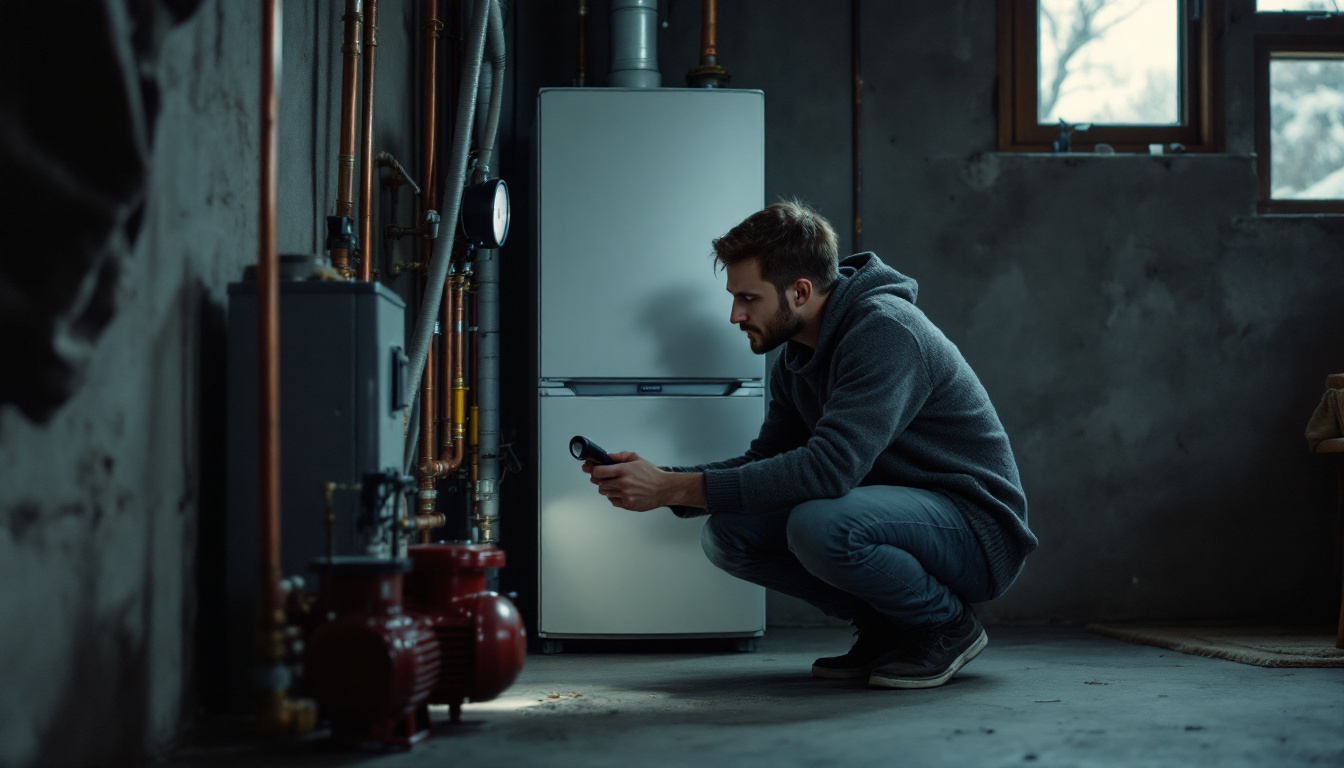
Boiler not working? Check four things first: power at the service switch, a thermostat calling for heat, an open gas valve, and the pressure gauge. If it still will not fire, or locks out again after one reset, call a licensed technician.
Key Takeaways
- 9.29 million US homes ran steam or hot water heat in 2020 (EIA RECS Table HC6.1).
- Of 274 estimated non-fire CO deaths from consumer products in 2022, 76 involved a heating system (CPSC, May 2026).
- Gas hot water boilers made on or after January 15, 2021 must hit 84 percent AFUE, with no constant-burning pilot permitted (10 CFR 430.32(e)(2)(iii)).
- Weil-McLain tells owners of several gas boiler lines that a water gauge should not exceed 24 psig, a steam gauge 15 psig (manual 550-142-301).
- Condensing boiler condensate is highly acidic, at a pH of 3 or below (DOE Building America).
- CPSC urges a yearly professional inspection of fuel-burning heating systems (CPSC).
Why is my boiler not working?
A boiler that will not fire has usually lost one of four inputs: electrical power, a heat call from the thermostat, fuel, or enough water at the right pressure. All four are checkable without tools. Combustion faults are the fifth cause, and a homeowner does not touch those.
If you are unsure which system you own, our explainer on the three ways American houses make central heat sorts it out.
What can a homeowner safely check when the boiler is not working?
Eight checks are safe, because none opens the combustion chamber, touches a gas line or defeats a safety control. Work through them in order and stop at the first that explains the symptom.
- The service switch. Often a switch at the top of the basement stairs or beside the unit.
- The breaker. Reset it once. If it trips again, leave it off and call.
- The thermostat. Set it to heat, raise the setpoint above room temperature, check the batteries. Our piece on what a thermostat can and cannot do covers failures that mimic a dead boiler.
- The gas valve. The manual shutoff handle should sit in line with the pipe. Touch nothing else on the gas train.
- The pressure gauge. Read a hot water boiler cold against your manual’s range. On steam, read the sight glass.
- The low water cutoff on steam. An empty sight glass means the cutoff stopped the burner on purpose. Weil-McLain warns not to add cold water to a hot boiler, because thermal shock can crack the heat exchanger.
- The condensate line. A frozen line can shut a condensing boiler down. Thaw a visible outdoor run; leave an internal trap alone.
- Air in the loop. If one zone stays cold, bleed its vents. Weil-McLain lists air in the system as a cause of radiators that do not heat or are noisy.
What does the pressure gauge on a boiler tell you?
It reads the pressure holding water in the loop, which must be high enough to reach the topmost radiator. No federal source publishes one correct cold figure, because it depends on building height; your range is in your manual.
Manufacturers publish a ceiling instead. Weil-McLain tells owners of its CGa, CGi, EG, PEG and LGB boilers that the water gauge should not exceed 24 psig, and 15 psig on steam. DOE Building America notes that a water-logged pressure tank can cause poor heating control and air entrainment in the system.
Low pressure is the more common no-heat cause. Topping up buys a night of heat, but a boiler that keeps needing water has a leak, and Weil-McLain warns that continual fresh makeup water will reduce boiler life. If the cold rooms run on fin tube baseboard rather than cast iron radiators, the bleed points sit at the ends of the runs.
What does a boiler reset button actually do?
It clears a safety lockout. It fixes nothing. The control shut the boiler down because a safety check failed, such as a blocked vent. Weil-McLain’s manual tells owners to reset after resolving the fault and, if the fault recurs, to contact a service technician.
One reset is reasonable; repeated resets are dangerous, because each restarts ignition on equipment that has reported it cannot run safely. If a spill switch or rollout fuse cuts off gas flow, the manual says not to restart the boiler at all. The same logic governs a furnace that will not light.
The rule that overrides everything else
If you smell gas, leave first. Weil-McLain tells owners not to light any appliance, touch any electrical switch or use any telephone in the building, and to call the gas supplier from a neighbor’s telephone. If you suspect CO poisoning, CPSC says get outside to fresh air immediately, then call 911. Our sibling guide to where CO alarms belong covers detection.
Is the boiler not working everywhere, in some zones, or only for heat?
Which rooms are cold narrows the fault fastest. No heat anywhere points at the boiler; some zones only points at distribution.
| What you observe | Most likely area | Owner or technician |
|---|---|---|
| Nothing runs, no display | Service switch, tripped breaker, control fuse | Owner, then technician |
| Boiler runs, every room cold | Circulator stopped, or pressure too low | Owner reads gauge |
| Some zones hot, one cold | Zone valve, air locked loop, thermostat wire | Owner bleeds air |
| Hot tap water, no space heat | Aquastat heating side or zone circulator | Technician |
| Lights, then locks out | Flame sensing, ignition, blocked flue, safety limit | Technician only |
| Steam dead, sight glass empty | Low water cutoff tripped, usually a leak | Technician |
The steam and hot water split changes every repair downstream, as our guide to fixing radiator heat once you know which type you have explains. A DOE Building America measure guideline describes the pressuretrol that shuts a steam boiler off on high pressure, and notes that one-pipe steam systems should typically operate at one half to one and one half psig.
Which boiler faults are strictly technician territory?
Anything touching combustion, the flue or the pressure vessel: flame sensor, igniter, gas valve, burner, vent, chimney and heat exchanger. Each needs test instruments to diagnose, and each can fail in ways that put flue gas inside the house.
One federal rule narrows the pilot question. Under 10 CFR 430.32(e)(2)(iii)(A), gas-fired hot water boilers made on or after January 15, 2021 must reach 84 percent AFUE, and gas-fired steam boilers 82 percent, both with no constant-burning pilot permitted. On a recent gas boiler there is no standing pilot to relight.
Condensing boilers add a failure older boilers never had. DOE Building America puts their AFUE at 90 to 96 percent, and notes that local code may require the acidic condensate to be pretreated before it reaches the sewer. A blocked or frozen condensate line stops the appliance. Our walkthrough of what a boiler installation involves covers where those drains run.
What does the carbon monoxide data say about heating systems?
CPSC’s May 2026 report estimated 274 unintentional, non-fire carbon monoxide deaths associated with consumer products in 2022, from 182 reported incidents. Heating systems were the second largest category, at an estimated 76 deaths or 28 percent.
An estimated 174 of the 274 deaths, or 64 percent, fell in November through February, against an 11 year average of 55 percent. CPSC describes conditions indicative of compromised vent systems, flue passageways and chimneys for furnaces, boilers and other heating systems, including detached vents and vents blocked by soot.
Install alarms on every level and outside sleeping areas, and get outside to fresh air immediately if you suspect CO poisoning, then call 911. Do not investigate the boiler first. Prevention is the annual visit, covered in our breakdown of the annual boiler service.
What does a boiler repair cost?
No federal series publishes boiler repair prices, so we print none. Vendor price surveys are not data.
Federal data does inform the repair or replace decision. DOE Energy Saver notes that older fossil fuel furnace and boiler systems run at 56 to 70 percent efficiency, while modern systems reach as high as 98.5 percent (archived copy). When a failed part costs a real share of a new appliance, our boiler replacement guide is the better frame.
How we researched this
Research date: September 21, 2026, when every figure was re-read at its source. Consulted and cited: CPSC’s 2022 carbon monoxide estimates and two CPSC safety pages; 10 CFR 430.32(e); three DOE Building America documents; EIA RECS 2020; and DOE Energy Saver, as an archived copy because the live page returns an error.
Excluded on purpose: Reddit and all user forums, because this is a combustion and carbon monoxide safety topic; contractor blogs and lead-generation sites for any number; and vendor price surveys, because no federal series publishes boiler repair prices. The Weil-McLain user manual is a Tier 2 manufacturer instruction, and its gauge ceilings apply to that product line only. Use your own manual for your own numbers.
Frequently asked questions
Why is my boiler not working but the hot water still runs?
If the boiler also heats your tap water, hot water proves the burner fires, so the fault sits on the heating side: the aquastat, a zone circulator, a stuck zone valve or a thermostat wire. Confirm the thermostat is set to heat, then call a technician.
How many times can I press the reset button on a boiler?
Once. Weil-McLain’s user manual tells owners to contact a service technician if the fault recurs, and not to restart the boiler at all if a spill switch or rollout fuse has cut off gas flow. A second lockout is a fault report, not a glitch.
What pressure should a hot water boiler show when cold?
Use the range in your own manual; it depends on the height of your highest radiator, and no federal source publishes a universal figure. Weil-McLain tells owners of several gas boiler lines that the water gauge should not exceed 24 psig, and that higher pressure may indicate a problem with the expansion tank or gauge.
Can a frozen condensate pipe stop a condensing boiler?
Yes. A condensing boiler drains acidic condensate while it runs, and a blocked or frozen line shuts it down. DOE Building America advises an indoor drain in cold climates, or protecting an outdoor drain from freezing by either insulation or heat tape. Thawing a visible outdoor section is an owner task; an internal trap is not.
What does the low water cutoff do on a steam boiler?
It stops the burner when the water level drops too low, so the boiler never fires dry. A DOE Building America guideline describes the Hartford Loop as a backup safety measure to the low water cutoff if a return line leaks. An empty sight glass means the safety worked and water is escaping somewhere.
Is a boiler that will not fire a carbon monoxide risk?
A locked-out boiler is not burning, so it is not making carbon monoxide. But lockout causes overlap with poisoning causes: CPSC describes compromised vent systems, flue passageways and chimneys for furnaces and boilers, and estimated 76 heating-system CO deaths in 2022.
Sources
- U.S. Consumer Product Safety Commission. “Non-Fire Carbon Monoxide Deaths Associated with the Use of Consumer Products, 2022 Annual Estimates.” https://www.cpsc.gov/s3fs-public/Non-Fire-Carbon-Monoxide-Deaths-Associated-with-the-Use-of-Consumer-Products-2022-Annual-Estimates.pdf. Accessed September 2026.
- U.S. Consumer Product Safety Commission. “Carbon Monoxide Information Center.” https://www.cpsc.gov/Safety-Education/Safety-Education-Centers/Carbon-Monoxide-Information-Center. Accessed September 2026.
- U.S. Consumer Product Safety Commission. “Home Heating Equipment.” https://www.cpsc.gov/Safety-Education/Safety-Education-Centers/Carbon-Monoxide-Information-Center/Home-Heating-Equipment. Accessed September 2026.
- Office of the Federal Register. “10 CFR 430.32 Energy and water conservation standards and their compliance dates.” https://www.ecfr.gov/current/title-10/chapter-II/subchapter-D/part-430/subpart-C/section-430.32. Accessed September 2026.
- U.S. Energy Information Administration. “Table HC6.1 Space heating in U.S. homes, by housing unit type, 2020.” https://www.eia.gov/consumption/residential/data/2020/hc/pdf/HC%206.1.pdf. Accessed September 2026.
- DOE Building America Solution Center. “Gas-Fired Boilers.” https://basc.pnnl.gov/resource-guides/gas-fired-boilers. Accessed September 2026.
- DOE Building America Solution Center. “Condensing Boilers.” https://basc.pnnl.gov/resource-guides/condensing-boilers. Accessed September 2026.
- Choi, J., Ludwig, P., and Brand, L. “Measure Guideline: Steam System Balancing and Tuning for Multifamily Residential Buildings.” U.S. Department of Energy Building America, April 2013. https://www1.eere.energy.gov/buildings/publications/pdfs/building_america/measure_guide_steam_system_balancing.pdf. Accessed September 2026.
- U.S. Department of Energy Energy Saver. “Furnaces and Boilers.” Archived copy. https://web.archive.org/web/2025id_/https://www.energy.gov/energysaver/furnaces-and-boilers. Accessed September 2026.
- Weil-McLain. “Gas-Fired Boilers User Manual, part number 550-142-301/0224.” https://www.weil-mclain.com/wp-content/uploads/Users-Manual-CGa-S3-CGi-S4-EG-PEG-S6-LGB-S2-S3-0224.pdf. Accessed September 2026.
Leave a Reply