Last reviewed: September 2026 · By the HVAC Brief Editorial Team · Our sourcing and editorial standards
An annual boiler service covers combustion, water and pressure: burner combustion and the heat exchanger, system pressure and the expansion tank, the relief valve, and on steam boilers the low-water cutoff. CPSC’s guidance names boilers among the fuel-burning systems that should get “a yearly professional inspection”.
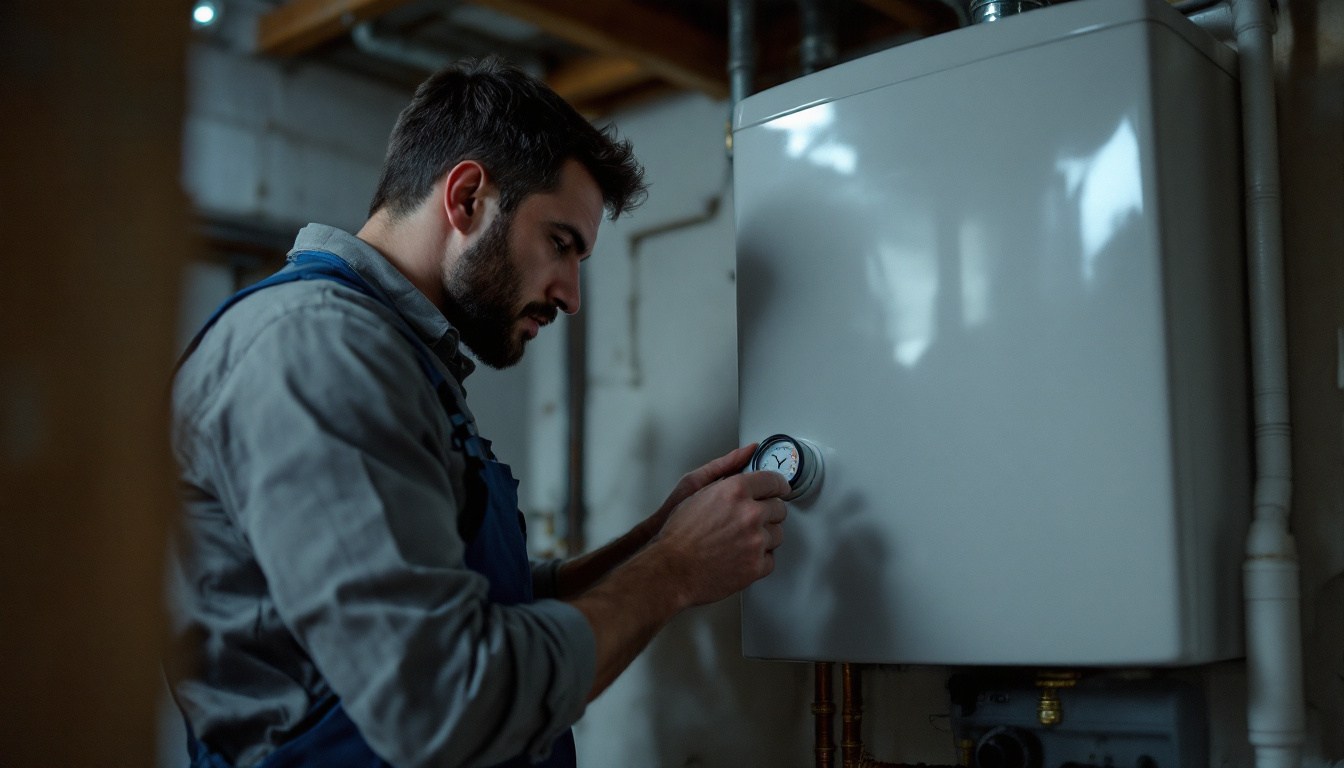
Owners have a few jobs of their own, mainly bleeding radiators, watching the pressure gauge and, on steam systems, keeping an eye on the water level.
What the technician should do
| Task | Hot water | Steam |
|---|---|---|
| Combustion analysis and burner inspection | Yes | Yes |
| Heat exchanger and flue passages | Yes | Yes |
| Flue and venting | Yes | Yes |
| System pressure and fill valve | Yes | Operating pressure control |
| Expansion tank | Yes | No |
| Pressure relief valve | Test | Safety valve test |
| Circulator pump | Yes | No |
| Low-water cutoff | If fitted | Test and flush |
| Sight glass and water level | No | Yes |
| Condensate neutraliser, condensing boilers | Yes | No |
ENERGY STAR’s maintenance checklist covers the combustion side in one line for any fuel-burning system: “Check all gas (or oil) connections, gas pressure, burner combustion and heat exchanger.”
Oil boilers need more
An oil burner’s nozzle and oil filter are normally replaced at the annual service, and soot is cleaned from the heat exchanger passages. Soot insulates: a thin layer between the flame and the water measurably cuts heat transfer, which is why an oil boiler that skips its service burns more fuel for the same heat. That matters more in a winter when heating oil prices are forecast sharply higher.
The pressure relief valve, the low-water cutoff and the high-limit control are what stop a boiler from overpressurising or firing dry. A relief valve that drips is reporting a problem, often a failed expansion tank or a fill valve letting pressure creep up, and it must never be capped. A low-water cutoff on a steam boiler that is not flushed and tested can fail silently, which is the failure boilers are designed never to have.
What the owner does
- Watch the pressure gauge on a hot water system. A reading that climbs when the boiler fires and drops when it cools is normal; one that rises toward the relief valve setting is not.
- Bleed radiators that are cool at the top, with the system off and cooled, to release trapped air.
- Check the sight glass on a steam boiler. The manufacturer marks the correct range.
- Keep the area around the boiler clear and combustion air openings unblocked.
- Test the carbon monoxide alarm at the start of the season.
How boiler systems distribute heat is covered in boilers and baseboard heating and radiant floor heating.
Signs service is overdue
- Pressure climbing when the boiler runs, or the relief valve dripping.
- Radiators cold at the top, or some rooms cold while others are hot.
- Banging or gurgling in pipes on a hot water system, or water hammer on steam.
- Soot, a yellow flame, or a burning smell.
- The boiler short cycling.
Soot, a smell of combustion, or a sounding CO alarm are safety matters: see what counts as an HVAC emergency. If repeated failures raise the question of replacement, see the boiler replacement guide.
Frequently asked questions
What is included in a boiler service?
Combustion analysis and burner inspection, heat exchanger and flue checks, system pressure and fill valve, expansion tank, relief valve test, circulator pump, and on steam boilers the low-water cutoff, sight glass and water level. Oil boilers also get a new nozzle and oil filter. Condensing boilers need the condensate neutraliser checked.
How often should a boiler be serviced?
Annually. CPSC advises a yearly professional inspection of fuel-burning home heating systems, naming boilers specifically. No federal rule sets an interval, but manufacturer warranties commonly require it.
Why is my boiler relief valve dripping?
Usually because system pressure is rising too high, often from a waterlogged expansion tank or a fill valve that lets pressure creep up. The valve is a safety device doing its job. It should never be capped or plugged; the cause needs diagnosing.
How do I bleed a radiator?
With the system off and cooled, open the bleed valve at the top of the radiator with a radiator key until water, not air, comes out, then close it. On a sealed hot water system, check the pressure gauge afterwards, since releasing air can drop the pressure below the normal range.
Methodology and limitations
Service tasks are described in general terms for residential hot water and steam boilers. Safety guidance is quoted from CPSC and the ENERGY STAR maintenance checklist. Household counts are EIA RECS 2020 table HC6.1, the current vintage for equipment data.
- No federal rule defines a boiler service or sets an interval.
- We publish no prices, because no federal series measures them.
- Manufacturer instructions govern pressures, water levels and service steps for a specific boiler.
Sources
- US Consumer Product Safety Commission, Home Heating Equipment.
- ENERGY STAR, Maintenance Checklist.
- Code of Federal Regulations, 10 CFR 430.32(e)(2), residential boiler standards.
The HVAC Brief is an independent trade publication. We do not sell equipment, take manufacturer advertising, or accept payment for placement in our research. Corrections welcome.
Leave a Reply