Last reviewed: September 2026 · By the HVAC Brief Editorial Team · Our sourcing and editorial standards
Most mini split problems are one of four things: a dirty filter or blower wheel, a condensate drain problem, a refrigerant leak at a flare joint, or a control fault the unit reports as an error code.
The first two are often owner-fixable. A mini split that drips water from the indoor head, smells musty, or blows weakly usually needs cleaning, not parts.
Symptom to cause
| Symptom | Usual cause | Owner fixable |
|---|---|---|
| Water dripping from the indoor head | Blocked condensate drain, unit not level, dirty coil | Filter and accessible drain |
| Musty or sour smell | Biological growth on the coil and blower wheel | Filter; deep clean is a technician job |
| Weak airflow | Dirty filter, fouled blower wheel, iced coil | Filter |
| Blinking lights or an error code | Sensor, communication, drain float or protection fault | Note the code first |
| Cooling or heating weakly, running constantly | Low charge from a leak, dirty outdoor coil | Clear outdoor coil debris only |
| Outdoor unit iced, winter | Normal defrost, or a defrost or drain fault if it persists | Do not chip ice |
| Nothing responds | Remote batteries, breaker, mode setting | Yes |
Musty smells from ductless heads are covered in more depth in why an HVAC system smells.
Cleaning, which fixes more than repairs do
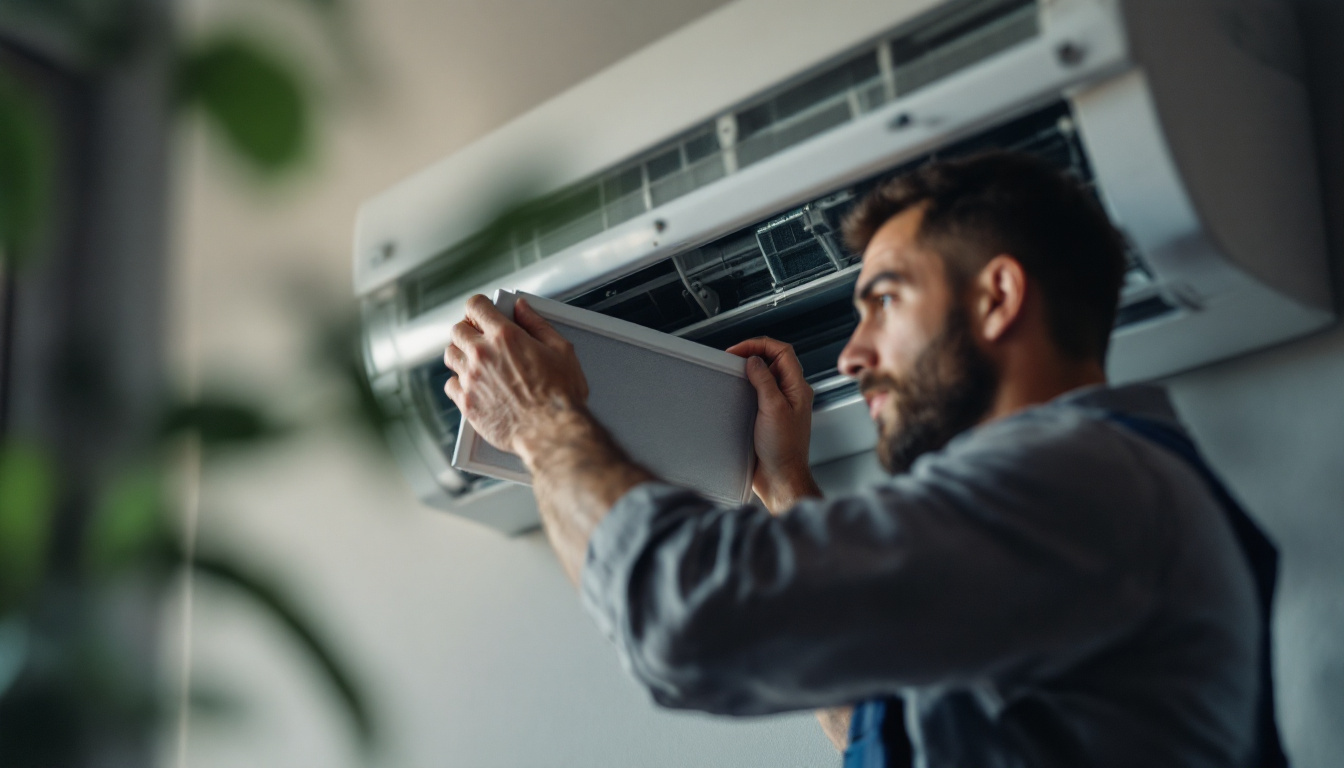
- Filters. Most indoor heads have washable mesh filters behind the front panel. Check them monthly in heavy use; follow the manufacturer’s instructions for cleaning and drying.
- The blower wheel. The squirrel cage fan inside the head collects the growth that causes smells and weak airflow. Cleaning it properly means partial disassembly and containment of runoff, which is why it is usually a technician job.
- The indoor coil. Cleaned with a suitable coil cleaner, rinsed so runoff goes to the drain rather than the wall.
- The outdoor unit. Kept clear of leaves and debris; coil cleaning with the power off.
Mini split refrigerant lines usually connect with flare fittings. A poorly made flare, or one not tightened to specification, is the most common source of slow refrigerant leaks in ductless systems, and it often appears a season or two after installation. A system that needs refrigerant has a leak; the fix is finding it, not topping up. Installation quality, including evacuation, is covered in mini split installation.
Error codes
Unlike most central systems, mini splits report their own faults through blinking lights or codes on the head or remote. The codes are manufacturer-specific, so write down exactly what is shown before calling. It narrows a diagnosis considerably and can save a second visit for parts.
Common families of fault include temperature sensor faults, communication faults between the indoor and outdoor units, condensate float or pump faults, and protection trips from overheating or low charge.
Repair or replace
A compressor failure or a leaking indoor coil on an older single-zone unit is where replacement often makes more sense. On a multi-zone system, a failed indoor head can usually be replaced without touching the rest. The refrigerant matters too: older ductless systems use R-410A, whose supply is tightening under the federal phasedown; see refrigerant prices.
Because a mini split is a heat pump, the defrost and heating-mode faults in heat pump repair apply as well.
Frequently asked questions
Why is my mini split leaking water?
Usually a blocked condensate drain, a head that is not level, or a dirty coil causing water to miss the drain pan. Check and clean the filter first. If water continues, the drain line or pump needs clearing, which may mean removing the head’s lower cover.
Why does my mini split smell?
A musty or sour smell usually comes from biological growth on the indoor coil and blower wheel, which stay damp in cooling mode. Cleaning the filters helps; a proper clean of the blower wheel and coil normally needs partial disassembly by a technician.
What do blinking lights on a mini split mean?
They are fault codes, and the meaning is manufacturer-specific. Record the exact pattern or code before calling for service, since it identifies the fault family, such as sensor, communication, drain or protection faults.
How often should a mini split be cleaned?
Filters should be checked monthly during heavy use and cleaned as the manufacturer directs. A deeper clean of the coil and blower wheel is commonly done annually, more often in dusty homes or where smells return.
Methodology and limitations
This page describes common failure modes of residential ductless mini split systems in general terms. Fault codes, cleaning procedures and part designs are manufacturer-specific.
- No federal source measures ductless repair frequency or prices, and we publish neither.
- Opening the refrigerant circuit requires EPA Section 608 certification.
- Nothing here is a diagnosis for a specific unit.
Sources
- US Environmental Protection Agency, Section 608, refrigerant handling and technician certification.
The HVAC Brief is an independent trade publication. We do not sell equipment, take manufacturer advertising, or accept payment for placement in our research. Corrections welcome.
Leave a Reply