Last reviewed: September 2026 · By the HVAC Brief Editorial Team · Our sourcing and editorial standards
A heat pump has every failure an air conditioner has, plus four of its own: the reversing valve, the defrost control, the auxiliary heat strips and the outdoor coil freezing for reasons that are not a fault.
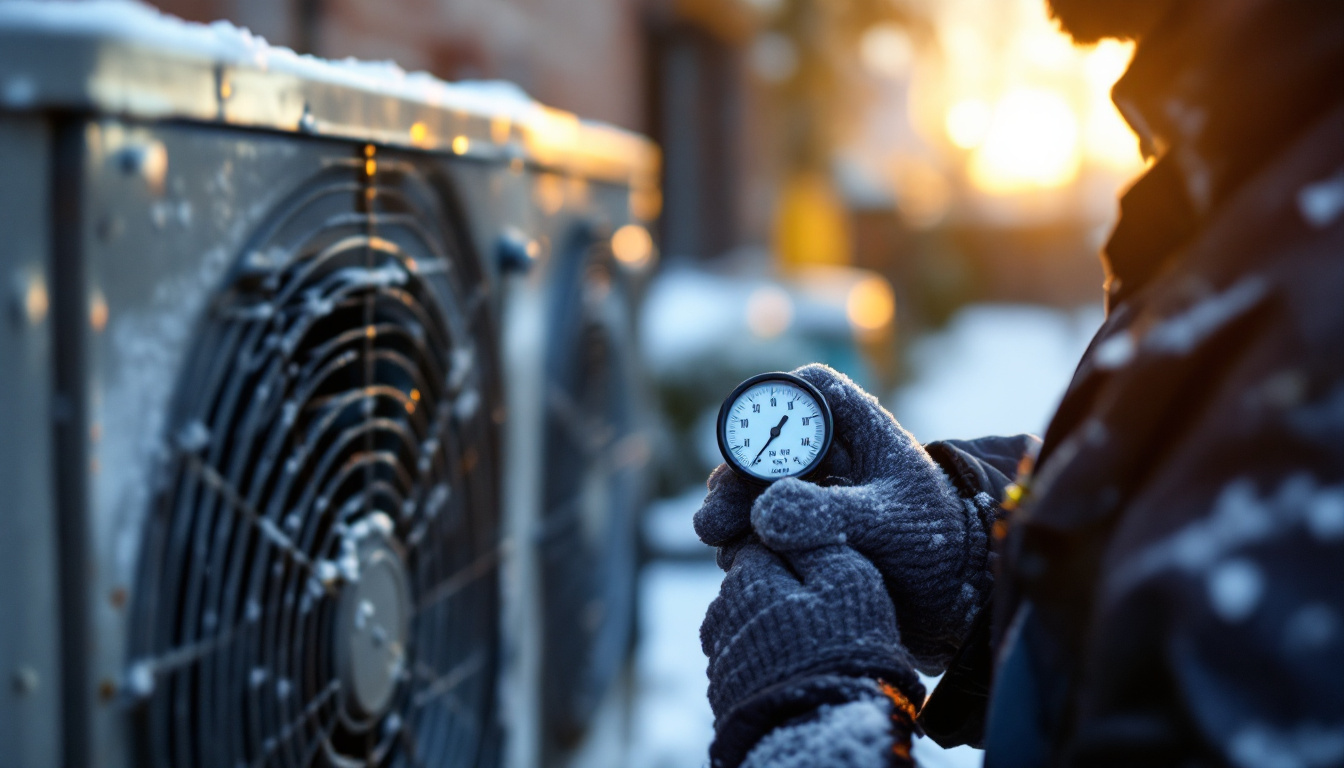
That last one causes most unnecessary service calls. A heat pump that steams and drips in cold weather, or blows cool air for a few minutes, is usually running a normal defrost cycle.
The faults that are specific to heat pumps
These four have no equivalent on a cooling-only system, and they are where a general air conditioning diagnosis goes wrong.
| Part | What it does | What failure looks like |
|---|---|---|
| Reversing valve | Switches the refrigerant flow between heating and cooling | System cools when it should heat, or gets stuck in one mode |
| Defrost control board and sensor | Runs a defrost cycle when the outdoor coil ices | Coil stays iced over, or the unit defrosts constantly |
| Auxiliary or emergency heat strips | Electric resistance backup in very cold weather | No backup heat, or strips running constantly and a very high bill |
| Outdoor coil and base pan | Absorbs heat from outdoor air in winter | Ice building at the base, blocked drainage |
Normal behaviour that looks like a fault
Heat pumps behave differently from furnaces, and three normal behaviours generate service calls.
- Defrost cycles. In cold, damp weather the outdoor coil frosts. The unit periodically reverses to melt it, which produces steam, dripping and a few minutes of cooler air indoors. This is designed behaviour.
- Cooler supply air. A heat pump delivers air cooler than a furnace does. It feels lukewarm at the register while still heating the house.
- Long run times. Heat pumps are meant to run for long periods at low output. Short, fierce cycles are the problem, not long gentle ones.
Our explainer on how a heat pump works covers the cycle these behaviours come from.
Emergency heat bypasses the heat pump and runs electric resistance strips. That is the most expensive heat in the house. At 2025/26 season prices, resistance heat cost about $52 per million Btu against about $24 from a minimum-efficiency heat pump, more than double. Use it when the heat pump has failed, not as a cold weather setting. See what heat costs by fuel.
The faults it shares with any air conditioner
Everything in the refrigeration circuit and the electrical path fails the same way it does on a cooling-only system: capacitors, contactors, fan motors, compressors, and refrigerant leaks.
A heat pump works the circuit harder, because it runs in both seasons rather than one. That is the argument for servicing it twice a year rather than once. See capacitor failures and what a tune-up should include.
What repairs cost
No federal series measures heat pump repair prices, and the range that matters most, a reversing valve or compressor replacement against the cost of a new system, is exactly the one nobody measures.
Two questions make a quote comparable. What refrigerant does the system use, since an R-410A system faces a tightening supply under the phasedown schedule. And what was measured, in pressures and temperatures, to reach the diagnosis.
Frequently asked questions
Why is my heat pump blowing cold air?
Most often it is a normal defrost cycle: the unit briefly reverses to melt frost off the outdoor coil, which produces cooler air indoors and steam outside for a few minutes. If it persists, suspect the reversing valve, a refrigerant charge problem or a defrost control fault.
Why is my heat pump frozen or iced up?
Light frost on the outdoor coil in cold, damp weather is normal and the defrost cycle clears it. Ice that stays, or builds at the base of the unit, points at a defrost control or sensor fault, blocked drainage, or low refrigerant charge.
What is the most common heat pump repair?
The same electrical wear parts as any air conditioner, chiefly capacitors and contactors, followed by defrost controls and sensors. Reversing valve and compressor failures are much less common and much more expensive.
Should I use emergency heat?
Only when the heat pump is not working. Emergency heat runs electric resistance strips, which at 2025/26 average prices cost roughly twice as much per unit of heat as a minimum-efficiency heat pump. Leaving it on is a common and expensive mistake.
Methodology and limitations
Component behaviour is described in general terms for residential air-source heat pumps. Household counts are EIA RECS 2020 table HC6.1. Running cost comparisons come from our fuel cost page, which uses EIA season average prices and federal minimum efficiencies.
- No federal source measures repair prices or failure rates, and we publish neither.
- Defrost behaviour varies by manufacturer and control strategy.
- Nothing here is a diagnosis for a specific system.
Sources
- US Energy Information Administration, Residential Energy Consumption Survey 2020, table HC6.1.
- Code of Federal Regulations, 10 CFR 430.32(c), heat pump efficiency standards.
The HVAC Brief is an independent trade publication. We do not sell equipment, take manufacturer advertising, or accept payment for placement in our research. Corrections welcome.
Leave a Reply