Last reviewed: September 2026 · By the HVAC Brief Editorial Team · Our sourcing and editorial standards
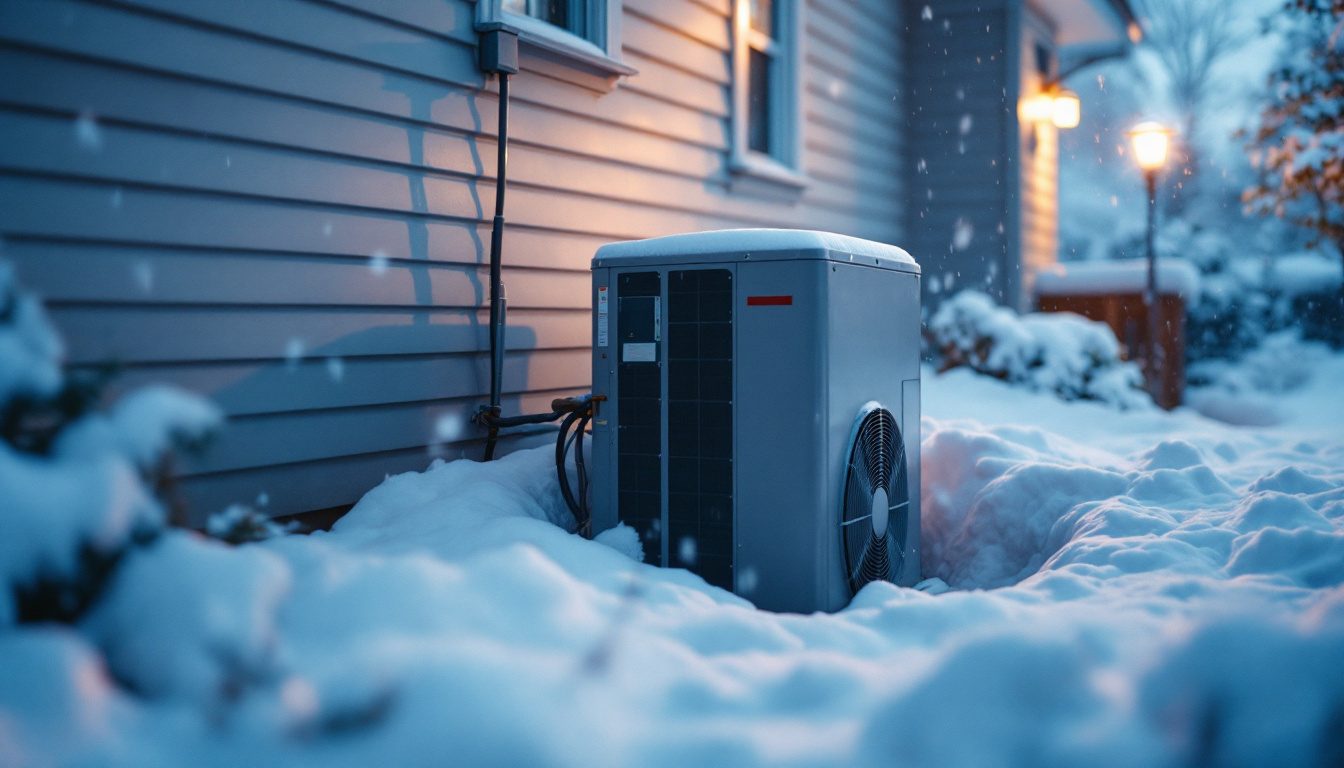
The median ENERGY STAR certified heat pump keeps 77% of its heating capacity at 5°F and runs at a coefficient of performance of 1.97, roughly twice the efficiency of electric resistance heat, at that temperature.
79% of 8,857 certified outdoor models keep at least 70% of capacity at 5°F, and 13% keep all of it. Ductless mini splits hold up best; single-package units worst.
This page answers whether heat pumps work in cold weather, using the ratings of every certified model. What the ENERGY STAR cold climate designation requires, and how 5°F ratings are measured, is explained in our guide to cold-climate heat pumps.
Whether heat pumps work in cold climates is argued constantly and usually with anecdote. ENERGY STAR publishes the rated cold-weather performance of every heat pump it certifies: heating capacity at 47°F, 17°F and 5°F, and efficiency at 5°F. Across the full certified list that is enough to answer the question from ratings rather than opinion.
The answer from 8,857 certified models
The key derived measure is capacity retention: rated heating output at 5°F divided by rated output at 47°F. It says how much of its heating power a heat pump keeps when it is cold outside.
| Measure | Value |
|---|---|
| Outdoor models analysed | 8,857 |
| Models with a 5°F capacity rating | 8,730 |
| Median capacity retention at 5°F | 77% |
| Keep at least 70% of capacity at 5°F | 79.3% |
| Keep 100% or more at 5°F | 12.7% |
| Median coefficient of performance at 5°F | 1.97 |
| Carry the ENERGY STAR cold climate designation | 77.6% |
A coefficient of performance of 1.97 at 5°F means the median certified heat pump delivers about 2.0 units of heat for each unit of electricity at that temperature. Electric resistance heat, whether baseboard or the strips inside a furnace or air handler, delivers exactly one. That is the comparison that matters for running cost in a cold snap.
Why the unit of count matters here too
The ENERGY STAR list certifies matched outdoor and indoor combinations, and ducted outdoor units are matched to far more indoor units than ductless ones. Counted by combination, median capacity retention falls to 71%, because ducted systems dominate the combination count. This analysis counts each outdoor model once, using the median of its matched ratings, which describes the products rather than the matching. Our refrigerant analysis sets out the same effect in detail.
By product type
| Product type | Outdoor models | Cold climate certified | Median 5°F retention | Keep 70% or more | Median COP at 5°F |
|---|---|---|---|---|---|
| Mini or Multi Split | 5,804 | 83.3% | 79% | 86.6% | 1.96 |
| Split System | 2,667 | 65.9% | 75% | 67.5% | 2.00 |
| Single Package | 386 | 71.8% | 67% | 49.2% | 1.77 |
Ductless mini and multi splits keep the most capacity in the cold, a median 79%, with 87% of models holding at least 70%. Ducted split systems keep 75%. Single-package units, which put the whole system in one outdoor cabinet, keep 67% and fewer than half reach 70%.

By refrigerant
| Refrigerant | Outdoor models | Median 5°F retention | Keep 70% or more | Median COP at 5°F |
|---|---|---|---|---|
| R-454B | 3,905 | 78% | 82.0% | 2.00 |
| R-410A | 3,008 | 76% | 70.4% | 1.90 |
| R-32 | 1,944 | 78% | 87.3% | 1.92 |
The refrigerant transition has not changed cold-weather performance in the certified ratings. Median retention is within two points across all three refrigerants.
What this does and does not show
These are laboratory ratings at defined test conditions. They establish that the certified product range is capable of substantial heating at 5°F, and they let products be compared on the same basis. They do not show how a given installation performs, which depends on sizing, ductwork, defrost behaviour and how the system is controlled. A heat pump that keeps 77% of its capacity at 5°F still delivers less heat at the moment a house needs the most, which is why sizing against the design load decides whether backup heat runs. Our explainer on auxiliary and emergency heat covers what that costs, and cold-weather demand by state is in our heating degree day index.
Frequently asked questions
Do heat pumps work in cold weather?
The certified ratings say yes, with less capacity. The median ENERGY STAR certified heat pump keeps 77% of its rated heating capacity at 5°F compared with 47°F, across 8,857 outdoor models. 79% keep at least 70%.
How efficient is a heat pump at 5°F?
The median certified model has a coefficient of performance of 1.97 at 5°F, meaning it delivers about 2.0 units of heat per unit of electricity. Electric resistance heat delivers exactly 1. So even at 5°F the typical certified heat pump is roughly twice as efficient as baseboard or furnace strip heat.
What does cold climate certified mean?
ENERGY STAR gives the cold climate designation only to heat pumps with a coefficient of performance of at least 1.75 at 5°F that also keep at least 70% of their 47°F heating capacity at 5°F. Our explainer on cold-climate heat pumps covers the criteria in full.
What share of heat pumps are cold climate certified?
78% of ENERGY STAR certified outdoor models carry the cold climate designation. Among those, the median keeps 83% of capacity at 5°F and 97% keep at least 70%.
Can a heat pump really have full capacity at 5°F?
Some certified models do: 12.7% are rated at or above their 47°F capacity at 5°F. Variable-speed compressors can run faster in cold weather to hold output. The rating is a laboratory figure at a defined test condition, not a guarantee of field performance.
Are ductless mini splits better in the cold than ducted systems?
In the certified data, yes. Mini and multi splits keep a median 79% of capacity at 5°F and 87% keep at least 70%. Ducted split systems keep 75% and 68%. Single-package units are lowest at 67%.
Does the refrigerant change cold-weather performance?
Not much in the certified ratings. Median 5°F capacity retention is between 76% and 78% for R-454B, R-410A and R-32 models alike.
Will a heat pump need backup heat?
Often, in cold climates. A heat pump that keeps 77% of its capacity at 5°F still delivers less heat exactly when a house needs the most. Whether it needs auxiliary heat depends on how the system was sized against the home’s design load, which a room-by-room calculation determines.
Methodology and limitations
- Source: ENERGY STAR Certified Heat Pumps dataset (data.energystar.gov, 83eb-xbyy), all 285,055 certified combinations, retrieved October 2026.
- Unit of analysis: 8,857 outdoor model listings, grouping combinations by outdoor model number, product type and refrigerant. Each model’s figures are the median across its matched combinations.
- Capacity retention is heating capacity at 5°F divided by heating capacity at 47°F, both as rated. Combinations missing either value are excluded from that measure.
- Coefficient of performance at 5°F is the value ENERGY STAR records (cop_at_5_f).
- Cold climate designation is ENERGY STAR’s own cold_climate field; a model is counted as cold climate if the majority of its combinations carry it.
- About 3% of cold-climate-designated models show a median retention just below 70% in this calculation, although the designation requires 70%. That reflects the method, not non-compliance: ENERGY STAR evaluates each certified combination against its own capacity definitions, while this analysis takes the median across a model’s combinations, which can sit below the threshold when some combinations do.
- All figures are rated performance under standardised test procedures, not measured field performance.
- ENERGY STAR certified products are a subset of the market and include only products that meet ENERGY STAR criteria; the shares describe the certified range, not every heat pump sold.
Sources
- ENERGY STAR, Certified Heat Pumps dataset.
- ENERGY STAR, Air-Source Heat Pumps key product criteria, including cold climate requirements.
The HVAC Brief is an independent trade publication. We do not sell equipment, take manufacturer advertising, or accept payment for placement in our research. Corrections welcome.
Leave a Reply