Last reviewed: September 2026 · By the HVAC Brief Editorial Team · Our sourcing and editorial standards
Furnace maintenance is a safety check first and an efficiency measure second. ENERGY STAR’s maintenance checklist has the contractor “Check all gas (or oil) connections, gas pressure, burner combustion and heat exchanger”, and CPSC advises “a yearly professional inspection of all fuel-burning home heating systems”.
The owner’s share is small and regular: the filter, clear vents, a working carbon monoxide alarm, and a clear path around the furnace. The rest needs instruments.
What the owner does
- Check the filter monthly during the heating season and replace it when dirty. ENERGY STAR’s wording: “Inspect, clean, or change air filters once a month.”
- Test the carbon monoxide alarm and replace batteries at the start of the season.
- Keep supply and return vents clear of furniture and rugs.
- Keep the area around the furnace clear, with nothing stored against it and nothing flammable nearby.
- Check the outdoor vent terminations on a condensing furnace for leaves, nests and, in winter, snow.
- Replace a humidifier pad if the furnace has one; see whole-house humidifiers.
What the technician should do
| Task | Why |
|---|---|
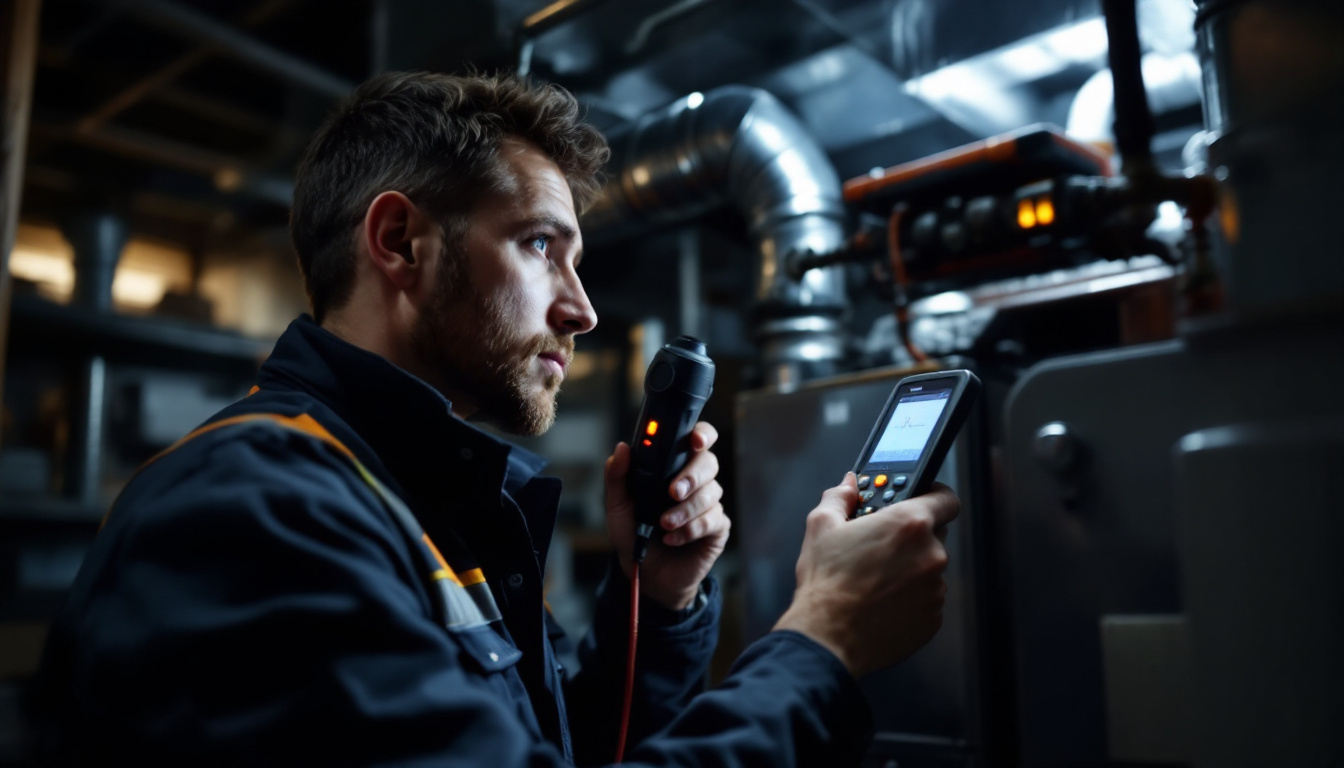
| Combustion analysis at the flue | Confirms clean, complete combustion and flags carbon monoxide |
| Heat exchanger inspection | A crack lets combustion gases into the airstream |
| Gas pressure check | Wrong manifold pressure affects output and safety |
| Flue and venting inspection | Blocked or disconnected vents spill combustion gases indoors |
| Clean flame sensor, inspect igniter | The most common no-heat causes |
| Test safety controls | Limit switch, rollout switch, pressure switch |
| Temperature rise | Compared with the data plate range, it confirms airflow |
| Blower inspection and amp draw | Catches a failing motor or capacitor before it stops |
| Condensate trap and drain, condensing models | A blocked trap shuts a condensing furnace down |
Ask for the readings on the invoice. Without numbers, a maintenance visit is an inspection of the outside of the cabinet. Our tune-up guide covers the cooling-side equivalent.
CPSC estimated 274 non-fire carbon monoxide deaths from consumer products in 2022, and 76 of them involved heating systems. Furnaces that have sat idle all summer can have blocked flues, disconnected vent pipe or cracked heat exchangers that only show up when they fire again. If a CO alarm sounds, leave first; see what counts as an HVAC emergency.
Oil furnaces need more
An oil burner has wear parts a gas furnace does not: the nozzle and the oil filter are normally replaced at the annual service, and soot is cleaned from the heat exchanger. A neglected oil burner wastes fuel through poor combustion, which matters more in a year when EIA forecasts heating oil prices up sharply.
What maintenance does not do
It does not make an oversized furnace the right size, fix leaky ducts, or add efficiency the furnace was not built with. No federal source measures the energy savings from a maintenance visit, and we publish no savings percentage. The documented case is safety and early detection of failing parts; see what fails on a furnace.
Frequently asked questions
What does furnace maintenance include?
For the owner: monthly filter checks, testing the CO alarm, clear vents and a clear area around the furnace. For a technician: combustion analysis, heat exchanger and flue inspection, gas pressure, cleaning the flame sensor, testing safety controls, temperature rise, blower checks, and the condensate trap on condensing furnaces.
How often should a furnace be serviced?
Annually is the common guidance. CPSC advises a yearly professional inspection of fuel-burning heating systems, and ENERGY STAR suggests checking the heating system in the fall. No federal rule sets an interval; manufacturer warranty terms often require one.
Can I do furnace maintenance myself?
The filter, CO alarm, vent clearance and outdoor terminations, yes. Combustion analysis, gas pressure, heat exchanger inspection and safety control testing need instruments and training, and they are the parts of the visit that address the documented safety risk.
Is furnace maintenance worth it?
The documented case is safety and catching failing parts early. CPSC estimated 76 carbon monoxide deaths involving heating systems in 2022. No federal source measures energy savings from maintenance, so treat savings percentages with caution.
Methodology and limitations
Task wording is quoted from the ENERGY STAR maintenance checklist and CPSC home heating equipment guidance. Carbon monoxide figures are CPSC 2022 annual estimates, published May 2026.
- No federal rule defines furnace maintenance or sets an interval.
- We publish no savings percentage and no prices, because neither is federally measured.
- Tasks vary by furnace type and manufacturer.
Sources
- ENERGY STAR, Maintenance Checklist.
- US Consumer Product Safety Commission, Home Heating Equipment and 2022 non-fire CO death estimates.
The HVAC Brief is an independent trade publication. We do not sell equipment, take manufacturer advertising, or accept payment for placement in our research. Corrections welcome.
Leave a Reply