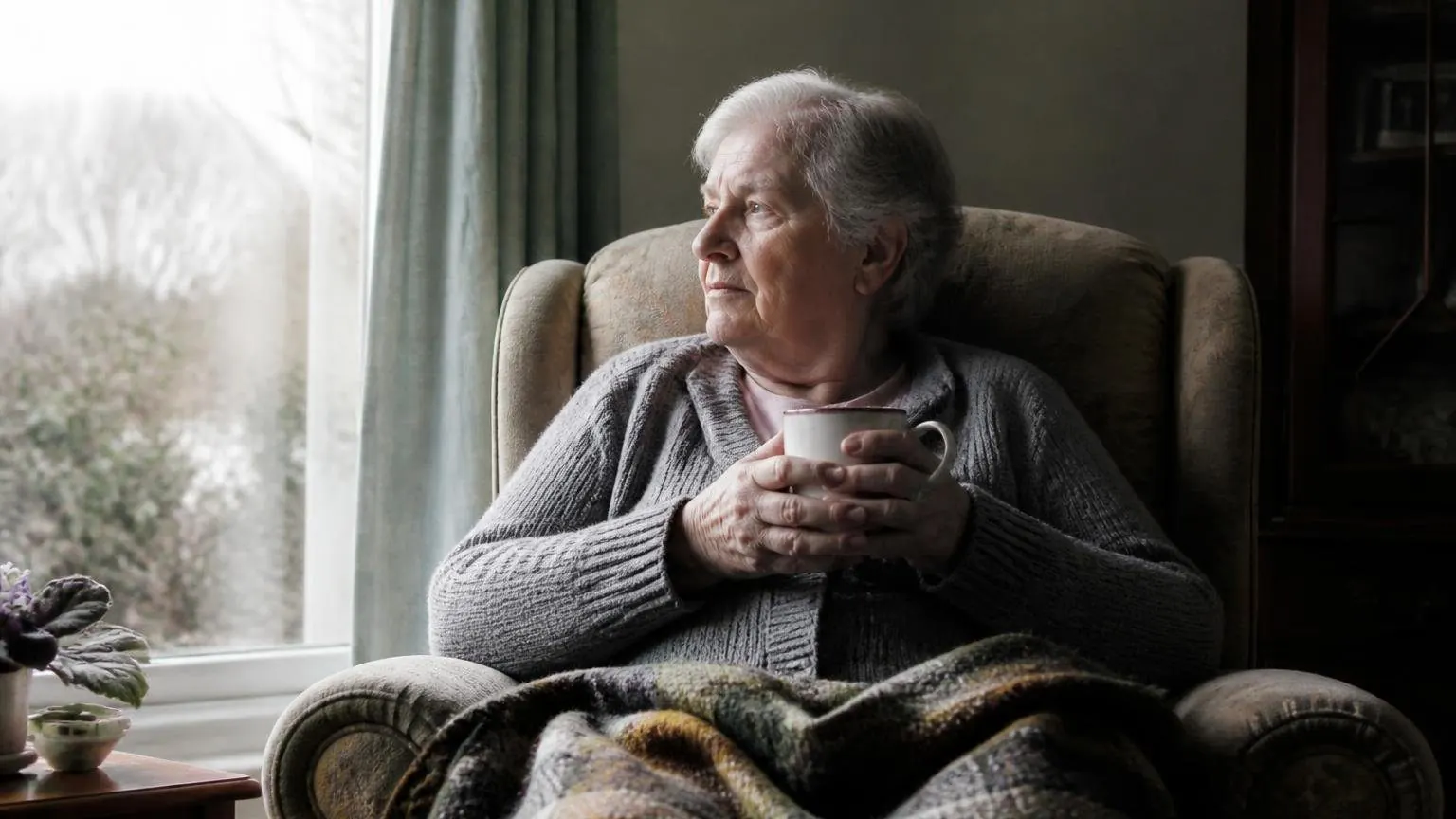
Is 62 degrees too cold for a house? For healthy adults who are dressed for it, no. 62°F (16.7°C) sits below the WHO cold-season minimum of 18°C (64.4°F), though, and the National Institute on Aging warns that homes at 60 to 65°F can cause hypothermia in older adults. With anyone over 65, ill or very young at home, aim for 68°F.
Who is 62°F too cold for, according to WHO, NIA and DOE?
62°F is too cold for the people health agencies single out: older adults, people with heart or lung disease, and infants. A healthy adult in a sweater tolerates it. Find your household’s row:
| Who lives there | Published minimum or guidance | Is 62°F enough? | Source |
|---|---|---|---|
| Healthy adults, awake and dressed | 18°C (64.4°F) “to protect the health of general populations during cold seasons” | 2.4°F short of the line; tolerable with layers | WHO Housing and Health Guidelines, 2018 |
| Adults over 65 | “Set your heat to at least 68°F”; 60 to 65°F “can lead to hypothermia in older adults” | No: 62°F is inside the named risk band | National Institute on Aging |
| Chronic illness, especially heart or lung disease | “A higher minimum indoor temperature than 18 °C may be necessary” | No | WHO, 2018 |
| Children and infants | WHO: children may need more than 18°C; AAP gives no room number, only “one layer more” than an adult wears | Not by itself; dress the child for it | WHO, 2018; AAP HealthyChildren.org |
| Rooms you spend a lot of time in (UK guidance) | “at least 18°C” in the living room or bedroom | No | UK Health Security Agency |
| Energy saving while awake | “around 68°F to 70°F while you’re awake,” lower asleep or away | Below DOE’s awake range; fine as a setback | DOE Energy Saver (archived copy) |
| Empty house, protecting pipes | “no lower than 55° F” when away | Yes, 7°F of margin | American Red Cross |
So 62°F is a sensible floor for an empty house or a setback hour, and a poor daily temperature for anyone fragile. DOE’s setback schedules are laid out in our guide to thermostat settings for winter and summer.
Where does 62°F fall against the WHO 18°C (64.4°F) line?
62°F converts to 16.7°C, which lands between the two cut points in the WHO evidence: 18°C, the recommended minimum, and 16°C (60.8°F), below which one Scottish cohort found the odds of high blood pressure rose sharply. WHO calls 18°C “a safe and well-balanced indoor temperature” for temperate and colder climates and rates that recommendation Strong.
WHO admits evidence is “insufficient to establish the precise temperature below which adverse health effects are likely to occur.” Its 18°C comes from a 1987 WHO finding of “no demonstrable risk to human health of healthy sedentary people living in air temperature of between 18 and 24 °C.” It marks the bottom of a known safe band, not a cliff edge.
Why is 62°F riskier for a 75-year-old than for a healthy 35-year-old?
Because older bodies lose the ability to sense and correct a slow chill, and cool air raises blood pressure. The National Institute on Aging states it outright: “Even mildly cool homes with temperatures from 60 to 65°F can lead to hypothermia in older adults.” NIA also reports that “about 20% of injuries related to exposure to cold occur in the home,” which is why its advice starts indoors with “Set your heat to at least 68°F.”
The WHO review’s blood pressure studies agree. A Japanese cohort of adults over 60 tied each 1°C indoor drop to higher blood pressure, and a UK cohort found systolic and diastolic pressure fell 0.5 mmHg per 1°C of room warming. Two Scottish cohorts linked homes heated below 18°C to more high blood pressure, with an odds ratio of 4.92 below 16°C. WHO rates the certainty that warming a cold house cuts cardiovascular risk as moderate.
For a healthy adult, 62°F is mostly a comfort question. If only one person at home is at risk, heating their room to 68°F follows the UKHSA advice to heat “rooms you spend a lot of time in” to at least 18°C.
Will a house kept at 62°F grow mold or freeze the pipes?
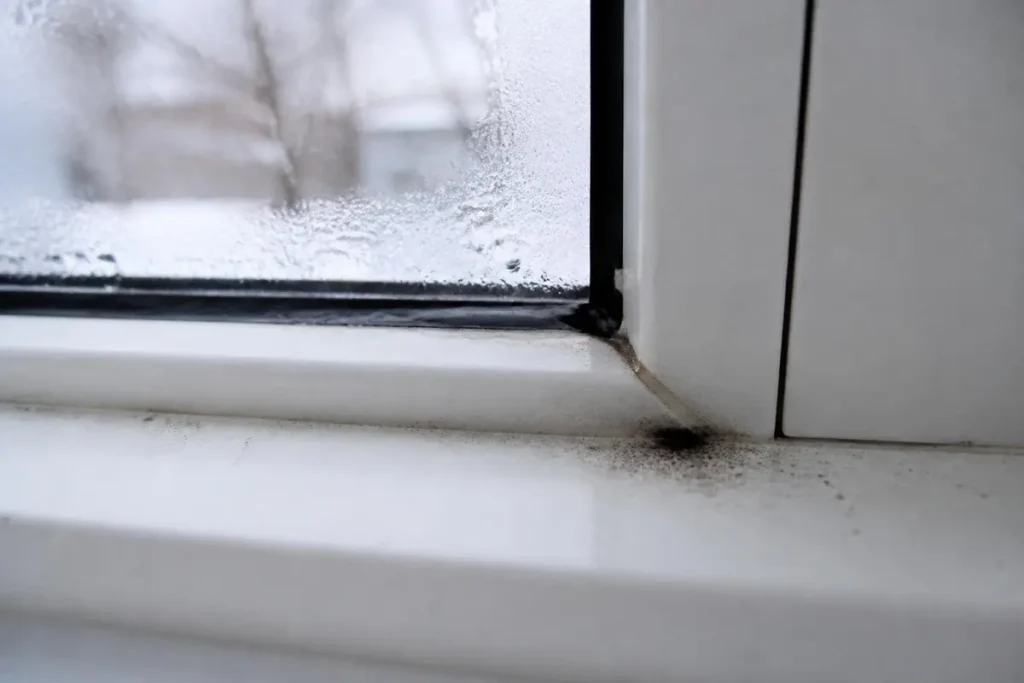
Pipes inside a 62°F house are safe; mold is the real risk, because the same moisture in cooler air means higher relative humidity. The Red Cross floor for an empty house is 55°F, 7°F of margin. Pipes in outside walls and crawl spaces differ, as the research on what temperature pipes freeze shows.
Humidity is where 62°F bites, because cooking, showers and breathing add the same water at any setting. We used the National Weather Service vapor pressure formula to hold the moisture in the air fixed and lower the temperature from 68°F to 62°F:
| Humidity at 68°F | Dew point | Same air at 62°F | Against EPA’s 60% ceiling |
|---|---|---|---|
| 30% | 35.5°F | 37% RH | Under |
| 40% | 42.8°F | 49% RH | Under, near the top of EPA’s ideal band |
| 50% | 48.7°F | 62% RH | Over |
EPA’s mold guide says to keep indoor humidity “below 60 percent (ideally between 30 and 50 percent).” A house that sits at a comfortable 50% at 68°F crosses that line at 62°F, and the walls, window frames and closet corners on outside walls run colder still. Wet sills come first; our page on window condensation works out what each glass type can hold. Run bath and kitchen fans longer in a cool house.
How much does keeping the house at 62°F save compared with 68°F?
As a rough estimate, holding 62°F instead of 68°F around the clock cuts the heat the house loses by 12% to 21%, depending on how cold your winter is. DOE does not publish a figure for that exact change. Its Energy Saver page says only that “you can save as much as 10% a year on heating and cooling by simply turning your thermostat back 7°-10°F for 8 hours a day,” and that savings are larger in milder climates.
| Average outdoor temperature over the heating season | Indoor to outdoor gap at 68°F | Gap at 62°F | Heat loss cut |
|---|---|---|---|
| 20°F | 48°F | 42°F | 12.5% |
| 30°F | 38°F | 32°F | 15.8% |
| 40°F | 28°F | 22°F | 21.4% |
Why more than DOE’s 10%? DOE’s case is 7°F to 10°F for 8 hours, 56 to 80 degree-hours a day; 6°F for 24 hours is 144 degree-hours. Heat pumps can lose the gain to backup strips during recovery, and a house at 62°F takes time to climb back to 68°F; our worked numbers on how long it takes to heat a house from cold show why the walls lag the air.
How many US homes are kept at 63°F or colder in winter?
Few homes are kept that cool while people are home: 4.42 million of 117.74 million heated US homes, or 3.8%, set 63 degrees or less during the day with someone home, in EIA’s 2020 Residential Energy Consumption Survey (Table HC6.1). Night and empty-house settings are much cooler. 14.85 million homes (12.6%) drop to 63°F or less at night, and 18.75 million (15.9%) do so when nobody is home during the day.
So 62°F is a common setback and an unusual living temperature in the US; the full distribution is in our average thermostat setting data. Some households at 62°F never chose it, as our cold home statistics from the American Housing Survey show.
When is 62°F a perfectly reasonable setting?
62°F works when the house is empty for the workday, everyone is asleep under bedding, or the household is healthy adults who prefer layers to a bigger gas bill. 15.9% of heated homes already go to 63°F or less when nobody is home.
Sleep is the easiest case. A 2012 review in the Journal of Physiological Anthropology found no difference in sleep stages from 13 to 23°C (about 55 to 73°F) when people slept with bedding, which our page on the best temperature for sleeping covers with the age-specific studies. If 62°F feels colder than the thermostat says, check the windows: stopping drafts from windows costs less than adding degrees.
Frequently asked questions
Is 59 degrees too cold for a house?
For anyone living in it, yes. 59°F is 15°C, below both WHO’s 18°C minimum and the 16°C point under which a Scottish cohort cited by WHO found an odds ratio of 4.92 for high blood pressure. It is still above the Red Cross floor of 55°F for an empty house, so 59°F is acceptable only as an away setting, not a lived-in one.
Is 64 degrees too cold for a house?
For healthy adults, 64°F is essentially at the WHO line: 18°C converts to 64.4°F, the temperature WHO calls safe and well balanced for the general population in cold seasons. It is still too cool for older adults under NIA guidance, which names 60 to 65°F as a hypothermia risk range and says to heat to at least 68°F.
Is 62 degrees too cold for a baby room?
The American Academy of Pediatrics publishes no room temperature. Its advice is to dress the baby in “only one layer more than you’re wearing,” use a wearable blanket rather than loose bedding, and watch for overheating, which “can increase the risk of SIDS.” WHO lists children among the groups that may need more than 18°C (64.4°F), so a 62°F nursery needs a sleep sack.
What’s the coldest you should let your house get?
The American Red Cross says to leave the heat “set to a temperature no lower than 55° F” when you go away in cold weather. That floor protects pipes, not people. For an occupied house, WHO’s 18°C (64.4°F) is the floor for healthy adults, and NIA’s 68°F is the floor for older adults.
Is 62 too cold for AC?
As a cooling setting, 62°F is far colder than almost any US home uses. In EIA’s 2020 survey only 22.99 million of 109.51 million air conditioned homes cooled to 69 degrees or less while someone was home. DOE notes that “the smaller the difference between the indoor and outdoor temperatures, the lower your overall cooling bill will be.”
How we researched this
We read chapter 4 of the WHO Housing and Health Guidelines (2018) and the NIA, UKHSA, Red Cross, EPA and AAP pages below, and downloaded EIA RECS 2020 Tables HC6.1 and HC7.1. Humidity uses the NWS vapor pressure formula; savings are a proportional heat loss estimate. We excluded contractor and retailer pages: one top result attaches a “62°F at night” allowance to the WHO figure, and that is not in the guideline. We found no primary source for pet room temperatures, so give none. Research date: November 26, 2026.
Sources
- World Health Organization. “WHO Housing and Health Guidelines” (2018), chapter 4. https://iris.who.int/server/api/core/bitstreams/be014865-921a-482c-89e4-9191c7476e13/content. Accessed November 2026.
- National Institute on Aging. “Cold Weather Safety for Older Adults.” https://www.nia.nih.gov/health/safety/cold-weather-safety-older-adults. Accessed November 2026.
- UK Health Security Agency. “Top tips for keeping warm and well this winter.” https://www.gov.uk/government/publications/keep-warm-keep-well-leaflet-gives-advice-on-staying-healthy-in-cold-weather/top-tips-for-keeping-warm-and-well-this-winter. Accessed November 2026.
- US Department of Energy, Energy Saver. “Programmable Thermostats” (archived copy). https://web.archive.org/web/2025id_/https://www.energy.gov/energysaver/programmable-thermostats. Accessed November 2026.
- US Energy Information Administration. “RECS 2020 Table HC6.1, Space heating in U.S. homes.” https://www.eia.gov/consumption/residential/data/2020/hc/xls/HC%206.1.xlsx. Accessed November 2026.
- US Energy Information Administration. “RECS 2020 Table HC7.1, Air conditioning in U.S. homes.” https://www.eia.gov/consumption/residential/data/2020/hc/xls/HC%207.1.xlsx. Accessed November 2026.
- American Red Cross. “Frozen Pipes.” https://www.redcross.org/get-help/how-to-prepare-for-emergencies/types-of-emergencies/winter-storm/frozen-pipes.html. Accessed November 2026.
- US Environmental Protection Agency. “A Brief Guide to Mold, Moisture and Your Home.” https://www.epa.gov/mold/brief-guide-mold-moisture-and-your-home. Accessed November 2026.
- National Weather Service. “Vapor Pressure.” https://www.weather.gov/media/epz/wxcalc/vaporPressure.pdf. Accessed November 2026.
- American Academy of Pediatrics, HealthyChildren.org. “A Parent’s Guide to Safe Sleep.” https://www.healthychildren.org/English/ages-stages/baby/sleep/Pages/a-parents-guide-to-safe-sleep.aspx. Accessed November 2026.
- Okamoto-Mizuno K, Mizuno K. “Effects of thermal environment on sleep and circadian rhythm.” Journal of Physiological Anthropology, 2012. https://pmc.ncbi.nlm.nih.gov/articles/PMC3427038/. Accessed November 2026.
Leave a Reply