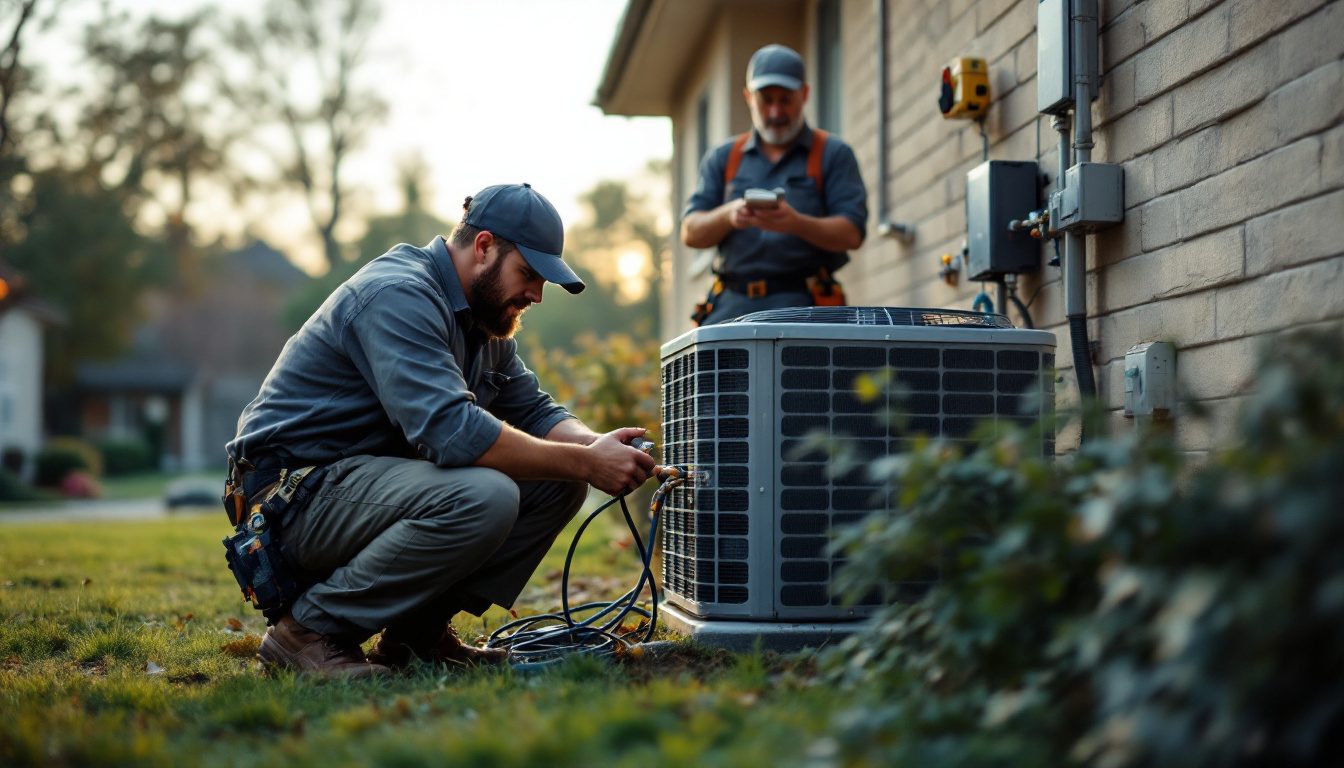
What are the HVAC license requirements by state? In 12 of the 15 most populous states, HVAC contractors or tradespeople are licensed at the state level, most after 2 to 5 years of documented experience and an exam. New York, Pennsylvania and Illinois leave licensing to cities and counties. Refrigerant work also needs federal EPA Section 608 certification.
Key Takeaways
- California requires at least 4 years of journey-level experience before the C-20 HVAC exam, per the Contractors State License Board.
- Texas asks for 48 months of supervised experience in the past 72 months for an air conditioning and refrigeration contractor license, per TDLR.
- Pennsylvania has no state licensure for most construction contractors; some of its 2,562 municipalities set their own, per PA Labor and Industry.
- About 45.8 million people live in New York, Pennsylvania and Illinois, where HVAC licensing is local (Census, 2025).
- Tennessee requires a state contractor license for projects of $25,000 or more, with a CMC-C trade exam for HVAC (Tennessee Board for Licensing Contractors).
- Every EPA Section 608 exam includes at least 25 core questions plus 25 per technical type, under 40 CFR 82.161.
HVAC license requirements by state: the 15-state table
The table covers the 15 most populous states by Census Bureau July 1, 2025 estimates, from California (39.4 million residents) to Tennessee (7.3 million). Every row comes from the licensing body’s own page, rule or statute, opened in October 2026. “Local” means cities or counties decide.
| State | Licensing body | Level | License or classification | Experience to qualify | Exam | Source |
|---|---|---|---|---|---|---|
| California | Contractors State License Board | Statewide | C-20 Warm-Air Heating, Ventilating and Air-Conditioning | 4 years, journey level or above | Yes | [1], [2] |
| Texas | TDLR | Statewide | ACR Contractor, Class A or Class B | 48 months in past 72 | Yes | [3] |
| Florida | DBPR, Construction Industry Licensing Board | Statewide (certified) or local (registered) | Class A or Class B air-conditioning contractor | 4 years, at least 1 as foreman | Yes | [4], [5] |
| New York | None; NYC Dept. of Buildings | Local | Local; NYC lists no HVAC license | local | local | [6], [7] |
| Pennsylvania | None | Local | Local | local | local | [8], [9] |
| Illinois | None | Local | Local | local | local | [10] |
| Ohio | Construction Industry Licensing Board (OCILB) | Statewide, commercial work | HVAC Contractor | 5 years as a tradesperson | Yes | [11], [12] |
| Georgia | Division of Conditioned Air Contractors | Statewide | Conditioned Air Class I (restricted) or Class II | Class I: 4 years; Class II: 5 years | Yes | [13] |
| North Carolina | Plumbing, Heating and Fire Sprinkler board | Statewide | Heating Group No. 1, 2 or 3 | 2 years (4,000 hours) | Yes | [14] |
| Michigan | LARA Bureau of Construction Codes | Statewide | Mechanical Contractor, HVAC equipment class | 3 years or 6,000 hours per classification | Yes | [15], [16] |
| New Jersey | Board of Examiners of HVACR Contractors | Statewide | Master HVACR Contractor | Apprenticeship or degree plus 1 journeyman year | Yes | [17] |
| Virginia | Board for Contractors (DPOR) | Statewide | HVAC tradesman: journeyman, master | Journeyman: 8 years, or less with training | Yes | [18] |
| Washington | Dept. of Labor and Industries | Statewide | Specialty electrician 06A or 06B | 06A: 4,000 hours; 06B: 2,000 hours | Yes | [19] |
| Arizona | Registrar of Contractors | Statewide | C-39, R-39 or CR-39 | 4 years, 2 within last 10 | Yes | [20], [21] |
| Tennessee | Board for Licensing Contractors | Statewide, $25,000+ jobs | CMC-C HVAC, Refrigeration and Gas Piping | not stated | Yes | [22], [23] |
Most programs license the contractor or its qualifying person, not every technician. The experience bar clusters at 4 years in California, Texas, Florida, Arizona and Georgia Class I. Our guide to getting into the trade as a technician covers the routes that start that clock.
Which states license HVAC work statewide, and which leave it to cities?
Twelve of the 15 issue a state HVAC credential; New York, Pennsylvania and Illinois do not. Two carry limits: Ohio licenses contractors “who perform commercial work,” and Tennessee’s license applies to projects of $25,000 or more.
Local does not mean unregulated. In Philadelphia, a licensed contractor must perform all work under a mechanical permit. The New York City Department of Buildings license list has no HVAC license but covers oil burner installers, gas work and high pressure boilers. Permits are a separate layer, as our guide to when a mechanical permit applies explains.
What HVAC license do I need: technician or contractor?
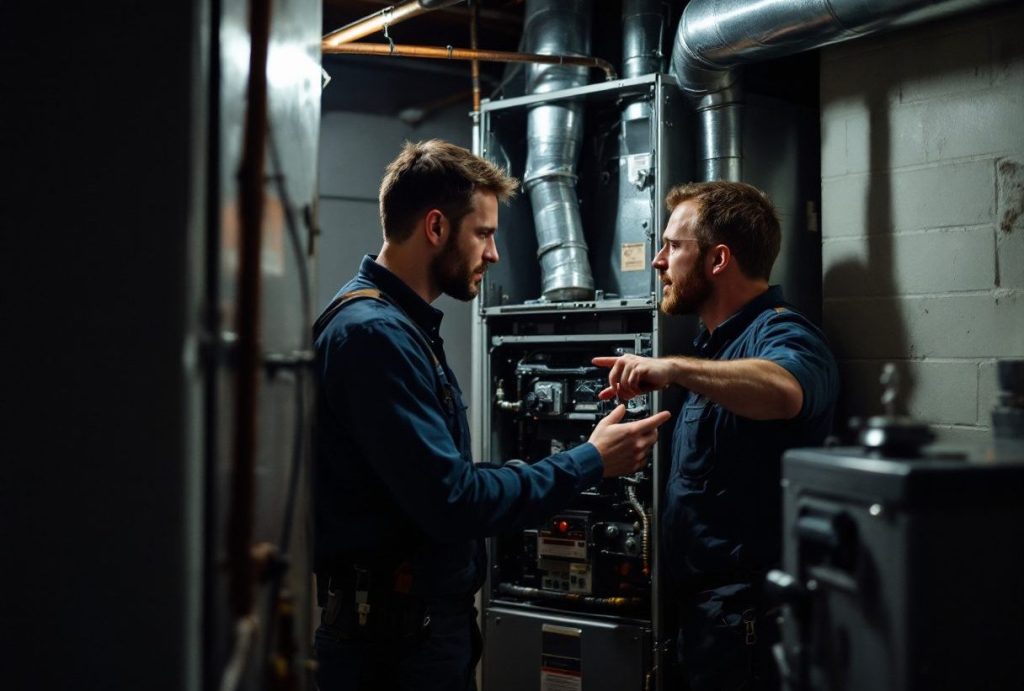
It depends on whether you work for a company or run one. Most states here license the contractor or its qualifying person, while employed technicians mainly need EPA 608. Virginia, North Carolina, Texas and Washington also credential individual workers.
- Federal: EPA Section 608 if your work could release refrigerant.
- State, the business: the license in the table, held by you or your qualifier, in 12 of these states.
- State, the worker: cards such as Virginia’s HVAC journeyman or Washington’s 06A certificate.
- Local: permits, plus all licensing in New York, Pennsylvania and Illinois.
Texas shows the split. TDLR issues technician registrations and certifications as well as contractor licenses, and 12 months as a certified technician cuts the contractor requirement to 36 months in the past 48. Our guide to launching an HVAC company covers the business side.
Is EPA 608 certification an HVAC license?
No. EPA Section 608 is a federal refrigerant-handling certification, not a license to contract. Under 40 CFR 82.161, anyone “reasonably expected to violate the integrity of the refrigerant circuit” must pass an exam from an EPA-approved program, whatever their state license.
| EPA 608 type | Who must hold it, per 40 CFR 82.161(a)(1) |
|---|---|
| Type I | People who maintain, service or repair small appliances |
| Type II | People who maintain, service, repair or dispose of medium, high or very high pressure appliances |
| Type III | People who maintain, service, repair or dispose of low-pressure appliances |
| Universal | People who work on all three groups above |
Each exam must include at least 25 core questions and at least 25 from each relevant technical group. Apprentices are exempt only while “closely and continually supervised by a certified technician.” Our explainer on which 608 type a technician actually needs goes deeper; the A2L shift is in our note on R-454B and mildly flammable refrigerants.
Common error
An EPA 608 card is not an HVAC license. In Texas, the TDLR contractor license separately requires experience, an exam and liability insurance of at least $300,000 per occurrence for Class A.
How long does it take to get an HVAC license in each state?
Most often 4 years of documented experience before the exam, though the stated range runs from 2 years in North Carolina to 8 years for a Virginia journeyman with no formal training. Several states credit schooling.
North Carolina counts up to 2,000 hours of academic or technical training toward its 4,000-hour requirement, per the state examining board. Michigan credits a 2-year HVAC program for up to 2,000 of its 6,000 hours. Arizona caps training credit at 2 of 4 years. Virginia’s rule drops from 8 years to 4 years with 240 hours of vocational training. Florida’s section 489.111 lets college credit cover up to 3 of its 4 years. See our count of schools that train HVAC technicians.
Washington counts hours: 4,000 for the 06A, or 1,000 to sit the 06B exam and 2,000 to be certified. Tennessee states no year count for CMC-C.
How to get an HVAC license: the steps the 12 licensing states share
The sequence is the same in every licensing state we checked: certify for refrigerant, log experience, apply, pass the exam, insure. Only the numbers change.
- Pass EPA 608 for the equipment you will service.
- Document experience. Ohio asks for five consecutive years of tax documents; Michigan wants employer statements signed under penalty of perjury.
- Apply. Texas requires everything, exam included, within one year of filing.
- Pass the exam. Georgia requires a minimum score of 70; Tennessee adds a Business and Law exam.
- Insure. Ohio requires $500,000 in liability coverage; New Jersey a $3,000 surety bond.
The BLS put median pay for HVAC mechanics and installers at $61,010 a year in May 2025; our state-by-state wage ranking shows the spread. Homeowners can use our checklist for vetting an HVAC contractor.
Do HVAC license requirements by state transfer when you move?
Not automatically. Each board sets its own terms, and some shorten the path for licensees from named states. North Carolina is the clearest example among the 15.
North Carolina waives the technical exam for South Carolina HVAC contractors, who must still pass its business law exam, and recognizes residents licensed in Georgia, South Carolina, Tennessee, Virginia or West Virginia. Tennessee notes that its exam waiver agreements apply only to licensed “Contractors,” not to its home improvement or limited licenses. Check the receiving board first, and see projected openings by state to see where the demand is.
How we researched this
Research date: October 8, 2026. We took the 15 most populous states from Census Vintage 2025 estimates and read each licensing body’s page, rule or statute. Vendor and insurance blogs were excluded as sources.
Sources: 37 read, 26 cited. Freshness: 22 live pages or statutes read in October 2026 and 4 archived copies (Michigan’s statute and LARA page, the Arizona ROC classification list and the New Jersey board’s 2020 application overview); live pages blocked access. Georgia comes from its board rules.
Gaps: Tennessee states no experience years for CMC-C. New York and Illinois are marked local because neither state’s licensing list includes HVAC. New Jersey’s document omits apprenticeship length. Washington showed no HVAC license beyond the electrical certificates. Fees were excluded.
Scope: The other 35 states and the District of Columbia are not covered in this edition. Updates: quarterly, adding states in population order.
Frequently asked questions
Do you need a license to do HVAC work?
Usually, at some level. In 12 of the 15 most populous states, contracting for HVAC work requires a state license; in New York, Pennsylvania and Illinois, cities and counties set the rules. Separately, 40 CFR 82.161 requires EPA Section 608 certification for anyone who could release refrigerant, in every state.
Is EPA 608 certification the same as an HVAC license?
No. EPA 608 certifies that you can handle refrigerant, as Type I, Type II, Type III or Universal. It does not let you contract for jobs. A state license, such as California’s C-20 or a Texas ACR contractor license, is separate and has its own experience and exam requirements.
Which states do not have a statewide HVAC license?
Among the 15 most populous states, New York, Pennsylvania and Illinois issue no state HVAC license. Pennsylvania’s Department of Labor and Industry says the state has no licensure for most construction contractors, while some of its 2,562 municipalities do. The other 35 states are not covered in this edition.
How long does it take to get an HVAC license in Texas?
TDLR requires 48 months of supervised air conditioning and refrigeration experience within the past 72 months. If you have held a technician certification for 12 months, 36 months in the past 48 is enough. The licensing exam must be passed within one year of applying.
Can an apprentice work on refrigerant without EPA 608?
Yes, with limits. Under 40 CFR 82.161(a)(2), apprentices are exempt only while “closely and continually supervised by a certified technician” during work that could release refrigerant. Both are responsible for compliance. Our guide to the 2026 refrigerant leak rules covers what changed this year.
Does an HVAC license from one state transfer to another?
Not automatically. North Carolina waives its technical exam for South Carolina HVAC contractors but still requires its business law exam. Its Neighbor State License Recognition Act lets North Carolina residents licensed in Georgia, South Carolina, Tennessee, Virginia or West Virginia apply for equivalent licensure.
Sources
- Contractors State License Board. “C-20 classification.” https://www.cslb.ca.gov/about_us/library/licensing_classifications/Licensing_Classifications_Detail.aspx?Class=C20. Accessed October 2026.
- Contractors State License Board. “Qualifying Experience for the Examination.” https://www.cslb.ca.gov/contractors/applicants/contractors_license/exam_application/experience_for_exam.aspx. Accessed October 2026.
- Texas Department of Licensing and Regulation. “Air Conditioning and Refrigeration Contractor License.” https://www.tdlr.texas.gov/acr/contractor-apply.htm. Accessed October 2026.
- Florida Legislature. “Section 489.111.” http://www.leg.state.fl.us/statutes/index.cfm?App_mode=Display_Statute&URL=0400-0499/0489/Sections/0489.111.html. Accessed October 2026.
- Florida Legislature. “Section 489.105.” http://www.leg.state.fl.us/statutes/index.cfm?App_mode=Display_Statute&URL=0400-0499/0489/Sections/0489.105.html. Accessed October 2026.
- New York Department of State. “Licensing Services.” https://dos.ny.gov/licensing-services. Accessed October 2026.
- NYC Department of Buildings. “License Types.” https://www.nyc.gov/site/buildings/industry/license-types.page. Accessed October 2026.
- Pennsylvania Department of Labor and Industry. “Contractor Licensing.” https://www.pa.gov/agencies/dli/programs-services/labor-management-relations/bureau-of-occupational-and-industrial-safety/uniform-construction-code-home/contractor-licensing. Accessed October 2026.
- City of Philadelphia. “Get a mechanical permit.” https://www.phila.gov/services/permits-violations-licenses/apply-for-a-permit/building-and-repair-permits/get-a-mechanical-permit/. Accessed October 2026.
- IDFPR. “Professions Regulated by IDFPR.” https://idfpr.illinois.gov/profs/proflist.html. Accessed October 2026.
- Ohio Department of Commerce. “Ohio Construction Industry Licensing Board.” https://com.ohio.gov/lookup-and-locate/boards/ocilb. Accessed October 2026.
- Ohio Department of Commerce. “OCILB Examination Application.” https://dam.assets.ohio.gov/image/upload/com.ohio.gov/DICO/OCILB/Testing_Application_-_OCILB.pdf. Accessed October 2026.
- Georgia Secretary of State. “Rule Chapter 121-3.” https://rules.sos.ga.gov/gac/121-3. Accessed October 2026.
- NC Plumbing, Heating and Fire Sprinkler board. “Applicant Information.” https://nclicensing.org/applicant-information/. Accessed October 2026.
- Michigan Legislature. “MCL 339.5807.” https://www.legislature.mi.gov/Laws/MCL?objectName=mcl-339-5807 (archived copy). Accessed October 2026.
- Michigan LARA. “Mechanical Examination and Licensing.” https://www.michigan.gov/lara/bureau-list/bcc/sections/licensing-section/exam-lic/mechanical-examination-licensing-registration-application-information (archived copy). Accessed October 2026.
- NJ State Board of Examiners of HVACR Contractors. “Application Process Overview.” https://www.njconsumeraffairs.gov/hvacr/Documents/HVACR-Application-Process-Overview.pdf (archived copy, 2020). Accessed October 2026.
- Virginia Administrative Code. “18VAC50-30-39.” https://law.lis.virginia.gov/admincode/title18/agency50/chapter30/section39/. Accessed October 2026.
- Washington State Legislature. “WAC 296-46B-945.” https://app.leg.wa.gov/wac/default.aspx?cite=296-46B-945. Accessed October 2026.
- Arizona Legislature. “ARS 32-1122.” https://www.azleg.gov/ars/32/01122.htm. Accessed October 2026.
- Arizona Registrar of Contractors. “License Classifications.” https://roc.az.gov/license-classifications (archived copy). Accessed October 2026.
- Tennessee Board for Licensing Contractors. “Contractor.” https://www.tn.gov/commerce/regboards/contractors/license/get/contractor.html. Accessed October 2026.
- Tennessee Board for Licensing Contractors. “Classification Outline.” https://www.tn.gov/commerce/regboards/contractors/license/classification-outline.html. Accessed October 2026.
- eCFR. “40 CFR 82.161.” https://www.ecfr.gov/current/title-40/chapter-I/subchapter-C/part-82/subpart-F/section-82.161. Accessed October 2026.
- US Census Bureau. “State population estimates, NST-EST2025.” https://www2.census.gov/programs-surveys/popest/datasets/2020-2025/state/totals/NST-EST2025-ALLDATA.csv. Accessed October 2026.
- Bureau of Labor Statistics. “Occupational Outlook Handbook: HVAC mechanics and installers.” https://www.bls.gov/ooh/installation-maintenance-and-repair/heating-air-conditioning-and-refrigeration-mechanics-and-installers.htm. Accessed October 2026.
Leave a Reply