What is a TXV valve? A TXV valve (thermostatic expansion valve) is the metering device that feeds liquid refrigerant into the indoor coil of an air conditioner or heat pump, opening and closing to hold a set superheat. Its proven edge over a fixed piston is tolerance of charge errors, not a flat 30% efficiency gain.
Key Takeaways
- In ASHRAE project 1173, summarized by Oak Ridge National Laboratory in 2018, fixed-orifice air conditioners degraded below 90% of factory charge; TXV units held to 80%.
- DOE’s 2018 installation research review reports TXV systems hold capacity and efficiency down to about 70% charge.
- On a 2.5-ton TXV heat pump, a 30% undercharge cut efficiency 7% to 15% in NIST Technical Note 1848 (2014).
- The repeated “about 30%” efficiency gain traces to a Danfoss web page that cites no test data.
- Danfoss reports that two-thirds of TXVs returned to it show no signs of failure.
- Replacing a TXV opens the refrigerant circuit; 40 CFR 82.154 bars knowingly venting refrigerant.
What is a TXV valve in an HVAC system?
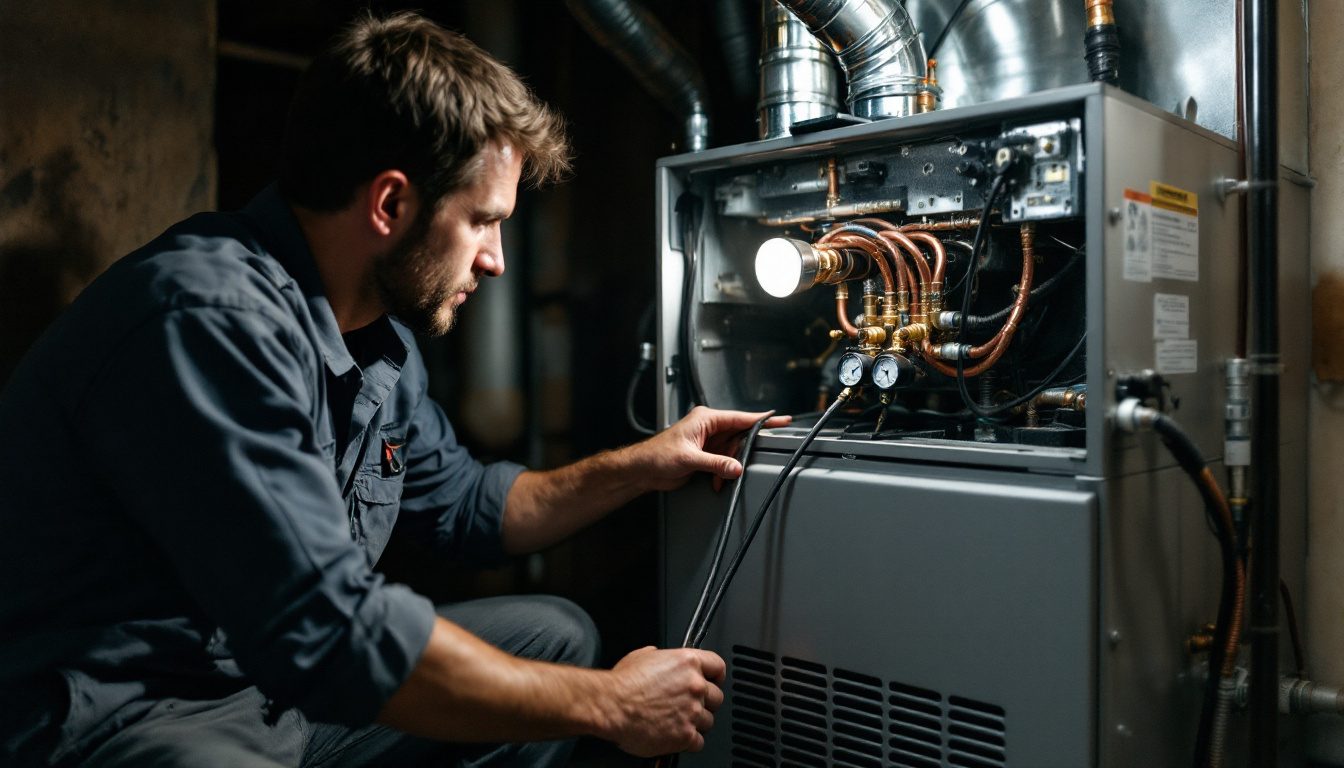
A TXV is the metering device between the high and low sides of the refrigeration circuit. At the indoor coil inlet, it drops liquid refrigerant to a pressure where it boils, feeding just enough that only vapor returns to the compressor.
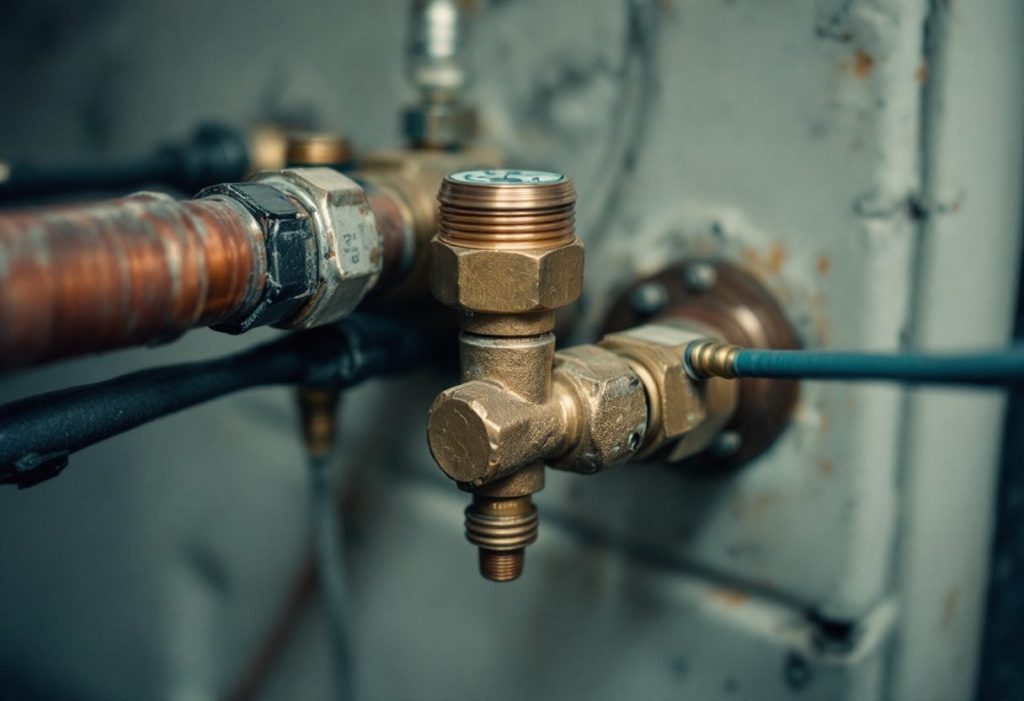
On a split system, the valve is brazed to the indoor coil in the coil cabinet or air handler. A sensing bulb is strapped to the suction line leaving the coil, and the liquid line of the refrigerant line set feeds the valve inlet.
How does a TXV valve work?
A TXV balances three pressures on one diaphragm. Bulb pressure pushes the valve open; spring pressure and evaporator pressure push it closed. The spring sets the target superheat.
Per Danfoss, the bulb “senses the suction temperature and drives the diaphragm down if there is an increase.” ACHR News columnist John Tomczyk writes that manufacturers usually preset it for 7 to 10°F of evaporator superheat. Reading it on gauges is covered in our superheat and subcooling explainer.
- The load rises and the suction line leaving the coil warms.
- The bulb warms, its pressure rises and the diaphragm pushes the pin open.
- More refrigerant enters, and superheat falls back to the spring setting.
- When the load drops, the valve throttles down.
An internally equalized valve senses evaporator pressure at the coil inlet; an externally equalized valve senses it at the outlet through a small tube. Tomczyk’s rule: use an external equalizer once coil pressure drop exceeds 3 psig in air conditioning.
TXV vs piston vs EEV: which metering device is better?
The TXV beats a piston on tolerance of charge and load swings; an electronic expansion valve (EEV) does the same job with a motor and controller. A piston is a fixed hole: Danfoss notes it cannot open wider as load rises, and at light load it risks sending liquid to the compressor.
| Metering device | How it meters | Adjusts to load? | Charge tolerance in lab tests |
|---|---|---|---|
| Piston (fixed orifice) | Fixed bore; flow set by the pressure difference across it | No | Noticeable loss below 90% of factory charge (ASHRAE RP-1173, four units) |
| TXV (thermostatic expansion valve) | Sensing bulb, spring and diaphragm move a pin | Yes, mechanically, toward a fixed superheat | Held until below 80% (RP-1173, two units); about 70% (Kim and Braun, via DOE) |
| EEV (electronic expansion valve) | Step motor positions the pin on a controller’s signal | Yes, electronically, from temperature and pressure sensors | No comparable residential test in the sources we read |
Sources: ORNL/TM-2018/485 (2018); DOE (2018); ACHR News (2004).
In practice, a piston needs an exact charge, a TXV forgives small errors and an EEV adds electronics to diagnose.
Does a TXV really make an AC 30% more efficient?
Not as a rule. The 30% figure repeated across contractor sites and AI answers traces to a Danfoss page saying a standard TXV “can increase efficiency versus a fixed orifice device by about 30%,” with no test cited. Lab evidence shows a narrower, real advantage: a TXV keeps efficiency when the charge is wrong.
Correction: the 30% is a charge-fault number at best
We found no federal or national-lab test showing a 30% gain at correct charge. SEER2 ratings under 10 CFR 430, Appendix M1, are lab tests run to AHRI 210/240-2024 with the charge that standard specifies, so piston and TXV systems are both rated at their intended charge.
The best comparison is ASHRAE project 1173 at Purdue, summarized by ORNL. It tested six residential air conditioners, two with TXVs and four with fixed orifices. Fixed-orifice units lost performance below 90% of factory charge; TXV units held until below 80%, when the valves were fully open.
DOE’s 2018 review reports the same from Kim and Braun (2010): TXV systems hold up to about 70% charge, and field-typical undercharge of 12% to 19% averaged a 7.6% efficiency loss. A TXV only softens the fault: NIST measured a 7% to 15% efficiency drop at 30% undercharge on a TXV heat pump, and about 4% at 30% overcharge.
DOE’s Energy Saver page once listed a thermal expansion valve and an EER above 11.6 for efficiency in the hottest weather (archived copy, January 2021); the current page omits it. No valve fixes a leak, so refrigerant leak detection matters more.
What are the symptoms of a bad TXV valve?
A bad TXV usually starves the coil, which looks almost exactly like low refrigerant: weak cooling, low suction pressure and high superheat. The tell is subcooling. Tomczyk writes that an underfeeding TXV shows slightly higher condenser subcooling, while an undercharged system shows low subcooling.
| Condition | Suction pressure | Evaporator superheat | Condenser subcooling |
|---|---|---|---|
| Starving TXV (plugged, lost bulb charge, stuck closed) | Low; a plugged valve can pull a vacuum | High | Slightly higher than normal |
| Low refrigerant charge (a leak) | Low | High | Low |
| Overfeeding TXV (loose or uninsulated bulb) | Not specified in source | Low, with risk of flooding the compressor | Not specified in source |
Source: ACHR News, Tomczyk (2022); Danfoss, “Thermostatic Expansion Valve Troubleshooting” (2017).
From the house, it shows up as an AC that runs but does not cool, and Tomczyk lists short cycling on the low-pressure control among the symptoms, which can pass for ordinary AC short cycling.
Blame the valve last: two-thirds of TXVs returned to Danfoss show no failure, and its checklist starts with airflow, including a clogged air filter, the one item a homeowner can fix. Ice on the coil has its own diagnosis in our guide to why an AC freezes up.
Can a TXV be adjusted, and when should it be replaced?
Some TXVs have an adjustable superheat stem, but Danfoss says to adjust only after every other fix. On its TR 6 valves, one clockwise turn raises superheat about one degree Fahrenheit; move one or two degrees at a time and allow ten to fifteen minutes to rebalance.
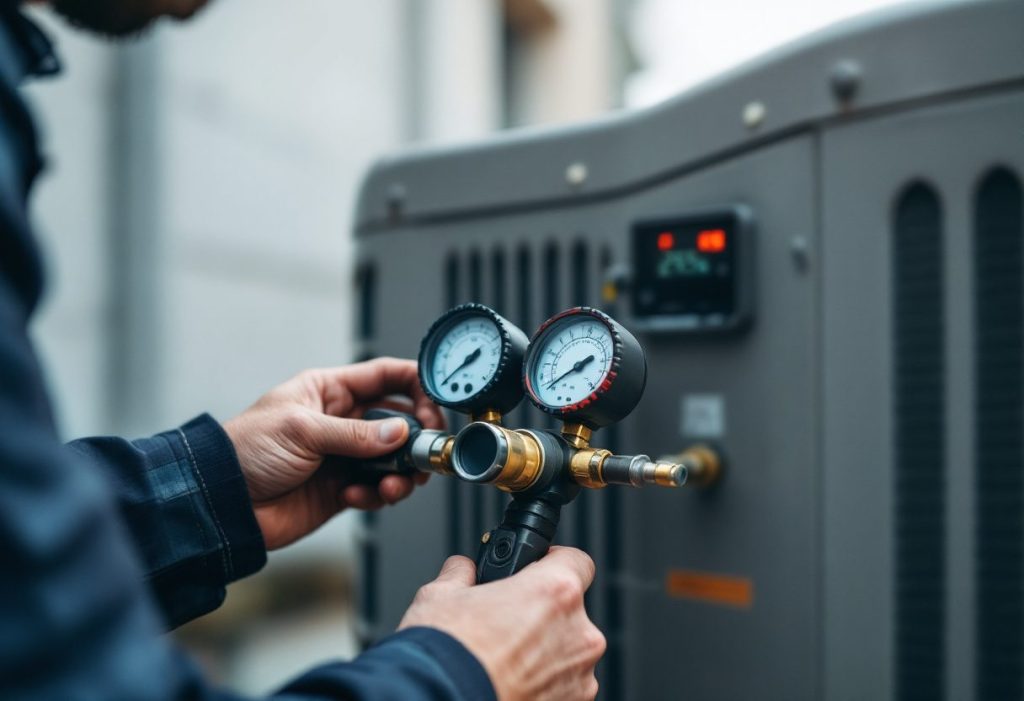
Before adding refrigerant, Danfoss says to check subcooling at the condenser outlet and the TXV inlet, one more reason a routine recharge is the wrong first move. Its sequence, condensed:
- Rule out low airflow, low charge and restrictions such as a clogged filter drier.
- Check the bulb: tight, insulated, with an OEM strap. Danfoss says fifty percent of the heat the bulb absorbs can come from the strap.
- Warm the bulb in a hand for a minute or two; a healthy valve should open.
- Adjust superheat in small steps.
- If it still misbehaves, replace it with a correctly sized valve and a new filter drier.
Size matters: Danfoss says replacement capacity should equal or exceed the equipment maker’s rating, and NIST notes a TXV’s variable opening masks an undersized valve, such as a 2-ton valve on a 2.5-ton system, until cooler weather. ORNL recommends TXVs for the low-charge designs that A2L refrigerants like R-454B push toward.
What does TXV valve replacement cost, and who can do it?
No federal or national-lab source publishes a TXV valve replacement cost, so we do not print one. The bill is mostly labor on a sealed refrigerant circuit. Our note on why no reliable national repair price exists explains the data gap.
Federal rules decide who does it. Under 40 CFR 82.154, no one servicing the system may knowingly vent refrigerant. Under 40 CFR 82.161, anyone who could breach the circuit must pass an EPA-approved exam, Type II for high-pressure equipment; our EPA 608 certification guide explains the types.
Danfoss adds two steps: cut the old valve out rather than sweating it off, so a warranty return can be examined, and change the filter drier. A homeowner’s part is limited to the air filter, then a call to a certified technician.
How we researched this
Research date: October 8, 2026. We read NIST TN 1848, ORNL/TM-2018/485, DOE’s 2018 review, current eCFR text, an archived DOE page, three Danfoss documents, a US patent and three ACHR News columns, and cite 11 sources. We traced the 30% claim to Danfoss and found no test behind it.
Excluded: contractor price ranges (no federal series), two studies we could not open (DOE and ORNL restatements cited instead) and an unverifiable A2L valve listing. No Reddit material; the topic involves refrigerant handling.
Frequently asked questions
Where is the TXV valve located?
On a split system it sits at the inlet of the indoor evaporator coil, with its sensing bulb strapped to the suction line leaving the coil. Heat pumps add a second metering device for heating; NIST notes the heating-mode TXV is installed in the outdoor section at the factory.
Is a TXV better than a piston?
For tolerance of charge errors, yes. In ASHRAE project 1173, summarized by ORNL in 2018, fixed-orifice air conditioners lost performance below 90% of factory charge, while TXV units held to 80%. At the correct charge, the lab evidence we found shows no large gap.
How do I know if my TXV is bad?
Only gauge readings can tell. A starving TXV shows low suction pressure, high superheat and slightly higher subcooling; a leak shows the first two but low subcooling, per ACHR News. Danfoss reports two-thirds of returned TXVs show no failure, so check airflow and charge first.
Can a TXV be adjusted?
Many can. Danfoss says to adjust only after every other fix: on its TR 6 valves one clockwise turn adds about one degree Fahrenheit of superheat, in steps of one or two degrees with ten to fifteen minutes to settle. Factory settings usually run 7 to 10°F.
Does a TXV increase efficiency by 30%?
No test we found supports that as a general figure; it comes from a Danfoss page that cites no data. The benefit appears when charge is off: NIST still measured a 7% to 15% loss at 30% undercharge on a TXV heat pump, and fixed-orifice units in ASHRAE testing degraded sooner.
Can I replace a TXV myself?
Not without EPA certification. Replacing the valve opens the refrigerant circuit, and 40 CFR 82.161 requires anyone who could breach it to pass an EPA-approved exam, Type II for high-pressure equipment. 40 CFR 82.154 bars knowingly venting refrigerant, so the charge must be recovered first.
Sources
- NIST. “Sensitivity Analysis of Installation Faults on Heat Pump Performance,” TN 1848 (2014). https://nvlpubs.nist.gov/nistpubs/TechnicalNotes/NIST.TN.1848.pdf. Accessed October 2026.
- Oak Ridge National Laboratory. “Impact of Varying Refrigerant Charge on AC System Performance,” ORNL/TM-2018/485 (2018). https://info.ornl.gov/sites/publications/Files/Pub108381.pdf. Accessed October 2026.
- US Department of Energy. “Residential HVAC Installation Practices: A Review of Research Findings” (June 2018). https://www.energy.gov/sites/prod/files/2018/06/f53/bto-ResidentialHVACLitReview-06-2018.pdf. Accessed October 2026.
- US Office of the Federal Register. “40 CFR 82.154 Prohibitions.” https://www.ecfr.gov/current/title-40/chapter-I/subchapter-C/part-82/subpart-F/section-82.154. Accessed October 2026.
- US Office of the Federal Register. “40 CFR 82.161 Technician certification.” https://www.ecfr.gov/current/title-40/chapter-I/subchapter-C/part-82/subpart-F/section-82.161. Accessed October 2026.
- US Office of the Federal Register. “10 CFR 430, Subpart B, Appendix M1.” https://www.ecfr.gov/current/title-10/chapter-II/subchapter-D/part-430/subpart-B/appendix-Appendix%20M1%20to%20Subpart%20B%20of%20Part%20430. Accessed October 2026.
- US Department of Energy, Energy Saver. “Central Air Conditioning” (archived copy, January 2021). https://web.archive.org/web/20210105043122/https://www.energy.gov/energysaver/central-air-conditioning. Accessed October 2026.
- Danfoss. “Benefits and advantages of TXVs vs other throttling devices.” https://www.danfoss.com/en-us/service-and-support/case-stories/dcs/benefits-and-advantages-of-thermostatic-expansion-valves-vs-other-throttling-devices/. Accessed October 2026.
- Danfoss. “How thermostatic expansion valves work” (2017). https://www.danfoss.com/en-us/service-and-support/case-stories/dcs/how-thermostatic-expansion-valves-work. Accessed October 2026.
- Danfoss. “Thermostatic Expansion Valve Troubleshooting” (2017). https://assets.danfoss.com/documents/90976/AC307572949567en-010101.pdf. Accessed October 2026.
- ACHR News, John Tomczyk. “The Professor: TXV Dos and Don’ts” (2013), with “Reasons Why TXVs Underfeed Refrigerant” (2022) and “Electronic Expansion Valves: The Basics” (2004). https://www.achrnews.com/articles/124938-the-professor-txv-dos-and-donts. Accessed October 2026.
Leave a Reply