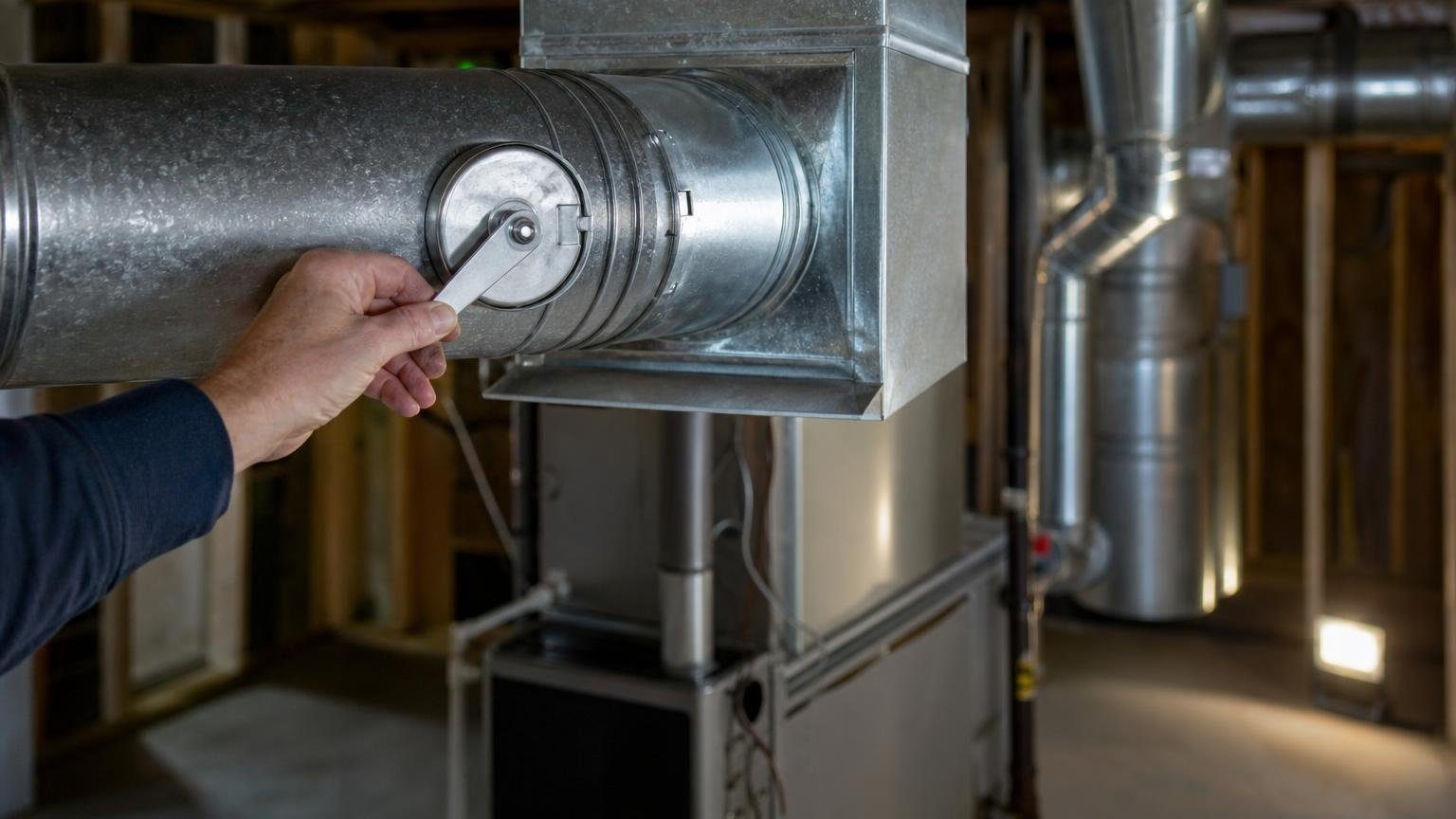
What are HVAC dampers? HVAC dampers are blades or plates inside ductwork that open, close or throttle airflow. Manual dampers set how much air each room gets, motorized zone dampers open and close on thermostat calls, and backdraft and fire dampers stop air moving the wrong way.
Key Takeaways
- DOE’s Building America Solution Center says trunk dampers allow seasonal adjustment between floors.
- A 2003 Lawrence Berkeley National Laboratory study found closing more than 60% of registers is not recommended.
- Honeywell’s TrueZONE ARD and ZD zone dampers are power close, spring open; range stop 3 still bleeds about 50% of airflow.
- Honeywell rates its SPRD barometric bypass damper for zone systems up to 0.5 in. static pressure and 2,000 cfm.
- California’s 2022 energy code rules out bypass ducts on newly constructed zoned systems unless the performance compliance path allows one.
- The 2021 IRC, Section M1502.3, requires a backdraft damper at dryer exhaust terminations.
What are HVAC dampers and what do they do?
HVAC dampers control how much air moves through a duct, and in which direction. In a house they do three jobs: share the blower’s air between rooms, switch air between zones, and stop outside air or fire coming back through a duct.
The louvers on a supply register are a damper of sorts, but the dampers that matter sit upstream in the duct. None of them adds airflow; they only move it from one branch to another.
What types of HVAC dampers are there?
Residential HVAC dampers fall into six types: two set by hand, two that move on their own, and two that guard openings to outdoors or through fire-rated construction.
| Damper type | Where it sits | What moves it | Governing document |
|---|---|---|---|
| Manual volume (balancing) damper | Branch take-off or trunk | Hand, locked by a quadrant | DOE Solution Center; ENERGY STAR |
| Register damper | Behind the supply grille | Slider or lever | DOE Solution Center |
| Motorized zone damper | Branch or trunk serving one zone | 24 V actuator wired to a zone panel | Honeywell 33-00079EFS; Trane 18-HD70D1-2 |
| Barometric bypass damper | Supply plenum to return | Duct pressure against a counterweight | Honeywell 69-1518-2; ACCA Manual Zr |
| Backdraft or makeup air damper | Exhaust outlets; makeup air inlets | Exhaust airflow, gravity or a motor | 2021 IRC M1502.3 and M1503.6.2 |
| Fire, smoke or combination damper | Fire-rated walls and floors | Fusible link or smoke signal | IBC Section 717 |
The 2021 IRC, Section M1502.3, says dryer exhaust terminations “shall be equipped with a backdraft damper” and bans screens there, a point to check during dryer vent cleaning. Section M1503.6.2 requires each make up air damper to be gravity type or open electrically whenever the exhaust runs.
Fire and smoke dampers close on heat or a smoke signal and appear mostly in multifamily and commercial buildings; our fire damper explainer covers them. In commercial systems the damper inside a VAV box does the zoning job.
How do you tell if a duct damper is open or closed?
On most manual duct dampers the handle, or the slot or notches cut into the end of the shaft, runs in line with the blade. Handle along the duct means open; across the duct means closed. Check the shaft mark, because a handle can be refitted at an angle.
Trane’s zoning damper guide treats the blade parallel with the mounting bracket as the fully open position and notes that “current damper position is indicated by two notches on the shaft.”
- Find the lever on a branch duct near the main trunk, in the basement, attic or crawl space.
- Read the shaft slot or notches against the duct: in line is open, 90 degrees is closed.
- On a motorized damper, read the travel indicator; never force the actuator.
- Mark the position with a paint pen before changing it.
Location matters too. ENERGY STAR’s commissioning checklist puts balancing dampers at the trunk to limit noise. Trane keeps zone dampers far from registers because “air turbulence and air noise often increase as damper blades close.”
Should dampers be open or closed in summer and winter?
In a two-story house on one system, open the upstairs dampers further in summer and the downstairs dampers further in winter. DOE’s Building America Solution Center describes trunk dampers that let you deliver less air upstairs during the heating season and more during the cooling season.
Warm air rises, so the upper floor tends to run warm. Make the change on trunk or floor-level dampers, not by shutting registers: leave the favored floor fully open, partly close the other, and mark both seasonal positions on the duct.
The same DOE page sets the limit: balancing dampers “are intended to fine-tune airflows but are not intended to correct significant duct sizing errors.” If a floor still lags, our guide to air balancing is the next step, and a floor that never catches up is a case for a zoning system.
How do motorized zone dampers work?
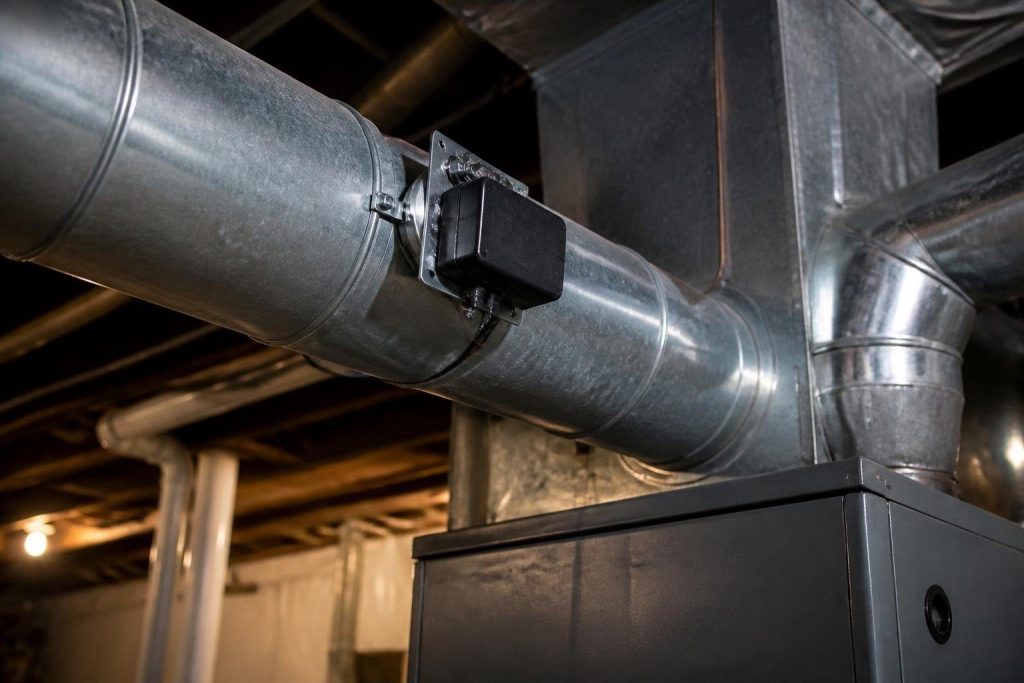
A motorized zone damper is a duct damper with a 24 volt actuator that a zone panel opens or closes as each zone’s thermostat calls. Makers use spring return, power open and power close, or modulating actuators.
Honeywell’s TrueZONE quick start guide states that its ARD and ZD dampers are “Power Close/Spring Open”, so a dead actuator leaves the zone open. Range stops on those models prevent full closure: position 0 is fully closed, and positions 1, 2 and 3 bleed about 16%, 30% and 50% of airflow. The guide also says never to mount the actuator under a horizontal damper.
Trane’s modulating zone damper actuator runs on 24 VAC, draws 1.1 W, delivers 18 in-lb of torque and takes 60 seconds to travel. Its terminals are labeled PO (power open) and PC (power closed).
Does a zoned system need a bypass damper?
A zoned system needs a bypass damper only when the equipment cannot cut its airflow as zones close. The bypass sends surplus supply air back to the return, a compromise that ACCA, California and Honeywell all limit.
Honeywell’s SPRD instructions say rising duct pressure “can reduce the volume of air through the air handler and cause it to trip on high limit or to create ice on the coil.” Those faults show up as a tripping furnace limit switch and an AC that freezes up. The SPRD is a weighted, unpowered blade for zone systems up to 0.5 in. static pressure and 2,000 cfm, set first with its counterweight about 45 degrees from vertical.
Worked example: sizing a bypass
Honeywell sizes the bypass as system airflow minus the smallest zone. Take a 1,200 cfm system whose smallest zone needs 450 cfm: the bypass must carry 750 cfm, and Honeywell’s Table 1 lists a 10 inch round SPRD at 750 cfm. ACCA Manual Zr calls bypass over system airflow the “Bypass Factor”; here it is 750 divided by 1,200, about 63%, against 50% in ACCA’s own 1,000 of 2,000 cfm example.
ACCA reports that a bypass duct meant to move 1,000 cfm “actually allows much more airflow,” and EWC quotes Manual Zr directly: “A balancing hand damper should be installed in the bypass duct.” Honeywell does not recommend dump zones.
California’s 2022 residential verification form requires an inspector to confirm that newly constructed zoned systems have no bypass duct unless the performance compliance path allows one. Equipment that can slow its blower, covered in our single stage vs variable speed comparison, leaves less surplus air to dump.
Why can closing HVAC dampers backfire?
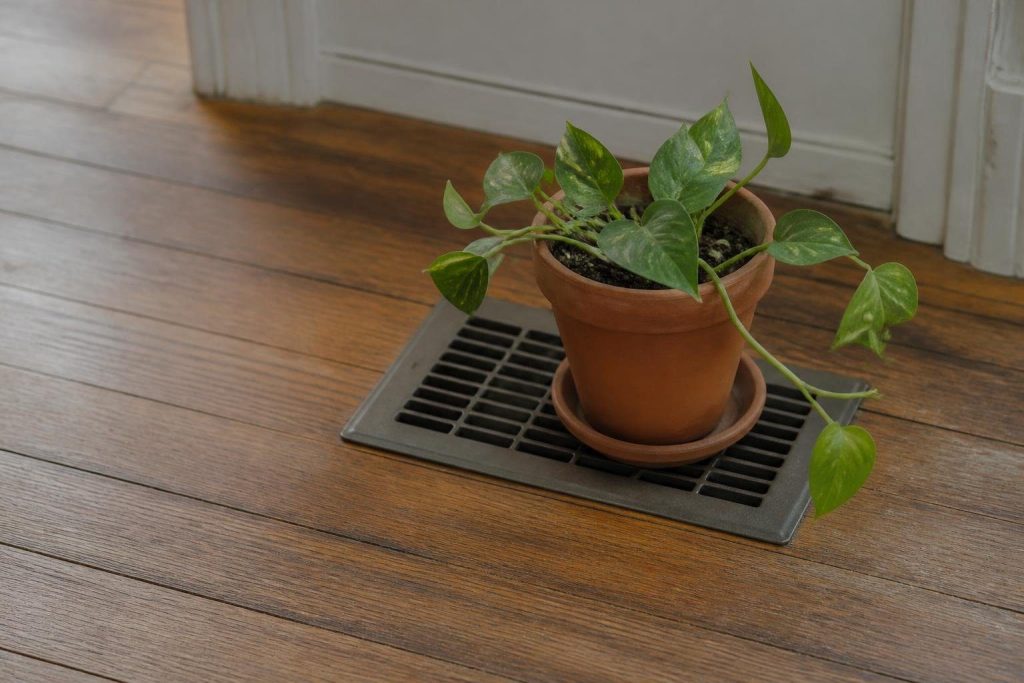
Closing dampers backfires because the air a blower moves still has to go somewhere. Shutting branches raises duct pressure and leakage instead of cutting the load. DOE warns that “too many closed dampers can lead to inadequate airflow through the furnace/air handler and result in HVAC equipment malfunction.”
Correction: closing dampers does not save energy
Page one keeps saying dampers save money by sending air only where needed. A Lawrence Berkeley National Laboratory study by Iain Walker found register closing “led to increased energy use” in a typical California house, mostly through added duct leakage. It advises against closing more than 60% of registers.
Our explainer on static pressure and ductwork shows why the blower pays for every restriction. ENERGY STAR’s checklist adds: limit a run with a balancing damper or correct sizing, never with looped or coiled duct, a common shortcut with flex duct. A system that needs most of its dampers shut has a duct design problem.
How we researched this
Research date: October 11, 2026. We read the top three informational pages for “hvac dampers”; none cited a code section or maker document. We consulted 12 source documents and cited 11: DOE, LBNL, ENERGY STAR and California Energy Commission documents, 2021 IRC and IBC text, and four maker documents from Honeywell, Trane and EWC, presented as maker data. ACCA Manual Zr is paywalled, so we cite ACCA’s restatement. Excluded: installed prices (no federal series) and Reddit.
Frequently asked questions
What does an HVAC damper do?
It controls airflow in a duct. Manual dampers set how much air a branch gets, motorized dampers open and close zones, and backdraft dampers stop outside air flowing back in. DOE’s Building America Solution Center says each supply branch should ideally have a manual balancing damper at the trunk take-off.
How do you tell if an HVAC damper is open or closed?
Read the handle or the slot on the shaft end: in line with the duct is open, across it is closed. Trane’s zoning damper guide treats a blade parallel to the mounting bracket as fully open and shows position with two notches on the shaft.
Do all homes have HVAC dampers?
No. Many ducted homes have manual dampers at the branch take-offs, but nothing guarantees it, and ENERGY STAR’s commissioning checklist calls air balancing recommended but not required for certification. Boiler and ductless homes have no supply duct dampers, only backdraft dampers on exhaust fans and dryers.
Should upstairs dampers be open in summer?
Yes, in most two-story homes on one system. DOE’s Building America Solution Center describes trunk dampers that deliver less air upstairs during heating and more during cooling. Open the upstairs trunk further in summer, partly close the downstairs one, and reverse that for winter.
What happens if a zone damper motor fails?
It depends on the design. Honeywell’s TrueZONE ARD and ZD dampers are power close, spring open, so a failed actuator leaves the zone open. Trane’s power open, power close actuator has a release button that frees the gears so the blade can be set by hand.
Does every zoning system need a bypass damper?
No. A bypass handles surplus air when only small zones call. Honeywell sizes it as system airflow minus the smallest zone, ACCA Manual Zr calls for a hand damper in the bypass duct, and California’s 2022 code bars bypass ducts on new zoned systems unless the performance path allows one.
Sources
- U.S. DOE Building America Solution Center (PNNL). “Pressure Balancing Supply and Return Ducts in Existing Homes.” https://basc.pnnl.gov/information/pressure-balancing-supply-and-return-ducts-existing-homes. Accessed October 2026.
- Walker, Iain S. Lawrence Berkeley National Laboratory. “Register Closing Effects on Forced Air Heating System Performance,” LBNL-54005, 2003. https://eta-publications.lbl.gov/bibcite/reference/31341. Accessed October 2026.
- U.S. EPA, ENERGY STAR. “National HVAC Commissioning Checklist, Rev. 14,” 2025. https://www.energystar.gov/sites/default/files/2025-01/National%20HVAC%20Commissioning%20Checklist_Rev%2014.pdf. Accessed October 2026.
- California Energy Commission. “CEC-CF3R-MCH-23-H, Space Conditioning System Airflow Rate,” 2022 Residential Compliance. https://www.energy.ca.gov/filebrowser/download/4769. Accessed October 2026.
- City of Seattle. “2021 Seattle Residential Code, Chapter 15 Exhaust Systems” (2021 IRC text). https://seattle.gov/documents/Departments/SDCI/Codes/SeattleResidentialCode/2021SRCChapter15.pdf. Accessed October 2026.
- Air Conditioning Contractors of America, ACCA Now. “Managing Airflow In Zoned Applications,” 2013. https://hvac-blog.acca.org/managing-airflow-in-zoned-applications/. Accessed October 2026.
- Honeywell (Resideo). “TrueZONE ARD, EARD, and ZD Series Damper Assemblies Quick Start Guide,” 33-00079EFS-01. https://resource.ecmdi.com/is/content/Watscocom/Gemaire/honeywell_ard10tz_article_1431504943122_en_sg.pdf. Accessed October 2026.
- Honeywell. “Static Pressure Regulating Damper (SPRD) Installation Instructions,” 69-1518-2. https://resource.gemaire.com/is/content/Watscocom/Gemaire/honeywell_sprd10_article_1371469484754_en_ii.pdf?fmt=pdf. Accessed October 2026.
- Trane. “Installer’s Guide 18-HD70D1-2: Zoning Dampers,” August 2011. https://elibrary.tranetechnologies.com/public/trane-history/Literature/Installation/18-HD70D1-2_08012011. Accessed October 2026.
- EWC Controls. “Model SID-HD Volume Control Hand Damper Submittal,” P/N 090377A0162 Rev. E. https://www.ewccontrols.com/acrobat/090377a0162.pdf. Accessed October 2026.
- City of Seattle. “2021 Seattle Building Code, Chapter 7” (IBC Section 717). https://www.seattle.gov/documents/Departments/SDCI/Codes/SeattleBuildingCode/2021SBCChapter7.pdf. Accessed October 2026.
Leave a Reply