Last reviewed: September 2026 · By the HVAC Brief Editorial Team · Our sourcing and editorial standards
An evaporative cooler, or swamp cooler, pulls outdoor air through wet pads and blows the cooled air into the house. The Department of Energy’s guidance says the process reduces air temperature “by 15° to 40°F” and that these units “cost about half as much to install as central air conditioners and use about one-quarter as much energy.”
The catch is in the same guidance: “They are only suitable for areas with low humidity.” They also need windows open, which is the part new owners find surprising.
How they work, and why humidity decides everything
Water evaporating from the pads absorbs heat from the air passing through them. That is the entire mechanism, and it works only when the air is dry enough to take up more moisture.
In humid air the same process delivers little cooling and adds moisture indoors, which is why DOE states plainly that evaporative coolers “should not be used in humid climates because they add humidity to the air in your home.”
The window rule
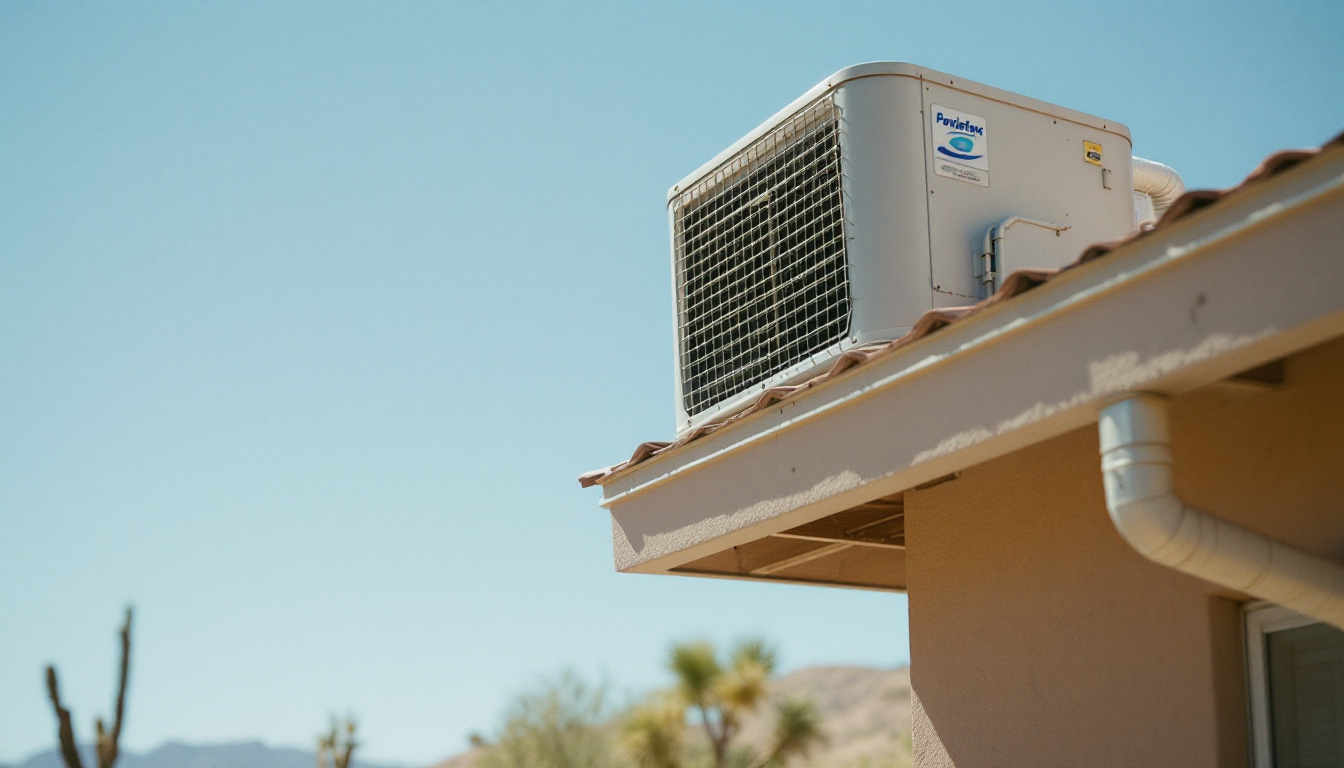
A refrigerant air conditioner recirculates indoor air. An evaporative cooler pushes a continuous stream of outdoor air in, so that air has to leave somewhere.
DOE’s guidance is specific: “Open windows or vents on the leeward side of the house to provide 1 to 2 square feet of opening for each 1,000 cfm of cooling capacity”, and warns that “If windows are not open far enough, humidity will build up in the home.” Opening windows in the rooms you want cooled and closing them elsewhere is how the cooling is directed.
Sizing and types
Evaporative coolers are rated in cubic feet per minute of air delivered, not in tons or Btu. DOE notes most models range from 3,000 to 25,000 cfm, and that manufacturers recommend “enough air-moving capacity for 20 to 40 air changes per hour, depending on the climate.”
| Configuration | Notes from DOE guidance |
|---|---|
| Roof mounted, down-flow | The most common residential arrangement |
| Ground mounted, horizontal | Preferred by many experts: easier to maintain, less risk of roof leaks |
| Window units | Small horizontal-flow coolers for a room or part of a home |
| Ducted | Required for larger houses with hallways and multiple rooms |
| Two-stage | Newer and more efficient, and adds less humidity; used where daytime temperatures often exceed 100°F |
DOE advises checking “the pads, filters, reservoir, and pump at least once a month” in hot climates where the cooler runs often, and a major cleaning every season to remove sediment and mineral buildup. A neglected evaporative cooler is a standing reservoir of warm water attached to your air supply, which is a different maintenance proposition from a sealed refrigerant system.
Against a conventional air conditioner
| Factor | Evaporative cooler | Refrigerant air conditioning |
|---|---|---|
| Works in humidity | No | Yes, and it dehumidifies |
| Windows | Partially open by design | Closed |
| Energy use | About a quarter, per DOE | Baseline |
| Water use | Continuous | None |
| Maintenance | Monthly in season, plus annual cleaning | Typically annual |
| Federal efficiency standard | Not covered like central air conditioners | SEER2 minimums under 10 CFR 430.32 |
For the alternatives in humid climates, see types of air conditioning systems and what central air is. For what electricity costs where you live, which is the other half of any running cost claim, see what air conditioning costs to run.
Frequently asked questions
How does a swamp cooler work?
It draws outdoor air through water-saturated pads. Evaporating water absorbs heat, which DOE says lowers the air temperature by 15 to 40°F before it is blown into the home. Because it introduces outdoor air continuously, windows must be partially open for the air to escape.
Do evaporative coolers work in humid climates?
No. DOE states they should not be used in humid climates because they add humidity to indoor air, and they deliver little cooling when the air cannot absorb more moisture. They are suited to low-humidity areas.
Are swamp coolers cheaper to run?
DOE’s guidance says they cost about half as much to install as central air conditioners and use about one-quarter as much energy. They also consume water continuously, which is a consideration in areas with limited supply.
How much maintenance does an evaporative cooler need?
More than a refrigerant system. DOE advises checking pads, filters, reservoir and pump at least monthly during heavy use, and a major cleaning each season to clear sediment and mineral buildup.
Methodology and limitations
DOE statements are quoted from its Energy Saver guidance on evaporative coolers, which no longer resolves at energy.gov; we cite the archived copy. Household counts are EIA RECS 2020 table HC7.1.
- We publish no installed prices, because no federal series measures them.
- Performance depends on local humidity and temperature, and manufacturer ratings are not comparable to SEER2.
- RECS 2020 remains the current equipment vintage; 2024 equipment data is due in 2027.
Sources
- US Department of Energy, Energy Saver: Evaporative Coolers, archived copy.
- US Energy Information Administration, Residential Energy Consumption Survey 2020, table HC7.1.
The HVAC Brief is an independent trade publication. We do not sell equipment, take manufacturer advertising, or accept payment for placement in our research. Corrections welcome.
Leave a Reply