
Original data and independent reporting for the HVAC trade

Author: The HVAC Brief Editorial Team

  • How American Homes Are Heated: The Fuel and Equipment Mix

    How American Homes Are Heated: The Fuel and Equipment Mix

    Last reviewed: August 2026 · By the HVAC Brief Editorial Team · Our sourcing and editorial standards

    The short answer

    Natural gas is the main heating fuel in 62.71 million US homes and electricity in 42.57 million, out of 123.53 million housing units. By equipment, the central warm-air furnace dominates: 53.26 million gas and 13.82 million electric.

    Heat pumps are the main heating equipment in 16.13 million homes, 13.1% of the stock, despite taking close to half of new central shipments. Equipment lasts a long time, so the stock lags the sales mix by many years.

    By fuel

    Main heating fuel Homes (million) Share
    Natural gas 62.71 50.8%
    Electricity 42.57 34.5%

    Those two account for the large majority of US homes. The remainder use propane, fuel oil, wood or other fuels, or have no heating equipment at all.

    By equipment

    Main heating equipment Homes (million) Share
    Natural gas central warm-air furnace 53.26 43.1%
    Heat pump 16.13 13.1%
    Electric central warm-air furnace 13.82 11.2%
    Steam or hot water system 6.51 5.3%

    The central warm-air furnace, gas and electric combined, is the main heating equipment in 67.08 million homes, more than four times the heat pump count. Our guide to hydronic systems covers the steam and hot water category.

    Stock versus sales

    Heat pumps hold about 13% of the installed base and near half of new central shipments. That gap is not a contradiction, it is what a slow-turning stock looks like. Any claim that heat pumps have taken over residential heating is describing sales, not homes. See our shipment share analysis.

    Why the mix is regional, not national

    National shares conceal strong geographic concentration. Gas furnaces dominate where gas distribution exists. Heat pumps concentrate in milder climates where their efficiency advantage holds through the heating season. Steam and hot water systems persist in older Northeast and Midwest housing. Fuel oil is heavily concentrated in the Northeast, which is why the heating oil price series matters far more in some states than others.

    Frequently asked questions

    How do most American homes heat?

    Natural gas is the main heating fuel in 62.71 million US homes and electricity in 42.57 million, out of 123.53 million housing units, per EIA RECS 2020. By equipment, the natural gas central warm-air furnace is the single largest category at 53.26 million homes.

    How many US homes have heat pumps?

    A heat pump is the main heating equipment in 16.13 million homes, about 13.1% of the housing stock, per EIA RECS 2020. That is far below their share of new shipments, because equipment stays installed for many years.

    Is gas or electric heating more common?

    Natural gas, by fuel: 62.71 million homes against 42.57 million for electricity. The gap has narrowed over time as heat pumps and electric systems have taken a larger share of new installations, but the installed base still favours gas.

    Why do heating systems differ so much by region?

    Gas furnaces dominate where gas distribution networks exist. Heat pumps concentrate in milder climates where efficiency holds through the season. Steam and hot water systems persist in older Northeast and Midwest housing, and fuel oil is heavily concentrated in the Northeast.

    Methodology and limitations

    All figures are EIA Residential Energy Consumption Survey 2020, table HC6.1, final data released March 2023, the current published vintage. Shares are computed against 123.53 million total housing units.

    • RECS runs every five or six years. 2020 remains current and we do not extrapolate forward.
    • Categories describe main heating equipment and fuel. Homes with secondary systems are counted by their main one.
    • National shares conceal strong regional concentration in every category.

    Sources

    1. US Energy Information Administration, Residential Energy Consumption Survey 2020, table HC6.1.
    2. Air-Conditioning, Heating, and Refrigeration Institute, June 2026 Statistical Release, for shipment share context.

    The HVAC Brief is an independent trade publication. We do not sell equipment, take manufacturer advertising, or accept payment for placement in our research. Corrections welcome.
  • What Ventilation Actually Means in HVAC (and What It Does Not)

    What Ventilation Actually Means in HVAC (and What It Does Not)

    Last reviewed: August 2026 · By the HVAC Brief Editorial Team · Our sourcing and editorial standards

    The short answer

    Ventilation is the V in HVAC and the part most often ignored, because unlike heating and cooling nobody notices it working. It means exchanging indoor air with outdoor air and filtering what circulates.

    A central system’s blower and ductwork do the circulating and filtering. Actual air exchange with outdoors happens through dedicated ventilation equipment, exhaust fans, or uncontrolled leakage through the building envelope.

    The distinction matters because a system running in fan mode is recirculating, not ventilating. Moving the same air past a filter repeatedly is filtration, and the two get conflated constantly.

    Three things people call ventilation

    Function What it does Typical equipment
    Circulation Moves air around the house System blower and ductwork
    Filtration Removes particles from circulating air Filter in the return
    Air exchange Replaces indoor air with outdoor air ERV or HRV, exhaust fans, envelope leakage

    Only the third is ventilation in the strict sense. A house can have excellent filtration and effectively no controlled air exchange, which is common in older housing where exchange happens by accident through leakage.

    Why tighter houses changed the problem

    Older houses leak, which provides uncontrolled air exchange at the cost of energy. As construction has tightened to reduce that energy loss, the accidental ventilation has gone with it, which is why dedicated ventilation equipment became necessary rather than optional in new construction.

    1. Exhaust fans remove air from kitchens and bathrooms, with makeup air drawn in through whatever gaps exist.
    2. Heat recovery ventilators (HRV) exchange air while transferring heat between the incoming and outgoing streams.
    3. Energy recovery ventilators (ERV) do the same and also transfer moisture, which matters in humid climates.
    4. Envelope leakage is the uncontrolled default, varying with weather and wind rather than with need.
    Filters do not ventilate

    Upgrading to a denser filter improves filtration and increases resistance across the blower, which raises static pressure and reduces airflow. It does nothing for air exchange. If the goal is fresh air rather than cleaner recirculated air, the filter is the wrong lever. See why static pressure matters.

    Frequently asked questions

    What does ventilation mean in HVAC?

    Exchanging indoor air with outdoor air, and filtering the air that circulates. It is the V in heating, ventilation and air conditioning. Running a system in fan mode recirculates and filters air but does not exchange it with outdoors, so circulation and ventilation are not the same thing.

    What is the difference between an ERV and an HRV?

    Both exchange indoor air with outdoor air while recovering energy from the outgoing stream. A heat recovery ventilator transfers heat only. An energy recovery ventilator transfers heat and moisture, which matters in humid climates where bringing in outdoor humidity would otherwise add load.

    Does running the fan improve air quality?

    It improves filtration of the air already inside by moving it past the filter more often. It does not bring in outdoor air, so it does not address anything that requires air exchange. It also consumes blower energy continuously.

    Will a better filter fix indoor air quality?

    A denser filter captures more particles but also increases resistance across the blower, raising static pressure and reducing airflow. It addresses filtration, not air exchange. Whether it is the right measure depends on whether the concern is particles in recirculated air or a need for fresh air.

    Methodology and limitations

    This page describes system functions and equipment categories. We publish no air change rates or air quality thresholds, as those are set by standards bodies and building codes that vary by jurisdiction rather than by a single federal residential requirement.

    • No ventilation rate is recommended here. Requirements vary by code and jurisdiction.
    • Equipment descriptions are generic, not specific to any manufacturer.
    • Nothing here is engineering advice for a specific building.

    Sources

    1. US Department of Energy, 10 CFR 430.32, for the SEER2 external static pressure basis referenced in the filtration discussion.

    The HVAC Brief is an independent trade publication. We do not sell equipment, take manufacturer advertising, or accept payment for placement in our research. Corrections welcome.
  • How Thermostats Actually Work, and What They Cannot Do

    How Thermostats Actually Work, and What They Cannot Do

    Last reviewed: August 2026 · By the HVAC Brief Editorial Team · Our sourcing and editorial standards

    The short answer

    A thermostat is a switch with a temperature sensor. It does not control how hard your system runs, only whether it runs. Most conventional residential equipment is single stage: it is either on at full output or off.

    That is why turning the setpoint far past your target does not heat or cool a house faster. The equipment produces the same output either way; only the run time changes.

    What a thermostat actually does

    It compares measured temperature against setpoint and closes a circuit when the difference crosses a threshold. On a single stage system that call is binary. On two stage or variable capacity equipment the control can request different output levels, which is a property of the equipment, not of the thermostat.

    Belief What actually happens
    Setting it lower cools the house faster Output is unchanged on single stage equipment. Only run time changes.
    Leaving it at one setting all day is cheaper Depends on setback depth and duration, not a universal rule
    A smart thermostat makes a system efficient It changes when the system runs, not how efficiently it runs
    The reading is the house temperature It is the temperature at that one location on that one wall
    Closing vents helps the thermostat It raises static pressure and reduces airflow

    Placement matters more than features

    1. Direct sun on the thermostat makes it read high, so the system overcools that zone.
    2. An exterior wall biases the reading toward outdoor conditions.
    3. Near a supply register the sensor reads conditioned air rather than room air, which causes short cycling.
    4. In a hallway rather than a living space the sensor controls to a space nobody occupies.
    5. Near a heat source, a lamp, a television or a kitchen, biases the reading upward.

    A poorly placed thermostat produces comfort complaints that look like equipment problems. So does a duct problem, which is why the diagnosis order matters. See ductwork and airflow.

    On smart thermostat savings claims

    The percentage savings quoted in marketing are not measured by any federal source. What a smart thermostat does is change the schedule the equipment runs on. Whether that saves money depends on your previous behaviour: a household already using setbacks has less to gain than one that never adjusted the setpoint.

    Frequently asked questions

    Does setting the thermostat lower cool the house faster?

    No. Most residential equipment is single stage, meaning it produces the same output whenever it runs. Setting the target far below your desired temperature does not increase output, it only makes the system run longer, and it risks overshooting past the temperature you actually wanted.

    Do smart thermostats save money?

    The specific percentage claims are not measured by any federal source. A smart thermostat changes when equipment runs rather than how efficiently it runs, so savings depend on prior behaviour. A household that already used setbacks has less to gain than one that never adjusted the setpoint.

    Where should a thermostat be placed?

    On an interior wall in an occupied living space, away from direct sun, supply registers, exterior walls and heat sources such as lamps or kitchens. Poor placement biases the reading and produces comfort complaints that resemble equipment faults.

    Why does my system short cycle?

    Common causes include an oversized system reaching setpoint too quickly, a thermostat mounted near a supply register so it reads conditioned air, or restricted airflow. Short cycling reduces dehumidification and increases wear, and it is usually a sizing, placement or airflow problem rather than a thermostat defect.

    Methodology and limitations

    This page describes control behaviour rather than publishing savings figures, because no federal source measures thermostat savings at household level.

    • No percentage saving is claimed for any thermostat type or schedule.
    • Behaviour described applies to conventional residential systems. Variable capacity equipment modulates output and behaves differently.
    • Nothing here is engineering advice for a specific installation.

    Sources

    1. US Department of Energy, 10 CFR 430.32, for equipment staging and efficiency rating context.

    The HVAC Brief is an independent trade publication. We do not sell equipment, take manufacturer advertising, or accept payment for placement in our research. Corrections welcome.
  • Water Heater Shipments Fell on Both Fuels in 2026

    Water Heater Shipments Fell on Both Fuels in 2026

    Last reviewed: September 2026 · By the HVAC Brief Editorial Team · Our sourcing and editorial standards

    The short answer

    US residential water heater shipments fell on both fuels through July 2026. Gas storage units were down 2.5% year to date at 2,487,389, and electric storage units down 5.2% at 2,877,192.

    Efficiency is regulated by Uniform Energy Factor under 10 CFR 430.32(d), and the minimum is not a single number: it is a formula that varies with tank volume and draw pattern, which is why no simple “minimum UEF” figure exists.

    What the shipment data shows

    Residential storage water heaters 2026 YTD 2025 YTD Change
    Gas 2,487,389 2,550,303 -2.5%
    Electric 2,877,192 3,035,356 -5.2%

    July itself was mixed, with gas up 5.2% to 333,499 units and electric down 3.9% to 385,594. A decent month inside a declining year, the same pattern visible across space conditioning equipment. See our shipment report.

    Electric units outship gas in absolute terms, 2,877,192 against 2,487,389 year to date, but are falling faster.

    How efficiency is regulated

    Water heaters are rated on Uniform Energy Factor, which replaced the older Energy Factor measure. Under 10 CFR 430.32(d), the minimum UEF for water heaters manufactured before May 6, 2029 is expressed as a formula rather than a constant, in the form of a base value minus a coefficient multiplied by rated storage volume.

    The formula also varies by draw pattern, which classifies the unit by how much hot water it delivers in a first-hour rating test: very small, low, medium or high. A 40 gallon gas storage heater and an 80 gallon one face different minimums, and the same tank faces different minimums under different draw patterns.

    Why you cannot quote one minimum UEF

    Because there is not one. Any page giving a single “minimum UEF” figure has silently fixed a product class, a tank size and a draw pattern. The regulation sets a family of formulas, which is more precise but harder to summarise, and that difficulty is why the number gets misreported.

    For what the standards require when you replace a unit, see our water heater replacement guide.

    Frequently asked questions

    Are water heater shipments rising or falling?

    Falling. Through July 2026, US residential gas storage water heater shipments were down 2.5% year to date at 2,487,389 units and electric storage down 5.2% at 2,877,192, per the AHRI July 2026 Statistical Release, even though gas shipments rose in the month itself.

    What is the minimum efficiency for a water heater?

    There is no single figure. Under 10 CFR 430.32(d) the minimum Uniform Energy Factor is a formula that varies with rated storage volume and draw pattern, so a 40 gallon and an 80 gallon unit face different minimums, as do units in different draw pattern classes.

    What is Uniform Energy Factor?

    UEF is the federal efficiency metric for water heaters, replacing the older Energy Factor. It is measured under a draw pattern reflecting typical hot water use, so units are classified as very small, low, medium or high draw, and minimum requirements differ accordingly.

    Do more homes use gas or electric water heaters?

    In shipments, electric outsells gas: 2,877,192 electric storage units shipped year to date through July 2026 against 2,487,389 gas. Electric shipments are also declining faster, down 5.2% against 2.5% for gas.

    Methodology and limitations

    Shipment figures are the AHRI July 2026 Statistical Release, published September 11, 2026, retrieved as a PDF from ahrinet.org. Efficiency requirements are quoted from 10 CFR 430.32(d).

    • Shipments measure movement into distribution, not installations, and include channel stocking.
    • AHRI covers participating manufacturers, close to but not identical with the whole market.
    • We do not reproduce the full UEF formula tables. The regulation is the authority.
    • Shipment counts are not the same as installed base. RECS covers installed water heating separately.

    Sources

    1. Air-Conditioning, Heating, and Refrigeration Institute, July 2026 Statistical Release.
    2. US Department of Energy, 10 CFR 430.32(d), water heater standards.

    The HVAC Brief is an independent trade publication. We do not sell equipment, take manufacturer advertising, or accept payment for placement in our research. Corrections welcome.
  • AC Leaking Water or Blowing Warm Air: What Each Symptom Means

    AC Leaking Water or Blowing Warm Air: What Each Symptom Means

    Last reviewed: August 2026 · By the HVAC Brief Editorial Team · Our sourcing and editorial standards

    The short answer

    An air conditioner leaking water inside almost always means the condensate is not draining, not that refrigerant is leaking. Refrigerant is a gas at those pressures and does not pool on a floor.

    An air conditioner blowing warm air points at a different set of causes: loss of refrigerant charge, a compressor or capacitor fault, a frozen coil, or the system simply not being in cooling mode.

    These two symptoms account for a large share of homeowner searches and they have distinct mechanisms. Knowing which family a symptom belongs to tells you whether it is an owner-fixable maintenance issue or a service call.

    Water leaking from the indoor unit

    Cooling removes humidity, and that water collects in a drain pan and leaves through a condensate line. Water appearing where it should not means that path is blocked or overwhelmed.

    1. Blocked condensate drain. The most common cause. Biological growth blocks the line and the pan overflows.
    2. Full or cracked drain pan. Age and corrosion.
    3. Frozen evaporator coil that has thawed. Ice melting at once overwhelms the pan. This is a symptom of a deeper fault, usually low airflow or low charge.
    4. Dirty filter restricting airflow. Low airflow drops coil temperature toward freezing, which leads back to the previous cause.
    5. Improper installation slope. A pan or line that does not drain by gravity.

    Only the filter is reliably an owner fix. A blocked drain is sometimes clearable, but a coil freezing repeatedly is a diagnostic problem rather than a cleaning problem.

    Water on the floor is not a refrigerant leak

    Refrigerant leaves a system as gas, not liquid pooling indoors. A system low on charge shows up as poor cooling and a freezing coil, not as a puddle. If a technician attributes indoor water directly to refrigerant loss, ask them to walk you through the mechanism.

    Blowing warm air

    Cause Typical signature Owner fixable
    System not in cooling mode Thermostat set to fan or heat Yes
    Dirty filter, restricted airflow Weak flow at registers, possible coil ice Yes
    Frozen evaporator coil Ice visible, airflow drops, water on thaw No, find the cause
    Low refrigerant charge Gradual loss of capacity, coil freezing No, it is a leak
    Failed capacitor Outdoor fan or compressor not starting No
    Outdoor coil blocked Vegetation or debris against the unit Partly

    A system that needs refrigerant has a leak. Sealed circuits do not consume refrigerant in normal operation, so repeatedly topping up treats the symptom while venting a controlled substance. Ask for the leak to be found.

    Frequently asked questions

    Why is my air conditioner leaking water inside?

    Almost always a condensate drainage problem rather than a refrigerant leak. Cooling removes humidity into a drain pan that empties through a condensate line; a blocked line, full or cracked pan, or a frozen coil thawing all put water where it should not be. Refrigerant leaves a system as gas and does not pool indoors.

    Why is my AC blowing warm air?

    Common causes are the system not being in cooling mode, a dirty filter restricting airflow, a frozen evaporator coil, low refrigerant charge from a leak, a failed capacitor preventing the compressor or fan starting, or a blocked outdoor coil. Only the thermostat setting and the filter are reliably owner fixable.

    Does my AC need a refrigerant top up?

    A sealed refrigerant circuit should not lose charge in normal operation, so a system needing refrigerant has a leak. Repeatedly adding refrigerant treats the symptom while venting a controlled substance and leaves the underlying fault in place. Ask for the leak to be located.

    Why does my evaporator coil freeze?

    Usually low airflow or low refrigerant charge. Restricted airflow from a dirty filter or duct problem drops coil temperature below freezing; low charge does the same by dropping evaporator pressure. Freezing is a symptom of another fault rather than a fault in itself.

    Methodology and limitations

    This page describes physical mechanisms rather than publishing failure frequencies, because no federal source measures residential HVAC fault rates. Refrigerant handling context is from 40 CFR part 82 and part 84.

    • No frequency or probability is claimed for any cause listed.
    • Nothing here is a diagnosis. Symptoms overlap and correct diagnosis requires measurement.
    • Refrigerant work requires EPA Section 608 certification and is not owner serviceable.

    Sources

    1. US Environmental Protection Agency, 40 CFR part 82 subpart F, refrigerant handling and technician certification; 40 CFR part 84, hydrofluorocarbon management.

    The HVAC Brief is an independent trade publication. We do not sell equipment, take manufacturer advertising, or accept payment for placement in our research. Corrections welcome.
  • HVAC Ductwork and Airflow: The Problem Blamed on the Equipment

    HVAC Ductwork and Airflow: The Problem Blamed on the Equipment

    Last reviewed: August 2026 · By the HVAC Brief Editorial Team · Our sourcing and editorial standards

    The short answer

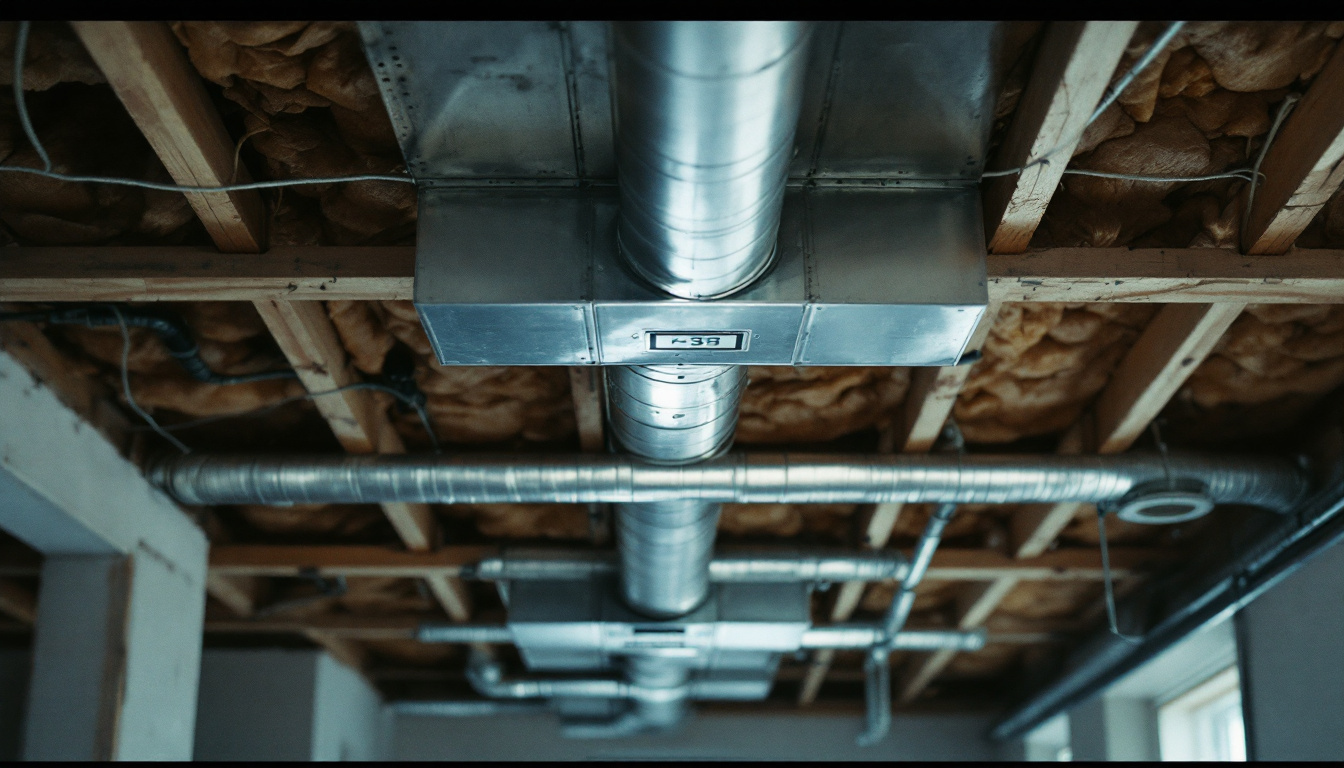
    Ductwork is the part of the system most often blamed on the equipment. If ducts are undersized, leaking or routed through unconditioned space, no amount of equipment capacity or efficiency rating fixes the result.

    The federal test procedure acknowledges this. SEER2 replaced SEER partly by raising the external static pressure used in testing, so ratings better reflect equipment working against real ductwork rather than a laboratory ideal.

    That change is the clearest official signal that duct resistance is a first-order variable. A system rated under the older procedure was measured under conditions gentler than most installed duct systems impose.

    What static pressure tells you

    Static pressure is the resistance the blower works against, measured across the air handler. High static pressure means the system is fighting the duct system, which reduces airflow, degrades capacity and dehumidification, and loads the blower motor.

    Symptom Often blamed on Frequently actually
    One room never comfortable Undersized equipment Duct run sizing or balancing
    House cool but clammy Equipment choice Oversizing, short cycling, or low airflow
    High bills after a new system Equipment underperforming Duct losses in unconditioned space
    Blower noise Equipment defect Static pressure above design
    Frequent blower motor failure Component quality Sustained high static pressure

    Where duct systems lose energy

    1. Leakage at joints and connections. Air that never reaches a register is conditioned air paid for and lost.
    2. Uninsulated runs in unconditioned space. Ducts in a hot attic or cold crawl space exchange heat with that space along their whole length.
    3. Undersized returns. A common and under-diagnosed cause of high static pressure, because attention usually goes to supply runs.
    4. Excessive flexible duct with sharp bends. Each bend adds resistance, and compressed flex adds far more than its length suggests.
    5. Closed registers. Closing vents to “redirect” air raises system static pressure rather than saving energy.
    The one measurement worth asking for

    Ask whether static pressure was measured, before and after any equipment replacement. If ductwork is the binding constraint, replacing equipment moves the problem rather than solving it, and the new system inherits the same limitation with a larger invoice attached.

    Why this interacts with sizing

    Load calculation determines required capacity; duct design determines whether that capacity reaches the rooms. Doing one without the other produces predictable failures. A correctly sized system on undersized ducts underperforms, and an oversized system on any ducts short cycles. See why square-footage sizing fails.

    Frequently asked questions

    Why is one room always hotter or colder?

    Usually duct related rather than equipment related: the run serving that room may be undersized, too long, badly bent, leaking, or the system may be unbalanced. Upsizing equipment to fix one room oversizes it for every other room, which introduces short cycling and poor dehumidification.

    What is static pressure in an HVAC system?

    The resistance the blower works against, measured across the air handler. High static pressure reduces airflow, degrades capacity and dehumidification, and loads the blower motor. SEER2 testing raised the external static pressure used for rating so results better reflect real installed ductwork.

    Does closing vents in unused rooms save money?

    No. Closing registers raises static pressure across the system rather than reducing the energy it uses. The blower works harder against greater resistance, airflow falls elsewhere, and any saving is offset or reversed.

    Should ductwork be replaced with the system?

    It depends on whether the ducts are the binding constraint, which static pressure measurement establishes. Reusing failing ductwork is the most common reason one quote comes in far below others, and it is a scope difference rather than a saving.

    Methodology and limitations

    The SEER2 external static pressure point references the test procedure basis in 10 CFR 430.32. Duct design procedure is ACCA Manual D, a private standard we name but do not reproduce.

    • We publish no duct sizing figures or leakage percentages, as no federal series measures them at household level.
    • The symptom table describes common diagnostic patterns, not measured frequencies.
    • Nothing here is engineering advice for a specific duct system.

    Sources

    1. US Department of Energy, 10 CFR 430.32, efficiency standards and the SEER2 test basis.
    2. Air Conditioning Contractors of America, Manual D duct design and Manual J load calculation, named as industry-standard procedures.

    The HVAC Brief is an independent trade publication. We do not sell equipment, take manufacturer advertising, or accept payment for placement in our research. Corrections welcome.

  • Boiler and Baseboard Heating: How It Works and Who Still Has It

    Boiler and Baseboard Heating: How It Works and Who Still Has It

    Last reviewed: August 2026 · By the HVAC Brief Editorial Team · Our sourcing and editorial standards

    The short answer

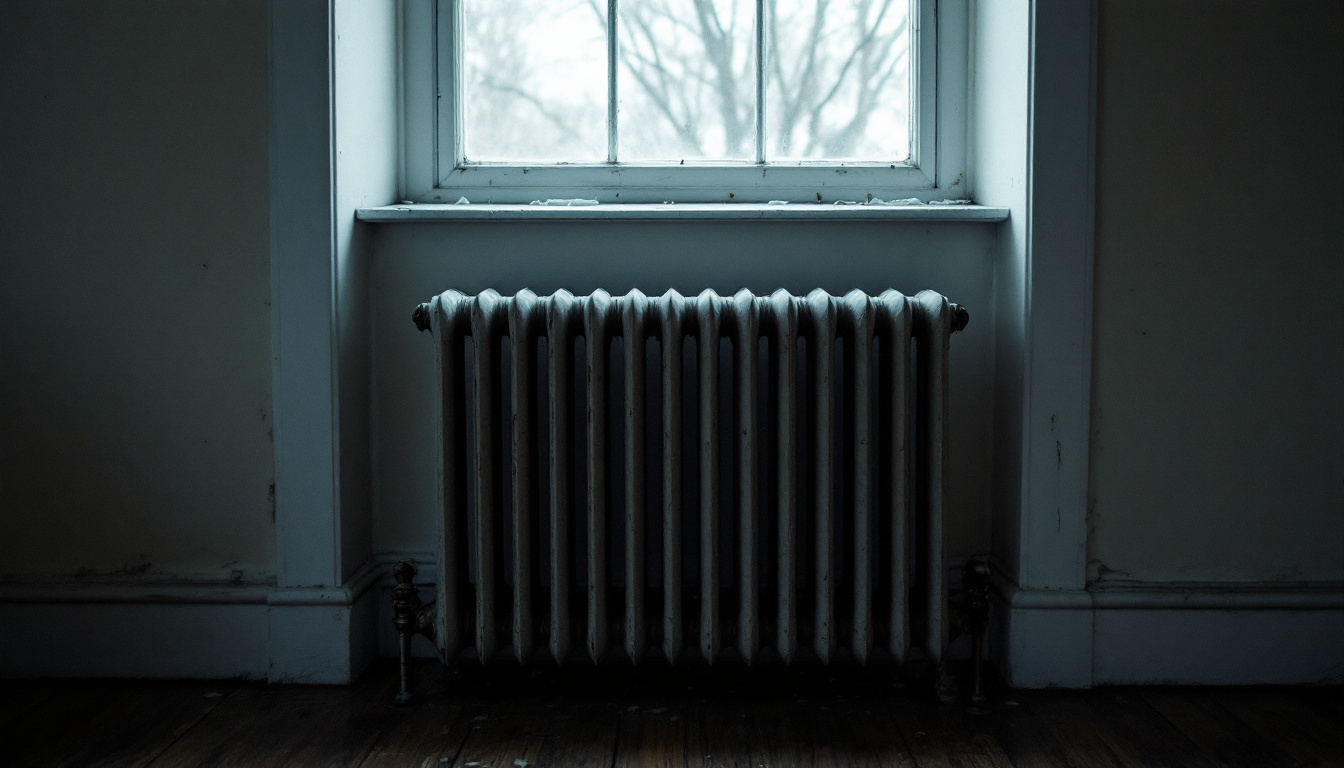
    Steam and hot water systems, the boiler-and-radiator or baseboard family, are the main heating equipment in 6.51 million US homes, about 5.3% of the housing stock. They are concentrated in older housing in the Northeast and Midwest.

    They work differently from forced air: a boiler heats water or makes steam, which circulates to radiators or baseboard units that heat rooms by radiation and convection. There is no ductwork and no blower, which is why these homes usually have no central air conditioning path.

    How common they are

    Main heating equipment Homes (million) Share of stock
    Natural gas central warm-air furnace 53.26 43.1%
    Heat pump 16.13 13.1%
    Electric central warm-air furnace 13.82 11.2%
    Steam or hot water system 6.51 5.3%

    Forced air dominates nationally, but that national picture hides regional concentration. Steam and hot water systems persist where the housing stock predates forced air, which is why a contractor in New England sees them constantly and one in Arizona almost never.

    How the system works

    1. The boiler heats water, or boils it to steam, using gas, oil, propane or electricity.
    2. Distribution carries hot water through pipes by circulator pump, or lets steam rise through pipes by pressure.
    3. Emitters, cast iron radiators, baseboard convectors or radiant floor loops, transfer heat into rooms.
    4. Return brings cooled water or condensed steam back to the boiler.

    Because heat moves through water rather than air, these systems respond more slowly than forced air and hold temperature more steadily. They also cannot deliver cooling, filtration or ventilation, which is the practical trade-off.

    Why this matters for cooling retrofits

    A house with hydronic heat has no ductwork to reuse, so adding central air means installing a duct system from scratch. That is the single largest reason ductless mini splits are common in this housing stock. See how mini splits work.

    Fuel matters more here

    Boiler systems are disproportionately oil-fired in the Northeast, which ties running cost to a volatile fuel. Residential heating oil averaged $4.01 a gallon in the 2025/26 season. Our heating oil price index tracks the weekly series.

    Frequently asked questions

    How many US homes use boiler or baseboard heating?

    Steam and hot water systems are the main heating equipment in 6.51 million US homes, about 5.3% of 123.53 million housing units, per EIA RECS 2020. They are concentrated in older housing in the Northeast and Midwest rather than spread evenly.

    What is the difference between a boiler and a furnace?

    A furnace heats air and a blower distributes it through ductwork. A boiler heats water or makes steam, which circulates through pipes to radiators or baseboard units. A boiler system has no ducts and no blower, so it cannot provide cooling, filtration or ventilation.

    Can you add air conditioning to a house with baseboard heat?

    Yes, but there is no existing ductwork to reuse, so the options are installing a duct system from scratch or using ductless mini splits. That absence of ducts is the main reason mini splits are common in hydronically heated housing.

    Is baseboard heating expensive to run?

    It depends on the fuel the boiler burns and local prices, not on the emitter type. Oil-fired systems are common in the Northeast and expose households to a volatile fuel price. Electric resistance baseboard, a different product from hydronic baseboard, has its own cost profile tied to electricity rates.

    Methodology and limitations

    Installed equipment figures are EIA Residential Energy Consumption Survey 2020, table HC6.1, final data released March 2023. Heating oil prices are EIA series W_EPD2F_PRS_NUS_DPG.

    • RECS 2020 remains the current vintage for equipment data; the 2024 survey’s heating and cooling tables are due in spring 2027 See what the 2024 survey release covers.; we do not extrapolate it forward.
    • The steam and hot water category groups several emitter types and fuels.
    • National shares conceal strong regional concentration in this category particularly.

    Sources

    1. US Energy Information Administration, Residential Energy Consumption Survey 2020, table HC6.1.
    2. US Energy Information Administration, weekly heating oil series W_EPD2F_PRS_NUS_DPG.

    The HVAC Brief is an independent trade publication. We do not sell equipment, take manufacturer advertising, or accept payment for placement in our research. Corrections welcome.
  • How to Become an HVAC Technician: Pay, Certification and Route In

    How to Become an HVAC Technician: Pay, Certification and Route In

    Last reviewed: September 2026 · By the HVAC Brief Editorial Team · Our sourcing and editorial standards

    The short answer

    409,670 people work as HVAC mechanics and installers in the US, at a median wage of $29.33 an hour or $61,010 a year. The trade is entered through apprenticeship or a trade programme, and EPA Section 608 certification is required by federal rule to handle refrigerants.

    The sector has been growing. Employment across plumbing, heating and air conditioning contractors rose to about 1,355,400 as of July 2026, and average hourly earnings at those firms reached $42.61.

    What the job pays

    Measure, SOC 49-9021, May 2025 Hourly Annual
    Median $29.33 $61,010
    Mean $31.14 $64,780

    State medians vary widely, from $23.26 in Alabama to $37.21 in Illinois across the large states we examined. Our state-by-state wage breakdown shows the states with the most jobs are not the best paid.

    The route in

    1. Apprenticeship or trade programme. Both routes exist. An apprenticeship pays while you train; a programme front-loads classroom time. Neither is federally mandated, and requirements are set by states and employers.
    2. EPA Section 608 certification. This one is federal. Under 40 CFR part 82 subpart F, technicians who maintain, service, repair or dispose of equipment containing regulated refrigerants must be certified. It is not optional.
    3. State or local licensing. Varies considerably. Some states license HVAC contractors at state level, others leave it to municipalities, and requirements differ for working as an employee versus contracting independently.
    4. Manufacturer and A2L training. Increasingly relevant as the refrigerant transition proceeds, because the new A2L refrigerants have different handling requirements from R-410A.
    What the data says about timing

    Employment in the sector grew about 18% since 2019 and average hourly earnings rose about 40%. Both rising together indicates competition for experienced people inside a growing trade rather than a shrinking one, which is a favourable entry condition.

    What the work actually involves

    SOC 49-9021 covers installing and repairing heating, air conditioning and refrigeration equipment. In practice that means diagnostics, refrigerant handling, electrical work, ductwork and increasingly controls. It is field work in occupied buildings, in attics and on roofs, with a seasonal load pattern that peaks in extreme weather.

    The occupation code is narrower than “works in HVAC”. Of the roughly 1,355,400 people employed by plumbing, heating and air conditioning contractors, 409,670 are counted in the mechanic and installer occupation. The rest are office, sales, supervisory and other roles.

    Frequently asked questions

    How do you become an HVAC technician?

    Through an apprenticeship or a trade programme, followed by EPA Section 608 certification, which federal rule requires for anyone servicing equipment with regulated refrigerants. State and local licensing requirements vary considerably and are separate from the federal certification.

    How much do HVAC technicians earn?

    The national median was $29.33 an hour, or $61,010 a year, in the BLS May 2025 release for SOC 49-9021, with 409,670 people employed. The mean was higher at $31.14 hourly, indicating higher earners pull the distribution upward.

    Is EPA 608 certification required?

    Yes, for handling regulated refrigerants. Under 40 CFR part 82 subpart F, technicians who maintain, service, repair or dispose of equipment containing regulated refrigerants must hold Section 608 certification. It is a federal requirement, separate from any state licence.

    Is HVAC a growing trade?

    By employment, yes. Plumbing, heating and air conditioning contractors employed about 1,355,400 people as of July 2026, up roughly 19% since 2019, while average hourly earnings rose about 40% over the same period.

    Methodology and limitations

    Wage and employment figures are BLS Occupational Employment and Wage Statistics, May 2025, SOC 49-9021, and BLS Current Employment Statistics for NAICS 238220. Certification requirements are from 40 CFR part 82 subpart F.

    • OEWS covers wage and salary employees and excludes self-employed contractors.
    • We do not list state licensing requirements, which change and vary by jurisdiction. Confirm with your state board.
    • We publish no training programme costs or durations, as no federal source compiles them.

    Sources

    1. US Bureau of Labor Statistics, Occupational Employment and Wage Statistics, May 2025, SOC 49-9021; Current Employment Statistics, NAICS 238220, via the BLS Public Data API v2.
    2. US Environmental Protection Agency, 40 CFR part 82 subpart F, refrigerant technician certification.

    The HVAC Brief is an independent trade publication. We do not sell equipment, take manufacturer advertising, or accept payment for placement in our research. Corrections welcome.

  • What Is a Ductless Mini Split? How It Differs From Central Air

    What Is a Ductless Mini Split? How It Differs From Central Air

    Last reviewed: August 2026 · By the HVAC Brief Editorial Team · Our sourcing and editorial standards

    The short answer

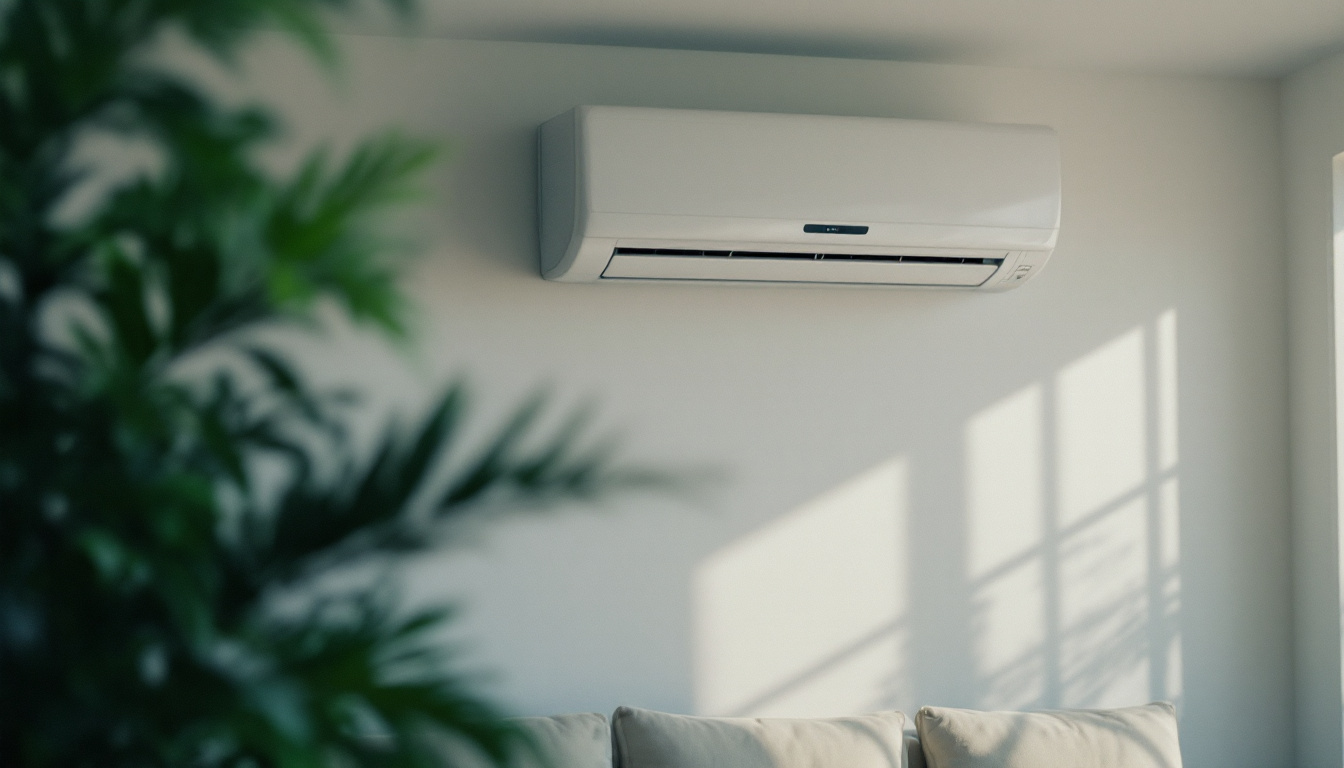
    A ductless mini split is a split system without ducts: an outdoor compressor connected by refrigerant lines to one or more wall, ceiling or floor units that condition rooms directly. Most are heat pumps, so they heat and cool.

    They are rated on SEER2 and HSPF2, the same federal measures as ducted central systems, not on the CEER scale used for window units. Split system heat pumps carry a national minimum of 14.3 SEER2 and 7.5 HSPF2.

    The name causes confusion. “Ductless” describes the distribution, not the technology. Mechanically a mini split is the same refrigerant cycle as a central system, with the air handler moved into the room instead of sitting in a plant space feeding ductwork.

    How a mini split differs from a central system

    Feature Ducted central system Ductless mini split
    Distribution Ductwork to registers Indoor heads in each conditioned space
    Zoning Whole house, or zoned with dampers Per head, inherently zoned
    Duct losses Real, especially in unconditioned space None, there are no ducts
    Efficiency rating SEER2 and HSPF2 SEER2 and HSPF2, same scale
    Federal minimum, split heat pump 14.3 SEER2, 7.5 HSPF2 14.3 SEER2, 7.5 HSPF2
    Regional AC standard applies Yes for air conditioners Not to heat pumps

    Where they make sense

    1. Homes without existing ductwork. Adding ducts to an older house is often the largest single cost in a retrofit. Mini splits remove that line item.
    2. Additions and conversions. A garage, attic room or extension that the existing system was never sized to serve.
    3. Rooms the central system cannot satisfy. Rather than upsizing the whole system for one problem room, which oversizes it for every other room.
    4. Where duct losses are severe. Ductwork running through an unconditioned attic loses energy that a ductless system never incurs.

    Where they make less sense is a house with sound existing ductwork and a system due for replacement. There the ducts are a sunk asset, and the case rests on zoning rather than on avoiding duct installation.

    The sizing rule still applies

    Per-head sizing is where mini split installations most often go wrong. Each head serves a space with its own load, and the same oversizing failure mode applies: an oversized head short cycles and dehumidifies poorly. See why square-footage sizing fails.

    Frequently asked questions

    What is a ductless mini split?

    A split system without ductwork. An outdoor compressor unit connects by refrigerant lines to one or more indoor heads mounted on walls, ceilings or floors, which condition rooms directly. Most are heat pumps, providing both heating and cooling, and they are rated on SEER2 and HSPF2 like ducted central systems.

    Are mini splits heat pumps?

    Most are. A mini split heat pump runs the refrigerant cycle in both directions so one machine heats and cools. Cooling-only mini splits exist but are less common in the US residential market. Federal minimums for split system heat pumps are 14.3 SEER2 and 7.5 HSPF2.

    Is a mini split more efficient than central air?

    Both are rated on the same SEER2 and HSPF2 scale, so the rating comparison is direct. The structural difference is duct losses: a ducted system loses energy through ductwork, particularly in unconditioned attics or crawl spaces, while a ductless system has none. Whether that advantage is decisive depends on the specific duct system.

    How many indoor units can one outdoor unit run?

    Multi-zone systems connect several indoor heads to one outdoor unit, with the number depending on the equipment. Each head serves a space with its own load, so per-head sizing from a room-by-room calculation matters as much as total capacity.

    Methodology and limitations

    Efficiency minimums are from 10 CFR 430.32(c)(5) and (c)(6). Equipment descriptions reflect standard configurations rather than any specific manufacturer’s product.

    • We publish no installed cost. No federal series measures HVAC installed prices.
    • Federal minimums are floors. Many products exceed them.
    • Whether a mini split suits a specific house depends on a load calculation for that house.

    Sources

    1. US Department of Energy, 10 CFR 430.32, efficiency standards for central air conditioners and heat pumps.

    The HVAC Brief is an independent trade publication. We do not sell equipment, take manufacturer advertising, or accept payment for placement in our research. Corrections welcome.

  • Window AC Efficiency Standards Just Jumped Up to 50%

    Window AC Efficiency Standards Just Jumped Up to 50%

    Last reviewed: August 2026 · By the HVAC Brief Editorial Team · Our sourcing and editorial standards

    The short answer

    Federal minimum efficiency for window and through-the-wall air conditioners rose sharply on May 26, 2026, by between 19% and 50% depending on the equipment class. The standards that had applied since June 1, 2014 were replaced on that date.

    The largest jump hits the most common household sizes. A cooling-only louvered unit between 14,000 and 19,900 Btu/h went from a minimum CEER of 10.7 to 16.0, an increase of 50%.

    Room air conditioners are regulated separately from central systems, under 10 CFR 430.32(b), and rated on Combined Energy Efficiency Ratio rather than SEER2. The change took effect three months ago and applies to units manufactured from that date, so stock built earlier can still be sold.

    The old and new minimums

    Equipment class CEER before CEER from May 26, 2026 Change
    Cooling only, with louvered sides , less than 6,000 Btu/h 11.0 13.1 +19%
    Cooling only, with louvered sides , of 6,000 to 7,999 Btu/h 11.0 13.7 +25%
    Cooling only, with louvered sides , of 8,000 to 13,999 Btu/h 10.9 16.0 +47%
    Cooling only, with louvered sides , of 14,000 to 19,999 Btu/h 10.7 16.0 +50%
    Cooling only, with louvered sides , of 20,000 Btu/h to 27,999 Btu/h 9.4 13.8 +47%
    Cooling only, with louvered sides , of 28,000 Btu/h or more 9.0 13.2 +47%
    Cooling only, without louvered sides, , less than 6,000 Btu/h 10.0 12.8 +28%
    Cooling only, without louvered sides , of 6,000 to 7,999 Btu/h 10.0 12.8 +28%
    Cooling only, without louvered sides , of 8,000 to 10,999 Btu/h 9.6 14.1 +47%
    Cooling only, without louvered sides , of 11,000 to 13,999 Btu/h 9.5 13.9 +46%
    Cooling only, without louvered sides , of 14,000 to 19,999 Btu/h 9.3 13.7 +47%
    Cooling only, without louvered sides , of 20,000 Btu/h or more 9.4 13.8 +47%
    Cooling and heating, with louvered sides, , less than 20,000 Btu/h 9.8 14.4 +47%
    Cooling and heating, without louvered sides, , less than 14,000 Btu/h 9.3 13.7 +47%
    Cooling and heating, with louvered sides, , of 20,000 Btu/h or more 9.3 13.7 +47%
    Cooling and heating, without louvered sides, , of 14,000 Btu/h or more 8.7 12.8 +47%

    Every class rose. Nothing was relaxed. The pattern is that mid-size cooling-only units, which dominate household sales, took the largest increases.

    What CEER measures and why it is not SEER2

    Combined Energy Efficiency Ratio expresses cooling output against electrical input, including standby power. It is a single-point measure, unlike SEER2, which is a seasonal average across a range of conditions. The two numbers are not interchangeable and a room unit cannot be compared with a central system by putting their ratings side by side.

    “Louvered sides” in the equipment classes refers to units with side vents, typical of window installations. Units without louvered sides are generally through-the-wall products, and they carry lower minimums because the installation restricts airflow.

    What this means in a shop

    The standard applies at manufacture, not at sale or installation. Units built before May 26, 2026 remain legal to sell and install, so inventory will straddle the two standards for some time. If efficiency matters for a specific purchase, the manufacture date and the CEER on the label decide it, not the year you buy.

    Frequently asked questions

    Did window air conditioner efficiency standards change in 2026?

    Yes. Under 10 CFR 430.32(b), the room air conditioner standards in effect from June 1, 2014 were replaced for products manufactured starting May 26, 2026. Minimum Combined Energy Efficiency Ratio rose across every equipment class, by between 19% and 50% depending on capacity and configuration.

    What is the minimum CEER for a window air conditioner?

    It depends on capacity and whether the unit has louvered sides and reverse cycle. For cooling-only louvered units manufactured from May 26, 2026, minimums run from 13.1 CEER below 6,000 Btu/h to 16.0 CEER in the 8,000 to 19,900 Btu/h range, per Table 7 to 10 CFR 430.32(b)(2).

    What is the difference between CEER and SEER2?

    CEER rates room air conditioners at a single operating point and includes standby power. SEER2 rates central air conditioners and heat pumps as a seasonal average across a range of conditions. They are different measures on different equipment and cannot be compared directly.

    Can I still buy a window unit built to the old standard?

    Yes. The standard applies to units manufactured from May 26, 2026, not to sale or installation. Stock built before that date remains legal to sell. Check the manufacture date and the CEER figure on the label rather than assuming the year of purchase determines the standard.

    Methodology and limitations

    All figures are quoted from the current text of 10 CFR 430.32(b), Table 6 to paragraph (b)(1) for the standards effective June 1, 2014 to May 26, 2026, and Table 7 to paragraph (b)(2) for products manufactured from May 26, 2026, retrieved from the electronic CFR. Percentage changes are ours, computed class by class.

    • These are federal minimums. Many products exceed them and utility programmes may require more.
    • Standards attach to manufacture date, not sale or installation date.
    • CEER and SEER2 are not comparable measures.
    • Nothing here is engineering or purchasing advice for a specific application.

    Sources

    1. US Department of Energy, 10 CFR 430.32(b), room air conditioner standards, Tables 6 and 7.

    The HVAC Brief is an independent trade publication. We do not sell equipment, take manufacturer advertising, or accept payment for placement in our research. Corrections welcome.