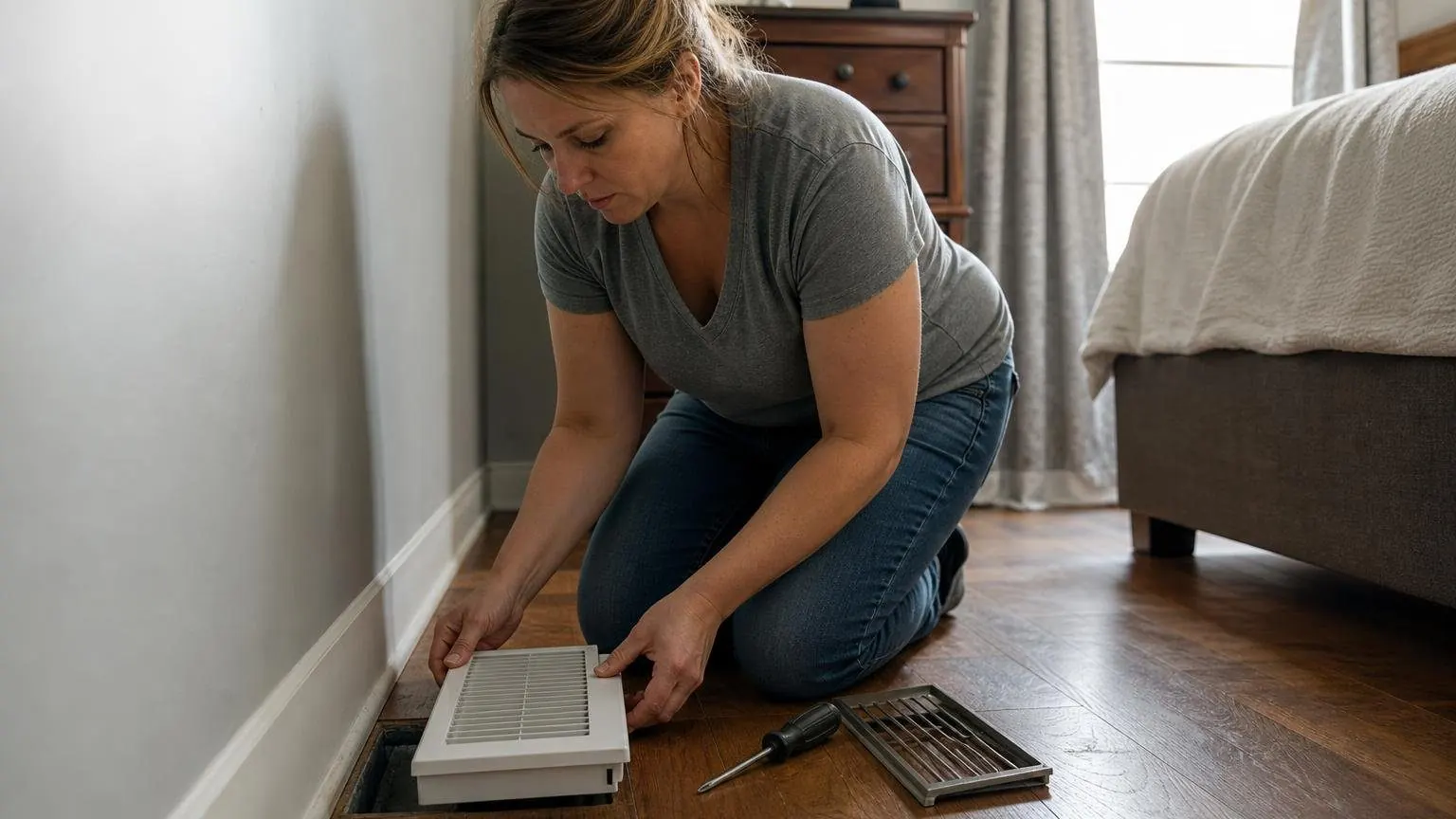
Do smart vents work? Partly. Smart vents can even out one or two problem rooms, but closing registers does not save energy when ducts leak, and closing too many starves the blower. National lab research and the makers’ own limits point the same way: close few, close the far ones, and fix the ducts first.
Key Takeaways
- A 2003 Lawrence Berkeley National Laboratory study found closing registers increased energy use in every simulated case, because duct leakage rose.
- LBNL advises against closing more than 60% of registers: furnaces can trip the high limit switch and coils can freeze.
- Flair caps closures at 1/3 of all vents in the home (maker claim).
- Keen says its vents carry pressure sensors but publishes no reopen threshold.
- The only third party test we found, a 2015 NYSP2I study Keen commissioned in one New Jersey house, showed better comfort but did not confirm savings.
- For whole floors, ACCA’s ANSI/ACCA 11 Manual Zr zoning standard is the engineered route.
What are smart vents, and how do they work?
Smart vents are motorized supply registers that open and close on their own to steer heated or cooled air toward the rooms that need it. They replace ordinary registers and take commands from an app, a hub and room temperature sensors.
The two names on page one of Google are Flair and Keen. Flair’s product page lists two C-cell batteries rated for 3 to 4 years, an optional 24 VAC wired connection, and a 915 MHz radio. Each room needs a temperature reading from a Flair Puck or a supported sensor. Keen’s page lists four AA batteries with “2+ year battery life”, a Zigbee radio, and “embedded temperature and pressure sensors”.
Smart Vent is also a flood vent brand, and “smart vents roof” searches concern attic ventilation; neither is covered here. For how ordinary registers and returns behave, see our guide to supply and return vents covers that ground.
Do smart vents work? What the independent evidence says
Smart vents work for comfort in narrow cases, but no independent study we found shows they save energy. The strongest evidence concerns closing registers in general, and it points the other way: in leaky ducts outside the living space, closed registers push more air out through the leaks.
Iain Walker’s LBNL report 54005 (2003) closed registers one by one on a lab duct system with ten registers, then modeled California houses. In every simulated case, closing registers increased energy use, “even for the low leakage configuration.” Supply boot leakage rose from 5% to 55% of blower airflow as registers closed, and supply plenum leakage rose from 10% to 35%.
Duct leakage is common. ENERGY STAR says a typical house loses about 20 to 30 percent of the air moving through its ducts to leaks, holes and poor connections. The DOE’s Building America HVAC guide (August 2011) says shutting vents in unused rooms “is not recommended”.
The one product test we found came from the New York State Pollution Prevention Institute at RIT, which Keen Home commissioned. It covered one rented house in Maywood, New Jersey, in the 2015 cooling season, with vent positions set by hand. Average temperature fell from 79.4°F to 75.7°F with “no detectable increase in energy consumption”; full savings were not confirmed.
Can smart vents damage your HVAC system?
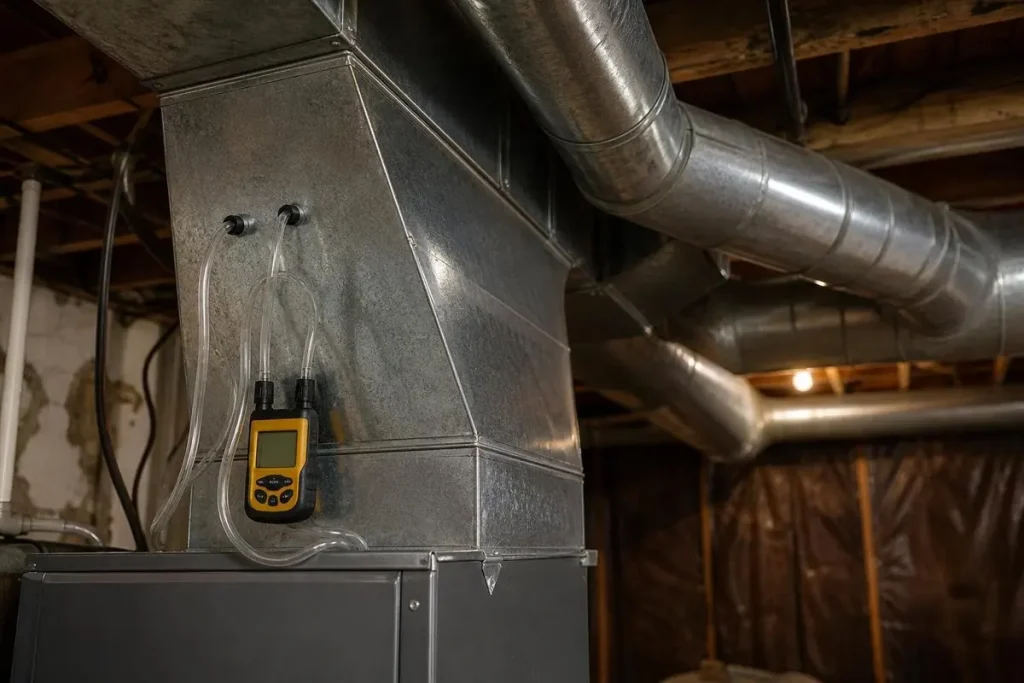
Smart vents can stress an HVAC system if they close too much register area. Closing registers adds resistance, so the blower moves less air or works against higher static pressure in the ducts.
Location matters as much as count. In LBNL’s test, closing the four registers nearest the air handler made boot pressure 3 to 4 times higher than closing the four farthest, “leading to about double the system leakage.” LBNL set about 20% as the largest acceptable cut in blower airflow; with near registers closed first, the leak-free test system hit that line at six closed registers out of ten.
LBNL warns that above 60% closed, furnaces may run on the high limit switch and cooling coils may freeze; our page on why an AC freezes up covers the coil side.
How the blower reacts depends on its motor, which our single stage vs variable speed explainer covers.
Two myths, one correction
“Closing vents in empty rooms saves energy” is wrong for houses with ducts outside the living space, per LBNL. “Any closed vent wrecks the furnace” is also unsupported: the documented harm comes from closing a large share of registers, especially near the air handler.
How do Flair and Keen smart vents manage static pressure?
Flair limits how many vents it closes, and Keen says its vents sense duct pressure. We found no independent test of either maker claim. Flair’s help center says it “will never close more than 1/3 of the total vents in a system”, counting every vent in the home, and credits an LBNL study plus “a 100% safety margin”.
Flair’s algorithm page gives the arithmetic. A thermostat zone with 14 supply vents allows 14 ÷ 3 = 4.67, rounded to 5 closed vents, or 36% of registers. When a sixth room calls for closing, Flair opens another vent first. With its Static Pressure Kit wired in, Flair says it adjusts the cap from live pressure readings.
Note that half of LBNL’s 60% ceiling is 30%, slightly below Flair’s 1/3, and a count-based cap does not tell near registers from far ones. Flair’s Manual mode page also says “none of the Flair automation runs” there, so treat manual control as a test setting.
| Product or approach | Pressure safeguard (as stated) | Power and sensing | Who says so |
|---|---|---|---|
| Flair Smart Vent | Closes no more than 1/3 of all vents; live cap with Static Pressure Kit | 2 C-cell batteries, 3 to 4 years, or 24 VAC; Puck or thermostat sensor per room | Flair (maker claim) |
| Keen Smart Vent | “Embedded temperature and pressure sensors”; no threshold published | 4 AA batteries, “2+ year battery life”; Zigbee | Keen (maker claim) |
| Engineered zone dampers | Designed excess air plan per Manual Zr | Wired dampers and zone panel | ACCA standard |
| Manually closed registers | None | None | LBNL: not an energy saver |
Smart vents vs zoning: which one fixes uneven rooms?
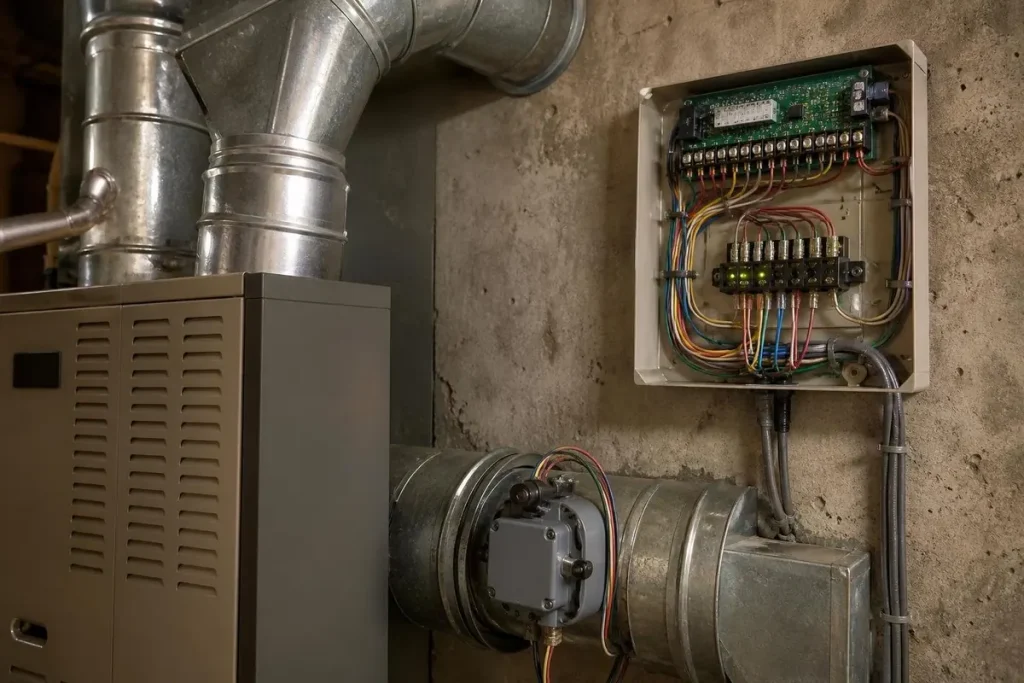
Smart vents suit a room or two; engineered zoning suits whole floors. A ducted zoning system is designed to handle the air the equipment still moves when zones close; smart vents are added to ducts sized to run fully open.
ACCA’s ANSI/ACCA 11 Manual Zr (2018) is the residential zoning standard. Section 8, Managing Excess Air, gives methods for “maintaining adequate airflow through the indoor blower” and keeping discharge air temperature within the equipment maker’s range. No smart vent maker we reviewed claims compliance with it.
Zoning uses wired motorized dampers in the branch ducts, explained in our guide to HVAC dampers. Where one room is starved, a technician doing air balancing can fix it without any motors.
Where there is no workable duct path, a ducted mini split for one area is another route.
Are smart vents worth it? When they help and when they do not
Smart vents are worth trying when the problem is one or two rooms, the ducts are tight, and closures stay well under the maker’s cap. They are poor value as an energy saver, because the lab evidence says closing registers on leaky ducts costs energy.
They make the most sense in these cases:
- A single bedroom or office that runs hot or cold while the rest of the house is fine.
- Ducts inside the conditioned space or recently sealed, so extra pressure leaks less to the outdoors.
- A product with a documented closure cap, and pressure measured before and after.
Skip them when a whole floor is uncomfortable, the ducts run unsealed through an attic or crawl space, or nobody will check pressure. In a house with no usable ducts to the problem area, compare what a mini split costs instead.
How do you install smart vents without hurting the system?
Installing smart vents is a register swap, but doing it safely starts with the ducts and ends with a pressure reading.
- Count every supply register in the house; Flair’s cap is a share of all vents.
- Seal what you can reach. ENERGY STAR says connections at vents and registers “are common locations to find leaks”; our page on duct repair and testing covers the rest.
- Have a technician record total external static pressure with every register open.
- Measure each register opening, then swap in the smart vents on supply registers only. Leave return grilles open.
- Add temperature sensing in each controlled room and confirm thermostat compatibility; our smart thermostat wiring guide helps here.
- Close the planned vents and measure static pressure again. Run the system in automatic mode, not manual.
The DOE guide also says to keep every room at a minimum of 50°F in winter to prevent frozen pipes.
How we researched this
Researched October 18, 2026, from a Google SERP pulled October 15. We read 16 primary and maker documents, including the full LBNL-54005 report, and cited ten. Flair and Keen statements are labeled maker claims. Keen’s help center returned “Not found”, so no Keen threshold is given. Vendor prices are excluded; forum and Reddit threads informed questions only, never facts.
Frequently asked questions
Are smart vents a good idea?
For one or two rooms with tight ducts, they can be. As an energy saver, the evidence is against them: LBNL’s 2003 study found closing registers increased energy use in every simulated California case, because duct leakage rose. Treat them as a comfort tool.
Are smart vents bad for HVAC systems?
They can be if they close too much. LBNL advises against closing more than 60% of registers, warning that furnaces may run on the high limit switch and cooling coils may freeze. Flair says it caps closures at 1/3 of all vents, a maker claim.
Do smart vents save money?
No independent study we found shows savings. A 2015 test that Keen commissioned from NYSP2I at RIT found better comfort, with average house temperature falling from 79.4°F to 75.7°F, and no detectable increase in energy use. The authors did not confirm the full savings potential, and it covered one house.
How many smart vents can I close at once?
Flair’s rule is one third of the supply vents in a thermostat zone, rounded: 14 vents allows 5 closed. LBNL’s leak-free lab system lost about 20% of its airflow, the limit LBNL accepts, with six of ten near registers closed. Far registers carry less risk.
How are smart vents powered?
Most run on batteries. Flair lists two C-cell batteries with 3 to 4 years of life, plus an optional 24 VAC wired connection. Keen lists four AA batteries and “2+ year battery life”. Both use a separate hub or bridge and a temperature reading from each room.
Do smart vents work with ecobee or Nest?
Both makers list them. Flair names ecobee, Nest, Honeywell Home and Sensi thermostats and accepts ecobee or Honeywell room sensors in place of its Puck. Keen lists Nest, ecobee and SmartThings hubs. Check each maker’s current list before buying any vents.
Sources
- Lawrence Berkeley National Laboratory (Walker, I.S.). “Register Closing Effects on Forced Air Heating System Performance.” LBNL-54005, 2003. https://eta-publications.lbl.gov/sites/default/files/54005.pdf. Accessed October 2026.
- U.S. Department of Energy, Building America (PNNL and ORNL). “HVAC: A Guide for Contractors to Share with Homeowners.” PNNL-20421, August 2011. https://www.energy.gov/sites/default/files/2013/11/f5/hvac_guide.pdf. Accessed October 2026.
- ENERGY STAR. “Duct Sealing.” https://www.energystar.gov/saveathome/heating-cooling/duct-sealing. Accessed October 2026.
- ACCA. “Manual Zr: Residential Zoning Systems (ANSI/ACCA 11 Manual Zr 2018).” https://www.acca.org/standards/technical-manuals/manual-zr. Accessed October 2026.
- New York State Pollution Prevention Institute, RIT. “NYSP2I’s Product Assessment of Keen Home’s Smart Vent System Identifies Energy Saving Opportunities.” https://www.rit.edu/affiliate/nysp2i/sites/rit.edu.affiliate.nysp2i/files/docs/resources/Keen_Home_Identifies_Energy_Saving_Opportunities.pdf. Accessed October 2026.
- Flair. “What is Back Pressure Protection?” https://support.flair.co/hc/en-us/articles/360000522112-What-is-Back-Pressure-Protection. Accessed October 2026.
- Flair. “Back Pressure Protection (BPP) Algorithms / Smart Air Routing.” https://support.flair.co/hc/en-us/articles/4403064590861-Back-Pressure-Protection-BPP-Algorithms-Smart-Air-Routing-How-Flair-protects-your-HVAC-system. Accessed October 2026.
- Flair. “Manual Mode.” https://support.flair.co/hc/en-us/articles/360000523052-Manual-Mode. Accessed October 2026.
- Flair. “Smart Vent.” https://flair.co/products/vent. Accessed October 2026.
- Keen Home. “Smart Vent.” https://keenhome.io/products/smart-vent. Accessed October 2026.
Leave a Reply