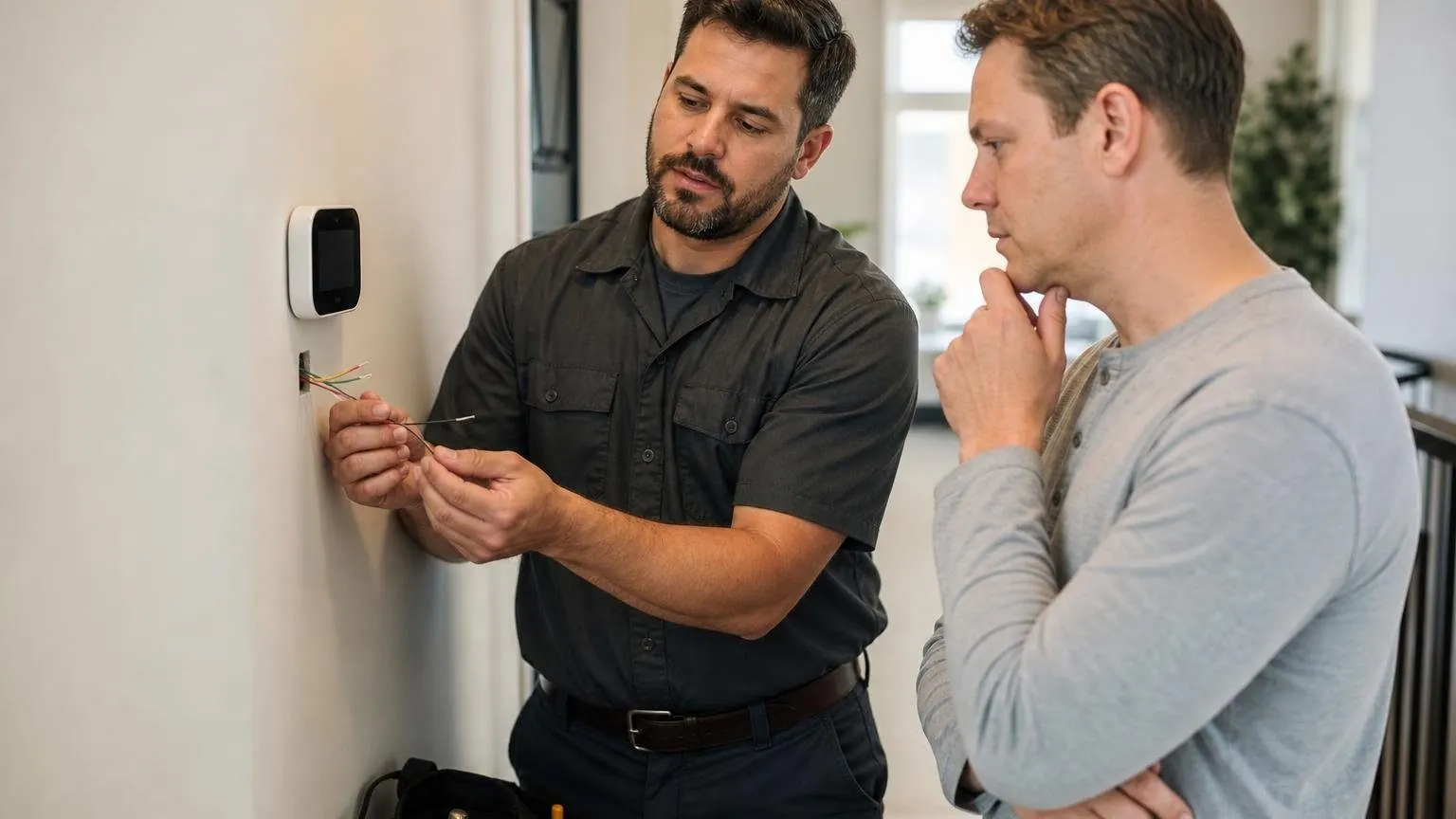
Ecobee vs Nest, which is better? On the makers’ own spec sheets, ecobee wins on room sensing: its SmartSensor detects occupancy and one account takes up to 32. Nest wins on staging and Matter: the Learning Thermostat (4th gen) runs 3 heat and 3 cool stages. Your wiring and equipment decide the rest.
Key Takeaways
- ecobee’s Premium spec page lists heat pumps at 2H/2C plus 2 AUX stages and boxes a SmartSensor and Power Extender Kit.
- Google’s Nest Learning Thermostat (4th gen) spec page lists 3 heating and 3 cooling stages and “Works with Google Home and Matter.”
- Google’s own C wire help page says heat pump, zoned, heating-only and cooling-only systems require a C wire or a power accessory.
- The 8% in ENERGY STAR’s smart thermostat criteria is a certification floor for heating run time reduction, not a promised bill saving.
- ENERGY STAR lab data: ±0.09°F static accuracy for the Nest Learning Thermostat (4th gen), ±0.53°F for the ecobee Premium.
- Google ended app support for 1st and 2nd gen Nest Learning Thermostats on October 25, 2025.
Ecobee vs Nest: which current models are we comparing?
As of October 29, 2026, ecobee sells three thermostats (Smart Thermostat Premium, Enhanced and Essential) and Google’s US store sells two (Nest Learning Thermostat (4th gen) and Nest Thermostat).
The ecobee4, Nest Learning (3rd gen) and Nest Thermostat E that fill page one are no longer in either store. Prices below are maker list prices and change often.
| Spec (maker page) | ecobee Premium | ecobee Essential | Nest Learning (4th gen) | Nest Thermostat |
|---|---|---|---|---|
| Maker list price, Oct 29, 2026 | $259.99 | $139.99 | $279.99 | $129.99 |
| Conventional stages | 2H/2C | 2H/1C or 1H/2C | 3 heat, 3 cool | 1H/1C plus a second heat or cool stage |
| Heat pump | 2H/2C + 2 stage AUX heat | 2H/1C | Up to 3 stages, 1 or 2 stages of aux and emergency heat | 1 stage plus aux or emergency heat |
| Power | 24VAC on C and Rc; Power Extender Kit in box | 24VAC on C and R; Power Extender Kit sold separately | “Power Sharing” from HVAC wiring, rechargeable battery | HVAC wires, 2 AAA backup batteries |
| Built-in sensors | Temperature, humidity, radar occupancy and proximity, air quality monitor | Temperature, humidity | Soli motion, temperature, humidity, ambient light | Motion, temperature, humidity, ambient light |
| Room sensor in box | 1 SmartSensor | None (SmartSensor works) | 1 Nest Temperature Sensor (2nd gen) | None, and not compatible |
| Platforms listed | Apple HomeKit, Alexa, Google Assistant, SmartThings | Google Assistant, Apple HomeKit, Alexa | Google Home and Matter | Matter certified; Hey Google and Alexa |
| Warranty | 3 years | 3 years | 2 years retail, 5 years via HVAC Pros | 1 year |
The Enhanced ($199.99) keeps radar occupancy sensing and the boxed Power Extender Kit but lists 1 AUX stage, no air quality monitor and no bundled SmartSensor. A standalone air quality monitor fills that gap for any thermostat, with particle and carbon dioxide readings of its own.
Which is better for a heat pump, ecobee or Nest?
For multi-stage heat pumps, the Nest Learning Thermostat (4th gen) and ecobee Premium or Enhanced qualify; the Nest Thermostat and ecobee Essential suit single-stage units. The bigger difference is when each runs backup heat.
Google’s heat pump configuration guide ships Heat Pump Balance at “Max Comfort,” which Google’s help page says “generally gives you higher AUX lockout temperature.” Google also states that “Nest thermostats do not support an outdoor temperature sensor”; lockouts rely on weather data over Wi-Fi.
Google says AUX heat “can cost about 2 to 5 times as much as running your heat pump,” so check that default; see what AUX and EM HEAT really cost. Ecobee’s equivalents are “Compressor Min Outdoor Temperature” and “Aux Heat Max Outdoor Temperature” under Thresholds in a DOE training module. For a furnace-backed dual fuel heat pump, Nest uses a Dual Fuel Breakpoint instead (default 30°F).
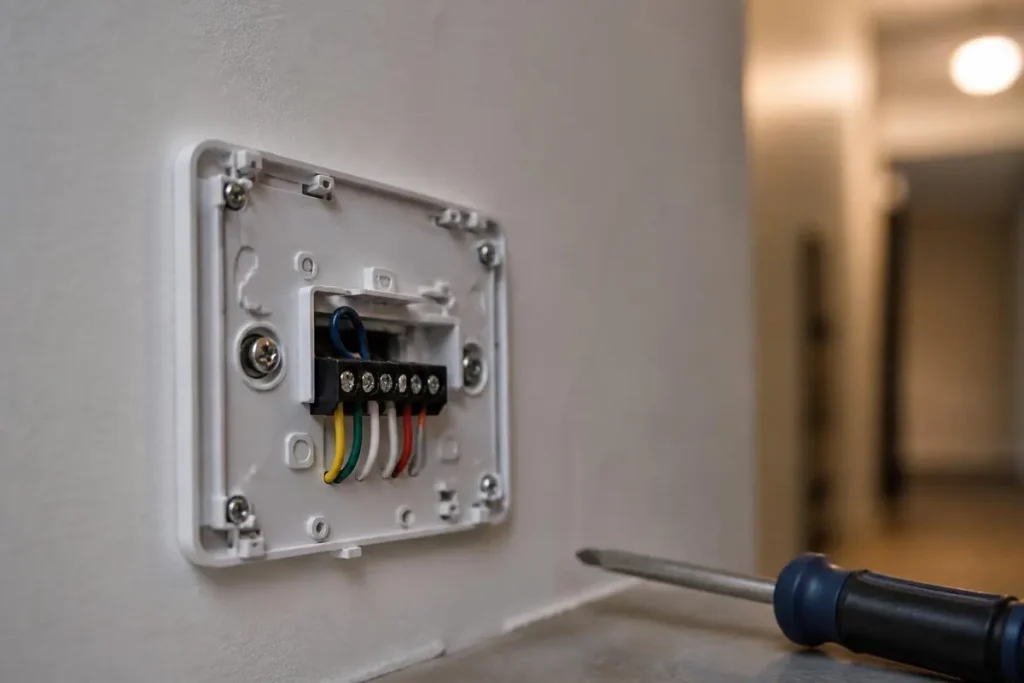
Do ecobee and Nest thermostats need a C wire?
Both need steady 24 volt power. Ecobee powers through the C terminal and covers a missing C wire with its Power Extender Kit; Nest draws power through the heating and cooling wires to charge a battery, with a C wire or Nest Power Connector as fallback.
Ecobee’s Power Extender Kit needs “at least four wires,” mounts at the furnace control board and works by “combining the functionality of the Y and G wires into a single wire.” Millivolt, high-voltage, dual transformer, fan coil and communicating systems are incompatible. The kit ships with every ecobee thermostat except the Essential and Lite.
Google says the 4th gen “is designed to work whether or not your home has a common (‘C’) wire,” needing a C wire or Power Connector only “in limited cases (<1%).” Count conductors with our thermostat terminal guide and check the 24 volt control transformer.
Why do some HVAC techs dislike Nest thermostats?
The complaint is electrical. Without a C wire, a thermostat borrows power through the circuits that switch the equipment, and some systems react badly. Google lists symptoms when a system “can’t deliver consistent power,” including:
- “Your system is making strange noises: chattering, stuttering, clicking or thumping”
- “Heating or cooling repeatedly turns on and off in a short period”
- “The system fan is always running or won’t turn on”
Google’s fix is a C wire or a Nest Power Connector, which it offers free when the power test shows a “Low power” error. Our thermostat troubleshooting guide separates power from wiring faults.
Myth check
“Ecobee needs a C wire and Nest doesn’t” is page one’s most repeated line. Google’s own help page says heating-only, cooling-only, zone-controlled and heat pump systems “require a C wire or a compatible power accessory,” and ecobee boxes its Power Extender Kit with the Premium and Enhanced.
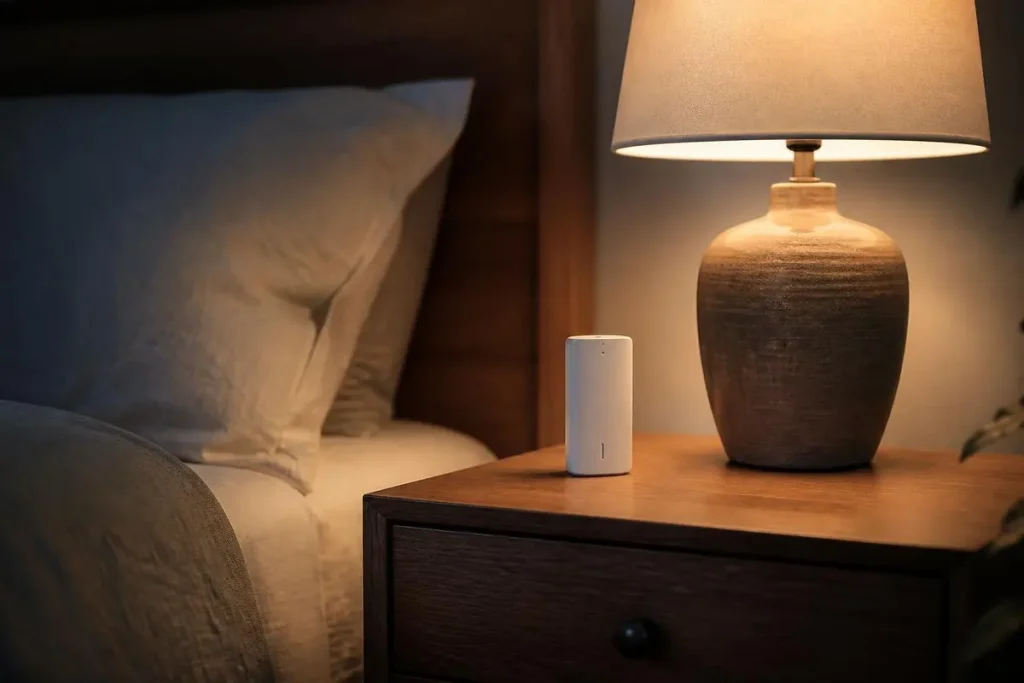
How do ecobee and Nest room sensors compare?
Ecobee’s SmartSensor reports temperature and occupancy; Google’s Nest Temperature Sensor (2nd gen) reports temperature only. Ecobee says “each account can accommodate up to 32 sensors,” placed up to 60 feet away. Google allows up to 6 sensors per thermostat and 18 per home, within 50 feet.
Occupancy is the practical difference: ecobee’s SmartSensor page says it “detects which rooms are in use and adjusts the temperature accordingly.” Google lets you prioritize one room or average several.
One trap: Google lists the sensor as compatible only with the Nest Learning Thermostat (4th and 3rd gen) and Nest Thermostat E, not the base Nest Thermostat. A sensor also fixes a badly placed wall unit; see where a thermostat belongs.
Does ecobee or Nest save more energy?
All five current models are ENERGY STAR certified, and no independent source ranks either brand higher on savings. ENERGY STAR requires at least an 8% heating and 10% cooling run time reduction, computed from a year of data from hundreds of customer homes: a floor, not a promise.
Ecobee’s “up to 26%” for the Premium comes, per its own footnote, from “an internal analysis conducted in April, 2021” and is “compared to a hold of 72°F/22°C,” a thermostat never set back. For hardware, ENERGY STAR’s lab data is more telling:
| Model (ENERGY STAR family) | Static accuracy | Standby power | Date certified |
|---|---|---|---|
| Nest Learning Thermostat 4th gen (GA05###) | ±0.09°F | 0.10 W | Apr 24, 2024 |
| Nest Thermostat (GA0####) | ±0.30°F | 0.10 W | Nov 1, 2020 |
| ecobee Premium (EB-STATE6) | ±0.53°F | 1.83 W | Apr 25, 2023 |
| ecobee Essential (EB-STATE7, “ecobee 7”) | ±0.73°F | 0.88 W | Jul 30, 2024 |
| ecobee Enhanced (EB-STATE6L) | ±1.11°F | 1.51 W | Dec 16, 2025 |
Either way, savings depend on the setback you program; see what DOE says a setback saves and our household thermostat setting data.
Is Google Nest being phased out?
No. Google still sells and supports the Nest Learning Thermostat (4th gen) and Nest Thermostat, but it ended app support for the three oldest Learning models on October 25, 2025: the 1st gen (2011), the 2nd gen (2012) and the 2nd gen Europe version (2014).
They lost app control, notifications, assistants and updates, and Nest Protect “emergency shut off will no longer run.” Google says schedules and on-device controls keep working.
On subscriptions, ecobee marks Premium smoke alarm detection “ecobee Smart Security plan required.” Google’s Nest spec pages list none.
Ecobee vs Nest: which should you buy?
Pick by system: ecobee for uneven rooms and native HomeKit; Nest for three-stage equipment, Matter, and conventional furnaces without a C wire. Run each maker’s checker, then:
- Count the wall-plate wires and check for a C wire.
- Identify the system: conventional, heat pump, dual fuel or zoned.
- Three compressor stages point to the Nest Learning Thermostat (4th gen).
- Occupancy-aware room sensors point to ecobee.
- Plan power: Power Extender Kit for ecobee, C wire or Power Connector for Nest.
Our smart thermostat installation guide covers the swap, and what a thermostat can and cannot sense explains the limits of any model.
How we researched this
This is a spec and documentation comparison; we did not install, test or use these thermostats. On October 28, 2026 we read the top-ranking comparisons, the current ecobee and Google Store spec pages, Google Nest Help, Google’s Q2 2026 heat pump guide, ENERGY STAR’s criteria and certified dataset, and a DOE training module, then rechecked all of it on October 29, 2026.
Excluded: maker savings claims as evidence, retailer prices, unsourced sensor counts, and press reports of ecobee’s 2024 cutoff for its oldest models (we could not open ecobee’s own notice). Reddit was read for questions only.
Frequently asked questions
Can I replace a Nest with an ecobee?
Usually, on a 24 volt system. Without a C wire, ecobee’s Power Extender Kit needs at least four wires and excludes millivolt, high-voltage, dual transformer, fan coil and communicating systems. Label each wire before removing the Nest base, then run ecobee’s checker.
Does ecobee support Matter?
Not on ecobee’s own pages as of October 29, 2026; the Premium lists Apple HomeKit, Amazon Alexa, Google Assistant, SmartThings and IFTTT. Google lists Matter for both current Nest thermostats: “Works with Google Home and Matter” on the 4th gen and “Matter certified” on the Nest Thermostat.
Do Nest temperature sensors work with the Nest Thermostat?
No. Google lists the Nest Temperature Sensor (2nd gen) as compatible only with the Nest Learning Thermostat (4th and 3rd gen) and the Nest Thermostat E. By contrast, ecobee’s lowest-priced model, the Essential, works with a SmartSensor, which is sold separately.
Will a 1st or 2nd gen Nest still heat my house?
Yes, manually. Google says pre-set schedules “will continue to work uninterrupted” and on-device controls still work after October 25, 2025. Remote control, notifications, third-party assistants and software or security updates all ended on that date, and Nest Protect emergency shut off stopped.
Which is more accurate, ecobee or Nest?
In ENERGY STAR’s certified product data, the Nest Learning Thermostat (4th gen) family tested at ±0.09°F static accuracy, the Nest Thermostat at ±0.30°F and the ecobee Premium at ±0.53°F. All five current models sit well inside the ±2.0°F certification limit.
Do ecobee and Nest work without Wi-Fi?
Yes, as basic thermostats. ENERGY STAR’s first requirement reads: “Work as a basic thermostat in absence of connectivity to the service provider.” Without Wi-Fi weather data, Google says Nest uses system performance to decide when to bring on AUX heat.
Sources
- ecobee. “Smart Thermostat Premium.” https://www.ecobee.com/en-us/smart-thermostats/smart-thermostat-premium/. Accessed October 2026.
- ecobee. “Smart Thermostat Enhanced.” https://www.ecobee.com/en-us/smart-thermostats/smart-thermostat-enhanced/. Accessed October 2026.
- ecobee. “Smart Thermostat Essential.” https://www.ecobee.com/en-us/smart-thermostats/smart-thermostat-essential/. Accessed October 2026.
- ecobee. “Compare thermostats.” https://www.ecobee.com/en-us/smart-thermostats/. Accessed October 2026.
- ecobee. “Power Extender Kit.” https://www.ecobee.com/en-us/thermostat-accessories/power-extender-kit/. Accessed October 2026.
- ecobee. “SmartSensor.” https://www.ecobee.com/en-us/sensors/smart-temperature-occupancy-sensor/. Accessed October 2026.
- Google Store. “Nest Learning Thermostat (4th gen) Tech Specs.” https://store.google.com/us/product/nest_learning_thermostat_4th_gen_specs?hl=en-US. Accessed October 2026.
- Google Store. “Nest Thermostat Tech Specs.” https://store.google.com/us/product/nest_thermostat_specs?hl=en-US. Accessed October 2026.
- Google Store. “Nest Temperature Sensor (2nd gen) Tech Specs.” https://store.google.com/us/product/nest_temperature_sensor_specs?hl=en-US. Accessed October 2026.
- Google Nest Help. “Learn about the common or C wire.” https://support.google.com/googlenest/answer/9251212?hl=en. Accessed October 2026.
- Google Nest Help. “Set up and install your Nest Temperature Sensor.” https://support.google.com/googlenest/answer/9207485?hl=en. Accessed October 2026.
- Google Nest Help. “Heat Pump Balance.” https://support.google.com/googlenest/answer/9248719?hl=en. Accessed October 2026.
- Google Nest Help. “End of support for Nest Learning Thermostats (1st and 2nd gen).” https://support.google.com/googlenest/answer/16233096?hl=en. Accessed October 2026.
- Google. “Configuring Heat Pump Settings, Nest thermostats” (Q2 2026 guide). https://services.google.com/fh/files/helpcenter/nest_thermostat_heat_pump_configuration_guide_q2_26.pdf. Accessed October 2026.
- US EPA, ENERGY STAR. “Smart Thermostats Key Product Criteria.” https://www.energystar.gov/products/heating_cooling/smart_thermostats/key_product_criteria. Accessed October 2026.
- US EPA, ENERGY STAR. “ENERGY STAR Certified Smart Thermostats” dataset. https://data.energystar.gov/Active-Specifications/ENERGY-STAR-Certified-Smart-Thermostats/7p2p-wkbf. Accessed October 2026.
- US DOE, Building Science Education Solution Center. “Thermostats Dual Fuel, Level 3, Apply” training module. https://bsesc.energy.gov/sites/default/files/2024-08/Thermostats%20Dual%20Fuel%20-%20Level%203%20-%20Apply.docx. Accessed October 2026.
Leave a Reply