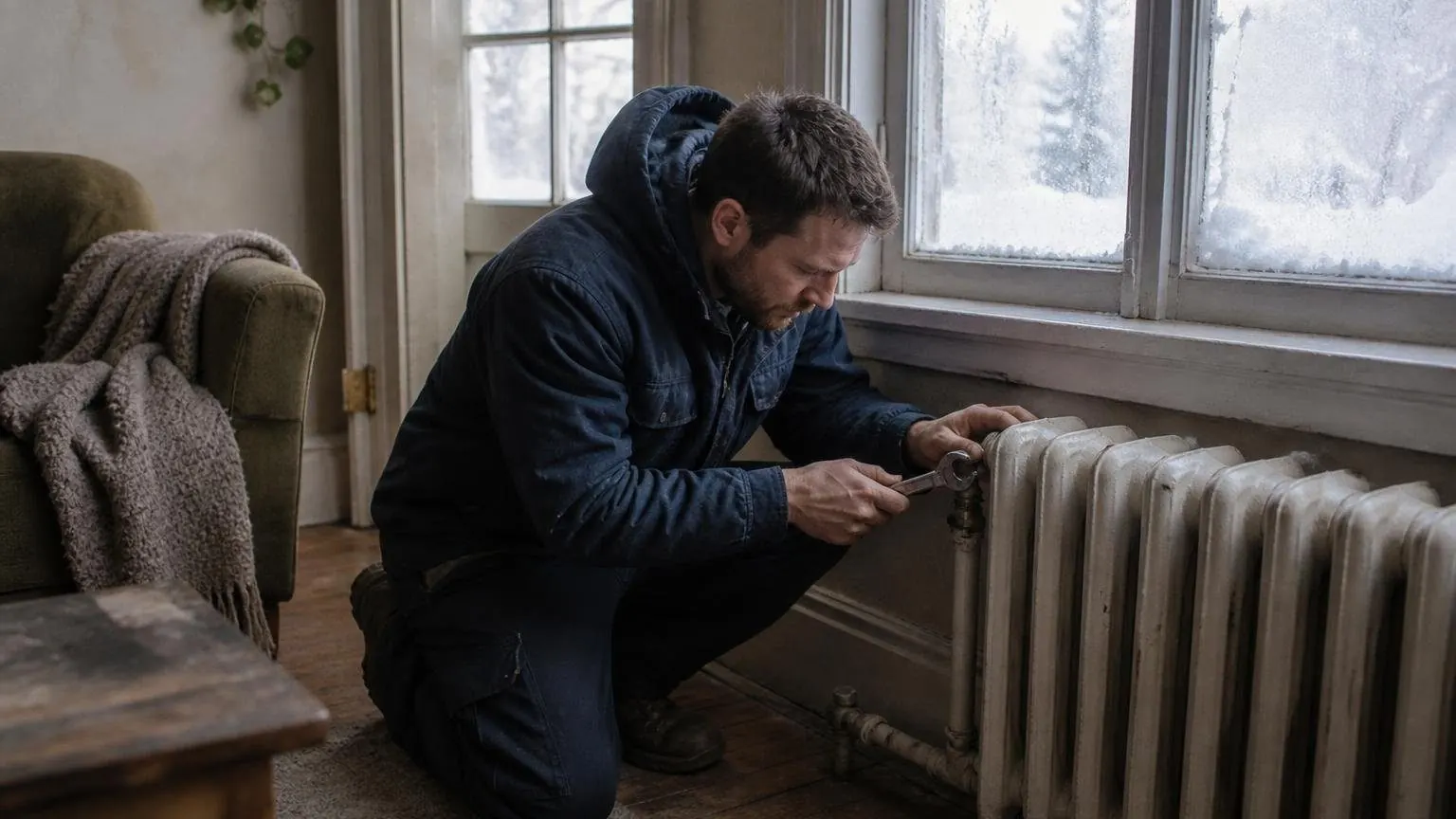
What are landlord heat requirements? Landlord heat requirements are city and state rules that set a heat season and a minimum indoor temperature, usually 68°F by day. Night minimums run from 62°F in New York City to 66°F in Chicago, and California requires heat capable of 70°F.
Key Takeaways
- New York City: 68°F from 6 a.m. to 10 p.m. when it is below 55°F outside, and 62°F overnight, Oct. 1 to May 31 (Admin. Code 27-2029).
- Chicago: 68°F from 8:30 a.m. to 10:30 p.m. and 66°F overnight, Sept. 15 to June 1, with fines of $500 to $1,000 per day per violation (Chicago Dept. of Buildings).
- Massachusetts: 68°F by day, 64°F at night and a 78°F maximum (105 CMR 410.201).
- New Jersey’s season ends May 15, with 65°F required from 11 p.m. to 6 a.m. (N.J.A.C. 5:10-14.4).
- California’s Title 25 requires rental heat capable of 70°F, 24 hours a day where the landlord controls it (25 CCR § 34).
- Philadelphia logged 1,352 no-heat complaints in 2025; 570 became violations (Philadelphia L&I).
What are landlord heat requirements, and who sets them?
Landlord heat requirements come from local housing codes and some state laws, not one national rule. Each sets the heat season, the minimum temperature by time of day, and whether the landlord must supply heat or only keep working equipment.
That last point matters. Chicago requires landlords to supply heat where tenants have no individual control, but where each unit has its own equipment the landlord must keep it able to reach 68°F and the tenant may pay the gas or electric bill. If you rent, our look at how renters’ heating equipment compares with owners’ uses federal data to show renters tend to live in leakier homes with older heat.
This is not legal advice. Codes change and cities can be stricter than their state. Check your city’s code or housing agency before acting.
Landlord heat requirements by city and state: the verified table
Every row below was read in October 2026 from code text or the enforcing agency’s own page. Where a source states no value, the cell says so.
| Jurisdiction | Heat season | Daytime minimum | Night minimum | Notes | Citation |
|---|---|---|---|---|---|
| New York City | Oct. 1 to May 31 | 68°F, 6 a.m. to 10 p.m., when outside is below 55°F | 62°F, 10 p.m. to 6 a.m. | Hot water at 120°F all year (HPD) | Admin. Code § 27-2029(a) |
| Chicago | Sept. 15 to June 1 | 68°F, 8:30 a.m. to 10:30 p.m. | 66°F, 10:30 p.m. to 8:30 a.m. | Two-pipe buildings: 64°F in transition weeks | Municipal Code 14X-8-803 |
| Massachusetts | All days except June 15 to Sept. 15 | 68°F, 7 a.m. to 11 p.m. | 64°F, 11:01 p.m. to 6:59 a.m. | Maximum 78°F | 105 CMR 410.201 |
| New Jersey | Oct. 1 to May 15 | 68°F, 6 a.m. to 11 p.m. | 65°F, 11 p.m. to 6 a.m. | Hotels and multiple dwellings | N.J.A.C. 5:10-14.4 |
| Washington, DC | Oct. 1 to May 1 (DC Attorney General) | 68°F, 6:30 a.m. to 11 p.m. | 65°F, 11 p.m. to 6:30 a.m. | When the occupant does not control heat; equipment capable of 70°F | 14 DCMR 501.2 and 501.4 |
| Philadelphia | Oct. 1 to April 30 | System capable of 68°F | Not stated | Single-family homes exempt | Philadelphia L&I, January 2026 |
| California (statewide) | No season stated | Capable of 70°F, 3 feet above the floor | 70°F, 24 hours, if the landlord controls the heat | No unvented fuel-burning heaters | Cal. Code Regs. tit. 25, § 34 |
| San Francisco | No season stated | Capable of 70°F, 3 feet above the floor | Same, 24 hours if the landlord controls the heat | Residential hotel rooms: 68°F for 13 hours a day | SF Housing Code, amended January 20, 2020 |
| Minnesota (statewide) | Oct. 1 to April 30 | 68°F | 68°F (no day/night split) | Cannot be waived in a lease | Minn. Stat. § 504B.161, subd. 1(a)(5) |
New York City’s code text comes from Local Law 86 of 2017, and the hot water rule from city’s housing agency, HPD. San Francisco’s row is from the Rent Board’s minimum heat page (archived copy).
When do landlords have to turn the heat on?
Usually Sept. 15 or Oct. 1. Chicago starts Sept. 15; New York City, New Jersey, Washington, DC, Philadelphia and Minnesota start Oct. 1. End dates range from April 30 in Philadelphia and Minnesota to June 1 in Chicago.
A heat season sets a window for minimum temperatures, not an order to run the boiler daily. Chicago says buildings may shut off heat or run air conditioning during the season as long as the minimums are met. Cooling duties are a separate question, covered in our guide to landlord air conditioning laws.
What temperature do landlords have to keep at night?
Between 62°F and 66°F in the codes we read, against 68°F by day. New York City is lowest at 62°F and Chicago highest at 66°F; Massachusetts uses 64°F, New Jersey and Washington, DC 65°F.
New York City adds an outdoor trigger: the 68°F daytime rule applies only below 55°F outside, and HPD inspectors record the outdoor temperature on every visit. The 62°F night rule applies in any weather.
The myth to retire
Some pages present 68°F by day, 62°F at night and a 55°F outdoor trigger as New Jersey law. Those are New York City’s numbers. New Jersey’s code says 65°F from 11 p.m. to 6 a.m., with no outdoor trigger, and its season ends May 15, not May 31.
Do space heaters satisfy landlord heat requirements?
Not in Chicago or San Francisco. Chicago bars cooking appliances, water heaters, portable space heaters and fireplaces from counting toward the minimum. San Francisco’s Rent Board says supplying portable space heaters does not comply.
California’s Title 25 also bans unvented fuel-burning heaters in rentals. If a tenant runs a portable unit while awaiting repair, see our space heater guide; Philadelphia L&I warns that using stoves or ovens for heat is illegal and unsafe.
How is the temperature measured for landlord heat requirements?
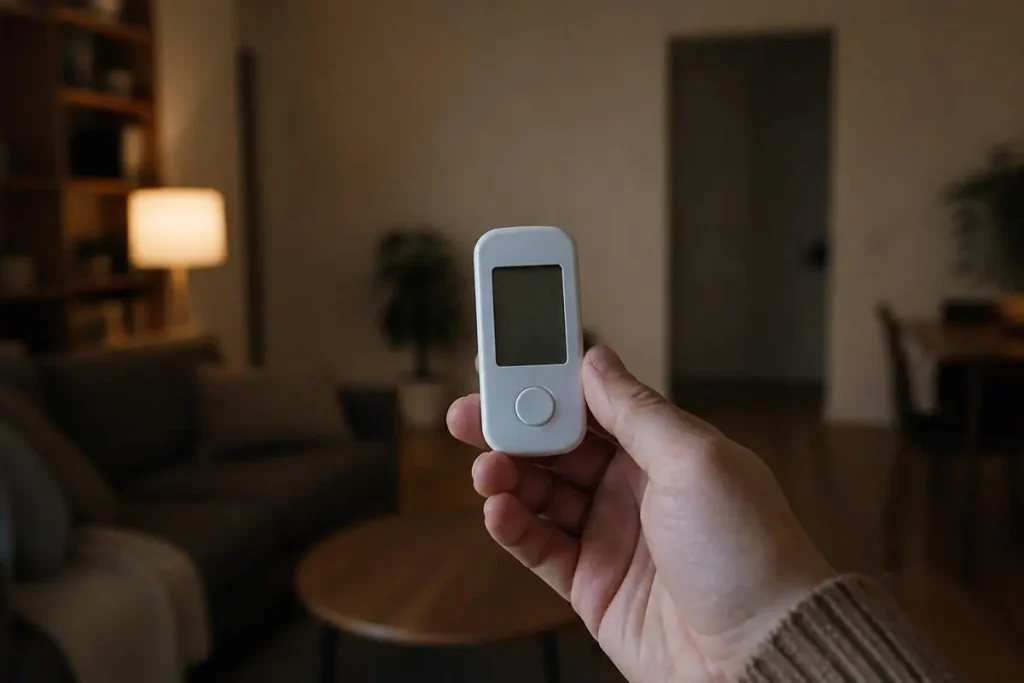
Codes say where the reading counts. Chicago measures 3 feet above the floor and at least 3 feet from any exterior wall, with windows and exterior doors closed. Massachusetts reads at 5 feet above the floor, more than 5 feet from the exterior wall.
California and San Francisco use 3 feet above the floor; Washington, DC measures with outside openings shut. A reading beside a window or radiator will not match an inspector’s, and a thermostat display may not either, as our note on where thermostats are mounted explains.
What can tenants do when there is no heat?
Start with the landlord, then the city. New York City’s HPD tells tenants to contact the landlord first and, if that fails, file through 311. Chicago and Philadelphia also take heat complaints through 311.
- Notify the landlord in writing, with dates and room temperatures.
- Measure the way your code does and note the time.
- File with the city: 311 in New York City, Chicago and Philadelphia; the Department of Building Inspection in San Francisco.
- Ask legal aid before withholding rent; remedies differ by state.
If an owner ignores a violation, HPD’s Emergency Repair Program may hire a contractor and bill the owner. San Francisco tenants may petition the Rent Board for a rent cut, though it cannot order heat restored. Space heaters and ovens raise carbon monoxide and fire risk, so check your CO alarm placement while you wait.
How can landlords meet heat requirements before the season starts?
Service equipment before the first cold night: Chicago states that the reason for a lack of heat does not matter. A preseason heating checklist and a plan for after-hours HVAC calls close most gaps.
- Washington, DC requires a yearly inspection of central heating in buildings with two or more units, between March 1 and Sept. 1, including flues and vents for carbon monoxide (14 DCMR 501.10).
- New Jersey makes the owner supply fuel unless the tenant agrees in writing and has separately billed equipment. The system must reach the minimum without heating adjoining rooms more than 5°F above it.
- Chicago lets two-pipe buildings hold 64°F at all hours early and late in the season while switching between heating and cooling, a rule that matters for steam and two-pipe systems.
When a boiler or furnace quits midseason, the usual first checks are in our guides to a boiler that will not fire and a furnace that will not ignite.
How we researched this
Research date: October 28, 2026. We opened 15 sources and cite 12: code or regulation text for New York City, Massachusetts, New Jersey, Washington, DC, California and Minnesota, and enforcing agency pages for New York City, Chicago, Philadelphia, San Francisco, Massachusetts and Washington, DC. Massachusetts, New Jersey and California text was read via Cornell’s Legal Information Institute. We dropped Wisconsin (code site unreachable) and California Health and Safety Code 17920.3 (site blocked). Reddit was skipped for this legal topic. Vendor and property-manager pages were read for SERP context only.
Frequently asked questions
What temperature do landlords have to turn on the heat in NYC?
From Oct. 1 to May 31, New York City requires 68°F from 6 a.m. to 10 p.m. whenever it is below 55°F outside, and 62°F overnight in any weather. HPD also requires hot water at 120°F all year. Complaints go through 311.
What are the landlord’s heat requirements in Illinois?
We found no statewide Illinois temperature rule, so it depends on the city. Chicago’s ordinance requires 68°F from 8:30 a.m. to 10:30 p.m. and 66°F overnight from Sept. 15 to June 1. Outside Chicago, check your city’s housing code.
What are the landlord’s heat requirements for tenants in Massachusetts?
Under 105 CMR 410.201, owners must keep habitable rooms and bathrooms at 68°F from 7 a.m. to 11 p.m. and 64°F from 11:01 p.m. to 6:59 a.m., and never above 78°F. State guidance describes the season as September 15 through June 15, and local boards of health can vary it.
When do landlords have to turn the heat on in NJ?
New Jersey’s maintenance code for hotels and multiple dwellings runs the season from Oct. 1 to May 15. It requires 68°F from 6 a.m. to 11 p.m. and 65°F from 11 p.m. to 6 a.m. in every habitable room.
Can I withhold rent if there is no heat?
Possibly, but withholding rules come from state law and courts, and the steps matter. We did not verify them for any state, including Pennsylvania. File a code complaint first, such as through 311 in Philadelphia, and talk to legal aid before holding back rent.
Is there a maximum temperature a landlord can heat to?
In Massachusetts, yes: 105 CMR 410.201 says the temperature shall at no time exceed 78°F during the heating season. State guidance says this keeps owners from overheating some units to warm others. Most other codes we read set minimums only.
Sources
- City of New York. “Local Law 86 of 2017” (amending Admin. Code § 27-2029). https://www.nyc.gov/assets/buildings/local_laws/ll86of2017.pdf. Accessed October 2026.
- NYC Department of Housing Preservation and Development. “Heat and Hot Water Information.” https://www.nyc.gov/site/hpd/services-and-information/heat-and-hot-water-information.page. Accessed October 2026.
- City of Chicago Department of Buildings. “Chicago Heat Ordinance.” https://www.chicago.gov/city/en/depts/bldgs/supp_info/chicago-heat-ordinance.html. Accessed October 2026.
- Massachusetts. “105 CMR 410.201 Temperature Requirements,” via Cornell LII. https://www.law.cornell.edu/regulations/massachusetts/105-CMR-410-201. Accessed October 2026.
- Massachusetts Executive Office of Health and Human Services. “Guidance on Heating Season and Min Temps” (archived copy). https://web.archive.org/web/20260209230715/https://www.mass.gov/guidance/guidance-on-heating-season-and-min-temps. Accessed October 2026.
- New Jersey. “N.J.A.C. 5:10-14.4 Minimum temperature,” via Cornell LII. https://www.law.cornell.edu/regulations/new-jersey/N-J-A-C-5-10-14-4. Accessed October 2026.
- District of Columbia. “14 DCMR 501 Heating of Residential Buildings.” https://dcregs.dc.gov/Common/DCMR/SectionList.aspx?SectionNumber=14-501. Accessed October 2026.
- DC Office of the Attorney General. “Tenant Alert: You have a right to stay warm in your apartment,” February 7, 2022. https://oag.dc.gov/release/tenant-alert-you-have-right-stay-warm-your. Accessed October 2026.
- Philadelphia Department of Licenses and Inspections. “Know Your Heat Rights,” January 30, 2026. https://www.phila.gov/2026-01-30-know-your-heat-rights-staying-safe-and-warm-during-philadelphias-cold-months/. Accessed October 2026.
- California. “Cal. Code Regs. tit. 25, § 34 Heating,” via Cornell LII. https://www.law.cornell.edu/regulations/california/25-CCR-34. Accessed October 2026.
- San Francisco Rent Board. “Minimum Heat Requirements” (archived copy). https://web.archive.org/web/2025/https://www.sf.gov/information/minimum-heat-requirements. Accessed October 2026.
- Minnesota Revisor of Statutes. “Minn. Stat. § 504B.161.” https://www.revisor.mn.gov/statutes/cite/504B.161. Accessed October 2026.
Leave a Reply