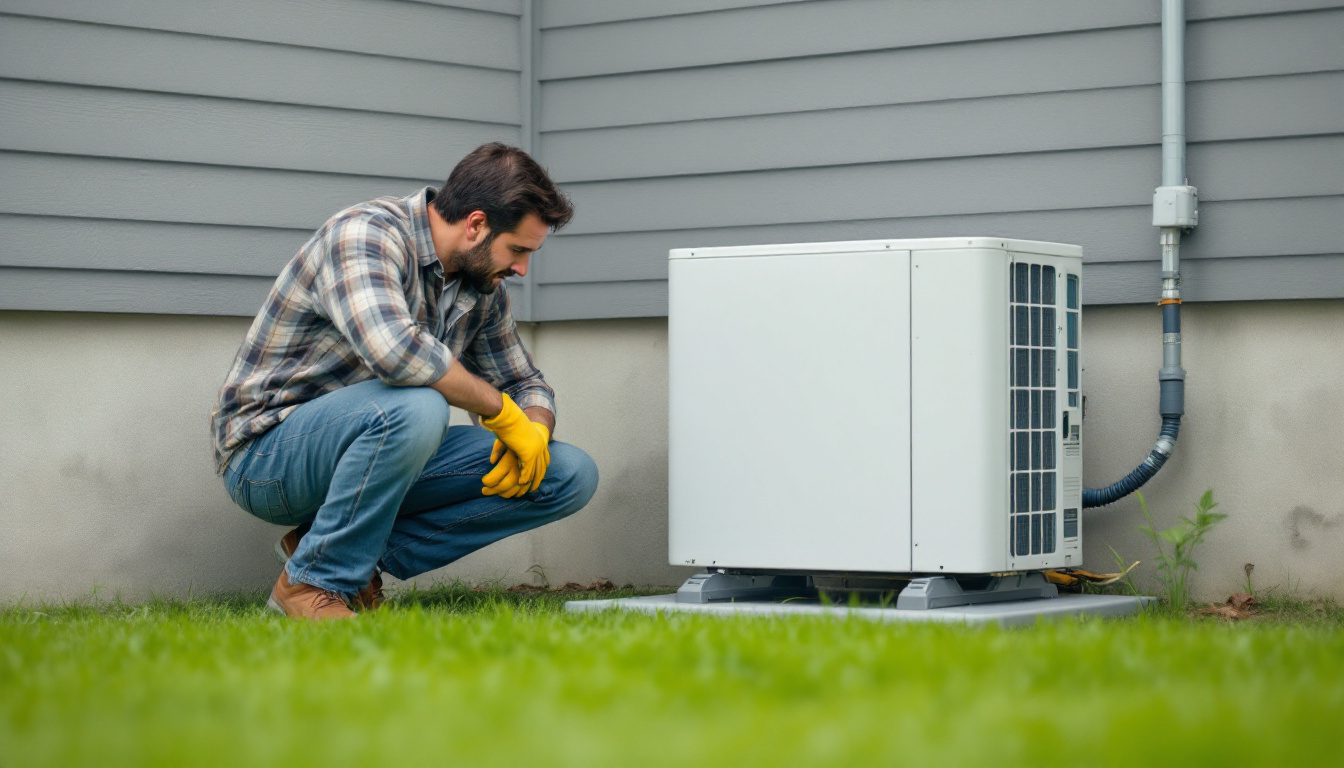
Is a DIY mini split legal to install yourself? Partly. Buying the kit needs no certification, but EPA says connecting or disconnecting hoses or pre-charged lines during a mini-split installation requires Section 608 technician certification.
Key Takeaways
- EPA says “connecting or disconnecting hoses or pre-charged lines requires a section 608 technician certification” during mini-split installation (EPA, page updated February 24, 2026).
- EPA’s refrigerant sales restriction “does not cover refrigeration and air-conditioning equipment or components containing refrigerants” (EPA sales restriction page).
- The technician definition in 40 CFR 82.152 names “owners and/or operators of appliances” (eCFR, 40 CFR 82.152).
- Split heat pumps manufactured on or after January 1, 2023 must reach at least 14.3 SEER2 and 7.5 HSPF2 nationally (10 CFR 430.32(c)(5)).
- In 2020, 1.76 million US homes used a ductless mini split as their main air conditioning equipment (EIA RECS 2020, Table HC7.1).
- 1.06 million homes used one as main heating equipment (EIA RECS 2020, Table HC6.1).
What is a DIY mini split kit?
A DIY mini split kit is a ductless split system whose refrigerant lines arrive factory charged and sealed, so the installer threads quick-connect couplings together instead of evacuating and charging the system on site.
DOE describes minisplits as “an outdoor compressor/condenser and an indoor air-handling unit” linked by a conduit (DOE Energy Saver, archived copy). It says the outdoor unit “can be located up to 50 feet away from the indoor evaporator.” Our explainer on how ductless systems work covers the basics.
One online retailer’s explainer for a DIY kit line tells shoppers: “No refrigerant loss. No vacuum pump. No technician required.” EPA’s published answer says otherwise. Our guide to professional mini split installation covers the conventional job.
Mini splits remain a small slice of US housing. EIA’s 2020 survey counted 123.53 million homes, 109.51 million of them using air conditioning. The 1.76 million cooling mainly with a mini split are about 1.6 percent of those, by our calculation.
Is it legal to install a DIY mini split yourself?
Under federal rules, a homeowner can legally buy a DIY mini split and do the non-refrigerant work, but EPA says connecting pre-charged lines is a certified-technician task. The regulation does not exempt owners; its technician definition expressly includes them.
40 CFR 82.161 requires anyone “reasonably expected to violate the integrity of the refrigerant circuit” during service to pass an approved exam, and assigns high-pressure appliances, which include R-410A equipment, to Type II. Our explainer on which EPA 608 certification type applies covers the exam structure.
EPA’s sales restriction Q&A adds: “Any person servicing, installing or disposing of stationary appliances (except the disposal of small appliances) must be a section 608 certified technician” (EPA sales restriction Q&A). State licensing and local permits are a separate layer that varies by jurisdiction.
What exactly does EPA say about pre-charged lines?
EPA’s Section 608 technician Q&A asks, “Is technician certification required to install an R-410A mini-split?” and answers yes. The full answer reads: “Yes. Adding or removing refrigerant from a mini-split as part of installation, and/or connecting or disconnecting hoses or pre-charged lines requires a section 608 technician certification.”
The answer then repeats the regulation’s test, listing “Attaching or detaching hoses and gauges” and cutting the refrigerant line among activities that violate the circuit.
Two details matter. EPA’s question names R-410A, not newer A2L refrigerants. But the certification rule covers every non-exempt refrigerant, and R-454B is not among the ten substitutes that 40 CFR 82.154(a)(1) exempts. EPA has published no separate answer for kits charged with R-454B and other A2L refrigerants.
Common myth: pre-charged means no certification
Sealed quick-connect fittings change how the job is done, not who EPA says may do it, whatever a product listing says.
Can you buy a DIY mini split without Section 608 certification?
Yes. Federal rules let anyone buy a DIY mini split, because the refrigerant sales restriction does not reach equipment that already contains refrigerant. The regulation, 40 CFR 82.154(c)(1)(vii), exempts sales where “the refrigerant is contained in an appliance with a fully assembled refrigerant circuit or an appliance component.”
Loose refrigerant is different. EPA says the restriction “covers refrigerants contained in cylinders, cans, or drums” and that “Only Section 608 certified technicians can purchase refrigerants intended for use with stationary refrigeration and air-conditioning equipment.” A DIY system that loses charge needs a certified technician to add refrigerant. Our mini split repair guide covers leak symptoms, and our note on why low charge means a leak explains why.
Which parts of a DIY mini split install fall outside the rule?
The federal rule targets refrigerant work, not mounting or painting. 40 CFR 82.152 says “painting the appliance, rewiring an external electrical circuit, replacing insulation on a length of pipe, or tightening nuts and bolts are not reasonably expected to violate the integrity of the refrigerant circuit.”
Tightening a quick-connect coupling resembles tightening a nut, yet EPA’s mini split answer addresses that exact step and puts it on the certified side. We rely on the specific answer.
| Step in a DIY mini split job | What the federal text says | Where it is stated |
|---|---|---|
| Buying a pre-charged kit | Not covered by the refrigerant sales restriction | EPA sales restriction page; 40 CFR 82.154(c)(1)(vii) |
| Buying refrigerant in cylinders or cans | Only Section 608 certified technicians (or employers of one) may buy stationary refrigerants | EPA sales restriction page |
| Connecting or disconnecting pre-charged lines | Requires Section 608 technician certification | EPA Section 608 Q&A |
| Attaching or detaching hoses and gauges | Listed as reasonably expected to violate the refrigerant circuit | 40 CFR 82.152; EPA Section 608 Q&A |
| Adding or removing refrigerant | Requires Section 608 technician certification | EPA Section 608 Q&A |
| Painting, pipe insulation, rewiring an external electrical circuit | Listed as not reasonably expected to violate the refrigerant circuit | 40 CFR 82.152 |
What efficiency minimums apply to a DIY mini split?
A DIY mini split must meet the same federal efficiency floors as any split system of its class. DOE’s definition in 10 CFR 430.2 covers products rated below 65,000 Btu per hour made of “an outdoor unit and one or more indoor units,” and 10 CFR 430.32(c)(5) sets minimums for units manufactured from January 1, 2023.
| Product class under 10 CFR 430.32(c) | Minimum SEER2 | Minimum HSPF2 |
|---|---|---|
| Split systems, heat pumps (national) | 14.3 | 7.5 |
| Split systems, air conditioners (national) | 13.4 | Not applicable |
| Split air conditioners under 45,000 Btu/hr installed in the Southeast or Southwest | 14.3 | Not applicable |
| Space-constrained products, heat pumps | 11.9 | 6.3 |
DOE says ductless minisplits “can achieve ratings between 15.2 and 35 SEER2,” well above those floors. Our breakdown of SEER2 minimums by region covers the regional rules.
What should you settle before buying a DIY mini split kit?
Settle who will make the refrigerant connection before you buy, because that decision shapes cost, warranty and legality.
- Decide who connects the line set. Under EPA’s written answer, that is a Section 608 certified technician.
- Size each zone to the room it serves, not to the whole house.
- Ask your local building department whether the job needs an electrical or mechanical permit, since requirements differ by jurisdiction.
- Read the manufacturer warranty for any condition tied to who installs or registers the unit.
- Plan the condensate route; DOE notes “there must be a place to drain condensate water outdoors.”
DOE warns that oversized or badly placed air handlers “can result in short cycling,” so use a room-by-room BTU sizing guide. Depending on local code, the circuit may need a permit or a licensed electrician, and our checklist for vetting an HVAC contractor applies if you hire out the refrigerant step.
Warranty terms vary by manufacturer, so treat the warranty document as the authority; our explainer on what HVAC warranties cover lists exclusions to check. If refrigerant work is off the table, a self-contained room unit such as a through-the-wall air conditioner is factory sealed and needs no line connection.
How we researched this
Research date: September 17, 2026. We consulted 17 sources and cited 13: four EPA Section 608 pages, eCFR text of 40 CFR 82.152, 82.154 and 82.161 and 10 CFR 430.2 and 430.32 (current as of September 15, 2026), EIA RECS 2020 Tables HC6.1 and HC7.1, an archived copy of DOE’s Energy Saver minisplit page (live page returns 404), and one retailer page quoted only as marketing. Four others were not cited: EPA’s homeowner page (no DIY text) and three pages that failed to load.
Excluded: installed prices (no federal series for DIY kits), warranty lengths (vendor marketing) and Technology Transitions installation dates (revised in 2026, covered separately). Reddit was skipped because the topic involves electrical work.
Frequently asked questions
Do I need a license to install a DIY mini split?
The federal requirement is EPA Section 608 technician certification, not a state license. EPA’s Section 608 Q&A says connecting or disconnecting hoses or pre-charged lines during a mini-split installation requires that certification. Contractor licensing, electrical licensing and permits are set locally, so check with your building department.
Is it legal for stores to sell DIY mini split kits to homeowners?
Yes. The refrigerant sales restriction in 40 CFR 82.154(c)(1)(vii) does not apply when the refrigerant is contained in an appliance with a fully assembled refrigerant circuit or an appliance component. The restriction applies to refrigerant sold in cylinders, cans or drums.
Can a homeowner mount the units without Section 608 certification?
The certification rule is about refrigerant work. 40 CFR 82.152 lists painting the appliance, rewiring an external electrical circuit and replacing pipe insulation as activities not reasonably expected to violate the refrigerant circuit. EPA’s mini-split answer still puts connecting pre-charged lines on the certified side, and local permit rules can apply to mounting and wiring.
Does EPA’s answer apply to R-454B kits or only R-410A?
EPA’s published question names R-410A mini-splits; there is no separate answer for A2L kits. The certification rule in 40 CFR 82.161 covers appliances with any non-exempt substitute refrigerant. R-454B is not among the ten substitutes exempted in 40 CFR 82.154(a)(1), which lists items such as carbon dioxide, nitrogen, water and propane in named uses.
Which Section 608 certification type covers a mini split?
Under 40 CFR 82.161, people who service high-pressure appliances must hold Type II or Universal certification. The definition of a high-pressure appliance in 40 CFR 82.152 names R-410A as an example refrigerant. EPA says Section 608 credentials do not expire, and EPA-approved organizations, not EPA, run the tests.
Can I buy refrigerant to top off my DIY mini split?
Not without certification. EPA’s sales restriction page says only Section 608 certified technicians can purchase refrigerants intended for stationary refrigeration and air-conditioning equipment, or by employers with written proof of employing one. A system that has lost refrigerant has a leak, and adding refrigerant is a Section 608 task under EPA’s mini-split answer.
How many US homes use a ductless mini split?
EIA’s Residential Energy Consumption Survey counted 1.76 million homes using a ductless mini split as their main air conditioning in 2020, out of 123.53 million homes. The same survey counted 1.06 million homes using one as main heating and 0.93 million using one as secondary heating.
Sources
- US Environmental Protection Agency. “EPA’s Refrigerant Management Program: Questions and Answers for Section 608 Certified Technicians.” https://www.epa.gov/section608/epas-refrigerant-management-program-questions-and-answers-section-608-certified. Accessed September 2026.
- US Environmental Protection Agency. “Refrigerant Sales Restriction.” https://www.epa.gov/section608/refrigerant-sales-restriction. Accessed September 2026.
- US Environmental Protection Agency. “Questions and Answers about the Refrigerant Sales Restriction.” https://www.epa.gov/section608/refrigerant-sales-restriction-qa. Accessed September 2026.
- US Environmental Protection Agency. “Section 608 Technician Certification Requirements.” https://www.epa.gov/section608/section-608-technician-certification-requirements. Accessed September 2026.
- eCFR. “40 CFR 82.152, Definitions.” https://www.ecfr.gov/current/title-40/chapter-I/subchapter-C/part-82/subpart-F/section-82.152. Accessed September 2026.
- eCFR. “40 CFR 82.154, Prohibitions.” https://www.ecfr.gov/current/title-40/chapter-I/subchapter-C/part-82/subpart-F/section-82.154. Accessed September 2026.
- eCFR. “40 CFR 82.161, Technician certification.” https://www.ecfr.gov/current/title-40/chapter-I/subchapter-C/part-82/subpart-F/section-82.161. Accessed September 2026.
- eCFR. “10 CFR 430.2, Definitions.” https://www.ecfr.gov/current/title-10/chapter-II/subchapter-D/part-430/subpart-A/section-430.2. Accessed September 2026.
- eCFR. “10 CFR 430.32, Energy and water conservation standards and their compliance dates.” https://www.ecfr.gov/current/title-10/chapter-II/subchapter-D/part-430/subpart-C/section-430.32. Accessed September 2026.
- US Energy Information Administration. “Table HC7.1 Air conditioning in U.S. homes, by housing unit type, 2020.” https://www.eia.gov/consumption/residential/data/2020/hc/pdf/HC%207.1.pdf. Accessed September 2026.
- US Energy Information Administration. “Table HC6.1 Space heating in U.S. homes, by housing unit type, 2020.” https://www.eia.gov/consumption/residential/data/2020/hc/pdf/HC%206.1.pdf. Accessed September 2026.
- US Department of Energy. “Ductless Minisplit Heat Pumps.” Energy Saver, archived copy. https://web.archive.org/web/2025id_/https://www.energy.gov/energysaver/ductless-mini-split-heat-pumps. Accessed September 2026.
- MRCOOL DIY Direct (retailer). “DIY Pre-Charged Mini Splits Explained.” https://mrcooldiydirect.com/blogs/mini-splits-101/diy-precharged-mini-splits-explained. Accessed September 2026. Quoted as marketing language only.
Leave a Reply