Last reviewed: August 2026 · By the HVAC Brief Editorial Team · Our sourcing and editorial standards
Non-weatherized gas furnaces manufactured on or after December 18, 2028 must achieve 95% AFUE, up from the 80% minimum that has applied since November 19, 2015. Mobile home gas furnaces move to 95% on the same date.
That jump effectively requires condensing furnaces, which vent differently from the 80% equipment most homes have. The venting change, not the efficiency change, is what makes this a retrofit problem.
The date is more than two years out, which is exactly why it is worth planning for now. Furnaces installed today will still be in service, and houses being re-piped or renovated in the meantime can be made ready cheaply.
The standard
| Product class | Current minimum AFUE | From December 18, 2028 |
|---|---|---|
| Non-weatherized gas furnaces | 80.0% | 95.0% |
| Mobile home gas furnaces | 80.0% | 95.0% |
| Weatherized gas furnaces | 81.0% | unchanged in this step |
| Mobile home oil-fired furnaces | 75.0% | unchanged in this step |
AFUE is Annual Fuel Utilization Efficiency, the share of fuel energy delivered as useful heat across a heating season. An 80% furnace sends roughly a fifth of its fuel energy up the flue; a 95% furnace recovers most of that by condensing water vapour out of the exhaust.
Why condensing changes the installation
- Exhaust is cooler and acidic. Condensing furnaces vent through plastic pipe rather than metal flue, because the exhaust no longer carries enough heat to drive a conventional chimney draught.
- A condensate drain is required. The water condensed out of the exhaust has to go somewhere, which means a drain the old installation never needed.
- Venting route may change. Plastic venting typically runs to a sidewall rather than up an existing chimney.
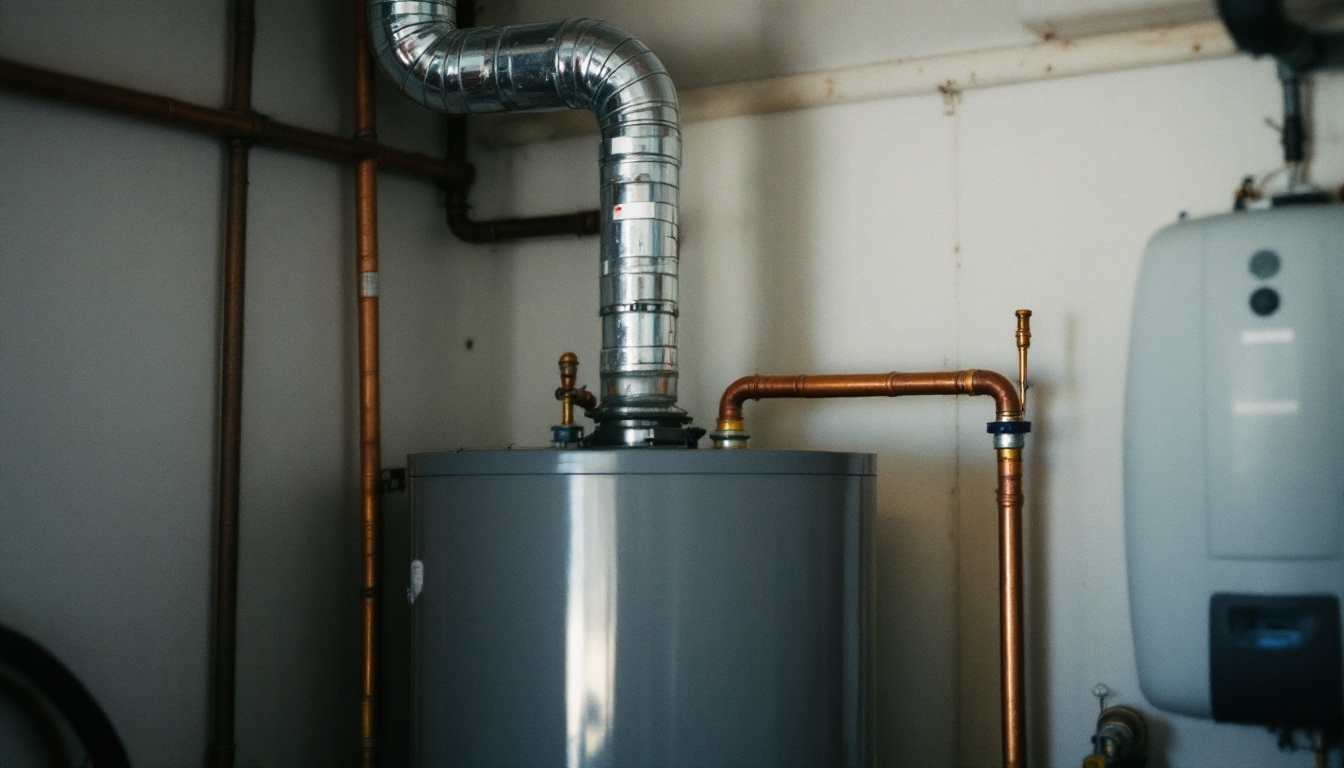
- Shared chimneys become a problem. Where a furnace and a water heater share a flue, removing the furnace can leave the water heater venting into an oversized chimney, which is its own hazard.
This is the failure mode that catches people. In houses where an 80% furnace and an atmospheric gas water heater share a chimney, switching the furnace to sidewall venting leaves the water heater alone on a flue sized for two appliances. That can cause draught problems and requires the water heater venting to be reassessed as part of the job, not afterwards.
What it means for planning
The standard applies at manufacture, so 80% units built before the date remain legal to sell and install afterwards. The practical horizon is longer than the date suggests. But any house with a chimney-vented furnace will eventually face the venting conversion, and the cheapest time to deal with it is during other work rather than as an emergency replacement in January.
Frequently asked questions
When does the 95% AFUE furnace standard take effect?
For non-weatherized gas furnaces and mobile home gas furnaces manufactured on or after December 18, 2028, per 10 CFR 430.32(e). The current minimum of 80% AFUE has applied to units manufactured since November 19, 2015.
Does this ban 80% furnaces?
It bars their manufacture from the effective date rather than their sale or use. Units built before December 18, 2028 remain legal to sell and install, and existing furnaces are unaffected. The practical transition is therefore longer than the date alone implies.
Why do condensing furnaces need different venting?
A 95% furnace extracts so much heat from the exhaust that the remaining flue gas is too cool to drive a conventional chimney draught, and it condenses into acidic water. That requires plastic venting, usually to a sidewall, and a condensate drain the older installation did not have.
What is AFUE?
Annual Fuel Utilization Efficiency, the proportion of fuel energy converted to useful heat across a heating season. An 80% furnace loses roughly a fifth of its fuel energy through the flue. A 95% furnace recovers most of that by condensing water vapour out of the exhaust stream.
Methodology and limitations
Standards and dates are quoted from 10 CFR 430.32(e), furnaces and boilers, retrieved from the electronic CFR.
- The standard applies to manufacture date, not sale or installation date.
- Venting descriptions state the mechanism. Specific venting requirements are set by manufacturer instructions and local mechanical code.
- We publish no conversion cost. No federal series measures installed HVAC costs.
- Nothing here is engineering advice for a specific installation.
Sources
- US Department of Energy, 10 CFR 430.32(e), furnaces and boilers, via eCFR.
The HVAC Brief is an independent trade publication. We do not sell equipment, take manufacturer advertising, or accept payment for placement in our research. Corrections welcome.