Original data and independent reporting for the HVAC trade

Category: Homeowners

Cost guides, repair versus replace, and how to read a quote.

  • What HVAC Smells Mean, and Which One Is an Emergency

    What HVAC Smells Mean, and Which One Is an Emergency

    Last reviewed: September 2026 · By the HVAC Brief Editorial Team · Our sourcing and editorial standards

    The short answer

    A musty smell from air conditioning is almost always moisture sitting somewhere it should be draining from, most often the evaporator coil or the drain pan. A burning smell and a gas smell are different categories entirely and one of them is an emergency.

    Sort the smell first. Musty is a maintenance problem. Electrical burning is a service call. Gas or sulphur means leave the building and call the utility.

    What each smell usually means

    Smell Usual cause Urgency
    Musty, damp, “dirty sock” Moisture on the coil or in the drain pan, biological growth Maintenance
    Burning dust, first heat of the season Dust burning off the heat exchanger, usually clears in minutes Monitor
    Electrical, acrid, plastic Overheating component or wiring Shut down, service call
    Rotten egg or sulphur Odorant added to natural gas, indicating a gas leak Leave, then call the gas utility
    Exhaust or car-like Possible combustion venting problem Shut down, service call

    Why musty smells come back after cleaning

    Cooling removes humidity by condensing water onto the coil. That water is supposed to leave through the drain pan and condensate line. When it lingers, on a coil that stays damp between cycles or in a pan that drains slowly, the conditions for growth are continuous rather than occasional.

    1. Check the condensate drain first. A slow or blocked line keeps standing water in the pan.
    2. Consider run time. An oversized system short cycles, leaving the coil wet without moving enough air to dry it. See why oversizing causes clamminess.
    3. Change the filter. A loaded filter holds moisture and restricts the airflow that would otherwise dry the coil.
    4. Look at the ductwork. Ducts through unconditioned space can sweat internally, which no coil cleaning will address.

    Cleaning treats the growth. Drainage, run time and airflow determine whether it returns.

    The one smell that is not a diagnosis question

    Rotten egg or sulphur is the odorant deliberately added to natural gas so leaks are detectable. It is not an HVAC troubleshooting item. Leave the building, do not operate switches, and call the gas utility from outside. Everything else on this page can wait; that cannot.

    Frequently asked questions

    Why does my air conditioning smell musty?

    Moisture sitting where it should be draining, usually on the evaporator coil or in the drain pan. Cooling condenses water out of the air, and that water should leave through the condensate line. When it lingers because the drain is slow or the coil stays wet between short cycles, growth follows.

    Why does my heating smell like burning when I first turn it on?

    Dust that settled on the heat exchanger over the cooling season burning off at first use. It typically clears within minutes. A burning smell that persists, or smells acrid, electrical or like hot plastic, is different: shut the system down and have it inspected.

    What should I do if my HVAC smells like rotten eggs?

    Treat it as a gas leak. That smell is the odorant added to natural gas so leaks can be detected. Leave the building, avoid operating electrical switches, and call your gas utility from outside. It is not a troubleshooting question and it should not wait for an HVAC service call.

    Does cleaning the coil stop the smell coming back?

    Cleaning removes existing growth, but whether it returns depends on drainage, run time and airflow. A slow condensate drain, an oversized system that short cycles and leaves the coil wet, or restricted airflow all recreate the conditions. Address those and cleaning holds; ignore them and it does not.

    Methodology and limitations

    This page describes common causes by mechanism. We publish no frequencies, as no federal source measures residential HVAC odour causes.

    • Smells can have causes outside the HVAC system, including plumbing traps and building materials.
    • Gas and combustion concerns are safety matters, not maintenance items.
    • Nothing here is a diagnosis for a specific system.

    The HVAC Brief is an independent trade publication. We do not sell equipment, take manufacturer advertising, or accept payment for placement in our research. Corrections welcome.
  • HVAC Zoning Systems: What They Fix and What They Cannot

    HVAC Zoning Systems: What They Fix and What They Cannot

    Last reviewed: September 2026 · By the HVAC Brief Editorial Team · Our sourcing and editorial standards

    The short answer

    An HVAC zoning system divides one ducted system into separately controlled areas using motorised dampers and a thermostat per zone. It solves uneven temperatures without adding a second system.

    It also introduces a failure mode people underestimate: closing dampers raises static pressure across the blower, so a zoning system fitted to marginal ductwork makes airflow problems worse rather than better.

    How zoning works

    1. Motorised dampers in the duct branches open and close to direct air toward zones calling for conditioning.
    2. A thermostat per zone reports demand rather than controlling the equipment directly.
    3. A zone control panel arbitrates between competing calls and drives the dampers and the equipment.
    4. A bypass or pressure relief strategy handles the air the equipment moves when most dampers are closed.

    That last item is where zoning succeeds or fails. Single stage equipment produces one airflow rate whether one zone is calling or all of them are, and the system has to do something with the surplus.

    Zoning versus the alternatives

    Approach How it handles uneven temperatures Main limitation
    Zoning a ducted system Dampers direct air where it is called for Raises static pressure when zones close; needs a relief strategy
    Ductless mini splits A head per space, inherently zoned Equipment in each room, higher visible hardware
    Duct rebalancing Fixes the distribution rather than controlling around it Only works if the duct system can be corrected
    Variable capacity equipment Modulates output so surplus air is smaller Higher equipment cost

    Zoning and variable capacity equipment pair well, because equipment that can reduce output has less surplus air to dispose of when zones close. Our guide to ductless mini splits covers the alternative approach.

    Zoning does not fix bad ductwork

    If a room is uncomfortable because its duct run is undersized, crushed or leaking, adding a damper upstream does not deliver more air to it. Zoning controls distribution between zones that can each be adequately served. Where the underlying distribution is broken, zoning layers control on top of a problem it cannot reach. See why static pressure matters.

    Frequently asked questions

    What is an HVAC zoning system?

    A way of dividing one ducted system into separately controlled areas, using motorised dampers in the duct branches, a thermostat in each zone, and a control panel that arbitrates between competing calls. It lets one system hold different temperatures in different parts of a house.

    Does zoning save money?

    It can reduce conditioning of unused space, but the saving depends on how the house is occupied and how the system handles surplus air when zones close. We publish no percentage figure, because no federal source measures zoning savings and the result varies with equipment, ductwork and occupancy.

    Will zoning fix a room that is always too hot?

    Only if that room’s duct run can already deliver enough air. If the run is undersized, crushed or leaking, a damper upstream cannot deliver more air than the duct will carry. In that case the distribution needs correcting rather than controlling.

    Is zoning better than mini splits?

    They solve the same problem differently. Zoning uses existing ductwork with dampers and suits houses where the duct system is sound. Mini splits place a head in each space and suit houses without usable ductwork. Neither is universally better; the existing distribution usually decides.

    Methodology and limitations

    This page describes system architecture and control behaviour. We publish no savings figures, as no federal source measures residential zoning savings.

    • No percentage saving is claimed for zoning.
    • Bypass and pressure relief strategies vary by installer and equipment. Manufacturer guidance governs.
    • Nothing here is a design recommendation for a specific house.

    The HVAC Brief is an independent trade publication. We do not sell equipment, take manufacturer advertising, or accept payment for placement in our research. Corrections welcome.

  • Why an AC Freezes Up: Two Causes, and How to Tell Them Apart

    Why an AC Freezes Up: Two Causes, and How to Tell Them Apart

    Last reviewed: September 2026 · By the HVAC Brief Editorial Team · Our sourcing and editorial standards

    The short answer

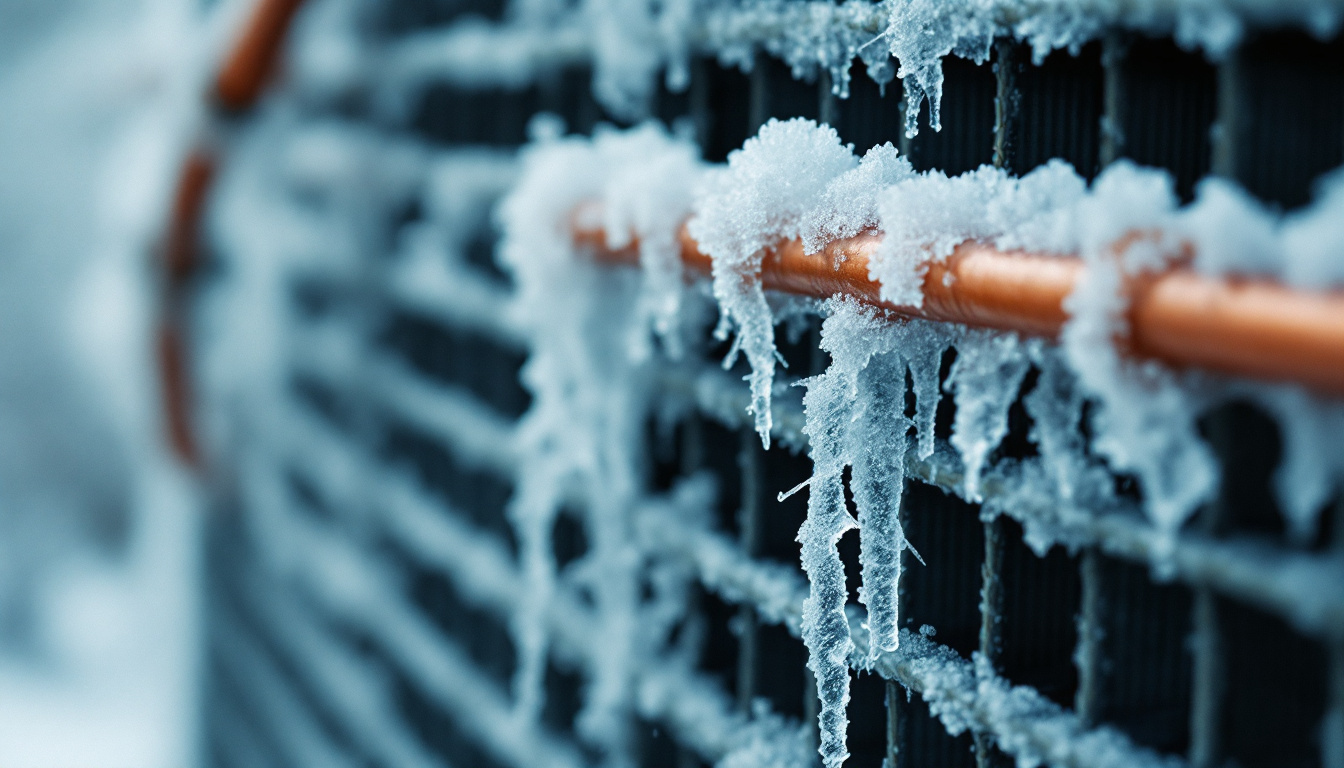
    An air conditioner freezes up for one of two reasons: not enough air moving across the coil, or not enough refrigerant in it. Both drop the coil below freezing, and condensation that would normally drain away turns to ice instead.

    Ice is a symptom, never the fault. Melting it restores operation temporarily and tells you nothing, because whatever pushed the coil below freezing is still there.

    The two causes are distinguishable, and the distinction matters because one is often owner-fixable and the other never is.

    The two causes, and how to tell them apart

    Restricted airflow Low refrigerant charge
    What happens Too little warm air crosses the coil to keep it above freezing Lower pressure drops the coil’s operating temperature below freezing
    Typical cause Blocked filter, closed registers, duct restriction, failing blower A leak. Sealed systems do not lose charge otherwise
    Owner checkable Yes, start with the filter No
    Recurs after thawing Yes, unless the restriction is cleared Yes, and gets worse as more charge escapes

    What to do when you find ice

    1. Turn the cooling off, leave the fan on. Running the fan without the compressor thaws the coil using indoor air.
    2. Do not chip the ice. Coil fins and tubing damage easily and a puncture turns a diagnosis into a replacement.
    3. Expect water. A thawing coil can overwhelm the drain pan, which is why frozen coils and indoor water often appear together.
    4. Change the filter while it thaws, since restricted airflow is the most common and most fixable cause.
    5. Watch what happens on restart. If it freezes again, the cause is unresolved and measurement is needed.
    Why “it just needs a recharge” is the wrong answer

    A sealed refrigerant circuit does not lose charge in normal operation, so low charge means a leak. Adding refrigerant restores cooling until enough has escaped again. Every recharge without a repair vents a controlled substance and delays the actual fix. Ask where the leak is.

    Why this connects to sizing and ductwork

    Restricted airflow is often a system design problem rather than a maintenance one. Undersized returns, crushed flexible duct and high static pressure all starve the coil of air continuously. If freezing recurs with a clean filter, the ductwork is the place to look. See why static pressure matters and how filter choice affects airflow.

    Frequently asked questions

    Why is my air conditioner freezing up?

    Either restricted airflow across the evaporator coil or low refrigerant charge. Both drop the coil below freezing so condensation turns to ice instead of draining. Restricted airflow usually starts with a blocked filter, closed registers or duct restriction. Low charge means a leak, because sealed systems do not lose refrigerant otherwise.

    How do I defrost a frozen AC?

    Switch cooling off and leave the fan running, which thaws the coil with indoor air. Do not chip or scrape the ice, because coil fins and tubing puncture easily. Expect water as it melts, since a thawing coil can overwhelm the drain pan. Change the filter while you wait.

    Will a frozen AC fix itself?

    It will thaw, but it will not fix itself. Ice is a symptom of restricted airflow or low charge, and thawing removes the ice without removing the cause. If the system freezes again after restarting, the underlying fault is unresolved and requires measurement to identify.

    Can a dirty filter cause an AC to freeze?

    Yes, and it is the most common cause. A restricted filter reduces the volume of warm indoor air crossing the evaporator coil, letting coil temperature fall below freezing. It is also the one cause a homeowner can address directly, which is why the filter is the first thing to check.

    Methodology and limitations

    This page describes the physical mechanism by which evaporator coils freeze. We publish no failure frequencies, as no federal source measures residential HVAC fault rates.

    • The two causes described can occur together, and diagnosis requires measurement.
    • Refrigerant work requires EPA Section 608 certification and is not owner serviceable.
    • Nothing here is a diagnosis for a specific system.

    The HVAC Brief is an independent trade publication. We do not sell equipment, take manufacturer advertising, or accept payment for placement in our research. Corrections welcome.
  • What the AC Condenser Does, and What Actually Fails in It

    What the AC Condenser Does, and What Actually Fails in It

    Last reviewed: September 2026 · By the HVAC Brief Editorial Team · Our sourcing and editorial standards

    The short answer

    The condenser is the outdoor half of your air conditioner, and its job is to dump the heat your house just gave up. The cabinet contains the compressor, the condenser coil and a fan that pulls outdoor air across that coil.

    Because its whole function is rejecting heat to outdoor air, anything blocking airflow across the coil degrades the entire system. That is why the most common condenser problem is not a failed part but a dirty one.

    What is inside the outdoor unit

    Component Function Common failure
    Compressor Raises refrigerant pressure and temperature Expensive failure, often decides replace over repair
    Condenser coil Releases heat to outdoor air Blocked by dirt, grass, cottonwood or debris
    Condenser fan Pulls air across the coil Motor failure, or capacitor preventing start
    Capacitor Provides starting torque Common wear item, stops compressor or fan starting
    Contactor Switches power to the unit Electrical wear item

    Why a blocked coil matters more than it looks

    Heat rejection depends on air moving freely across the coil fins. Restrict that airflow and head pressure rises, capacity falls, the compressor works harder and runs hotter, and efficiency drops across every hour of operation.

    1. Keep the fins clear. Vegetation, fencing and stored items too close to the cabinet restrict airflow.
    2. Watch seasonal debris. Cottonwood, grass clippings and leaves mat against fins quickly.
    3. Do not stack things on top. Most units discharge air upward through the top.
    4. Straighten bent fins carefully or not at all. Damaged fins reduce surface area permanently.

    Clearance around the unit is the one piece of condenser maintenance a homeowner can reliably do. Anything involving the refrigerant circuit or electrical components is a service call.

    Fan not spinning is not one problem

    A condenser fan that does not start can be a failed capacitor, a failed fan motor, or a contactor not pulling in. Those are different repairs at very different costs, and they are distinguished by measurement rather than by observation. A capacitor is a cheap wear part; a compressor is the failure that usually decides replacement.

    Condenser versus compressor versus condensing unit

    These get used interchangeably and they are not the same. The condenser is strictly the coil that rejects heat. The compressor is the pump inside the cabinet. The condensing unit is the whole outdoor assembly containing both. When a quote says the condenser needs replacing, ask which of the three is meant, because the cost difference is large.

    Frequently asked questions

    What does an AC condenser do?

    It releases the heat collected from inside your house to the outdoor air. Refrigerant arrives as hot high pressure vapour, passes through the condenser coil while a fan draws outdoor air across it, and condenses back into liquid as it gives up that heat. The coil, compressor and fan sit in the outdoor cabinet.

    Why is my condenser fan not spinning?

    Common causes are a failed capacitor, a failed fan motor, or a contactor not closing. These are different repairs at very different costs and are distinguished by electrical measurement rather than observation. A capacitor is an inexpensive wear part, while motor replacement costs more.

    Is the condenser the same as the compressor?

    No. The condenser is the coil that rejects heat to outdoor air. The compressor is the pump that raises refrigerant pressure. The condensing unit is the entire outdoor cabinet containing both. The three are often used interchangeably, and the cost of replacing each differs considerably.

    How much clearance does an outdoor unit need?

    Enough for air to move freely across the coil and discharge from the top without recirculating. Manufacturer instructions specify the requirement for a given model. In practice the failures we see described are vegetation grown against the fins, fencing built too close, and items stacked on top of the cabinet.

    Methodology and limitations

    This page describes standard split system architecture and component function. We publish no repair prices, as no federal series measures HVAC component repair costs.

    • No failure frequencies are claimed. No federal source measures residential HVAC component failure rates.
    • Clearance requirements are set by manufacturer instructions for the specific model.
    • Electrical and refrigerant work is not owner serviceable.

    The HVAC Brief is an independent trade publication. We do not sell equipment, take manufacturer advertising, or accept payment for placement in our research. Corrections welcome.
  • What Is Refrigerant, and Why Freon Is Not the Answer

    What Is Refrigerant, and Why Freon Is Not the Answer

    Last reviewed: September 2026 · By the HVAC Brief Editorial Team · Our sourcing and editorial standards

    The short answer

    Refrigerant is the working fluid that carries heat out of your house, and “Freon” is a brand name, not a type. Freon was DuPont’s trademark, applied across several different chemicals, which is why the word tells you nothing about what is actually in your system.

    What matters is which refrigerant you have. R-22 has not been produced in the US since January 1, 2020. R-410A cannot go into new residential equipment built after January 1, 2025. New systems use R-454B or similar.

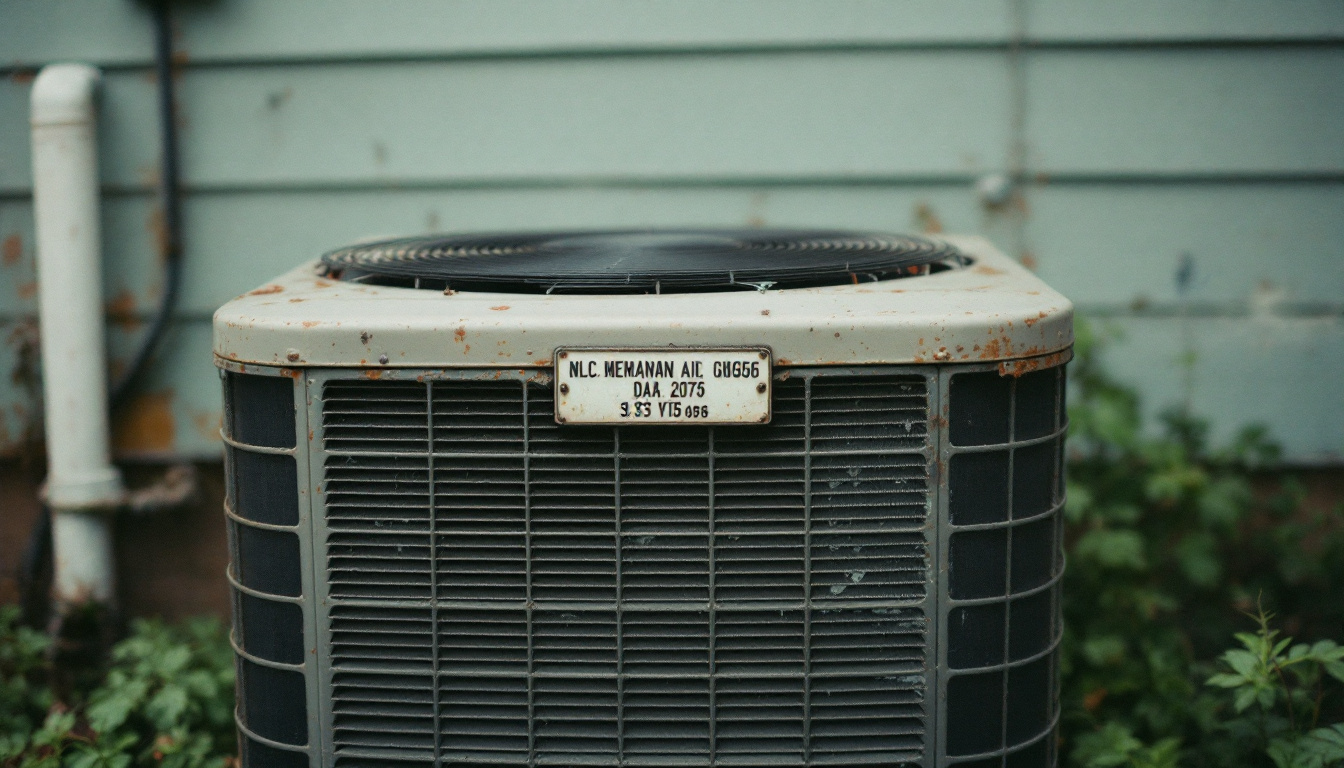
    Ask a technician what is in your system and the answer should be a designation like R-410A, not a brand. The data plate on the outdoor unit states it.

    What refrigerant actually does

    It does not create cold. It moves heat from inside your house to outside, by changing state. The cycle works because a fluid absorbs heat when it evaporates and releases heat when it condenses.

    1. Evaporator coil, indoors. Low pressure liquid refrigerant absorbs heat from indoor air and boils into vapour. The air leaving the coil is cooler and drier.
    2. Compressor, outdoors. Raises the pressure and temperature of that vapour.
    3. Condenser coil, outdoors. Hot high pressure vapour releases heat to outdoor air and condenses back to liquid.
    4. Metering device. Drops the pressure again, and the cycle repeats.

    The refrigerant is never consumed. It circulates in a sealed loop, which is why a system that needs topping up has a leak rather than an appetite.

    Which refrigerant is in your system

    Refrigerant Typical era Status
    R-22 Systems installed before about 2010 No US production or import since January 1, 2020. Reclaimed material only.
    R-410A Roughly 2010 to 2025 Cannot go in new residential equipment built after January 1, 2025. Servicing is legal.
    R-454B New equipment from 2025 Current. Classified A2L, mildly flammable.

    Our guides cover what remains of R-22 and what R-454B changes in more detail.

    Why “Freon” confuses the conversation

    Freon was a DuPont trademark covering a family of chemicals, not a single substance. A homeowner told their system “needs Freon” learns nothing about which refrigerant, what it costs to source now, or whether the underlying leak was found.

    A system that needs refrigerant has a leak

    A sealed refrigerant circuit does not consume refrigerant in normal operation. If a technician proposes adding refrigerant, the correct question is where the leak is and what happens when it recurs. Repeatedly recharging treats the symptom while venting a controlled substance, and under 40 CFR part 82 venting is prohibited regardless of system size.

    Frequently asked questions

    What is refrigerant in an air conditioner?

    The working fluid that carries heat from inside your house to outside by changing state between liquid and vapour. It absorbs heat when it evaporates at the indoor coil and releases it when it condenses at the outdoor coil. It circulates in a sealed loop and is not consumed in normal operation.

    Is Freon the same as refrigerant?

    Freon is a brand name, originally a DuPont trademark applied to several different chemicals, not a type of refrigerant. Saying a system needs Freon does not identify what is actually in it. The designation that matters is on the outdoor unit data plate, typically R-22, R-410A or R-454B.

    How do I know which refrigerant my system uses?

    Read the data plate on the outdoor unit, which states the refrigerant designation. As a rough guide by age, systems installed before about 2010 often use R-22, systems from roughly 2010 to 2025 use R-410A, and equipment manufactured after January 1, 2025 uses R-454B or a similar low global warming potential blend.

    Does air conditioning refrigerant run out?

    No. Refrigerant circulates in a sealed loop and is not consumed by normal operation. A system that is low has lost refrigerant through a leak. Adding more without locating the leak means the loss continues and the refrigerant escapes into the atmosphere.

    Methodology and limitations

    Refrigerant status dates are from 40 CFR 84.54 for the 700 GWP threshold effective January 1, 2025, and the Clean Air Act Title VI phaseout for R-22 production ending January 1, 2020. Venting prohibitions are in 40 CFR part 82.

    • We publish no refrigerant prices. No federal series tracks residential refrigerant pricing.
    • Era guidance by installation year is approximate. The data plate is authoritative for a specific system.
    • Refrigerant work requires EPA Section 608 certification and is not owner serviceable.

    Sources

    1. US Environmental Protection Agency, 40 CFR 84.54; 40 CFR part 82 subparts A and F.

    The HVAC Brief is an independent trade publication. We do not sell equipment, take manufacturer advertising, or accept payment for placement in our research. Corrections welcome.

  • Can You Still Get R-22? What Ended and What Did Not

    Can You Still Get R-22? What Ended and What Did Not

    Last reviewed: August 2026 · By the HVAC Brief Editorial Team · Our sourcing and editorial standards

    The short answer

    R-22 has not been produced or imported in the United States since January 1, 2020, under the Clean Air Act ozone-depleting substance phaseout. What remains available is recovered and reclaimed material from existing systems.

    Servicing an R-22 system is still legal. The supply is finite and no longer replenished by production, which is a different constraint from the HFC phasedown now affecting R-410A.

    Two separate regulatory schemes are involved and they get conflated constantly. R-22 was phased out because it depletes ozone, under Title VI of the Clean Air Act. R-410A is being phased down because of its global warming potential, under the AIM Act. Different laws, different mechanisms, different timelines.

    The two phaseouts compared

    R-22 R-410A
    Reason Ozone depletion Global warming potential
    Authority Clean Air Act Title VI AIM Act, 40 CFR part 84
    Mechanism Production and import ended Declining production allowances
    Status No new production since January 1, 2020 Capped and stepping down, next step 2029
    Servicing existing systems Legal, using reclaimed material Legal
    New residential equipment Long since unavailable Barred since January 1, 2025

    The practical difference matters. R-22 supply cannot grow, because nothing new is made. R-410A supply is being reduced on a schedule but still produced. See our phasedown schedule.

    What this means for an R-22 system

    1. It remains legal to operate and service. No rule requires replacing a working R-22 system.
    2. Refrigerant comes from reclamation. Recovered from decommissioned systems, cleaned to specification, and resold.
    3. A leak is a bigger decision than it used to be. Any repair opening the circuit means recharging from a finite supply.
    4. Retrofit refrigerants exist but change system behaviour and are not a drop-in equivalent in the way marketing sometimes implies.
    5. Age is the real signal. A system still on R-22 has been in service a long time, which bears on repair-versus-replace independently of refrigerant.
    The question to ask about a repair quote

    If a technician proposes recharging an R-22 system, ask whether the leak has been located and what the plan is if it recurs. Repeatedly recharging from a finite, unreplenished supply is the least defensible version of this decision, both economically and environmentally. See how to sanity check a repair quote.

    Frequently asked questions

    Can you still get R-22 refrigerant?

    Yes, but only recovered and reclaimed material. Production and import into the United States ended on January 1, 2020 under the Clean Air Act ozone-depleting substance phaseout, so the supply is finite and no longer replenished. Servicing existing R-22 systems remains legal.

    Is it illegal to run an R-22 air conditioner?

    No. No rule requires replacing a working R-22 system, and servicing one is legal using reclaimed refrigerant. What ended was production and import of the substance, not the operation or maintenance of equipment containing it.

    What is the difference between the R-22 and R-410A phaseouts?

    Different laws and mechanisms. R-22 was phased out for ozone depletion under Clean Air Act Title VI, with production and import ending January 1, 2020. R-410A is being phased down for its global warming potential under the AIM Act, through declining production allowances rather than an end date.

    Should I replace an R-22 system?

    The refrigerant is one input to that decision rather than the whole of it. A system still on R-22 has been in service a long time, and any repair opening the refrigerant circuit means recharging from a finite supply. Weigh the specific repair against replacement rather than treating the refrigerant alone as decisive.

    Methodology and limitations

    The R-22 production and import phaseout under Clean Air Act Title VI, effective January 1, 2020, is the established regulatory position. The R-410A phasedown figures are from 40 CFR 84.7 and the residential equipment restriction from 40 CFR 84.54.

    • We publish no refrigerant prices. No federal series tracks residential refrigerant pricing.
    • Retrofit refrigerant options are named as a category only. Suitability is equipment specific.
    • Nothing here is legal or engineering advice for a specific system.

    Sources

    1. US Environmental Protection Agency, Clean Air Act Title VI ozone-depleting substance phaseout, 40 CFR part 82 subpart A.
    2. US Environmental Protection Agency, 40 CFR 84.7, HFC phasedown schedule, and 40 CFR 84.54.

    The HVAC Brief is an independent trade publication. We do not sell equipment, take manufacturer advertising, or accept payment for placement in our research. Corrections welcome.
  • MERV Ratings: Why the Highest Filter Is Not the Best Filter

    MERV Ratings: Why the Highest Filter Is Not the Best Filter

    Last reviewed: August 2026 · By the HVAC Brief Editorial Team · Our sourcing and editorial standards

    The short answer

    A higher MERV filter captures more particles and also restricts more airflow, and residential systems are not all designed for the denser end of the scale. Fitting the highest available rating is not automatically an upgrade.

    MERV, Minimum Efficiency Reporting Value, rates how effectively a filter captures particles across defined size ranges. It says nothing about whether your blower can move air through it at the rate the system needs.

    The trade-off is real and mechanical. Filtration and airflow pull against each other, and the correct choice depends on the system, the ductwork and the filter area available, not on picking the largest number.

    What MERV measures

    The rating describes capture efficiency across particle size ranges, with higher numbers capturing smaller particles more effectively. It is a laboratory measure of the filter medium, tested to a standard published by a private standards body, and it is not a measure of installed system performance.

    What rises with MERV What also rises
    Capture of smaller particles Pressure drop across the filter
    Capture efficiency overall Static pressure across the blower
    Perceived air quality benefit Blower energy use, and motor load
    Filter cost Rate at which restriction worsens as it loads

    Why filter area matters more than rating

    1. Pressure drop falls as filter area rises. A physically larger or deeper filter of the same rating restricts less than a thin one.
    2. A four or five inch media cabinet gives far more surface area than a one inch slot, which is why higher ratings are viable there.
    3. A one inch filter at a high rating is where problems concentrate, because the area is small and the restriction is high.
    4. Restriction worsens as the filter loads, so a filter that was acceptable when clean may not be near the end of its interval.
    The measurement that settles it

    Static pressure across the air handler tells you whether the system is working against more resistance than it was designed for. It is the only way to know whether a given filter is appropriate for a specific system, and it is worth asking for if comfort or airflow problems appeared after a filter change. See why static pressure matters.

    Filters do not ventilate

    A filter cleans air already inside the house as it recirculates. It does not exchange indoor air with outdoor air. If the concern is fresh air rather than particles, the filter is the wrong lever entirely. See what ventilation actually means.

    Frequently asked questions

    What MERV rating should I use?

    It depends on the system and the filter housing rather than on a universal recommendation. Higher ratings restrict more airflow, and a one inch filter slot has far less area than a four or five inch media cabinet, so the same rating behaves very differently in each. Static pressure measurement is what establishes whether a given filter suits a specific system.

    Is a higher MERV filter always better?

    No. Higher ratings capture more particles and also increase pressure drop across the blower, reducing airflow and loading the motor. Whether that trade is acceptable depends on the system design, ductwork and available filter area. Fitting the highest rating available is not automatically an improvement.

    Can a filter damage my HVAC system?

    A filter that is too restrictive for the system raises static pressure, which reduces airflow, degrades capacity and dehumidification, and loads the blower motor. Sustained high static pressure is associated with blower motor stress. The filter itself does not fail the system, the resistance it creates does.

    Will a better filter improve indoor air quality?

    It improves filtration of the air already circulating, which addresses particles. It does not bring in outdoor air, so it does nothing for anything requiring air exchange. It also increases resistance across the blower, so the benefit is not free.

    Methodology and limitations

    MERV is defined by a private standard which we name but do not reproduce. This page describes the mechanical trade-off between filtration and airflow rather than recommending a rating, because the appropriate choice depends on system design and filter housing.

    • No MERV rating is recommended here. The right choice is system specific.
    • No pressure drop figures are published, as they depend on filter construction, area and loading.
    • Nothing here is engineering advice for a specific installation.

    The HVAC Brief is an independent trade publication. We do not sell equipment, take manufacturer advertising, or accept payment for placement in our research. Corrections welcome.

  • Why a Furnace Will Not Ignite: The Sequence and Where It Stops

    Why a Furnace Will Not Ignite: The Sequence and Where It Stops

    Last reviewed: August 2026 · By the HVAC Brief Editorial Team · Our sourcing and editorial standards

    The short answer

    A modern gas furnace will not ignite unless every safety interlock in its start sequence proves out. Most no-heat calls are the furnace correctly refusing to run, not the furnace failing.

    The sequence is: thermostat calls, inducer proves draught through a pressure switch, igniter heats, gas valve opens, flame sensor confirms flame, blower starts. A failure at any step stops ignition, and the control board usually flashes a code identifying which.

    Knowing the sequence tells you which failures are homeowner-checkable and which are not. It also explains the most common pattern: a furnace that lights, runs briefly, then shuts down and retries.

    The ignition sequence

    1. Thermostat calls for heat. A circuit closes and the control board wakes.
    2. Inducer motor starts and establishes draught through the heat exchanger and flue.
    3. Pressure switch proves draught. If it does not close, the sequence stops here and nothing lights.
    4. Igniter energises, either a hot surface igniter or a spark.
    5. Gas valve opens and the burners light.
    6. Flame sensor confirms flame within a few seconds. If it does not, the gas valve closes.
    7. Blower starts after a delay so it does not push cold air.

    What each failure looks like

    Symptom Likely stage Homeowner checkable
    Nothing happens at all Power, thermostat, door switch Yes, partly
    Inducer runs, nothing lights Pressure switch or blocked flue Check flue terminal for blockage
    Lights, runs a few seconds, shuts off, retries Flame sensor No
    Igniter glows but no flame Gas supply or gas valve Check gas is on elsewhere
    Runs then overheats and cuts out Airflow, filter or ductwork Yes, filter first
    Repeated lockout after several tries Control board has locked out deliberately No
    The classic: lights then quits after five seconds

    That pattern almost always points at flame sensing. The furnace lights, fails to confirm the flame, and closes the gas valve as designed. It is a safety system working correctly on bad information, and it recurs until the sensing issue is addressed. It is not a homeowner repair.

    What to check before calling

    The filter, because restricted airflow causes overheat cutouts and is the most common owner-fixable cause. The thermostat mode and batteries. The furnace door switch, since many furnaces will not run with the panel off. Whether other gas appliances work, which separates a furnace fault from a gas supply problem. And the outdoor flue terminal, which can block with snow or debris on sidewall-vented equipment.

    Beyond that, the diagnostic requires measurement. Anything involving the gas valve, flame sensing or the heat exchanger is a service call.

    Frequently asked questions

    Why does my furnace light then shut off?

    Most often flame sensing. The furnace lights, fails to confirm flame within a few seconds, and closes the gas valve as a safety response, then retries. It is the safety system working correctly on bad information. After several failed attempts the control board locks out deliberately.

    Why is my furnace not igniting at all?

    If the inducer runs but nothing lights, the sequence has usually stopped at the pressure switch, which proves draught before gas is allowed to flow. A blocked flue terminal, particularly on sidewall-vented equipment in snow, prevents that switch closing. If nothing happens at all, check power, thermostat and the furnace door switch.

    Can I fix a furnace that will not ignite?

    The owner-checkable items are the filter, thermostat mode and batteries, the furnace door switch, whether other gas appliances work, and whether the outdoor flue terminal is blocked. Anything involving the gas valve, flame sensing or the heat exchanger requires a qualified technician.

    What does a furnace lockout mean?

    The control board has stopped attempting ignition after repeated failures, deliberately, to avoid releasing unburned gas. Resetting power clears it, but if the underlying fault persists the furnace will lock out again. Repeated resets without diagnosis are not a fix.

    Methodology and limitations

    This page describes the standard sequence of operation for modern induced-draught gas furnaces. Sequences vary between manufacturers and models, and the manufacturer’s literature is authoritative for any specific unit.

    • No failure frequencies are claimed. No federal source measures residential furnace fault rates.
    • Gas appliance work carries safety risk and is not owner serviceable beyond the checks listed.
    • Diagnostic codes vary by manufacturer. Read the code chart on the unit rather than assuming a meaning.

    The HVAC Brief is an independent trade publication. We do not sell equipment, take manufacturer advertising, or accept payment for placement in our research. Corrections welcome.

  • Why Your House Is Cold but Humid (and Why a Bigger AC Makes It Worse)

    Why Your House Is Cold but Humid (and Why a Bigger AC Makes It Worse)

    Last reviewed: August 2026 · By the HVAC Brief Editorial Team · Our sourcing and editorial standards

    The short answer

    Air conditioning removes humidity only while the coil is running, so a system that cools the house quickly and shuts off leaves it cool and clammy. That is the classic signature of an oversized system.

    Dehumidification is a function of run time, not of capacity. Adding capacity to a humidity problem usually makes it worse, because the system reaches setpoint faster and runs less.

    This is the most consequential misunderstanding in residential cooling, because the intuitive fix is exactly wrong. Understanding the mechanism tells you whether the answer is equipment, sizing, airflow or a dedicated dehumidifier.

    How an air conditioner removes moisture

    1. Warm humid air passes over the evaporator coil, which is below the dew point of that air.
    2. Water vapour condenses onto the cold coil surface.
    3. Condensate drains into a pan and out through the condensate line.
    4. The air leaving the coil is both cooler and drier.

    Every step depends on the coil being cold and air moving across it. Stop the compressor and moisture removal stops immediately, while the water already on the coil begins re-evaporating into the airstream.

    Why oversizing causes clamminess

    System behaviour Temperature Humidity
    Correctly sized, longer run cycles Reaches setpoint steadily Removed throughout the cycle
    Oversized, short cycles Reaches setpoint quickly Little removed before shutdown
    Restricted airflow Poor cooling Coil may freeze, then flood on thaw

    An oversized system satisfies the thermostat before it has done much dehumidification, then stops. The house is at temperature and still humid, which reads as cold and clammy rather than comfortable. Our sizing guide covers why square-foot rules produce this.

    Why lowering the thermostat does not fix it

    Dropping the setpoint makes the system run longer, which does remove more moisture, but it does so by overcooling the house. You are treating a humidity problem with temperature, which is why the room ends up cold and still uncomfortable. See what a thermostat can and cannot do.

    Frequently asked questions

    Why is my house cold but humid?

    Usually an oversized system short cycling. Air conditioning removes moisture only while the coil runs, so a system that reaches setpoint quickly and shuts off cools the air without dehumidifying it. Adding capacity makes this worse rather than better, because the system then runs even less.

    Does air conditioning dehumidify?

    Yes, as a by-product of cooling. Warm humid air passing over a coil below its dew point condenses water onto the coil, which drains away. The effect depends entirely on run time: moisture removal stops the moment the compressor stops, and water already on the coil begins re-evaporating.

    Will a bigger air conditioner fix humidity?

    No, it typically worsens it. Larger capacity reaches the thermostat setpoint faster, which shortens run cycles and reduces the time the coil is available to condense moisture. Correct sizing, adequate airflow or a dedicated dehumidifier address humidity; extra capacity does not.

    Should I lower the thermostat to reduce humidity?

    It extends run time and so removes more moisture, but at the cost of overcooling the house. That treats a humidity problem with temperature and usually leaves the room cold and still uncomfortable. The underlying issue is normally sizing or airflow.

    Methodology and limitations

    This page describes the physical mechanism of coil dehumidification and the consequences of run-time behaviour. We publish no humidity targets or capacity figures, as appropriate values depend on climate, building and occupancy.

    • No target relative humidity is recommended here.
    • Variable capacity equipment modulates output and behaves differently from the single stage case described.
    • Nothing here is engineering advice for a specific system.

    Sources

    1. US Department of Energy, 10 CFR 430.32, for equipment staging and rating context.

    The HVAC Brief is an independent trade publication. We do not sell equipment, take manufacturer advertising, or accept payment for placement in our research. Corrections welcome.

  • Why Single-Hose Portable Air Conditioners Underperform

    Why Single-Hose Portable Air Conditioners Underperform

    Last reviewed: August 2026 · By the HVAC Brief Editorial Team · Our sourcing and editorial standards

    The short answer

    A single-hose portable air conditioner exhausts indoor air outside, which pulls unconditioned outdoor air into the room through every gap to replace it. That is a physical consequence of the design, not a defect.

    It is why a portable unit rated the same as a window unit performs worse in the same room. The rating measures the machine; the hose configuration determines how much of that output reaches you.

    Portable units solve a real problem: rooms where a window unit cannot be fitted, rented properties, and windows that do not take a standard sash mount. Understanding the trade-off lets you choose well rather than expecting window-unit performance.

    Why single hose costs you capacity

    An air conditioner rejects heat outdoors. The condenser needs air to carry that heat away, and a single-hose portable takes that air from the room it is cooling, then pushes it out of the window.

    1. The unit blows conditioned room air across the condenser and out of the hose.
    2. That air leaves the house, so the room is now at slightly negative pressure.
    3. Air is pulled in from outdoors and adjoining spaces through gaps to equalise.
    4. The incoming air is hot and humid, which is exactly what the unit is trying to remove.

    A dual-hose design draws condenser air from outside through a second hose instead of from the room, which removes most of that penalty. It is the single most useful specification to check.

    Consideration Window unit Single-hose portable Dual-hose portable
    Condenser air source Outdoors The cooled room Outdoors
    Creates negative room pressure No Yes Largely no
    Needs a suitable window Yes, sash mount Vent kit only Vent kit only
    Federal efficiency metric CEER Portable AC standards Portable AC standards
    Where portables genuinely win

    Rooms with casement windows, rentals that prohibit window installation, spaces where a unit must be moved between rooms, and situations where nothing can be permanently mounted. In those cases the comparison is against no cooling at all, and the hose penalty is irrelevant.

    Room air conditioners just got a big standards increase

    Federal minimums for window and through-the-wall units rose sharply for products manufactured from May 26, 2026, by between 19% and 50% depending on class. That changes what is available new, and older stock built to the previous standard remains legal to sell. See our breakdown of the new CEER minimums.

    Frequently asked questions

    Are portable air conditioners less effective than window units?

    Single-hose portables are, for a structural reason: they exhaust conditioned room air outside, which pulls hot outdoor air in through gaps to replace it. A dual-hose design takes condenser air from outside instead and avoids most of that penalty. Window units do not have the problem at all.

    What is the difference between single-hose and dual-hose?

    A single hose exhausts air from the cooled room to outdoors, depressurising the room and drawing in unconditioned replacement air. A dual-hose unit draws condenser air from outdoors through a second hose, so it does not use room air for heat rejection. Dual hose is the more effective configuration.

    When is a portable air conditioner the right choice?

    Where a window unit cannot be fitted: casement windows, rentals prohibiting window installation, rooms needing occasional rather than continuous cooling, or spaces where nothing may be permanently mounted. In those cases the comparison is against no cooling, not against a window unit.

    Do portable air conditioners have efficiency standards?

    Yes, portable air conditioners are a separate regulated product class from room air conditioners under federal appliance standards, with their own metric. Window and through-the-wall units are rated on CEER, and those minimums rose substantially for units manufactured from May 26, 2026.

    Methodology and limitations

    Room air conditioner standards are quoted from 10 CFR 430.32(b). The single-hose explanation describes the physical mechanism of a negative pressure air balance, not a measured capacity penalty, because the size of that penalty depends on the specific room and building envelope.

    • We publish no percentage capacity loss for single-hose designs. It varies with room tightness and conditions.
    • We name no products and publish no efficiency figures for specific portable models.
    • Portable and room air conditioners are separate regulated classes with different metrics and are not directly comparable by rating.

    Sources

    1. US Department of Energy, 10 CFR 430.32(b), room air conditioner standards.

    The HVAC Brief is an independent trade publication. We do not sell equipment, take manufacturer advertising, or accept payment for placement in our research. Corrections welcome.