
A fishy smell from vents in winter is treated as an overheating electrical part until proven otherwise: a receptacle, switch, breaker, plugged-in heater, or the furnace blower motor and wiring. Smoke, sparks, sizzling or buzzing means get out and call 911. Otherwise cut power to the suspect circuit or unit and find which one.
The vents are usually the messenger: return grilles pull air from the whole house, so an odor from one hot outlet or from the furnace cabinet can reach every register. What matters is where the smell is strongest and when it appears, sorted below using what Massachusetts DFS, UL, CPSC, Carrier and EPA publish. Our HVAC smell guide covers the other odors.
Where is the fishy smell strongest, and what does each spot point to?
Sniff each room with the system running, then with the thermostat OFF. Each of these 8 locations maps to a different first move.
| Where it is strongest | What it most often points to | First move | Stop line (source) |
|---|---|---|---|
| One wall outlet or light switch | Overheating receptacle, switch or wire connection | Unplug everything on it, switch that breaker OFF | Any part of the outlet hot: certified electrician (CPSC); smoke, sparks or sizzling: fire department (Mass. DFS) |
| Breaker panel or fuse box | Overheating breaker, bus or wire lug | Do not remove the cover | Weird odor at the panel: electrician right away (UL) |
| A plugged-in space heater, its cord or plug | Heater plug, cord or the outlet it uses | Unplug the heater | Cord or plug HOT: authorized repair person (CPSC) |
| Every supply vent, only while the blower runs | Blower motor, damaged wiring or another electrical fault in the unit (Carrier) | Thermostat OFF, then the furnace service switch OFF | Electrical or burning plastic odor: furnace stays off until inspected (Carrier) |
| Every vent, first heat call of the season, dusty | Dust burning off the heat exchanger | Check the filter, ventilate | Lasts more than a few hours or gets stronger: inspection (Carrier) |
| One register, steady even with the system off | Rodent or insect activity in that duct run | Pull the register and look with a light | Ducts infested with vermin is one of three EPA reasons to clean ducts (EPA) |
| Rotten eggs or sulfur, anywhere | Gas odorant, not an electrical smell | Leave the building, then call 911 and the gas utility | Do not touch light switches or anything that could spark (Peoples Gas) |
| No smell at all, CO alarm sounding | Carbon monoxide, which has no odor | Get everyone outside | CO cannot be seen, tasted or smelled (EPA) |
Compiled by The HVAC Brief from Massachusetts DFS, UL, CPSC, Carrier, EPA, 49 CFR 192.625 and Peoples Gas (Sources 1 to 8). None of them uses the word “fishy”; rows map it onto the odor and overheating signs they define.
Does a fishy smell from vents mean an electrical fire, and when is it 911 instead of an electrician?
It can mean wiring or a device is overheating before anything is visibly burning, which is why the first test is heat, sound and smoke, not the smell alone. The Massachusetts DFS fact sheet splits warning signs into two lists. Call the fire department immediately for “arcs, sparks or short circuits”, a “sizzling or buzzing sound” or “Odors, vague smell of something burning”. Call a licensed electrician soon for “Overheated plugs, cords or switches”, “Unusually warm or faulty electrical outlets or switches”, and frequently blown fuses or tripped breakers.
DFS notes that firefighters can use thermal imaging technology to see excessive heat inside walls, so a call is not wasted when the hot spot is hidden. A smell that keeps building with no source found belongs on the first list: get out and call 911.
How do you find which outlet, switch or breaker is overheating without opening anything?
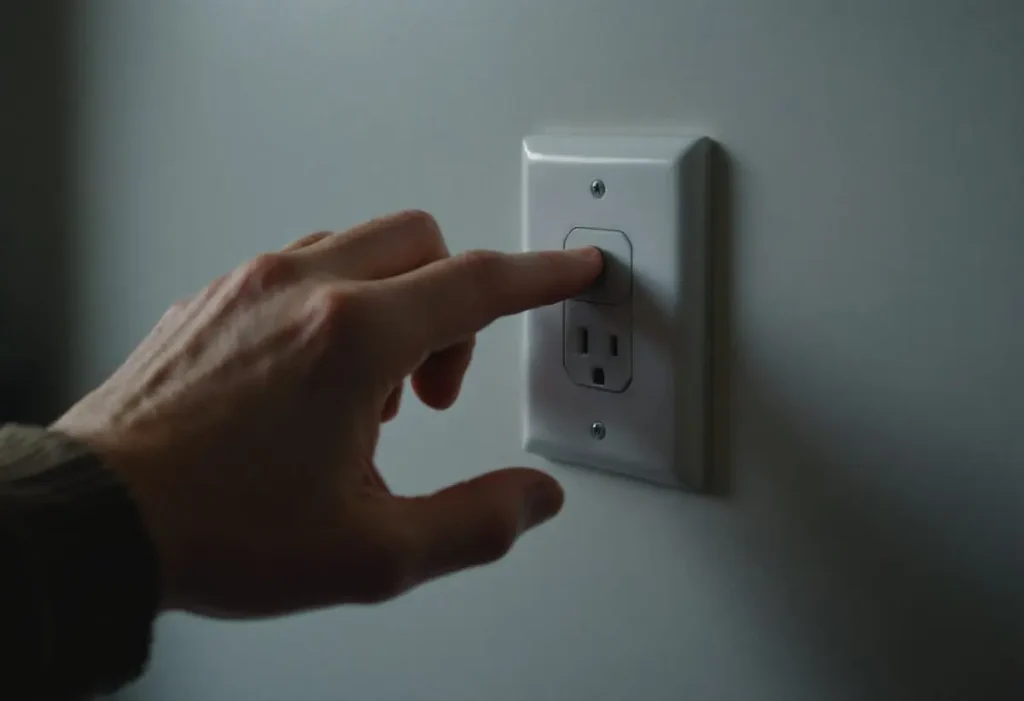
Use your hand, your nose and the breaker labels, never a screwdriver. The back of a hand on a cover plate tells you if it is warmer than the wall; CPSC says that if any part of the outlet is hot, contact a certified electrician. UL’s guidance for an odd smell from an outlet is to turn off and unplug anything connected to it and not use it again until a qualified electrician checks it.
Switch OFF the breaker labeled for the room where the smell peaks and see whether the odor stops building. UL says a weird odor from the panel itself means call an electrician right away; leave the cover on, because the main lugs stay live with every branch breaker OFF. If a plugged-in space heater is in the room, our electric heater burning smell guide already covers it: a fishy smell from a heater or its plug means unplug it now.
Fishy smell only while the furnace blower runs: which parts in the cabinet overheat?
If the smell comes and goes with the blower and is strongest at the furnace or air handler, the source is almost always inside that cabinet. Carrier’s homeowner guidance lists an “Electrical/burning-wire odor” from an “Overheating blower motor, damaged wiring, or another electrical issue” and says to turn the furnace off and have a qualified professional inspect it; for burning plastic it says to stop using the furnace until it is inspected. Carrier ties an overheated blower motor to heavy dust buildup or a clogged air filter.
Set the thermostat to OFF and the fan to AUTO, then turn off the furnace service switch on or near the cabinet, or its breaker. If the vents stop smelling and the cabinet smells strongest, leave it off. The usual suspects a technician checks are the blower motor and its capacitor, the wire terminals on the furnace control board, the control transformer, and on electric furnaces and heat pump air handlers the heat strip connections. A fishy smell from AC vents in summer follows the same logic, because the same indoor blower and wiring move the cooling air.
The first heat call of the season is different: Carrier says burning dust may fade within about 30 minutes to a few hours.
Could it be a dead mouse in the duct instead? How the timing differs
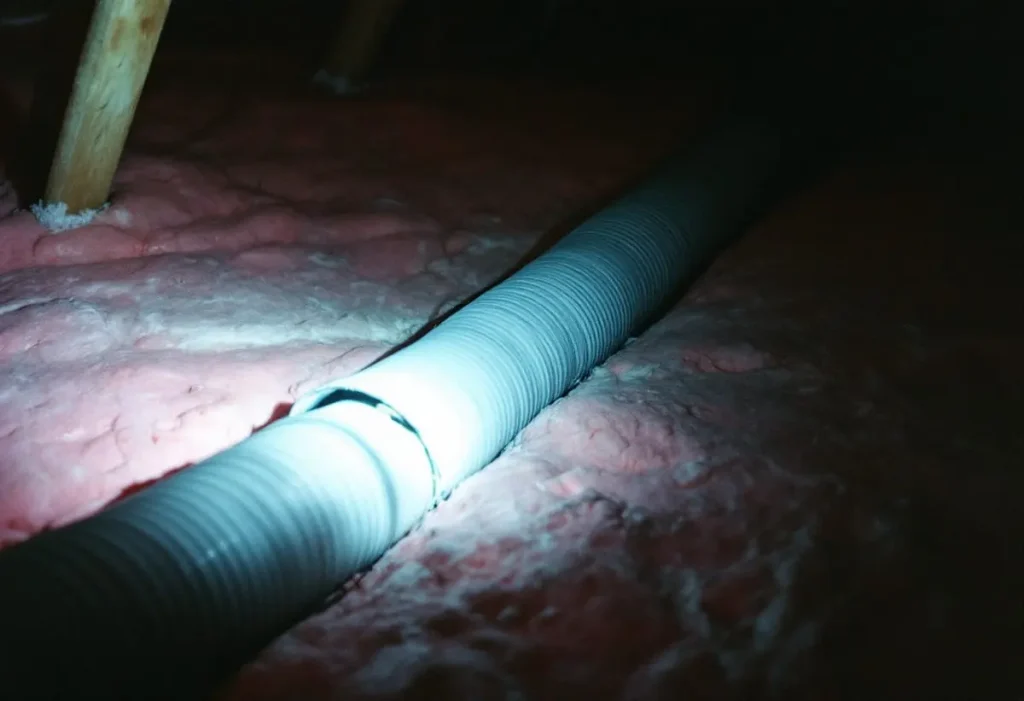
Yes, and the timing gives it away: an animal smell stays when the power is off and every outlet is cool, and it is usually strongest at one register rather than all of them. EPA’s duct cleaning page lists ducts “infested with vermin, e.g. (rodents or insects)” as one of three conditions where cleaning is warranted, alongside substantial visible mold and heavy dust that blows out of supply registers. Pull that register and look in with a flashlight.
A musty or damp smell points to moisture or mold rather than electrical heat; our guide to confirming mold in air ducts covers what to test. EPA does not recommend routine air duct cleaning, and cleaning cannot fix a hot breaker or blower motor.
Is it gas or carbon monoxide? Rotten eggs is the gas odorant, and CO has no smell
A fishy odor is not the natural gas warning smell. Federal pipeline rule 49 CFR 192.625 requires gas in distribution lines to be odorized so it is readily detectable by a person with a normal sense of smell at one-fifth of the lower explosive limit, and utilities such as Peoples Gas describe that added odorant as a “rotten egg” odor. Rotten eggs means leave first; the full sequence is on our furnace smells like gas page.
Carbon monoxide cannot cause a fishy smell, because EPA describes CO as an odorless, colorless and toxic gas that is impossible to see, taste or smell. If a CO alarm sounds, the alarm wins; our page on what CO detector beeps mean decodes the patterns by brand.
What will the electrician or HVAC technician test?
They should find the heat, not just the smell. An electrician scans receptacles, switches and the panel with an infrared camera or thermometer (the thermal imaging Massachusetts DFS says firefighters use), then opens the hot device for melted insulation and loose terminal screws. The reading that matters is one device or lug running clearly hotter than its neighbors.
An HVAC technician compares blower motor amp draw with the nameplate, checks the run capacitor, and looks for scorched terminals on the control board, transformer and any heat strips. Ask to see the part that was hot; a discolored terminal is the proof, and Carrier’s advice is to keep the furnace off until then.
Frequently asked questions
Why do I keep smelling a fishy smell in my house when the heat is off?
With the system off, the vents are not the source, so check outlets, switches and the panel. Massachusetts DFS lists unusually warm outlets or switches and overheated plugs or cords as reasons to call an electrician soon. If every device is cool and one register smells steadily, check that duct for rodents, which EPA names as a reason for duct cleaning.
Can carbon monoxide smell like fish?
No. EPA describes carbon monoxide as an odorless, colorless and toxic gas that is impossible to see, taste or smell, so a fishy odor is never CO itself. If a CO alarm sounds, get everyone outside first and deal with the smell later.
Is a fishy smell coming from HVAC vents safe to run the furnace through overnight?
No. Carrier’s guidance for an electrical or burning-wire odor from an overheating blower motor or damaged wiring is to turn the furnace off and have a qualified professional inspect it before running it again. Do not plug a space heater into the circuit you suspect.
Will duct cleaning get rid of a fishy smell from vents in the house?
Only if the source is in the ducts. EPA says to clean ducts when they have substantial visible mold, are infested with vermin, or are clogged with debris that blows out of supply registers. A smell from a hot outlet, breaker or blower motor comes back after any cleaning, because the part is still overheating.
How we researched this
On November 24, 2026 we read the Massachusetts Department of Fire Services “Preventing Electrical Fires” fact sheet (archived copy, because mass.gov blocks automated fetches), UL’s “8 signs” article, the CPSC portable electric heater safety sheet, Carrier’s “Burning Smell in House” page, EPA’s duct cleaning and carbon monoxide pages, the eCFR text of 49 CFR 192.625 and the Peoples Gas leak page. We also read the two non-forum pages ranking for this query, both duct-cleaning company blogs that cite no source.
Excluded: contractor and restoration blogs, Reddit and other forums, and the repeated claim that a named resin or chemical makes overheating plastic smell like fish. 2 searches found no primary or peer-reviewed source tying a compound to wiring devices, so we state none. Car vents are outside this page.
Sources
- Massachusetts Department of Fire Services. “Preventing Electrical Fires” (archived copy). https://web.archive.org/web/2025id_/https://www.mass.gov/doc/electrical-fire-safety-english/download. Accessed November 2026.
- UL. “8 signs you may have a problem with your electrical wiring.” https://www.ul.com/insights/8-signs-you-may-have-problem-your-electrical-wiring. Accessed November 2026.
- U.S. Consumer Product Safety Commission. “Portable Electric Heater Safety.” https://www.cpsc.gov/s3fs-public/PortableElectricHeaterSafetyNSN.pdf. Accessed November 2026.
- Carrier. “Burning Smell in House? Discover How To Get Rid of It.” https://www.carrier.com/residential/en/us/products/furnaces/burning-smell-in-house/. Accessed November 2026.
- U.S. EPA. “Should You Have the Air Ducts in Your Home Cleaned?” https://www.epa.gov/indoor-air-quality-iaq/should-you-have-air-ducts-your-home-cleaned. Accessed November 2026.
- U.S. EPA. “Carbon Monoxide’s Impact on Indoor Air Quality.” https://www.epa.gov/indoor-air-quality-iaq/carbon-monoxides-impact-indoor-air-quality. Accessed November 2026.
- eCFR. “49 CFR 192.625 Odorization of gas.” https://www.ecfr.gov/current/title-49/section-192.625. Accessed November 2026.
- Peoples Gas. “If You Smell Gas.” https://peoplesgas.com/safety/if-you-smell-gas. Accessed November 2026.
Leave a Reply