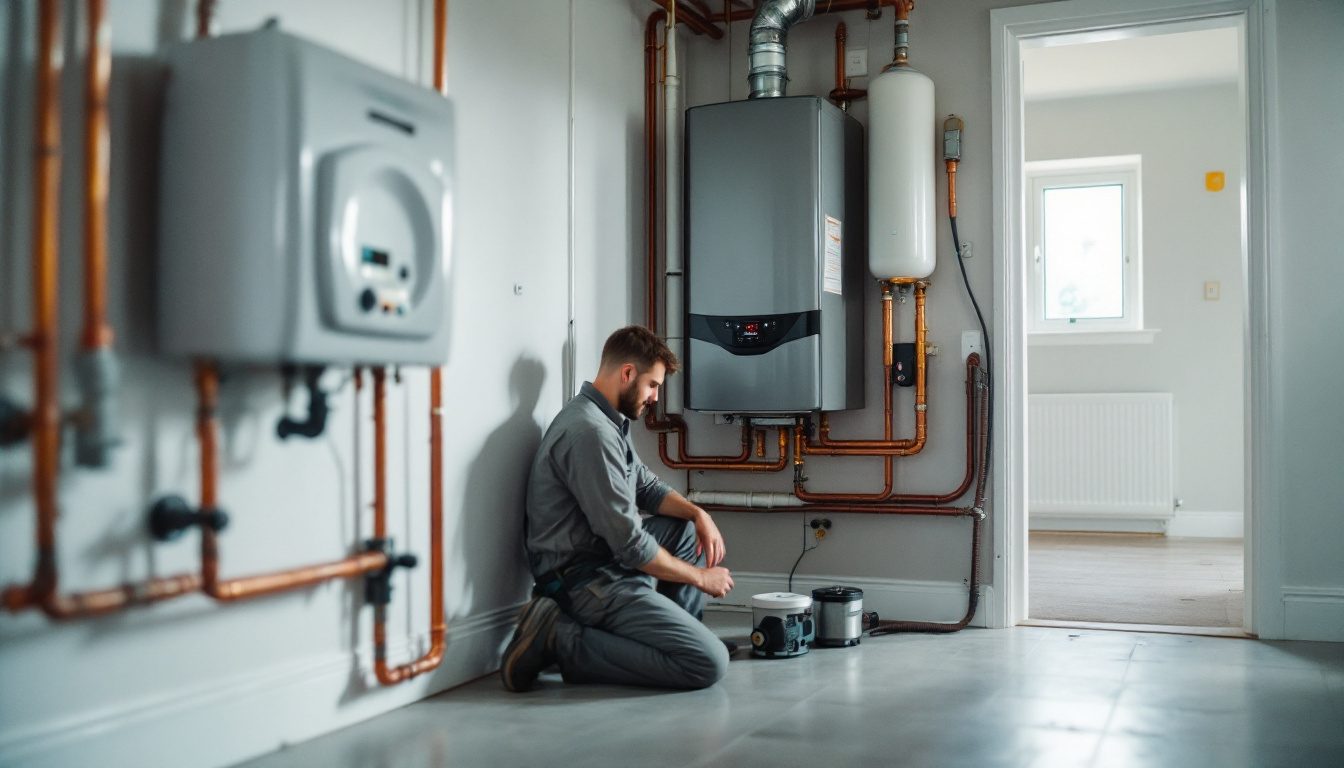
What is a hydronic heating system? A hydronic heating system heats a home with water. A boiler or heat pump warms the water, a circulator pump moves it through a sealed loop to baseboards, radiators, floor tubing or fan coils, and it returns cooler to be heated again.
Key Takeaways
- 9.29 million US homes used steam or hot water as main heat in 2020, 7.5% of all homes (EIA RECS 2020).
- The Northeast holds 6.01 million of them, about 27% of its homes (EIA RECS 2020, HC6.7).
- Federal floors: 84% AFUE for gas hot water boilers, 86% for oil (10 CFR 430.32).
- A condensing boiler needs return water at or below 130°F, per a DOE Building America guide (Arena, 2014).
- The “DOE says up to 30% savings” claim is not on DOE’s radiant page, which gives no percentage (DOE Energy Saver, archived copy).
- Circulator pumps built from May 22, 2028 face a federal efficiency standard (10 CFR 431.465).
What is a hydronic heating system?
A hydronic heating system carries heat in water instead of air. In DOE’s words, boiler hot water “can be distributed via baseboard radiators or radiant floor systems, or can heat air via a coil” (DOE Energy Saver, archived copy).
Steam systems also use a boiler but move vapor and run hotter; see our guide to steam heat. Our overview of home heating system types shows where hydronic fits.
How does a hydronic heating system work?
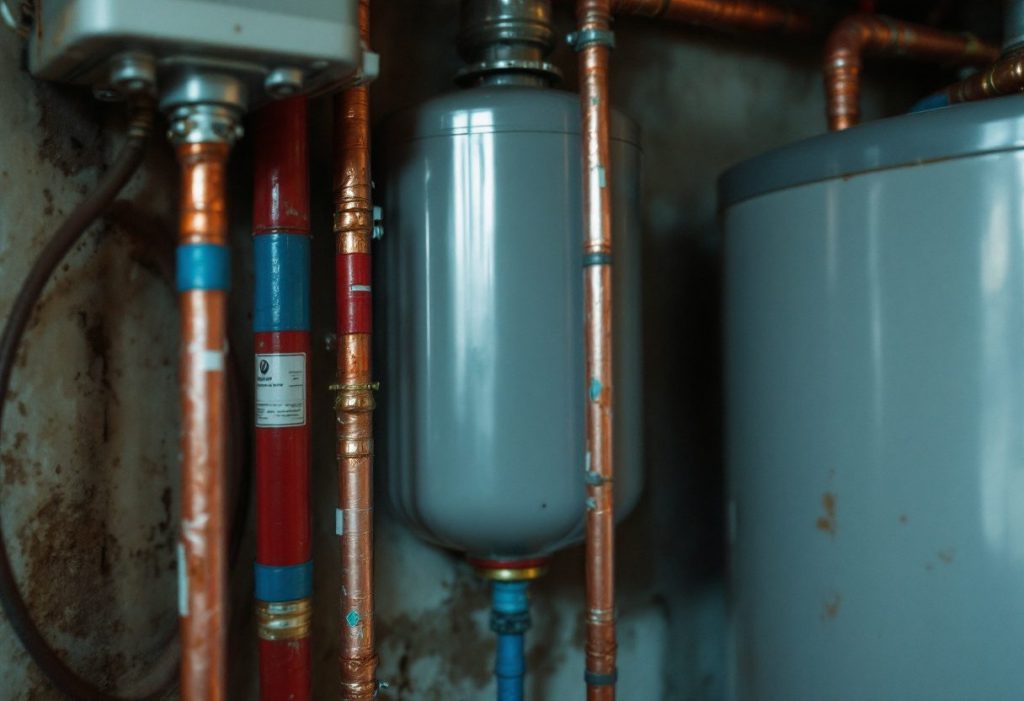
It works as a closed loop: heat goes into water at one point, a pump pushes it to the rooms, and cooled water comes back. Old radiator houses and new heated slabs run the same cycle.
- The thermostat calls for heat; the heat source fires.
- The circulator pushes hot supply water into the piping.
- Zone valves or zone pumps feed only the zones calling.
- Emitters pass the heat into the room.
- Cooler return water flows back to be reheated.
| Component | What it does | Owner or service note |
|---|---|---|
| Circulator pump | Moves water around the loop | Some systems zone with pumps |
| Expansion (pressure) tank | Air cushion absorbs expanding water | Should be “filled with air,” not water |
| Pressure relief valve | Opens on excess pressure | Test it at service visits |
| Aquastat or outdoor reset | Sets the supply water temperature | Adjust for efficiency and comfort |
| Zone valves or zone pumps | Feed only zones calling for heat | Pair each zone with a thermostat |
DOE’s hot water service list: test the pressure relief valve and high limit, and inspect the pressure tank “to verify that it’s not filled with water” (DOE Energy Saver). Zoned loops are the hydronic version of what zoning does for ducted systems.
Which heat sources can run a hydronic heating system?
Most hydronic heating systems run on a gas or oil boiler, but electric boilers, condensing water heaters and air-to-water heat pumps can also heat the loop. The choice decides which federal rating applies.
| Heat source | Federal floor (built since Jan 15, 2021) | ENERGY STAR or DOE note |
|---|---|---|
| Gas hot water boiler | 84% AFUE, no standing pilot | ENERGY STAR: 90% AFUE or higher |
| Oil hot water boiler | 86% AFUE | ENERGY STAR: 87% AFUE or higher |
| Electric hot water boiler | No AFUE minimum | DOE: AFUE between 95% and 100% |
| Condensing water heater | Rated as a water heater, not a boiler | DOE guide: tank at or below 130°F |
| Air-to-water heat pump | No AFUE; not a boiler class | Can also make chilled water |
The boiler rows come from 10 CFR 430.32(e)(2), which also requires automatic water temperature controls that hold an idle boiler to “not more than 140 degrees Fahrenheit.” Our boiler replacement guide weighs condensing choices; what a boiler installation involves covers the job.
Electric boilers lose nothing up a chimney, but DOE calls them “an uneconomic choice” in most of the country because of power prices.
How hot does the water need to be for each emitter?
It depends on the emitter and the weather. DOE says an aquastat typically holds boiler water at 160°F to 180°F, while an outdoor reset control drops it to 120°F to 140°F in mild weather (DOE Energy Saver). A DOE guide sizes fin-tube baseboard at a 170°F average water temperature.
The lower rungs matter for condensing. That guide sizes condensing systems so “the return temperature does not exceed 130°F,” which with a 20°F loop drop means “a 150°F boiler supply temperature” (Arena, 2014). Its sample reset curve supplies 180°F at 5°F outdoors and 120°F at 50°F.
Fan coils add a catch: some will not start below 140°F supply water, leaving that room cold on a low reset curve. DOE calls hydronic floors “the most popular and cost-effective radiant heating systems for heating-dominated climates.” See our radiant floor heating breakdown.
Is hydronic heat more efficient than forced air?
Often, but the gain comes from distribution. DOE says radiant heat is “usually more efficient than forced-air heating because it eliminates duct losses” (DOE Energy Saver, archived copy). DOE adds that duct losses, which AFUE ignores, “can be as much as 35%” of furnace output with ducts in an attic or garage.
The best federal measurement is small. A DOE Building America case study monitored two homes in Tucson, Arizona and Chico, California in 2011 to 2012: radiant floor delivery averaged 94% distribution efficiency against 76% for tight attic ducts, with projected HVAC savings of 3% to 31% (DOE/GO-102013-4045).
Correction: the “DOE says 30%” claim
Ranking explainers say DOE found radiant hydronic systems “can reduce heating costs by up to 30%.” DOE’s radiant heating page gives no percentage. The closest federal figure is the case study above: up to 31% of HVAC energy versus an air-to-air heat pump with attic ducts, and up to 28% versus ducts in conditioned space. That is a ceiling from two houses, not a national average.
How many US homes have hydronic heating systems?
About 9.29 million US homes heated mainly with steam or hot water in 2020, 7.5% of all 123.53 million homes (EIA RECS 2020, Table HC6.1). EIA counts steam and hot water together, so the hydronic share alone is somewhat lower.
It is regional. The Northeast had 6.01 million of them, about 65%, and about 27% of its 21.92 million homes use it (EIA RECS 2020, Table HC6.7). Our analysis of the full US fuel and equipment mix puts that in context, and who still heats with boilers and baseboard goes deeper.
Can a heat pump run a hydronic heating system?
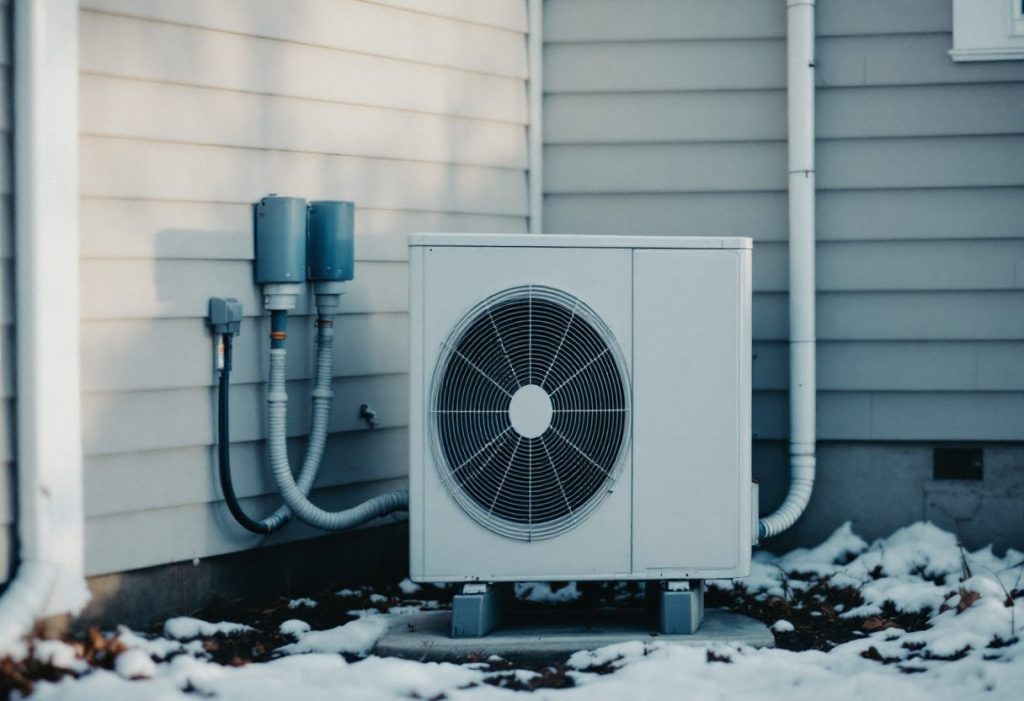
Yes, with an air-to-water heat pump, but the emitters decide how well it works. DOE says these units “employ a refrigerant-to-water heat exchanger and generate hot or chilled water” for “a radiant floor, fan coils, or radiators” (DOE Building America).
The obstacle is water temperature: the hotter the water, the harder the compressor works, as explained in how a heat pump moves heat. NREL notes that “more than 3.8 million multifamily housing units rely on gas-driven steam or hot water systems” whose “high-temperature radiators” are hard to electrify (NREL, BTO Peer Review 2023).
NREL’s fixes lower the water temperature the house needs:
- Replace emitters with larger devices.
- Cut the load with envelope retrofits.
- Swap some emitters for fan coils.
- Add radiant panels.
The same changes help a condensing boiler, which needs return water at or below 130°F.
What are the drawbacks of a hydronic heating system?
The main drawbacks are no built-in cooling, slow response in thick slabs, freeze risk and air in the loop.
Cooling needs a separate system or chilled water through fan coils; DOE’s case study warns that “radiant cooling is not recommended in humid climates.” Thick slabs respond so slowly that DOE calls setbacks “difficult if not impossible.”
DOE advises keeping cooler zones “above 50°F to prevent pipe freezing” and bleeding radiators at the start of each heating season (DOE Energy Saver, “Heat Distribution Systems,” archived copy). Our radiator repair walkthrough covers bleeding, and a yearly boiler service visit should test the relief valve and expansion tank.
Under 10 CFR 431.465(i), each circulator pump manufactured starting May 22, 2028 must have a circulator energy index of not more than 1.00.
How we researched this
Research date: October 8, 2026. Cited: EIA RECS 2020 tables HC6.1 and HC6.7; 10 CFR 430.32 and 431.465 on eCFR; four DOE Energy Saver pages, now 404 and read as archived copies; a DOE Building America case study and measure guideline; an NREL project summary from DOE’s 2023 peer review; and ENERGY STAR boiler criteria.
Excluded: competitor savings claims of 20% to 40%, which trace to no federal source, and installed prices, which no federal series publishes. We found no federal figure for air-to-water heat pump maximum water temperature, so we give none. Reddit was not mined: boilers burn fuel, a safety-topic exclusion.
Frequently asked questions
Is hydronic heating the same as radiant heating?
Not exactly. DOE defines radiant heating as heat supplied directly to floors or to wall or ceiling panels, and names three radiant floor types: air, electric and hot water. Hydronic floors are one of them. Hydronic baseboard and fan coils also use hot water but heat mostly by warming air.
Can a hydronic heating system provide air conditioning?
Only with added equipment. An air-to-water heat pump can make chilled water for fan coils or a floor, as in DOE’s Building America case study homes. That study warns that “radiant cooling is not recommended in humid climates,” so most hydronic homes add a separate cooling system.
What does an expansion tank do in a hydronic system?
Water expands as it heats, and the expansion tank holds an air cushion that absorbs the extra volume so loop pressure stays in range. DOE’s hot water checklist says to inspect the pressure tank, “which should be filled with air,” and confirm it is not filled with water.
How hot should the water in a hydronic heating system be?
DOE says an aquastat typically keeps boiler water at 160°F to 180°F. Outdoor reset lowers it in mild weather to 120°F to 140°F, which DOE, citing the Smarter House guide, says cuts fuel use by 5% to 10%. Condensing boilers need return water at or below 130°F.
What efficiency must a new hydronic boiler meet?
Gas-fired hot water boilers made since January 15, 2021 must reach 84% AFUE and oil-fired ones 86%, under 10 CFR 430.32. Electric hot water boilers have no AFUE minimum. ENERGY STAR requires 90% AFUE or more for gas boilers and 87% or more for oil.
Is a steam system a hydronic heating system?
Steam uses a boiler too, but it moves vapor rather than circulating liquid water, so most references treat it separately. DOE says steam boilers run hotter and “are inherently less efficient.” Federal floors are lower for steam: 82% AFUE for gas and 85% for oil.
Sources
- EIA. “RECS 2020 Table HC6.1, Space heating in U.S. homes, by housing unit type.” https://www.eia.gov/consumption/residential/data/2020/hc/pdf/HC%206.1.pdf. Accessed October 2026.
- EIA. “RECS 2020 Table HC6.7, Space heating in homes in the Northeast and Midwest regions.” https://www.eia.gov/consumption/residential/data/2020/hc/pdf/HC%206.7.pdf. Accessed October 2026.
- eCFR. “10 CFR 430.32, Energy and water conservation standards and their compliance dates.” https://www.ecfr.gov/current/title-10/chapter-II/subchapter-D/part-430/subpart-C/section-430.32. Accessed October 2026.
- eCFR. “10 CFR 431.465, Pumps energy conservation standards and their compliance dates.” https://www.ecfr.gov/current/title-10/chapter-II/subchapter-D/part-431/subpart-Y/section-431.465. Accessed October 2026.
- DOE Energy Saver. “Radiant Heating (archived copy).” https://web.archive.org/web/2025id_/https://www.energy.gov/energysaver/radiant-heating. Accessed October 2026.
- DOE Energy Saver. “Furnaces and Boilers (archived copy).” https://web.archive.org/web/2025id_/https://www.energy.gov/energysaver/furnaces-and-boilers. Accessed October 2026.
- DOE Energy Saver. “Gas-Fired Boilers and Furnaces (archived copy).” https://web.archive.org/web/2025id_/https://www.energy.gov/energysaver/gas-fired-boilers-and-furnaces. Accessed October 2026.
- DOE Energy Saver. “Heat Distribution Systems (archived copy).” https://web.archive.org/web/2025id_/https://www.energy.gov/energysaver/heat-distribution-systems. Accessed October 2026.
- DOE Building America. “Air-to-Water Heat Pumps With Radiant Delivery in Low Load Homes, DOE/GO-102013-4045.” https://www.energy.gov/sites/prod/files/2014/01/f7/case_study_airtowater_heatpumps.pdf. Accessed October 2026.
- L. Arena, CARB, DOE Building America. “Measure Guideline: Condensing Boilers, Optimizing Efficiency and Response Time During Setback Operation.” https://www1.eere.energy.gov/buildings/publications/pdfs/building_america/measure_guide_condensing_boilers.pdf. Accessed October 2026.
- NREL, DOE BTO Peer Review 2023. “High-Temperature Combination Heat Pumps for Low-Cost Electrification.” https://www.energy.gov/documents/bto-peer-2023-32260b-high-nrel-jamespdf. Accessed October 2026.
- ENERGY STAR. “Boilers.” https://www.energystar.gov/products/boilers. Accessed October 2026.
Leave a Reply