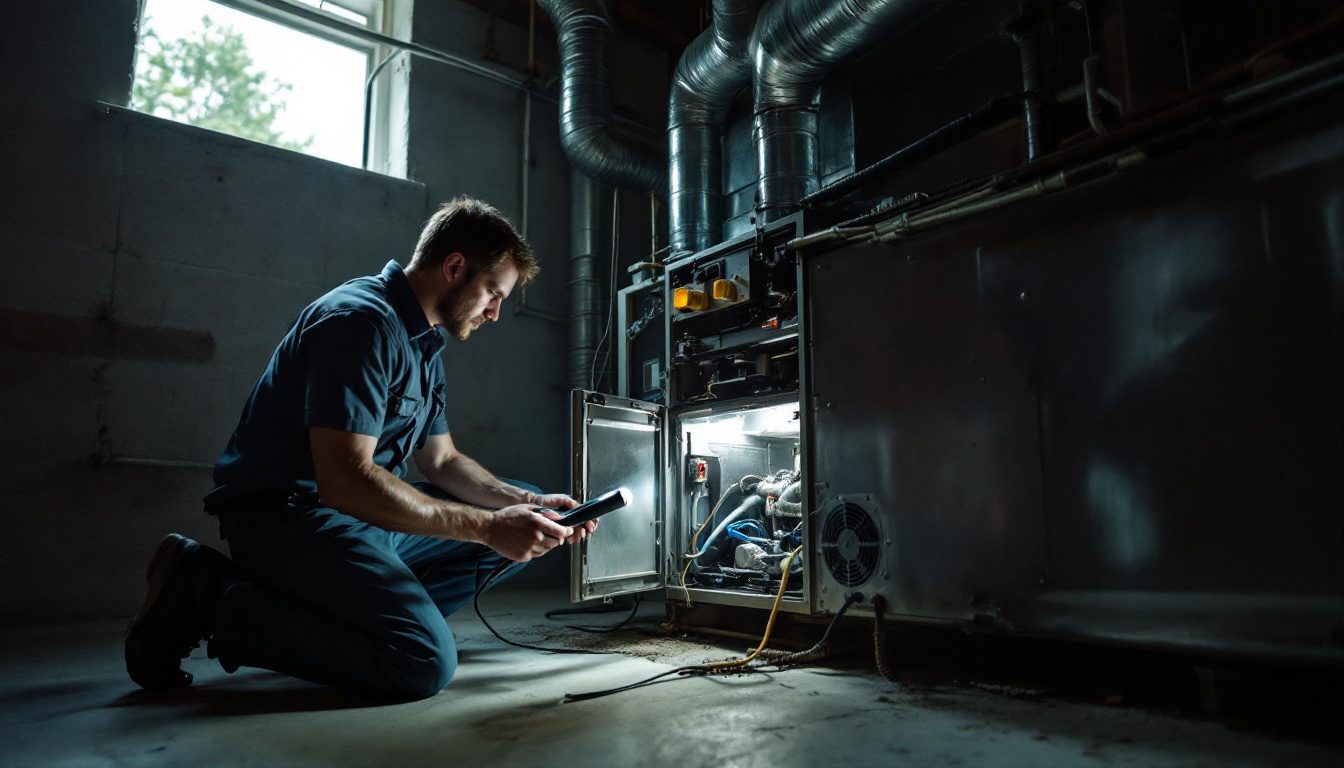
Is a cracked heat exchanger dangerous? A cracked heat exchanger is a breach in the metal wall that keeps burner exhaust out of the air your blower circulates. It warrants shutting the furnace down, but federal investigators found heat exchanger faults usually act together with a second failure, such as soot or bad combustion.
Key Takeaways
- US gas furnaces and boilers were tied to an estimated 21 CO deaths a year in 2017 to 2019 (CPSC, 88 FR 73275).
- Furnaces including boilers accounted for an estimated 20 of 274 US non-fire CO deaths in 2022 (CPSC, May 2026).
- In 28 CPSC investigations of furnace CO incidents (1987 to 2001), heat exchanger faults appeared in 14 but stood alone in just 3 (CPSC staff memo, 2002).
- Canadian regulator Technical Safety BC linked eight hospitalizations to corroded secondary heat exchangers in Carrier furnaces built 1989 to 2011 (Technical Safety BC, 2022).
- Goodman’s warranty covers the heat exchanger for the registered owner’s lifetime but excludes labor (Goodman warranty PWCFURNUL, 2014).
What is a cracked heat exchanger?
A cracked heat exchanger is a split, hole or separated seam in the metal chamber where a gas furnace burns its fuel. CPSC describes it: gas and air burn “within the combustion chamber of a heat exchanger,” and heat passes “through the wall of the heat exchanger” to the air your blower pushes through the ducts.
That wall is the only barrier between combustion products and house air. It heats and cools with every cycle, which is why frequent short cycles and overheating trips at the high limit switch matter. Condensing furnaces add a second, secondary heat exchanger, the part a Canadian regulator found corroding in one product line.
How dangerous is a cracked heat exchanger? What federal CO data shows
A cracked heat exchanger is dangerous because it opens a path for carbon monoxide, but the path is only half the hazard. CPSC staff describe furnace CO poisoning as two steps: “hazardous levels of CO from incomplete combustion” and then “exhaust leakage of that hazardous CO into the living space.” Their typical leakage paths include the heat exchanger, a blocked vent or a disconnected vent pipe (88 FR 73275).
CPSC estimated 21 CO deaths a year from gas furnaces and boilers in 2017 to 2019, 539 from 2000 through 2019, and 30,587 nonfatal injuries from 2014 to 2018. In its 2022 annual estimates, furnaces including boilers were tied to 20 of 274 deaths, with case notes citing “compromised heat exchangers” next to detached vents; see our CO death statistics.
What are the symptoms of a cracked heat exchanger, and does it smell?
No symptom you can see or smell proves a cracked heat exchanger. CPSC describes carbon monoxide as “a colorless, odorless, and poisonous gas,” so an odor can neither confirm nor rule out a CO leak. A burning or exhaust smell still warrants a service call.
Signs worth acting on usually point to the second failure: a sounding CO alarm, soot around the burner or cabinet, or a lazy yellow flame, which our furnace flame color guide explains. CPSC lists CO poisoning symptoms as “headache, fatigue, nausea, and cognitive impairment” and warns that some “may mimic common illnesses, such as influenza or colds” (CPSC, 2026). Symptoms that ease when you leave the house are the pattern to report.
Is the cracked heat exchanger myth real? Visible cracks vs measured CO
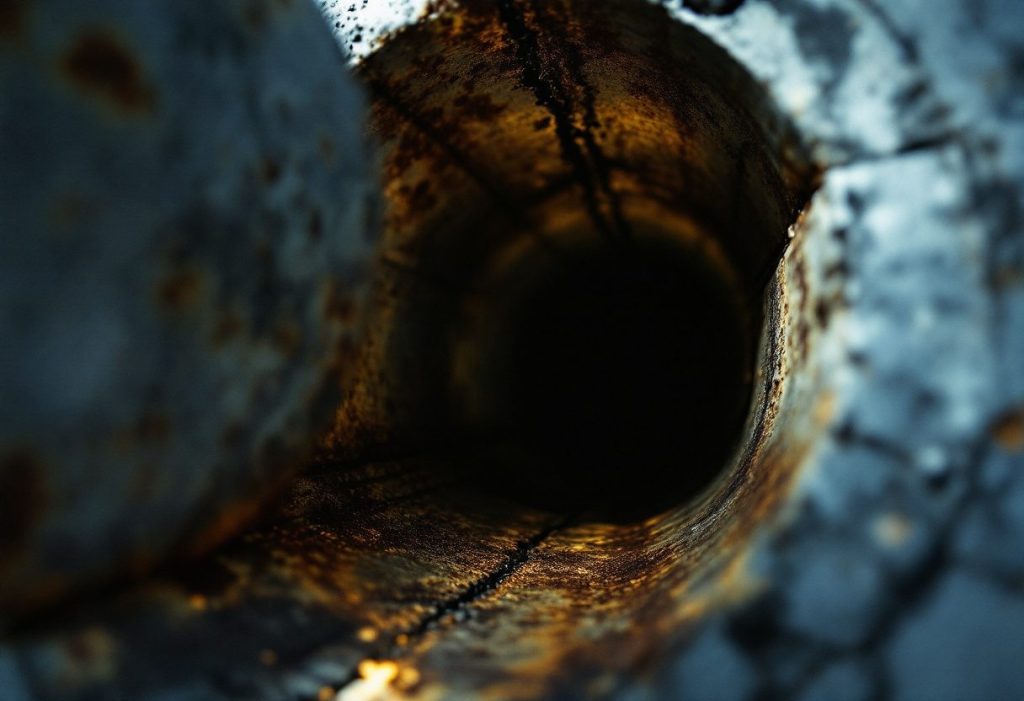
The cracked heat exchanger myth cuts both ways. One claim says every crack leaks deadly CO. The counterclaim says cracks rarely matter, because blower pressure pushes house air into a breach; UEi describes fresh air “forced into the flue.” The case evidence supports neither extreme.
CPSC staff reviewed 28 in-depth investigations of CO incidents with modern furnaces, tied to 13 deaths. Heat exchanger faults appeared in 14, cracks in 6, and the exchanger was the only fault in 3. Staff concluded that CO leakage “typically occurs as a result of two failures”: a furnace producing elevated CO, plus a leakage path (CPSC staff memo, 2002).
In Sparwood, British Columbia, in February 2017, a furnace with a hole in its heat exchanger and a vent pipe “no longer glued securely” produced 500 ppm at the front door; one person was hospitalized (Technical Safety BC). In the Carrier cases, corrosion “interfered with combustion airflow, which in some cases produced CO,” making the exchanger both source and path; 8 people were hospitalized (Technical Safety BC, 2022).
Visible crack vs measured CO
A crack on camera proves a breach, not that CO is reaching the house today. A clean combustion reading proves the burner behaved during the test, not that the metal is sound. UEi’s analyzer manual says “many cracks are invisible to borescopes or the naked eye” (UEi manual). Home inspectors are not the referee: the ASHI Standard of Practice says the inspector is not required to inspect “heat exchangers.”
How do technicians test for a crack?
Technicians combine a visual check with measurements, because each misses what the other catches. UEi’s manual describes the core combustion test: watch “the Excess Air, O2 and CO readings both before and after the blower turns on.” If the exchanger is sealed, the readings “should remain fairly stable”; a rise in oxygen, excess air or CO suggests a breach needing “additional testing and inspection” (UEi C162/C163/C164 manual).
| Method | What it can show | What it cannot show |
|---|---|---|
| Light, mirror or borescope camera | Visible cracks, rust through, separated seams on the primary exchanger | Cracks that open only when hot; hidden secondary coils |
| Flue combustion analysis, blower off then on | O2, excess air and CO shifts when blower pressure hits a breach | Exact location of the breach |
| CO reading in supply air or living space | CO already reaching the occupants | A crack that is not leaking during the test |
| Home inspection (ASHI scope) | Installed heating equipment, vents and flues | Heat exchanger condition, which the standard excludes |
A thorough evaluation runs in this order:
- Measure CO in the living space and at the furnace first.
- Inspect accessible exchanger surfaces with a light or camera.
- Run the analyzer in the flue, then compare readings with the blower off and on.
- Check the vent and its connections.
- Give the owner the analyzer printout and photos.
Smoke and dye tracer tests are also used, but no federal document we found standardizes them. This is the measurement half of a real HVAC inspection.
What happens after a crack is confirmed?
A confirmed breach means the furnace stays off until the exchanger or furnace is replaced. In the Sparwood case, the gas utility technician measured 500 ppm and “the furnace was red tagged and taken out of service” (Technical Safety BC). Who can issue and clear a red tag varies by utility and jurisdiction, so ask for the tag reason in writing.
If the CO alarm sounds, diagnosis waits: get everyone outside and call 911, as our CO alarm placement guide explains.
Does warranty cover a cracked heat exchanger, and what does it cost?
Heat exchanger warranties are long, but they pay for the part, not the labor. Goodman’s furnace warranty runs “for the lifetime of the registered owner for the heat exchanger” if registered within 60 days, and Goodman “will not pay for: Labor, freight” (Goodman PWCFURNUL, 9/2014).
| Document | Heat exchanger term | What the owner gets |
|---|---|---|
| Goodman warranty, registered owner | Owner’s lifetime, original home | Part; a new furnace if it fails in the first 10 years |
| Goodman warranty, not registered | Up to 20 years | Replacement part only |
| Carrier Legacy Gas Furnace Enhanced Warranty | Secondary exchanger, 20 years, models built 1993 to 2011 | New exchanger plus labor credit, or up to $525 toward a new furnace |
Carrier’s program overlaps the furnace era Technical Safety BC investigated (Carrier). Goodman dates units by the first four serial digits (YYMM); our serial number lookup guide decodes other brands. Our warranty explainer covers voiding rules.
We found no federal or national lab estimate for heat exchanger replacement cost, and online ranges are unsourced vendor figures, so we publish none. For whole-furnace replacement, our new furnace cost analysis uses federal estimates; the CPSC rule record notes an expected “20-year lifespan” for these appliances (88 FR 73276).
Can a boiler have a cracked heat exchanger?
Yes. A boiler heats water rather than air, but it burns gas inside a heat exchanger the same way. In 56 in-depth investigations of boiler CO incidents from 1987 to 2001, tied to 41 deaths, heat exchanger conditions appeared in 6 and a cracked exchanger was cited in 2 (CPSC staff memo, April 2002).
The vent was the bigger story. Across 87 boiler, wall furnace and floor furnace investigations, vent conditions were associated with 51 incidents and heat exchanger conditions with 11. So annual boiler service should test combustion and inspect the venting, not just the exchanger.
How we researched this
Researched October 8, 2026. We read 16 primary and Tier 2 documents and cite 10: CPSC death estimates, the 2023 CPSC proposed rule, two CPSC investigation memos, two Technical Safety BC records, two manufacturer warranty documents, one analyzer manual and the ASHI standard. Excluded: contractor blogs and vendor cost ranges (no federal cost series exists), and Reddit, skipped because this is a carbon monoxide safety topic.
Frequently asked questions
Is it safe to run a furnace with a cracked heat exchanger?
No. A confirmed breach removes the barrier between exhaust and house air, and CPSC staff found leakage typically needs only a second failure, such as poor combustion. In the Sparwood case, the furnace was red tagged and taken out of service.
Will furnace safety switches catch a cracked heat exchanger?
Not reliably. CPSC notes the ANSI Z21 standards require shutoff for a fully blocked vent, an unsealed blower door and flames outside the burner compartment, not a breached exchanger. Technical Safety BC found built-in safety devices did not reliably detect corroded secondary heat exchangers.
Can a cracked heat exchanger be repaired?
The manufacturer remedies we reviewed replace rather than repair. Goodman supplies a replacement part, or a new furnace for registered owners if the exchanger fails in the first 10 years. Carrier’s legacy program supplies a new secondary heat exchanger or a furnace credit.
Does a home inspection check the heat exchanger?
Not in depth. The ASHI Standard of Practice covers installed heating equipment, vents and flues, but states the inspector is not required to inspect heat exchangers. A combustion analysis by a licensed technician addresses the exchanger directly.
Is a cracked heat exchanger covered if I bought the house used?
It depends on the brand. Goodman’s 2014 furnace warranty covers only the original owner as of the installation date and that owner’s spouse. Carrier’s legacy program is measured as 20 years from the original installation date for listed models.
Will future furnaces detect carbon monoxide themselves?
Possibly. In October 2023 CPSC proposed a rule to detect and prevent dangerous carbon monoxide production and leakage from residential gas furnaces and boilers. Current ANSI Z21 standards cap CO at 400 ppm only under lab test conditions, not in the field.
Sources
- CPSC. “Non-Fire Carbon Monoxide Deaths, 2022 Annual Estimates (May 2026).” https://www.cpsc.gov/s3fs-public/Non-Fire-Carbon-Monoxide-Deaths-Associated-with-the-Use-of-Consumer-Products-2022-Annual-Estimates.pdf. Accessed October 2026.
- CPSC. “Safety Standard for Residential Gas Furnaces and Boilers, 88 FR 73269.” https://www.federalregister.gov/documents/2023/10/25/2023-23302/safety-standard-for-residential-gas-furnaces-and-boilers. Accessed October 2026.
- CPSC. “CO Incidents Associated with Modern Gas Fired Furnaces (2002).” https://www.cpsc.gov/s3fs-public/pdfs/cofurnace.pdf. Accessed October 2026.
- CPSC. “CO Incidents with Gas Boilers, Wall and Floor Furnaces (2002).” https://www.cpsc.gov/s3fs-public/pdfs/idi.pdf. Accessed October 2026.
- Technical Safety BC. “Cracked heat exchanger on residential furnace (Sparwood, 2017).” https://www.technicalsafetybc.ca/regulatory-resources/incident-investigations/cracked-heat-exchanger-residential-furnace-results-carbon-monoxide-exposure. Accessed October 2026.
- Technical Safety BC. “Common gas furnaces pose risk to the public (2022).” https://www.technicalsafetybc.ca/learn-about/technical-safety-bc/latest-news/common-gas-furnaces-pose-risk-to-the-public. Accessed October 2026.
- Goodman Manufacturing. “Limited Warranty, Part No. PWCFURNUL (9/2014).” https://apps.goodmanmfg.com/brochures/files/55f9bce7bd52bPW-CFURNU.pdf. Accessed October 2026.
- Carrier. “Legacy Gas Furnace Enhanced Warranty.” https://www.carrier.com/us/en/residential/homeowner-resources/legacy-gas-furnace-enhanced-warranty/. Accessed October 2026.
- UEi Test Instruments. “C162/C163/C164 Instruction Manual.” https://www.ueitest.com/ecommerce/site/content/PDFs/C162/C162_C163_C164_MAN.pdf. Accessed October 2026.
- American Society of Home Inspectors. “Standard of Practice for Home Inspection.” https://www.homeinspector.org/resources/standard-of-practice/. Accessed October 2026.
Leave a Reply