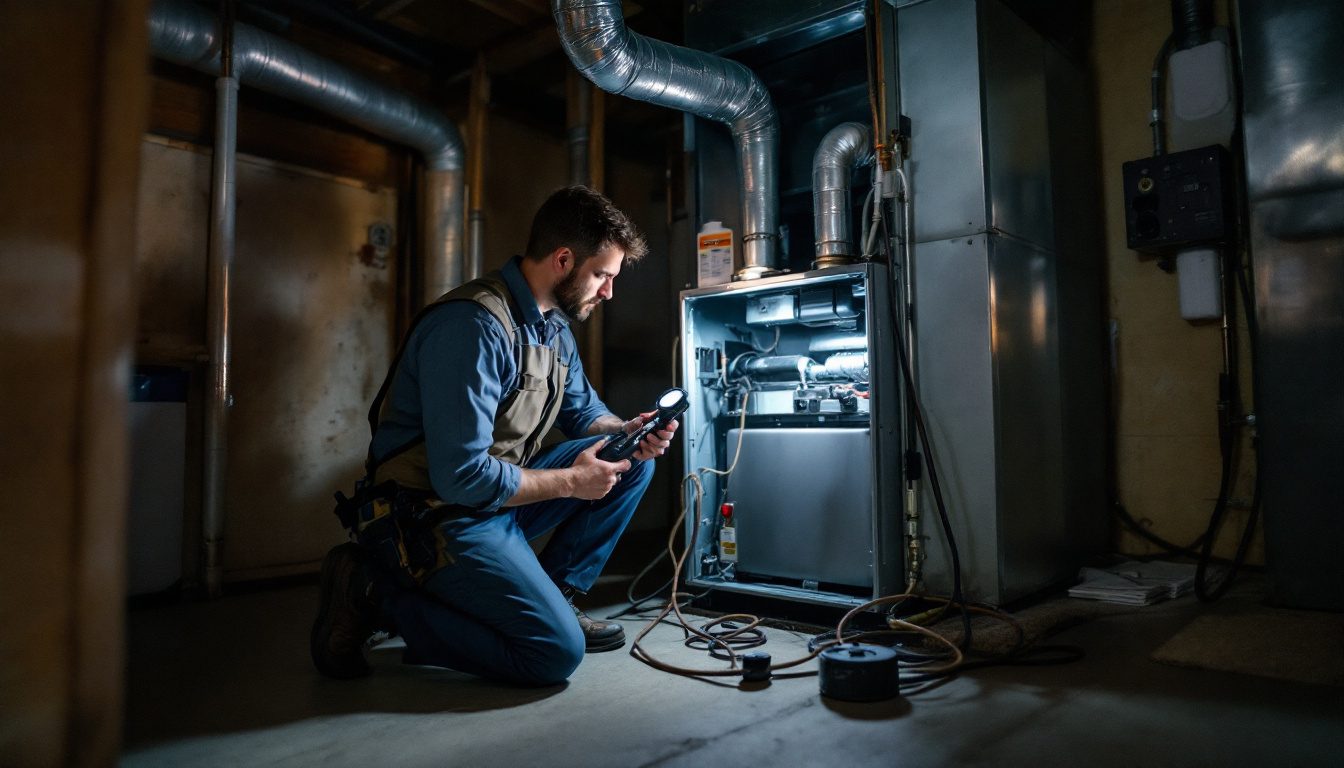
What is a furnace limit switch? A furnace limit switch is a heat sensing safety switch that shuts the burners off when the furnace runs too hot. Most high limit trips trace to low airflow, such as a clogged filter. A tripped manual reset rollout switch means flame left the burners and needs a technician.
Key Takeaways
- Goodman’s primary limit is automatic reset; its flame rollout control is manual reset (Goodman RS6612022).
- Rheem says limit trips “almost always involve low airflow through the furnace” (Rheem 801T manual).
- On one Goodman furnace, airflow falls from 749 CFM to 554 CFM as static pressure climbs from 0.1 to 0.5 inches (Goodman IOG-2030A).
- In a California field study, no system measured at or below the 0.50 in. w.c. furnace rating point (ASHRAE Journal, October 2012).
- For a tripped rollout switch, Rheem’s instruction reads “DO NOT jumper or reset this switch” (Rheem 801T).
- ENERGY STAR advises inspecting, cleaning or changing filters once a month (ENERGY STAR).
What is a furnace limit switch?
A furnace limit switch is a temperature operated safety switch in the burner control circuit. Before every heat cycle, Goodman’s control “verifies the limit switch is closed” (Goodman IOG-2030A); if the switch opens on overheating, the burners stop and the blower keeps running.
Rheem’s factory set high limit “prevents the air temperature leaving the furnace from exceeding the maximum outlet air temperature.” The name “limit switch” gets used loosely for three different switches:
| Switch | Where it sits | Reset | What a trip usually means | Display code |
|---|---|---|---|---|
| Primary (main or high) limit | Near the heat exchanger, reached through the burner compartment on Goodman 90% models | Automatic, bi-metal, nonadjustable | Too little air over the heat exchanger | Goodman EE3; Rheem code 22 |
| Auxiliary limit | Blower compartment, on the blower deck (Goodman upflow models) | Varies by model; Goodman says reset it only once | Heat building in the furnace or ductwork, often a blower problem | Rheem code 22 (shared with main limit) |
| Flame rollout switch | Burner manifold or burner box: top, left and right on the Rheem 801T | Manual, red button | Flame or heat escaped the burner area | Goodman E11 or six flashes; Rheem code 33 |
Setpoints vary by model: Goodman sends servicers to the Primary Limit Charts in each technical manual, so distrust any single “trips at X degrees” figure online.
Where is the furnace limit switch located?
The furnace limit switch location depends on which switch you mean. On a Goodman 90% furnace the primary limit is reached by removing the burner compartment door, the auxiliary limit sits on the blower deck, and the rollout controls are “mounted to the manifold assembly” beside the burners (Goodman RS6612022).
Goodman says its furnaces “should be serviced only by a qualified service technician.” A homeowner can still read the fault code on the control board display before calling.
Why does a furnace limit switch keep tripping?
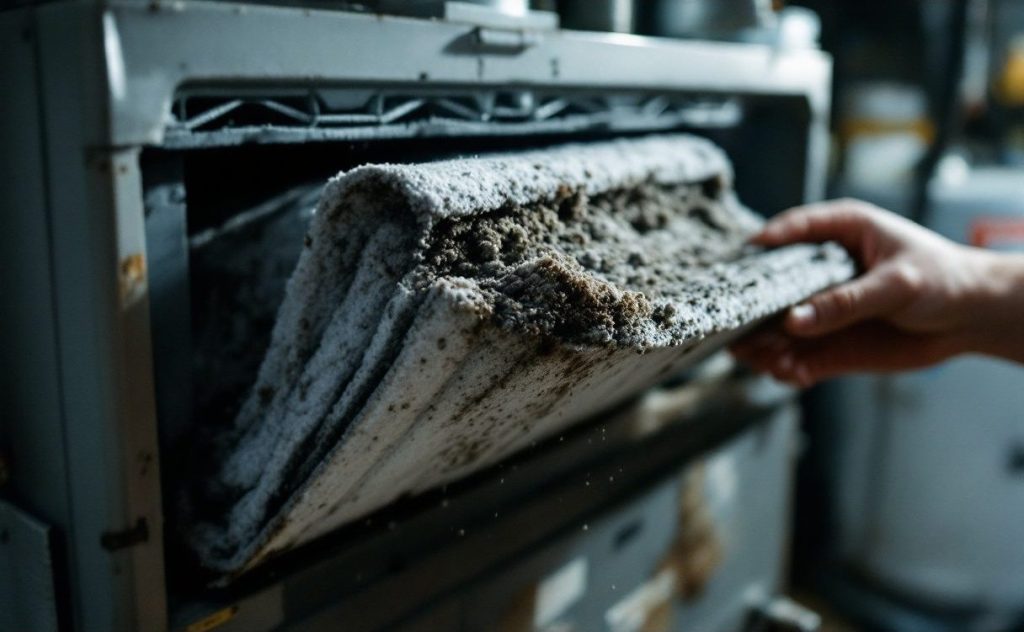
A furnace limit switch that keeps tripping is usually reporting low airflow, not failing. Rheem says limit openings “almost always involve low airflow through the furnace” (Rheem 801T), and Goodman’s chart for an open primary limit starts with “Check filters and ductwork for blockage.”
Rheem’s list runs: dirty filter, dirty cooling coil, restricted return or supply ducts, blower faults (wrong speed tap, bad bearings, dirty wheel), overfiring, ventilation problems and a failed blower motor. Rule out a clogged furnace filter and a weak blower motor first.
The number that explains it: temperature rise
Temperature rise is supply air temperature minus return air temperature. Per Goodman’s manuals, “The more air (CFM) being delivered through a given furnace, the less the rise will be,” and the rise “must be within the range listed on the furnace nameplate” (Goodman IOG-2030A). Rheem wants the middle of the range: 55°F for a 40 to 70°F range.
Static pressure squeezes the airflow. Too much of it “can cause excessive temperature rise. This can cause limit switch tripping and heat exchanger failure,” Goodman warns. Its airflow table shows the effect.
From 0.1 to 0.5 inches, airflow drops through 749, 697, 652, 607 and 554 CFM while the rise climbs from 40°F to 53°F. A loaded filter or closed supply registers add static the same way.
High static is normal in the field. In California field research, “None of the systems had an external static pressure of 0.50 in. w.c. (125 Pa) or less,” mostly because of return ducts (ASHRAE Journal, 2012). Lawrence Berkeley National Laboratory urged rating tests at “realistic system static pressures between 0.5 and 0.8 inches of water” (LBNL-62344, 2008). Rheem warns some high-efficiency filters have “greater than normal resistance” to airflow; see our MERV and airflow analysis.
A limit that opens and recloses looks like furnace short cycling. On the Rheem 801T, a main limit open over 150 seconds triggers a one hour lockout; four in one heat call mean a hard lockout.
What does a tripped furnace rollout switch mean?
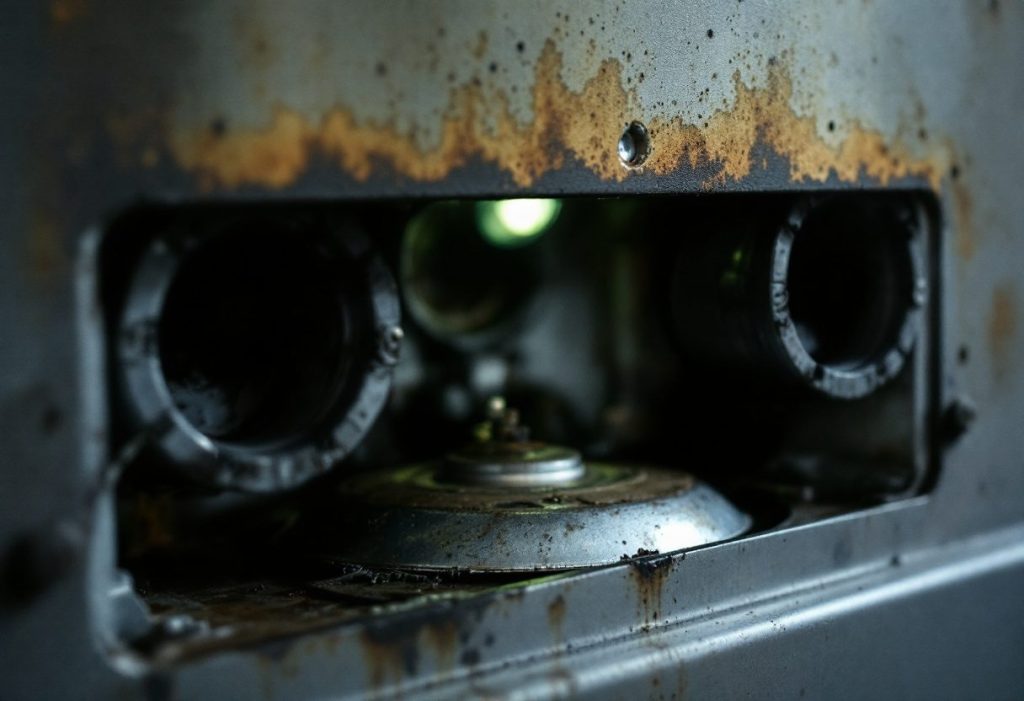
A tripped furnace rollout switch means flame or heat escaped the burner area and the switch cut the gas valve circuit. Goodman’s control is “designed to open should a flame roll out occur” and is manual reset, so the furnace stays off until someone presses the button (Goodman RS6612022).
On Goodman furnaces “the air circulation blower will run continuously” and single stage controls flash six times; *M9S80 displays show E11, and the Rheem 801T shows code 33.
The causes are combustion problems. Goodman’s chart for an open roll out switch lists gas pressure, burner alignment and burner restriction. The Department of Energy’s professional checklist adds the vent pipe, “the combustion chamber for cracks” and a carbon monoxide test (DOE, archived copy). Rheem lists “a blockage in the exhaust vent” as a furnace pressure switch cause too, and a suspected cracked heat exchanger needs a technician’s inspection.
Safety: a rollout trip is a stop sign
Rheem: “DO NOT jumper or reset this switch.” Goodman: “Do not bypass any safety circuit.” Leaking combustion gases can cause carbon monoxide poisoning, DOE warns, so confirm your CO alarms are placed and working while you wait.
How do you reset a furnace limit switch safely?
You usually cannot reset a primary furnace limit switch: it resets itself as the heat exchanger cools, so the real reset is fixing the airflow. Goodman allows a manual reset auxiliary limit one reset; a tripped rollout switch gets none from a homeowner. Safe owner steps:
- Note the fault code: EE3 or code 22 means limit; E11 or code 33 means rollout, so stop and call a technician.
- Replace a loaded filter. ENERGY STAR warns a dirty filter can “damage your equipment, leading to early failure” (ENERGY STAR).
- Open supply registers and clear return grilles.
- Clear the lockout: Rheem says lockouts clear once the fault is fixed and power is cycled off and back on.
- Watch one heat cycle. If the code returns, static pressure or the blower needs a technician.
ENERGY STAR recommends a contractor check-up each fall, and DOE’s professional task list includes adjusting “blower control and supply-air temperature.” Our furnace maintenance checklist splits owner and technician tasks.
How is a furnace limit switch tested and replaced?
A technician tests a furnace limit switch with power off and an ohmmeter across its terminals, which “should read continuous unless heat exchanger temperature is above limit control setting. If not as above, replace the control” (Goodman RS6612022).
Rollout switches are checked live during an ignition attempt: voltage to ground on one side but not the other means the switch is open. Goodman tags this step “Line Voltage now present,” so it is not homeowner work.
Rheem sets two replacement rules: “identical OEM replacement parts” only, and a test of the new switch “for a minimum of 15 minutes” at maximum input with both doors installed (Rheem 801T). A new switch that trips like the old one means the fix is in the ductwork and airflow.
We publish no furnace limit switch replacement cost: no federal source tracks it.
How we researched this
We read Goodman’s service manual RS6612022 and installation instructions IOG-2030A, Rheem’s (-)801T installation instructions, ENERGY STAR’s maintenance checklist, DOE’s archived furnace guide, LBNL-62344 and a 2012 ASHRAE Journal field research column, all cited. Research date: October 8, 2026. We also read the top three ranking pages; their setpoint and price figures carried no source, so we used none. Reddit was excluded because this is a gas and combustion safety topic.
Frequently asked questions
Can I reset a furnace limit switch myself?
Usually there is nothing to reset. Goodman’s primary limit is an automatic reset bi-metal control that recloses once the heat exchanger cools. Replace the filter, open registers, then cycle power to clear any lockout. If a manual reset auxiliary limit trips, Goodman allows one reset; a second trip needs a qualified servicer.
Is it safe to bypass a furnace limit switch?
No. Goodman’s service manual says “Do not bypass any safety circuit,” and Rheem calls a safety switch shutdown “an indication of a potential safety hazard” for a qualified technician. A jumpered limit lets the furnace run without airflow protection, the condition Goodman links to heat exchanger failure.
What is the difference between a rollout switch and a high limit switch?
A high limit senses heat exchanger heat, trips on low airflow and resets itself. A rollout switch sits at the burners, trips when flame escapes the burner area and must be reset by hand. Goodman *M9S80 furnaces show them as separate codes, EE3 for the high limit and E11 for rollout.
What does furnace limit switch open mean?
The control saw the limit circuit open and shut the burners off. On Goodman furnaces the circulator blower keeps running with no heat, and the troubleshooting chart says to check filters and ductwork for blockage. On a Rheem 801T, a limit open for more than 150 seconds is treated as a dead blower.
Can a dirty filter trip a furnace limit switch?
Yes. A dirty or restricted filter is first on Rheem’s list of limit switch causes. In California field research, mean filter pressure drop was 0.28 in. w.c., nearly three times the 0.10 assumed in ACCA manuals. ENERGY STAR says to inspect, clean or change filters once a month.
Where is the furnace rollout switch located?
At the burners. Goodman mounts its manual reset rollout controls, with a red reset button, to the manifold assembly on 90% furnaces. Rheem places its switches on the top, left side and right side of the burner box on the 801T. Either way, a trip calls for a technician before any reset.
Sources
- Goodman Manufacturing. “Service and Troubleshooting GM9S92/GM9S96/GC9S96 (RS6612022 R1).” https://mobile.goodmanmfg.com/mobileapp/stellent/pdf/infoPdf/Lit/RS6612022R1.pdf. Accessed October 2026.
- Goodman Manufacturing. “Installation Instructions for *M9S80 and *C9S80 Gas Furnace (IOG-2030A).” https://documents.alpinehomeair.com/product/goodmangm9s8gc9s8installationmanual.pdf. Accessed October 2026.
- Rheem. “Installation Instructions, (-)801T Upflow Series Gas Furnaces (92-24161-164-01).” https://resource.gemaire.com/is/content/Watscocom/Gemaire/rheem_r801t_en_ii.pdf. Accessed October 2026.
- ENERGY STAR. “Maintenance Checklist.” https://www.energystar.gov/saveathome/heating-cooling/maintenance-checklist. Accessed October 2026.
- U.S. Department of Energy. “Furnaces and Boilers,” archived copy. https://web.archive.org/web/2025id_/https://www.energy.gov/energysaver/furnaces-and-boilers. Accessed October 2026.
- Lawrence Berkeley National Laboratory. “Comparing Residential Furnace Blowers for Rating and Installed Performance (LBNL-62344).” https://eta-publications.lbl.gov/publications/comparing-residential-furnace-blowers. Accessed October 2026.
- Proctor, J. ASHRAE Journal. “Residential AC Filter,” October 2012. https://mail.proctoreng.com/dnld/ASHRAE2012.pdf. Accessed October 2026.
Leave a Reply