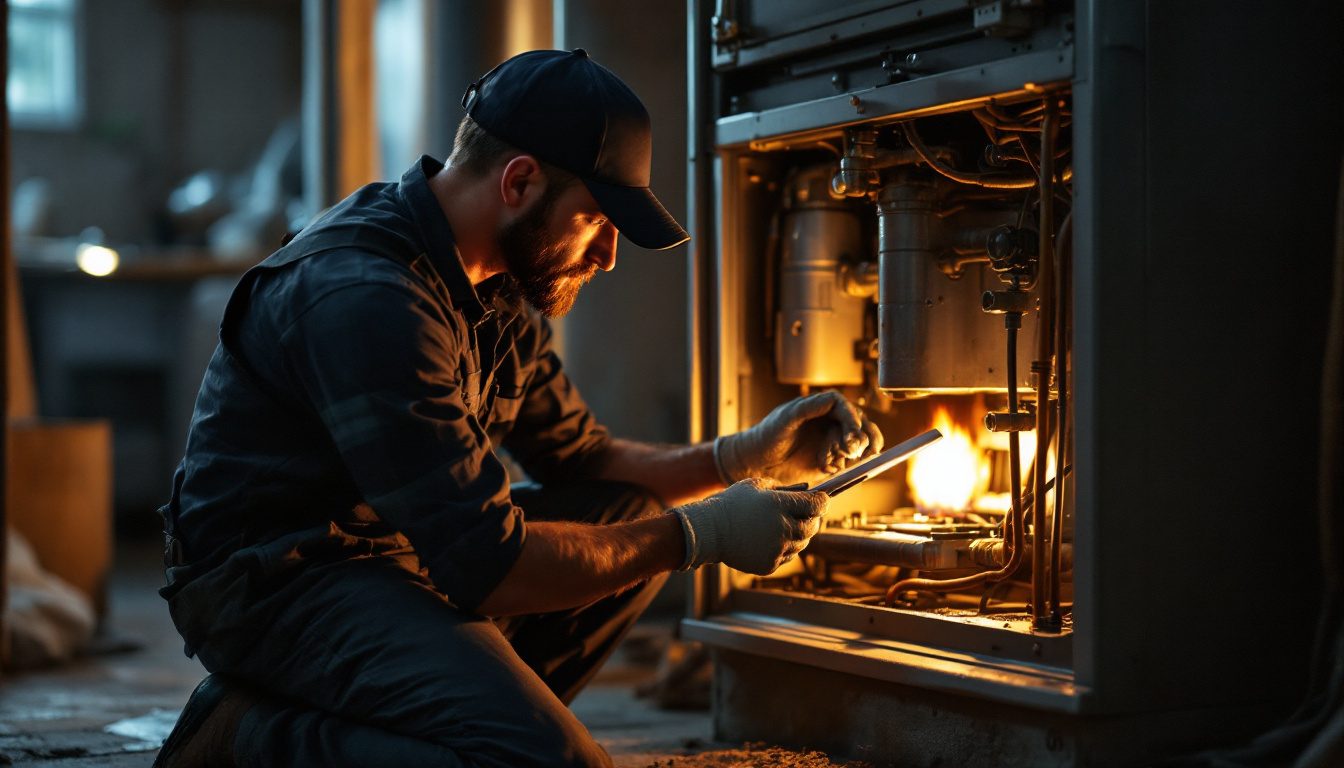
What does a furnace ignitor do, and how do you know it failed? A furnace ignitor is the ceramic element that glows hot enough to light the gas. If it never glows, test it cold against its resistance spec. If it glows but no flame follows, look at gas supply and the gas valve circuit.
Key Takeaways
- Goodman’s 115 volt silicon carbide igniter should read 37 to 68 ohms at about 70 to 77°F (Goodman RS6612022).
- White-Rodgers’ 120 volt silicon nitride replacement lists 20 to 100 ohms cold and reaches 1,796°F in 8 seconds maximum (White-Rodgers 789A-751KT2).
- Nitride igniters also come in an 80 volt class, run by controls such as White-Rodgers’ 50A65-843 (White-Rodgers R-4152).
- Goodman’s lockout chart sends a glow but no flame furnace to gas pressure, 24 volts at the valve and a series pressure switch (Goodman).
- Goodman warns that touching the igniter body with bare fingers can cause early failure (Goodman).
- No federal source publishes igniter prices or field lifespans; White-Rodgers rates one nitride part at 100,000 cycles (White-Rodgers).
What does a furnace ignitor do, and which kind do you have?
A furnace ignitor lights the burners on every call for heat. Most gas furnaces use a hot surface igniter, a ceramic element that glows orange on line voltage; some use a spark that lights a small pilot only when heat is called for.
The Department of Energy lists a continuous pilot light on older systems rated 56% to 70% AFUE, and electronic ignition with no pilot light on mid-efficiency systems rated 80% to 83% AFUE (DOE Energy Saver, archived copy).
Spark is not only an old design. Rheem’s 801T ultra low NOx furnace uses an intermittent pilot: a sparker lights the pilot, and the main valve opens once flame has been present for 2 seconds (Rheem 801T instructions).
Silicon carbide or silicon nitride: how do furnace igniters differ?
Furnace igniters are silicon carbide or silicon nitride, and nitride parts come in 80 and 120 volt classes. The material changes cold resistance, heat-up time and fragility, so the right test value depends on the exact part.
| Part | Material | Voltage | Cold resistance | Heat-up |
|---|---|---|---|---|
| Goodman 0130F00008 | Silicon carbide | 115 V | 37 to 68 ohms at 70 to 77°F | 17 second warm-up set by the control |
| White-Rodgers 789A-751A1 | Silicon nitride | 120 V, +10% / -15% | 20 to 100 ohms | 8 seconds max to 1,796°F at 102 V |
| 80V nitride on White-Rodgers 50A65-843 control | Silicon nitride | 80 V | Not listed on spec sheet | 20 second initial warm-up set by the control |
| Robertshaw 41-600 mini series | Silicon nitride | Not listed on product page | Not listed | 3 second heat-up (maker’s claim) |
Carbide is the older, more delicate material; Goodman’s bare finger caution applies to its carbide part. Robertshaw markets its nitride line as “durable, non-porous,” a maker’s description rather than a test result. White-Rodgers sells the 789A-751KT2 kit to convert a Carrier/ICP carbide igniter (LH33ZS001) to nitride, with an adapter harness for the old plug.
Match the voltage class
A nitride igniter is built for 80 or 120 volts, and the control must match. White-Rodgers prints “Do not exceed the specified voltage of 120 volts” on its 120 V kit, and its 50A65-843 control drives an 80V nitride ignitor. Read the voltage on the old part and the control before ordering.
When does the furnace igniter turn on?
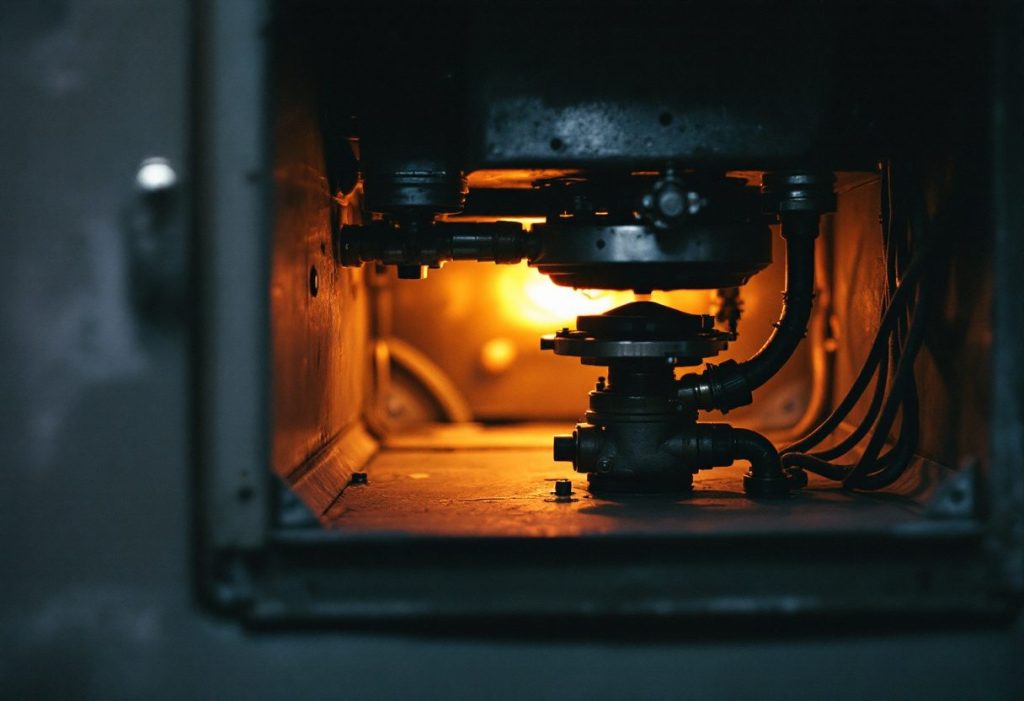
The igniter turns on only after the inducer runs and the pressure switch proves draft, then glows for a fixed warm-up before the gas valve opens. In Goodman’s sequence it shuts off as soon as flame is sensed.
Timings vary. The Resideo S9200U1000 lists a 30 second prepurge, an HSI warm-up of 17/27 or 30/30 seconds for first and later trials, and a 4, 6 or 8 second trial for ignition. Rheem’s 801T locks out for one hour after four failed ignition trials.
The full chain, thermostat to blower, is in our guide to why a furnace will not ignite; the next two sections cover only the igniter’s place in it.
Why is the furnace ignitor not glowing?
A furnace ignitor that never glows is either not receiving line voltage or is open inside. The control will not power it until earlier safety checks pass, so work in the order the board does.
- Read the code. Goodman’s status light shows through the blower door sight glass; pulling the door without holding its switch closed erases the stored code.
- Confirm the call for heat and power. Thermostat on heat, furnace switch and breaker on. Loose low voltage leads are covered in our thermostat wiring color guide.
- Check the safeties. Goodman’s control verifies the limit is closed before starting the inducer; an open high limit switch or a pressure switch that never closes stops the cycle before the igniter gets power.
- Voltage at the igniter plug (technician). No 115 VAC from the board means a board or wiring fault, per Goodman’s flowchart.
- Powered but dark. Replace the igniter; Goodman’s fault table calls this “Ignitor Open.”
- Glows, then goes dark early. If it does not glow for the entire 17 second warm-up, Goodman says to check for the pressure switch opening.
Furnace igniter glows but no flame: what is wrong?
If the furnace igniter glows through its warm-up and the burners never light, the igniter did its job. The fault is downstream: no gas, a gas valve that does not open, or a safety switch in series with the valve cutting its 24 volt signal.
Goodman’s E0 chart, the lockout after 3 total retries, follows that path. It checks supply gas and manifold pressure, 3.2 to 3.8 inches of water column for natural gas, then the valve’s On/Off switch, 24 volts at the valve, and whether the front cover pressure switch stays closed.
Goodman wires an auxiliary limit in series with the valve on 80% models and a front cover pressure switch on 90% models, so a glowing igniter can still mean a pressure switch fault. Placement matters too: the EZ-FLO kit says a replacement may need repositioning if the burners do not light.
If burners light but die within seconds, flame was not proved. Goodman’s fault table points to a dirty flame sensor, a poor ground or reversed polarity; repeated cycles look like furnace short cycling.
If you smell gas
Stop. Goodman’s manual says do not light any appliance, touch any electrical switch or use a phone in the building; call the gas supplier from a neighbor’s phone, or the fire department. A working carbon monoxide alarm is a separate layer of protection.
How do you test a furnace ignitor with an ohmmeter?
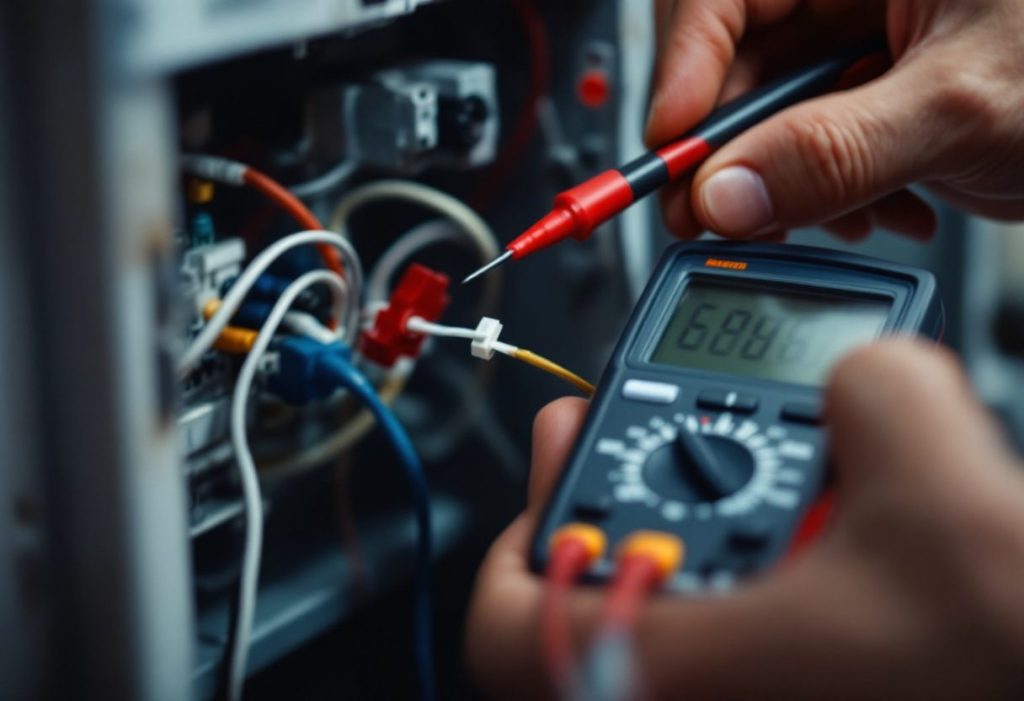
Test a furnace ignitor cold, unplugged and with power off, measuring resistance across its leads against the spec for that part. An open reading means a broken element; an in-range reading sends you back to the voltage checks.
- Disconnect all power to the furnace.
- Remove the burner compartment door to reach the igniter.
- Let the igniter cool; Goodman specifies approximately 70 to 77°F.
- Unplug the igniter from the ignition control. Do not touch the ceramic element.
- Measure resistance with an ohmmeter. For Goodman’s carbide part, a normal reading is 37 to 68 ohms.
- Reconnect the igniter and restore power.
Use your part’s number. White-Rodgers’ 120 V nitride part lists 20 to 100 ohms, so a reading that is high for one igniter is normal for another. If resistance is in range and the igniter stays dark, Goodman’s next check is 120 volts at the igniter during preheat: technician work.
Furnace ignitor replacement: what must match, and what does it cost?
A furnace ignitor replacement must match the original’s voltage class, mounting position and connector, and the element must not be touched. Goodman says only a qualified servicer should handle the igniter; the EZ-FLO kit strongly recommends a trained technician.
The White-Rodgers 789A-751KT2 kit includes a bracket and an adapter harness, and its steps disconnect the gas valve, flame sensor and igniter wires. The EZ-FLO kit instructions add a check worth copying: call for heat with the gas off to confirm the igniter gets hot, then turn the gas on, confirm light-off, and repeat two more times.
No federal or national lab series covers igniter parts or labor, so we publish no price; vendor surveys were excluded. For repair or replace decisions, see the furnace parts that fail most and the federal estimates for a new furnace. The only lifespan figure we found is a maker’s lab rating: 100,000 cycles at 120 volts under typical conditions for the 789A-751A1.
Goodman calls for a qualified inspection at least once per year, including burner ignition; our furnace maintenance checklist covers that visit.
How we researched this
Researched October 8, 2026. We read eight primary documents: a Goodman service manual, two White-Rodgers documents, a Resideo control manual, a Rheem installation manual, an EZ-FLO kit sheet, a Robertshaw product page and an archived DOE page. All eight are cited, and every number traces to a sentence or table cell recorded in our fact sheet.
Excluded: unsourced igniter price and lifespan ranges from contractor and content sites; a resistance range on a furnace brand’s consumer page that named no document; and vendor price surveys, since no federal series exists. Reddit was skipped because the topic involves gas and line voltage.
Frequently asked questions
How many ohms should a furnace ignitor read?
It depends on the part. Goodman lists 37 to 68 ohms at about 70 to 77°F for its 115 volt silicon carbide igniter, while White-Rodgers lists 20 to 100 ohms cold for its 120 volt nitride replacement. An open reading, with no continuity, means the element is broken.
Can you touch a furnace igniter?
Not the ceramic element. Goodman warns that touching the igniter body with bare fingers, rough handling or vibration could cause early failure, and says only a qualified servicer should handle it. Hold a replacement by its bracket or ceramic block.
Why does my furnace ignitor glow but the burners do not light?
The igniter is working, so look downstream. Goodman’s lockout chart checks gas supply and manifold pressure, 3.2 to 3.8 inches of water column on natural gas, then the valve’s On/Off switch, 24 volts at the valve and a series pressure switch. Those are technician checks.
Can I replace a furnace ignitor myself?
Manufacturers say no. Goodman states that only a qualified servicer should handle the igniter, and the EZ-FLO kit strongly recommends a trained technician. The job involves line voltage and gas valve wiring, and EZ-FLO confirms the result by repeating the ignition cycle two more times.
How long does a furnace ignitor last?
No federal or independent field study publishes igniter lifespan. The only figure we found is a manufacturer rating: White-Rodgers rates its 789A-751A1 nitride igniter at 100,000 cycles at 120 volts under typical conditions. The makers warn about rough handling, overvoltage and water on the part.
Why does my furnace try to light several times and then stop?
That is a safety lockout after failed ignition. Goodman’s control locks out after 3 total retries and shows E0. Rheem’s 801T enters a one hour soft lockout after four failed trials, and the Resideo S9200U1000 restarts automatically after 60 minutes. Read the code before resetting power.
Sources
- Goodman Manufacturing (Daikin Comfort). “Service and Troubleshooting, GM9S92 / GM9S96 / GC9S96 Single Stage Gas Furnaces, RS6612022 R1.” https://mobile.goodmanmfg.com/mobileapp/stellent/pdf/infoPdf/Lit/RS6612022R1.pdf. Accessed October 2026.
- Copeland / White-Rodgers. “789A-751KT2 OEM Direct Replacement 120V Hot Surface Ignitor, Installation Instructions.” https://media.copeland.com/c8a28437-b7f0-45b1-9861-b16b0108ced8/0037-7750001%20789A-751KT2%20-%20Installation%20Instructions.pdf. Accessed October 2026.
- Copeland / White-Rodgers. “Universal Nitride Integrated Ignition System 50A65-843, R-4152.” https://media.copeland.com/db2914e6-e2dc-47cc-b495-b16d001674e9/R_4152_50A65-843-SS.pdf. Accessed October 2026.
- Resideo. “S9200U1000 Universal Hot Surface Ignition Integrated Furnace Control, Installation Instructions 69-2075.” https://www.cochranesupply.com/media/assets/product/documents/Honeywell/S9200U1000.pdf. Accessed October 2026.
- Rheem. “Installation Instructions, (-)801T Upflow Series Ultra Low NOx Gas Furnaces.” https://resource.gemaire.com/is/content/Watscocom/Gemaire/rheem_r801t_en_ii.pdf. Accessed October 2026.
- EZ-FLO. “Universal Hot Surface Ignitor Kit, Installation Instructions.” https://pdf.lowes.com/productdocuments/b54e6720-a71a-400f-be02-d2141afd8b6c/15601003.pdf. Accessed October 2026.
- Robertshaw. “41-600 Silicon Nitride Hot Surface Mini-Ignitor Series.” https://www.robertshaw.com/parts/silicon-nitride-hot-surface-mini-ignitors-series/. Accessed October 2026.
- U.S. Department of Energy. “Furnaces and Boilers,” Energy Saver (archived copy). https://web.archive.org/web/2025id_/https://www.energy.gov/energysaver/furnaces-and-boilers. Accessed October 2026.
Leave a Reply