Last reviewed: September 2026 · By the HVAC Brief Editorial Team · Our sourcing and editorial standards
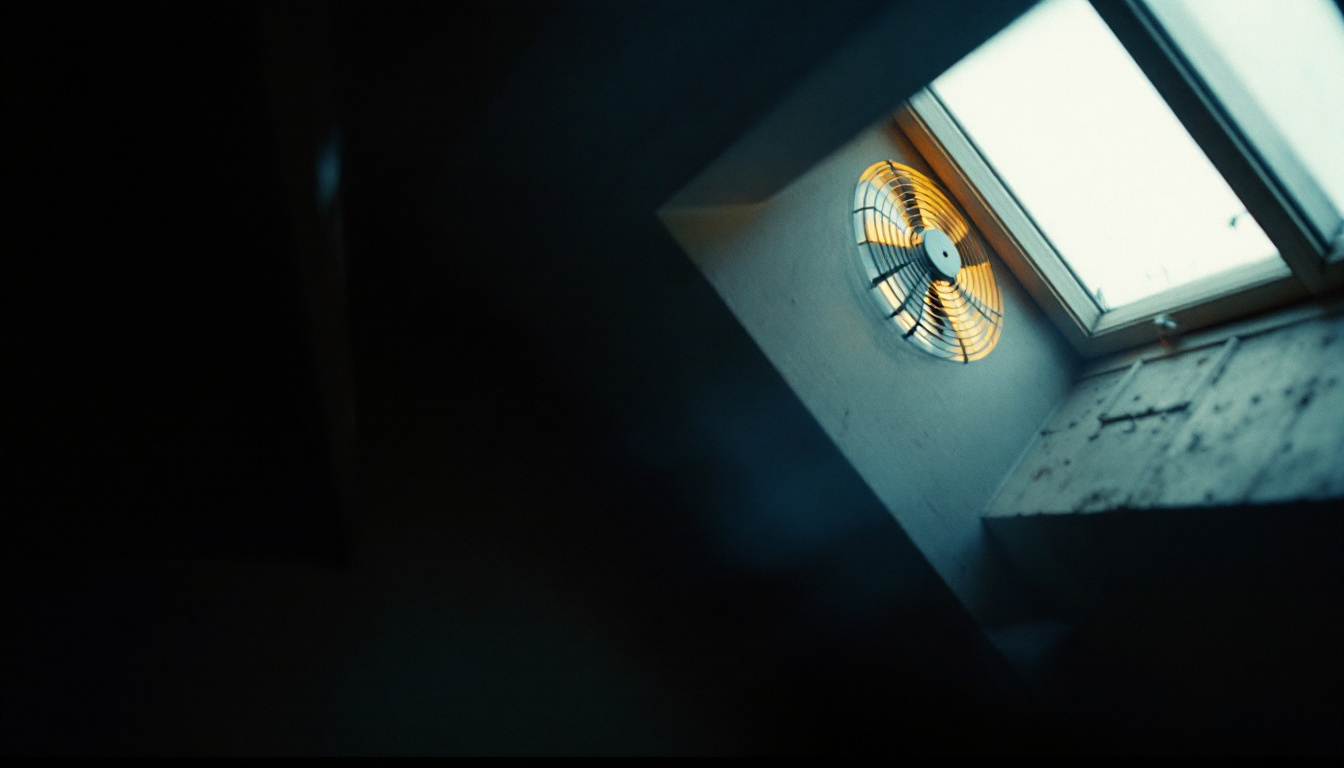
A powered attic fan pulls air out of the attic, and where the ceiling below is not airtight, some of what it pulls is conditioned air from the house. That is the mechanism behind the long-running argument about them.
Attic ventilation and attic fans are not the same thing. Passive ventilation through soffit and ridge vents moves air without a motor and without depressurising anything.
Powered versus passive
| Passive ventilation | Powered attic fan | |
|---|---|---|
| How air moves | Buoyancy and wind, through soffit and ridge vents | Motor driven extraction |
| Uses electricity | No | Yes |
| Depressurises the attic | No | Yes, which is the concern |
| Risk if ceiling leaks | None from the vent itself | Can draw conditioned air up through leaks |
| Risk with combustion appliances | None from the vent itself | Depressurisation near atmospheric appliances warrants care |
What determines whether a fan helps or hurts
- How airtight the ceiling plane is. Recessed lights, hatches, top plates and duct penetrations are the usual leaks. A sealed ceiling means the fan pulls outdoor air; a leaky one means it pulls some conditioned air.
- Whether intake ventilation is adequate. A fan without enough soffit intake will find its make-up air wherever it can, including the house.
- Whether ducts run through the attic. If they do, attic temperature affects the system directly, and the better answer is usually insulating and sealing those ducts. See why duct location matters.
- Whether combustion appliances share the space or are affected by pressure changes.
Seal the ceiling plane and insulate first. Once the boundary between house and attic is genuinely airtight, the objection to a powered fan largely disappears, because what it extracts is outdoor air. Installing the fan first, against a leaky ceiling, is what produces the outcomes people report as disappointing. See why envelope work comes first.
Frequently asked questions
Do attic fans actually work?
They move air out of the attic, which is not disputed. The argument is about what replaces it. Where the ceiling below is not airtight, some make-up air comes from the conditioned house rather than from outside, which offsets the benefit. Sealing the ceiling plane first resolves most of that objection.
What is the difference between an attic fan and attic ventilation?
Passive ventilation moves air through soffit and ridge vents using buoyancy and wind, with no motor and no depressurisation. A powered attic fan extracts air mechanically, which lowers attic pressure and draws make-up air from wherever it can, including through leaks in the ceiling below.
Will an attic fan lower my cooling bill?
We publish no figure, because no federal source measures it at household level and the result depends on how airtight the ceiling is, how much intake ventilation exists, and whether ducts run through the attic. The mechanism can work, and it can also be offset by conditioned air being drawn upward.
Should I insulate the attic or add a fan?
Insulate and seal first. That reduces heat transfer through the ceiling and removes the pathway by which a fan could draw conditioned air upward. Once the ceiling plane is airtight, a fan extracts outdoor air rather than competing with your cooling system.
Methodology and limitations
This page describes the pressure mechanism rather than publishing performance figures, because no federal source measures attic fan performance at household level.
- No energy saving percentage is claimed in either direction.
- Depressurisation near atmospheric combustion appliances is a safety consideration requiring assessment of the specific installation.
- Nothing here is engineering advice for a specific house.
The HVAC Brief is an independent trade publication. We do not sell equipment, take manufacturer advertising, or accept payment for placement in our research. Corrections welcome.
Leave a Reply