Last reviewed: August 2026 · By the HVAC Brief Editorial Team · Our sourcing and editorial standards
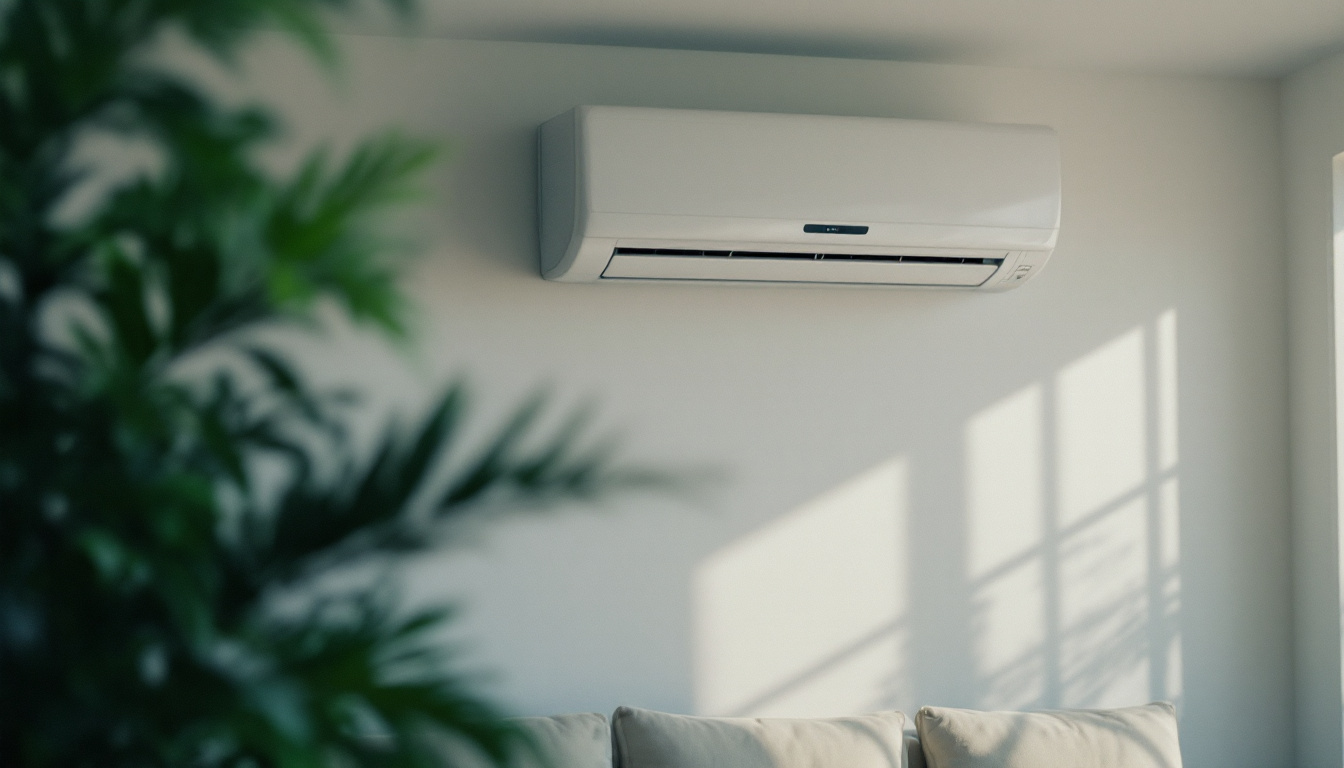
A ductless mini split is a split system without ducts: an outdoor compressor connected by refrigerant lines to one or more wall, ceiling or floor units that condition rooms directly. Most are heat pumps, so they heat and cool.
They are rated on SEER2 and HSPF2, the same federal measures as ducted central systems, not on the CEER scale used for window units. Split system heat pumps carry a national minimum of 14.3 SEER2 and 7.5 HSPF2.
The name causes confusion. “Ductless” describes the distribution, not the technology. Mechanically a mini split is the same refrigerant cycle as a central system, with the air handler moved into the room instead of sitting in a plant space feeding ductwork.
How a mini split differs from a central system
| Feature | Ducted central system | Ductless mini split |
|---|---|---|
| Distribution | Ductwork to registers | Indoor heads in each conditioned space |
| Zoning | Whole house, or zoned with dampers | Per head, inherently zoned |
| Duct losses | Real, especially in unconditioned space | None, there are no ducts |
| Efficiency rating | SEER2 and HSPF2 | SEER2 and HSPF2, same scale |
| Federal minimum, split heat pump | 14.3 SEER2, 7.5 HSPF2 | 14.3 SEER2, 7.5 HSPF2 |
| Regional AC standard applies | Yes for air conditioners | Not to heat pumps |
Where they make sense
- Homes without existing ductwork. Adding ducts to an older house is often the largest single cost in a retrofit. Mini splits remove that line item.
- Additions and conversions. A garage, attic room or extension that the existing system was never sized to serve.
- Rooms the central system cannot satisfy. Rather than upsizing the whole system for one problem room, which oversizes it for every other room.
- Where duct losses are severe. Ductwork running through an unconditioned attic loses energy that a ductless system never incurs.
Where they make less sense is a house with sound existing ductwork and a system due for replacement. There the ducts are a sunk asset, and the case rests on zoning rather than on avoiding duct installation.
Per-head sizing is where mini split installations most often go wrong. Each head serves a space with its own load, and the same oversizing failure mode applies: an oversized head short cycles and dehumidifies poorly. See why square-footage sizing fails.
Frequently asked questions
What is a ductless mini split?
A split system without ductwork. An outdoor compressor unit connects by refrigerant lines to one or more indoor heads mounted on walls, ceilings or floors, which condition rooms directly. Most are heat pumps, providing both heating and cooling, and they are rated on SEER2 and HSPF2 like ducted central systems.
Are mini splits heat pumps?
Most are. A mini split heat pump runs the refrigerant cycle in both directions so one machine heats and cools. Cooling-only mini splits exist but are less common in the US residential market. Federal minimums for split system heat pumps are 14.3 SEER2 and 7.5 HSPF2.
Is a mini split more efficient than central air?
Both are rated on the same SEER2 and HSPF2 scale, so the rating comparison is direct. The structural difference is duct losses: a ducted system loses energy through ductwork, particularly in unconditioned attics or crawl spaces, while a ductless system has none. Whether that advantage is decisive depends on the specific duct system.
How many indoor units can one outdoor unit run?
Multi-zone systems connect several indoor heads to one outdoor unit, with the number depending on the equipment. Each head serves a space with its own load, so per-head sizing from a room-by-room calculation matters as much as total capacity.
Methodology and limitations
Efficiency minimums are from 10 CFR 430.32(c)(5) and (c)(6). Equipment descriptions reflect standard configurations rather than any specific manufacturer’s product.
- We publish no installed cost. No federal series measures HVAC installed prices.
- Federal minimums are floors. Many products exceed them.
- Whether a mini split suits a specific house depends on a load calculation for that house.
Sources
- US Department of Energy, 10 CFR 430.32, efficiency standards for central air conditioners and heat pumps.
The HVAC Brief is an independent trade publication. We do not sell equipment, take manufacturer advertising, or accept payment for placement in our research. Corrections welcome.
Leave a Reply