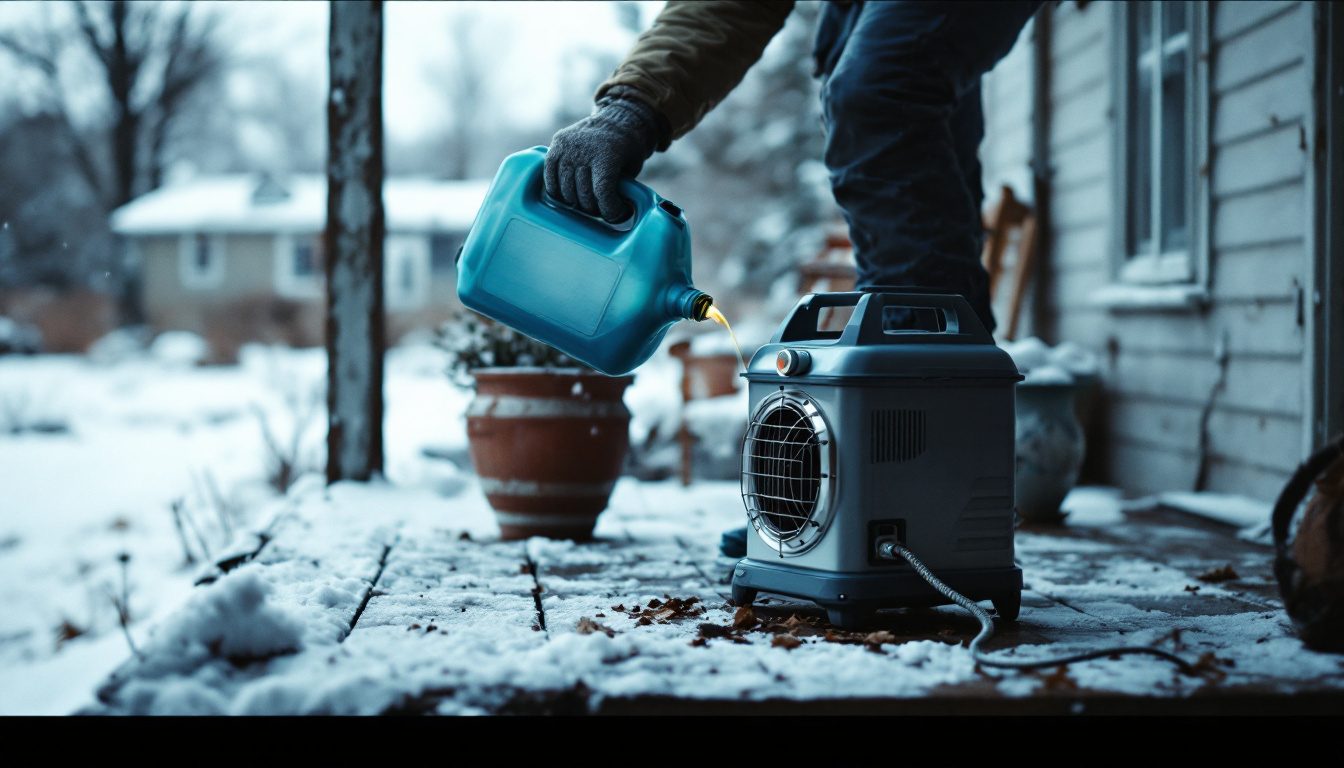
Is a kerosene heater safe to use indoors? Only with conditions. A kerosene heater is an unvented, wick-fed space heater, so every bit of its carbon monoxide and nitrogen dioxide stays in the room. It needs 1-K fuel, fresh air, a CO alarm and outdoor refueling, and Massachusetts and New York City ban it in homes outright.
Key Takeaways
- CPSC says burn only 1-K kerosene, refuel outdoors and keep the heater 3 feet from furniture (CPSC Pub. 5052).
- In 14 homes with heaters running, carbon monoxide averaged 7 ppm, and CO or sulfur dioxide beat outdoor standards in 8 of 14 (Cooper and Alberti, 1984).
- Massachusetts law (chapter 148, section 25B) bans using or selling unvented kerosene space heaters (archived copy).
- Fire code section 603.4 bans portable unvented heaters in apartments and hotels but allows listed ones in one- and two-family homes (Fairfax County Fire Marshal).
- Maine kerosene averaged $6.89 a gallon on October 5, 2026, about $51 per million Btu (Maine DOER).
- A 23,800 Btu/h heater then costs about $1.24 an hour, roughly half of resistance electric at Maine’s 32.41 cents per kWh (EIA, July 2026).
What is a kerosene heater, and how does it work?
A kerosene heater is a portable, unvented space heater that draws kerosene up a round wick from its base tank and burns the vapor. Convection models warm the surrounding air; radiant models add a reflector. With no flue, combustion gases and water vapor stay in the room.
The Master Forge WK95C8M manual lists 23,800 Btu/h, a tank of 1.9 gallons, a burn rate of 0.180 gallons an hour and 8 to 12 hours per fill. The manual says the heater is “either on or off”: turning the wick down causes odor, tar and carbon. A heater too big for the room should be switched off, not throttled. As backup heat, it falls in the category our secondary heating data tracks.
Is a kerosene heater safe to use indoors?
A kerosene heater can be used indoors only where it is legal and only as its manual directs: correct fuel, enough room volume or an open window, and an adult awake nearby. The CPSC’s kerosene heater guidance (Pub. 5052) says low levels of carbon monoxide and nitrogen dioxide are produced even in normal use, and may harm people with chronic respiratory or circulatory problems.
The two failure modes are poisoning and fire. Our count of carbon monoxide deaths tied to heating shows the first nationally, and the home heating fire record covers the second. Fire code section 603.4.1 keeps these heaters out of sleeping rooms entirely.
What does a kerosene heater put into the air?
A kerosene heater puts carbon monoxide, nitrogen dioxide, particles and sulfur dioxide into the room; the EPA notes that unvented kerosene heaters may also generate acid aerosols. A persistent yellow-tipped flame, EPA adds, signals maladjustment and higher emissions.
A 1984 study of 14 homes with heaters running found mean levels of 7 ppm CO and 0.4 ppm SO2, with CO or SO2 over the outdoor standard in 8 of 14 homes (Cooper and Alberti). The EPA outdoor standard is 9 ppm CO over 8 hours and 100 ppb NO2 over 1 hour. A study of 333 New Haven, Connecticut homes (1982 to 1983) found NO2, SO2 and CO2 above national standards in some.
Among 888 nonsmoking women in Connecticut and Virginia (1993 to 1996), each extra daily hour of kerosene heater use carried a wheeze rate ratio of 1.06, a 6% higher wheeze-day rate (Triche et al.).
Are kerosene heaters legal in a house?
Kerosene heater legality depends on your state, city and building type. Massachusetts bans using or selling unvented liquid fired space heaters in chapter 148, section 25B (archived copy), and the FDNY says they are illegal in New York City. Elsewhere, the local fire code decides.
| Jurisdiction or code | What it says | Penalty or exception |
|---|---|---|
| Massachusetts, M.G.L. c.148 s.25B | No use or sale of unvented kerosene, range oil or No. 1 oil heaters with the tank within 42 inches of the burner | Fine of not more than $100 |
| New York City (FDNY) | Kerosene and propane space heaters are prohibited | Fine up to $10,000 and up to 6 months, per a heater maker’s manual |
| Fire code section 603.4 (Fairfax County, Virginia restatement) | Portable unvented heaters banned in assembly, school, institutional and R-1 to R-4 occupancies | Listed, approved heaters allowed in one- and two-family dwellings |
| Fire code section 603.4.1 | Not in sleeping rooms, bathrooms, toilet rooms or storage closets | Applies where the exception allows use |
The Fairfax County Fire Marshal’s summary shows the usual pattern: banned in apartments and hotels, allowed in a detached house if listed. Many jurisdictions amend the section, so ask your fire marshal, landlord or insurer before buying. Forced-air “torpedo” heaters differ; the Remington manual marks them not for residential living areas. Vent-free gas logs raise similar questions, covered in our gas fireplace venting explainer.
What fuel does a kerosene heater use?
A kerosene heater runs on 1-K kerosene only. ASTM D3699 defines No. 1-K as a special low-sulfur grade for appliances with no flue, and No. 2-K as a regular grade for flue-connected burners. CPSC says other grades can release more pollutants indoors and can look identical, so buy from a dealer who certifies 1-K.
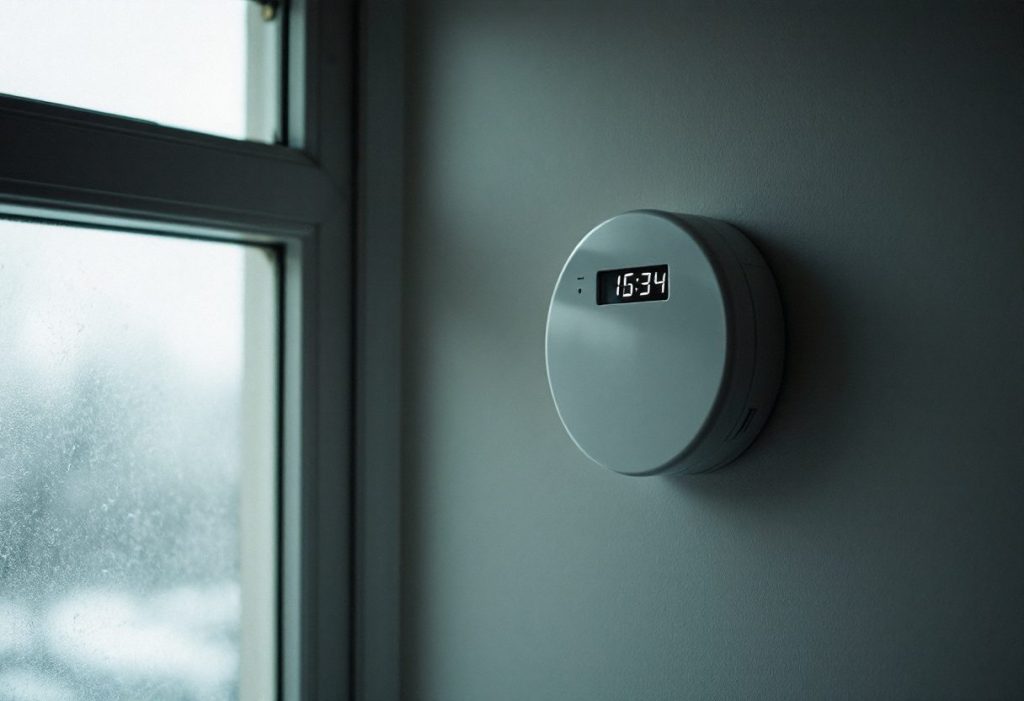
Never use gasoline; CPSC warns even small amounts in kerosene raise fire and explosion risk. Store kerosene in a blue can, never a red gasoline can. And never burn last winter’s fuel: the Master Forge manual says kerosene kept from one season to the next will not burn properly. Strong smells are covered in our guide to heating odors and which ones are emergencies.
Kerosene heater vs propane and electric: what does each cost to run?
A kerosene heater cost about $51 per million Btu to run in Maine in October 2026, below resistance electric there but above bulk propane. We used the Maine DOER survey because no federal series tracks retail kerosene: on October 5, 2026 it showed kerosene at $6.89, heating oil at $5.97 and propane at $3.46 a gallon. Neither unvented nor resistance heat loses energy up a flue, so we compare fuel energy directly.
| Heat source | Price | Btu per unit (EIA) | Cost per million Btu |
|---|---|---|---|
| Kerosene heater (Maine) | $6.89 per gallon | 135,000 | $51 |
| Propane heater, bulk price (Maine) | $3.46 per gallon | 91,452 | $38 |
| Electric space heater (Maine) | 32.41 cents per kWh | 3,412 | $95 |
| Electric space heater (US average) | 18.31 cents per kWh | 3,412 | $54 |
The worked hour: 0.180 gallons times $6.89 is $1.24 an hour at full output, and a full tank of 1.9 gallons costs $13.09. Making the same 23,800 Btu/h with resistance heat takes 6.98 kWh, or $2.26 an hour in Maine. A 1,500 W plug-in heater makes only 5,118 Btu/h. Caveat: Maine’s propane figure is a bulk delivered price, and the state says small users pay more per gallon. Our indoor propane heater guide covers that side, and the electric space heater cost breakdown covers plug-in units.
For a whole-house fuel decision, compare what heat costs by fuel on a delivered basis.
How do you run a kerosene heater safely?
Run a kerosene heater safely by following the manual’s room-size rule, refueling outdoors and keeping a CO alarm nearby. The Master Forge manual says a room with less than 200 cubic feet of air per 1,000 Btu/h needs open doors to adjacent rooms or a window open at least 1 inch. For a 23,800 Btu/h heater that is 4,760 cubic feet, about 595 square feet under an 8-foot ceiling.
- Confirm it is legal for your building and a listed indoor model.
- Fill with fresh 1-K kerosene outdoors, with the heater off and cool, never above the full mark.
- Keep it 36 inches from furniture and curtains, and out of bedrooms and bathrooms.
- Crack a window about one inch and keep the door to the rest of the house open.
- A persistent yellow-tipped flame means it needs adjustment or a cleaner wick.
- Dry burn the wick outdoors weekly in the heating season to clear tar.
- Turn it off before sleeping or leaving. If it flares up, do not carry it; leave and call the fire department.
Any home burning fuel indoors needs a carbon monoxide alarm; our CO alarm placement guide covers where it goes. CPSC also wants smoke alarms on every level.
Myth: a kerosene heater burns clean once it warms up
Start-up odor should fade within 5 to 10 minutes, per the Master Forge manual. But carbon monoxide has no smell, and the 7 ppm average in the 1984 study came from normal operation.
How we researched this
Researched October 9, 2026. We consulted 27 sources and cited 16: CPSC, EPA, three peer-reviewed studies, the Massachusetts statute (archived copy), a fire marshal’s restatement of fire code section 603.4, FDNY, ASTM D3699, two heater manuals, Maine DOER and EIA. Cost figures are our arithmetic. EIA’s refiner kerosene price series ends in 2022, so Maine’s survey stands in. Excluded: retailer listings, content farms and all Reddit material, because this is a combustion safety topic.
Frequently asked questions
Can you use a kerosene heater in a garage?
Often, but check local code first, since fire code section 603.4 rules depend on occupancy. CO still builds up in a closed garage, and the Remington forced-air manual wants bulk fuel stored 25 feet from the heater. Our garage heating guide compares vented options.
Why is my kerosene heater smoking?
Smoke usually means bad fuel or a dirty wick. The Master Forge manual lists smoke, odor and a low flame as signs of poor or old kerosene. Switch to fresh 1-K, dry burn the wick outdoors, and replace it if it still smokes.
Is it safe to sleep with a kerosene heater on?
No. The Master Forge manual says to turn the heater off and confirm it is out before going to bed, and fire code section 603.4.1 bars portable unvented heaters from sleeping rooms. Overnight use means hours of exposure with no one awake to notice symptoms.
Is a kerosene heater cheaper than electric?
Usually. At Maine prices on October 5, 2026, kerosene came to about $51 per million Btu against $95 for resistance electric in Maine and $54 at the July 2026 US average power price. Where power is cheap, the gap disappears.
How long does a kerosene heater run on one tank?
A typical 23,800 Btu/h convection model holds 1.9 gallons and burns up to 0.180 gallons an hour, which the Master Forge manual rates at 8 to 12 hours per fill. Smaller radiant models burn and hold less. At Maine’s October 2026 price, a fill costs $13.09.
Can you burn diesel or red dyed kerosene in a kerosene heater?
Red dyed 1-K is fine in at least one maker’s heater; diesel and 2-K are not. The Master Forge manual allows only water-clear or red dyed 1-K kerosene, and ASTM D3699 reserves 2-K for flue-connected burners. CPSC rules out gasoline in any amount.
Sources
- US CPSC. “Kerosene Heater Safety,” Pub. 5052. https://www.cpsc.gov/s3fs-public/5052.pdf. Accessed October 2026.
- US EPA. “Combustion Products.” https://www.epa.gov/indoor-air-quality-iaq/sources-combustion-products-introduction-indoor-air-quality. Accessed October 2026.
- US EPA. “NAAQS Table.” https://www.epa.gov/criteria-air-pollutants/naaqs-table. Accessed October 2026.
- Cooper KR, Alberti RR. Am Rev Respir Dis, 1984. https://pubmed.ncbi.nlm.nih.gov/6424521/. Accessed October 2026.
- Leaderer BP et al. Am J Epidemiol, 1986. https://pubmed.ncbi.nlm.nih.gov/3088984/. Accessed October 2026.
- Triche EW et al. Epidemiology, 2005. https://pubmed.ncbi.nlm.nih.gov/15824555/. Accessed October 2026.
- Massachusetts General Laws c.148 s.25B (archived copy). https://malegislature.gov/Laws/GeneralLaws/PartI/TitleXX/Chapter148/Section25B. Accessed October 2026.
- Fairfax County Fire Marshal. “Portable Heaters Guidelines.” https://www.fairfaxcounty.gov/fire-ems/fire-marshal/portable-heaters-guidelines. Accessed October 2026.
- FDNY Smart. “Kerosene and Propane Space Heaters.” https://fdnysmart.org/safetytips/dont-use-kerosene-propane-space-heaters/. Accessed October 2026.
- ASTM International. “D3699 Specification for Kerosine.” https://store.astm.org/d3699-19.html. Accessed October 2026.
- LF, LLC. “Master Forge WK95C8M Owner’s Manual.” https://pdf.lowes.com/productdocuments/ced94ae7-9902-4bd5-9eac-c1bba1263ccc/67609658.pdf. Accessed October 2026.
- Pinnacle Climate Technologies. “Remington Kerosene Forced Air Heater Manual.” https://images.thdstatic.com/catalog/pdfImages/51/51581aca-81df-4c8b-a90b-0f42bdd54bad.pdf. Accessed October 2026.
- Maine Department of Energy Resources. “Heating Fuel Prices.” https://www.maine.gov/energy/heating-fuel-prices. Accessed October 2026.
- EIA. “Electric Power Monthly, Table 5.6.A.” https://www.eia.gov/electricity/monthly/epm_table_grapher.php?t=epmt_5_6_a. Accessed October 2026.
- EIA. “Monthly Energy Review, Appendix A.” https://www.eia.gov/totalenergy/data/monthly/pdf/mer_a.pdf. Accessed October 2026.
- EIA. “British thermal units.” https://www.eia.gov/energyexplained/units-and-calculators/british-thermal-units.php. Accessed October 2026.
Leave a Reply