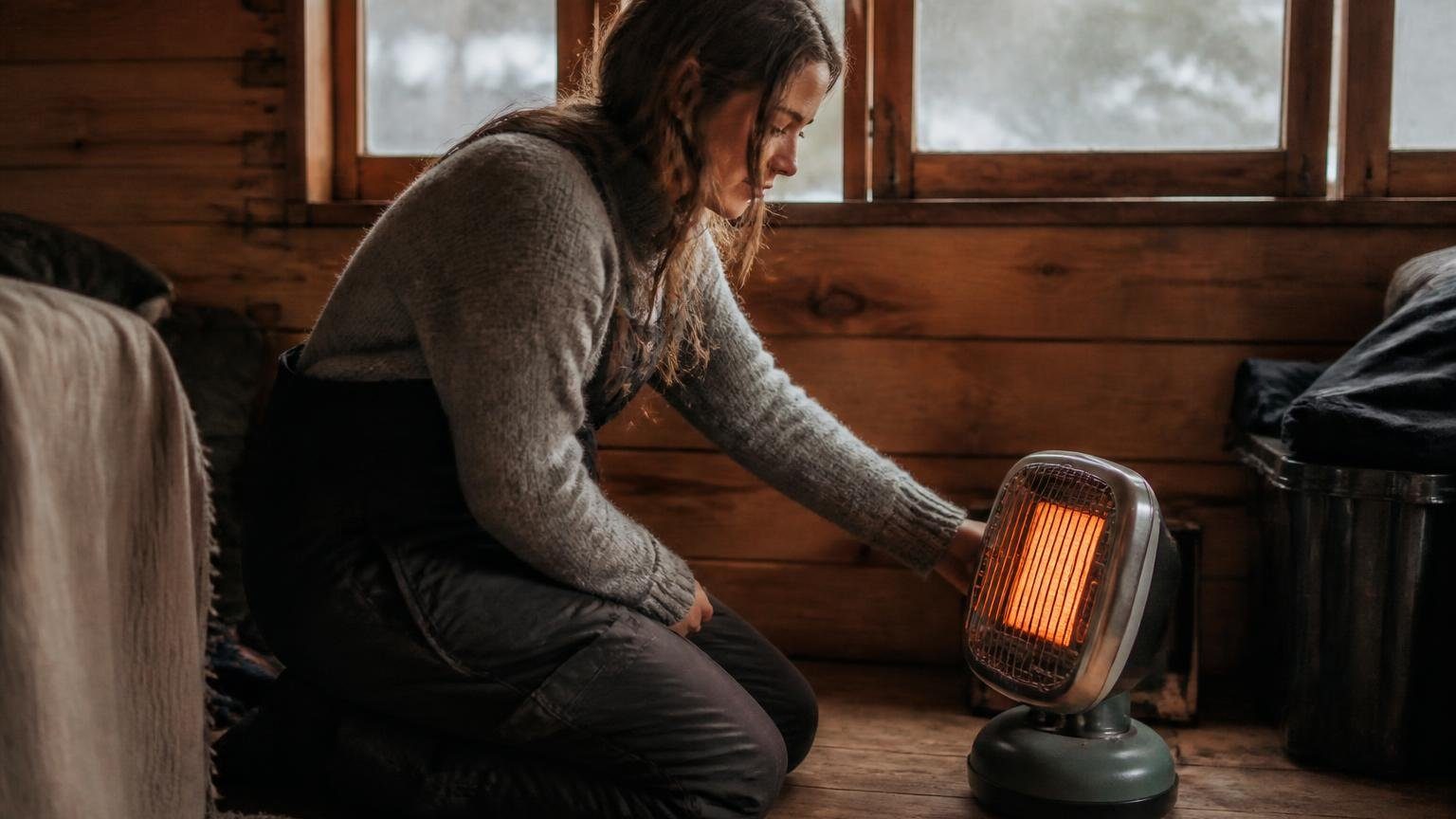
Can you use a propane heater indoors? Yes. Only a heater labeled for indoor use, with an oxygen depletion sensor, the fresh air openings its manual specifies and a working CO alarm. Patio and forced-air torpedo heaters are outdoor or job-site equipment, and CPSC tied unvented portable propane heaters to an estimated 30 deaths in 2022.
Key Takeaways
- Unvented portable LP gas heaters were tied to an estimated 30 US CO deaths in 2022, more than all furnaces and boilers (20) (CPSC, May 2026).
- The Mr. Heater Buddy MH9BX is certified to ANSI Z21.103 for “recreational and emergency indoor use” and needs 9 square inch vents (MH9BX manual).
- Installed vent-free room heaters carry CSA/ANS Z21.11.2 listing and an oxygen depletion sensor, and stay out of bedrooms and bathrooms (FDF400 series manual).
- Massachusetts bars unvented propane space heaters in homes unless they meet state fire board standards; fine up to $100 (M.G.L. c.148 s.25A).
- Each gallon of propane burned releases 6.8 pounds of water (Mississippi State Extension, 2024).
- At $2.598 a gallon (October 5, 2026), bulk propane costs about $28.24 per million Btu (EIA weekly prices; our arithmetic).
Can you use a propane heater indoors? What makes one indoor rated
You can use a propane heater indoors only when its label and manual allow it. Four ANSI standards cover the propane heaters people buy, and only two permit indoor use.
Portable “indoor-safe” heaters such as the Mr. Heater Buddy MH9BX are certified to ANSI Z21.103, which covers “unvented portable type gas camp heaters for indoor and outdoor use” (MH9BX manual). Installed vent-free room heaters carry CSA/ANS Z21.11.2. Forced-air construction heaters are built to ANS Z83.7 and patio heaters to ANS Z83.26, and both labels rule out the house.
Every unvented model burns room air and leaves its exhaust in the room, unlike the furnace on a whole-house propane heating system, which vents outdoors. Space heaters are a common backup in our secondary heating data.
Which propane heaters are safe indoors, and which are not?
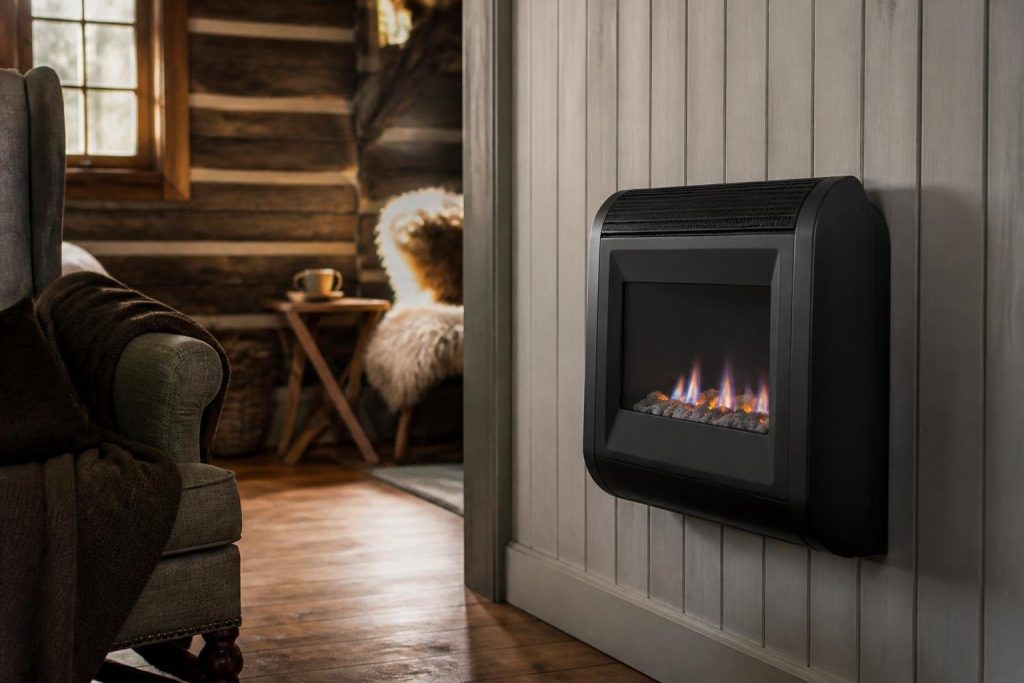
Two propane heater types allow some indoor use and two do not. The manuals settle it.
| Heater type (example) | Standard | Indoor use per manual | Key limit |
|---|---|---|---|
| Portable camp heater (Mr. Heater Buddy MH9BX) | ANSI Z21.103 | Recreational enclosures; emergency home heating on a 1 lb cylinder | 9 sq in vents at ceiling and floor; never while sleeping |
| Vent-free room heater (FDF400 series) | CSA/ANS Z21.11.2 | Installed supplemental heat where local code allows | Not in a bedroom or bathroom; supply tanks outdoors |
| Forced-air “torpedo” (Dyna-Glo RMC-FA series) | ANS Z83.7 | None: “not for home or recreational vehicle use” | Up to 150,000 Btu/h, exhaust released into the space |
| Patio heater (Dyna-Glo DGPH301BL) | ANS Z83.26 | None: “for outdoor use only” | Never inside a building or garage |
| Portable kerosene heater (comparison) | Not a gas appliance | Varies by state | CPSC: an estimated 4 CO deaths in 2022 |
The construction heater manual says its combustion products are “released into the area being heated” (Dyna-Glo RMC-FA manual). The patio heater manual adds “never use inside building, garage, or other unventilated or enclosed areas” (DGPH301BL manual).
A garage counts as indoors on these labels, so our garage heating guide works through vented options. Kerosene has its own rules, covered in our kerosene heater explainer.
How does the oxygen depletion sensor in a Buddy propane heater work?
An oxygen depletion sensor (ODS) is a pilot-flame safety that shuts off the gas when room air runs low on oxygen. The Buddy manual calls it a “safety system designed to turn off the heater if not enough fresh air is available.”
The sensor does not replace ventilation. The MH9BX “requires a minimum vent area of 9 square inches, (example 3″ x 3″ opening) at the ceiling and at floor level.” For emergency home use it must not exceed 5,000 Btu/h in a bathroom or 10,000 Btu/h in a bedroom, and the manual says “never operate the heater while sleeping” (MH9BX manual).
Installed vent-free heaters use the National Fuel Gas Code test: a space needs at least 50 cubic feet per 1,000 Btu/h of all appliances in it. A 20 by 16 foot room with an 8 foot ceiling holds 2,560 cubic feet and supports 51,200 Btu/h in total (New Buck vent-free manual).
Safety point
An ODS senses oxygen, not carbon monoxide. The Buddy manual warns that a knob set between positions can cause “poor combustion and higher levels of carbon monoxide,” so a separate CO alarm is still needed. Our gas fireplace guide covers the ODS trip point.
How often do propane heaters cause carbon monoxide deaths?
In the latest federal year, portable propane heaters outranked furnaces in carbon monoxide deaths. CPSC estimates, published May 2026, tie unvented portable LP gas heaters to an estimated 30 non-fire CO deaths in 2022, against 20 for all furnaces and boilers of every fuel (CPSC 2022 annual estimates).
LP gas heating as a whole was linked to an estimated 43 of 274 deaths, and CPSC says “about 70 percent” of those 43 involved unvented portable propane heaters. It calls them “camping heaters or heaters for other temporary spaces.” The 2020 to 2022 averages are closer, 25 a year against 23 for furnaces and boilers, and CPSC notes data for 2018 onward is “only partially complete,” so counts may rise.
Our carbon monoxide death statistics break the same tables down by product and victim.
Are vent free propane heaters legal, and can cylinders come inside?
Whether vent free propane heaters are legal depends on your state and city. Installed vent-free manuals allow manufactured home installation only “where not prohibited by local codes,” and portable heater makers exclude whole states.
Massachusetts law says no person shall “sell or offer for sale, or install, use or maintain” an unvented gas or propane space heater in a dwelling unless it meets Board of Fire Prevention Regulations standards; the fine is up to $100 (M.G.L. c.148 s.25A, archived copy). The MH9BX manual cover reads “for US sale except Massachusetts,” and the manual adds “not for use in a ‘dwelling home’ in California.”
For cylinders, the MH9BX manual allows emergency indoor heating only on a disposable 1 lb cylinder and warns, “NEVER bring a refillable propane cylinder indoors.” A Utah fire department’s NFPA 58 summary allows up to two (2) 1 lb disposable cylinders inside a home or attached garage (Bluffdale Fire Department). Vent-free room heaters run from supply tanks that “must be placed outdoors” (FDF400 manual).
Does an indoor propane heater cause condensation, and what does it cost?
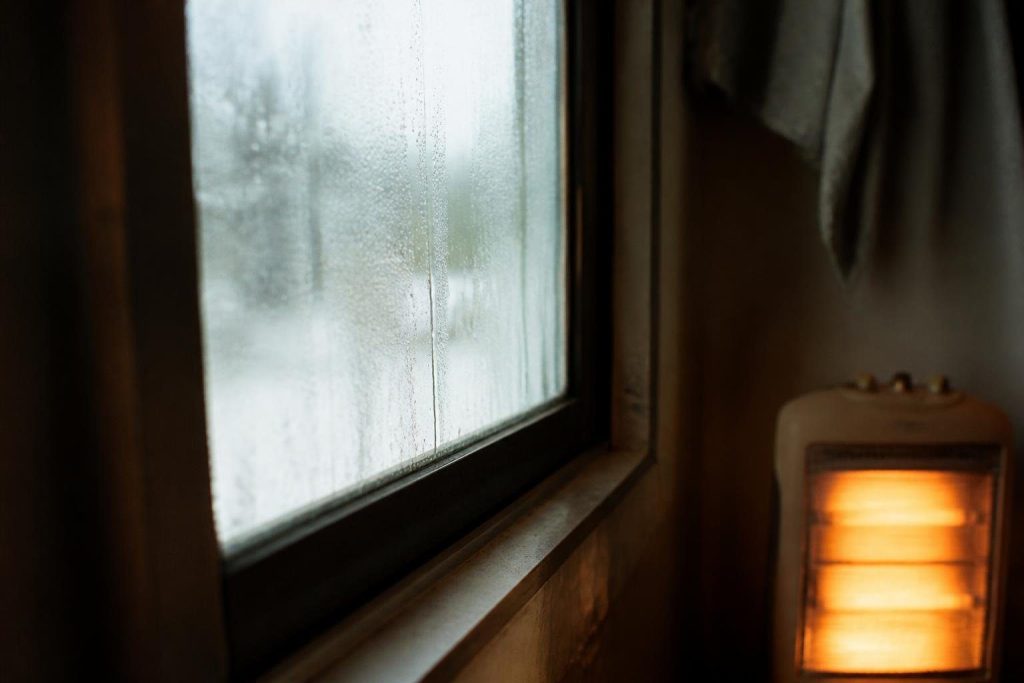
Yes, an indoor propane heater adds water to the room, and vent-free manuals warn that poor ventilation “may cause excessive moisture buildup and cause mildew.” Burning one gallon of propane yields 92,000 Btu and “6.8 pounds (0.8 gallons) of water” (Mississippi State Extension, 2024).
A vent-free manual puts it at “approximately one (1) ounce (30 mL) of water for every 1,000 BTUs” of hourly input, so a Buddy on 9,000 Btu/h releases about 9 ounces an hour (10.6 by the extension figure). By the combustion equation, each pound of propane yields about 1.6 pounds of water. If windows sweat, see our guide to a cold but humid house.
EIA put US residential propane at $2.598 a gallon, excluding taxes, for the week of October 5, 2026 (EIA). At 92,000 Btu a gallon that is about $28.24 per million Btu, and a 9,000 Btu/h heater burns roughly 25 cents of bulk propane an hour. EIA does not price 1 lb cylinders. Our cost of heat by fuel compares propane with other fuels; see also electric space heater costs.
How do you run a propane heater indoors safely?
Run it only for short, attended periods, with vents open and a CO alarm working; our CO alarm placement guide shows where alarms go. These steps come from the manuals cited above.
- Check the label for ANSI Z21.103 or Z21.11.2. Z83.7 or Z83.26 means it stays out of the house.
- Install CO alarms before the first burn.
- Open the vents: 9 square inches at the ceiling and at floor level for an MH9BX.
- Keep clearances: 30 inches above, 24 inches in front and 6 inches at the sides of a Buddy; 42 inches for a vent-free room heater.
- Use 1 lb disposable cylinders only, and store refillable tanks outdoors.
- Turn it off before sleep and never leave it unattended.
- If anyone gets a headache, dizziness or nausea, get fresh air. The manual says early CO poisoning signs “resemble the flu.”
How we researched this
Researched October 9, 2026. We opened 24 documents and cite 10: the CPSC 2022 CO death estimates, a Massachusetts statute, a fire department NFPA 58 summary, an extension bulletin, EIA weekly prices and five manufacturer manuals. Excluded: Reddit, skipped because this is a combustion safety topic; propane dealer and contractor blogs; and state fire marshal pages that no longer load. No federal series prices 1 lb cylinders, so none is quoted.
Frequently asked questions
Can you use a Buddy heater indoors?
Yes, within limits. Mr. Heater rates the MH9BX Buddy for “recreational and emergency indoor use” on a disposable 1 lb cylinder. Its manual requires a 9 square inch opening at ceiling and floor level, caps it at 5,000 Btu/h in a bathroom and bars it from homes in California and sale in Massachusetts.
Can you sleep with a propane heater on?
No. The MH9BX manual says “never operate the heater while sleeping,” and installed vent-free room heaters must not be installed in a bedroom at all. CPSC tied unvented portable propane heaters to an estimated 30 carbon monoxide deaths in 2022.
Can you use a propane heater indoors without ventilation?
No. Every indoor-rated propane heater burns room air and leaves its exhaust in the room. The Buddy manual states “do not use in unventilated areas” and specifies 9 square inches of opening at the ceiling and at floor level, while installed vent-free heaters need at least 50 cubic feet of room per 1,000 Btu/h.
Can you use a propane torpedo or patio heater indoors?
No. Forced-air torpedo heaters are construction heaters certified to ANS Z83.7, and the Dyna-Glo manual states “not for home or recreational vehicle use.” Patio heaters are certified to ANS Z83.26, and their manual says “for outdoor use only” and never inside a building or garage.
Do indoor propane heaters produce carbon monoxide?
They can. The MH9BX manual warns that without adequate combustion and ventilation air the heater “may give off excessive carbon monoxide.” Its oxygen depletion sensor shuts the gas off when oxygen runs low but does not measure CO. CPSC linked an estimated 43 deaths in 2022 to LP gas heating, about 70 percent from portable heaters.
Can you keep a 20 lb propane tank inside the house?
No. The MH9BX manual says “NEVER bring a refillable propane cylinder indoors,” and vent-free room heater supply tanks “must be placed outdoors.” A Utah fire department’s NFPA 58 summary allows only two 1 lb disposable cylinders inside a home or attached garage. Check your local fire code.
Sources
- CPSC. “Non-Fire CO Deaths, 2022 Annual Estimates (May 2026).” https://www.cpsc.gov/s3fs-public/Non-Fire-Carbon-Monoxide-Deaths-Associated-with-the-Use-of-Consumer-Products-2022-Annual-Estimates.pdf. Accessed October 2026.
- Mr. Heater. “MH9BX Buddy Owner’s Manual (retailer copy).” https://images.toolsid.com/mr-heater/items/pdf/mh9bx-manual.pdf. Accessed October 2026.
- Factory Buys Direct (vent-free maker). “FDF400RT-ZC Vent-Free Manual, 200372-01G (Lowe’s copy).” https://pdf.lowes.com/productdocuments/5ad6834b-2bc2-4b8d-8159-ec83ae5e33fe/81845813.pdf. Accessed October 2026.
- New Buck Corporation. “Vent Free Stove Series Manual, 2013 (Home Depot copy).” https://images.homedepot-static.com/catalog/pdfImages/36/360734ba-2c89-461f-acf4-3c5bbe313b43.pdf. Accessed October 2026.
- Dyna-Glo. “RMC-FA Construction Heater Manual (retailer copy).” https://images.toolsid.com/dyna-glo/items/pdf/rmc-fa150dgd-manual.pdf. Accessed October 2026.
- GHP Group (Dyna-Glo). “DGPH301BL Patio Heater Manual (Home Depot copy).” https://images.homedepot-static.com/catalog/pdfImages/3d/3d9234a6-336a-4a3a-ad6a-e65455e6f06a.pdf. Accessed October 2026.
- General Court of Massachusetts. “General Laws c.148 s.25A (archived copy).” https://malegislature.gov/Laws/GeneralLaws/PartI/TitleXX/Chapter148/Section25A. Accessed October 2026.
- Bluffdale Fire Department. “Home Fuel Storage Limits.” https://bluffdale.gov/880/Home-Fuel-Storage-Limits. Accessed October 2026.
- Mississippi State University Extension. “Broiler House Ventilation During Cold Weather, P2749 (2024).” https://extension.msstate.edu/sites/default/files/publications/P2749_web.pdf. Accessed October 2026.
- U.S. Energy Information Administration. “Weekly Heating Oil and Propane Prices, October 7, 2026.” https://www.eia.gov/dnav/pet/pet_pri_wfr_a_EPLLPA_PRS_dpgal_w.htm. Accessed October 2026.
Leave a Reply