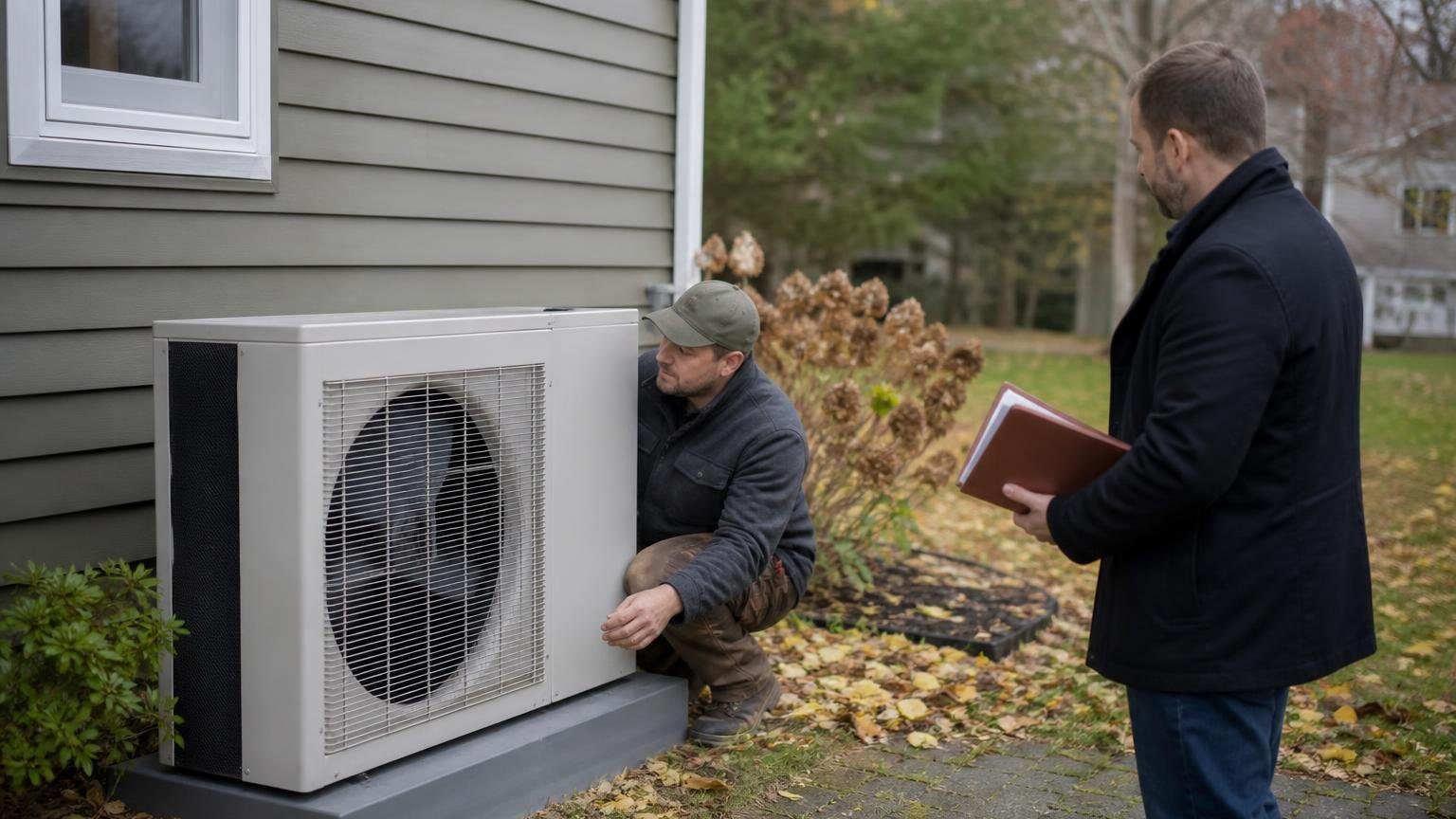
Are there heat pump rebates in 2026? Yes. Heat pump rebates still exist through utilities and some state IRA programs, worth up to $8,000 for income-qualified households. But the federal tax credit is gone for 2026 installs, and DOE now bars its rebates for replacing gas, oil or propane heat.
Key Takeaways
- The Section 25C credit ends for equipment placed in service after December 31, 2025 (Public Law 119-21, sec. 70505).
- The same law, sec. 50402(b), rescinded unspent IRA contractor-training money (sec. 50123) but left the HOMES and HEEHR rebate sections standing.
- Federal statute caps the heat pump rebate at $8,000 and a household’s total at $14,000 (42 U.S.C. 18795a).
- DOE Program Notice 26-2, effective May 29, 2026, limits HEEHR equipment rebates to replacing existing electric equipment.
- State status varies: California’s single-family HEEHRA money was fully reserved on February 24, 2026, while Wisconsin’s program was still taking applications in October 2026.
- Utility rebates have tiers open to any income: Mass Save lists $2,650 per ton for 2026 whole-home installs, capped at $8,500.
Are there still heat pump rebates in 2026?
Yes, but the menu shrank. In October 2026 heat pump rebates come from three places: your utility, your state’s share of the federal IRA rebate money, and occasional state or regional add-ons.
The IRA money is still law. Public Law 119-21 rescinded unspent balances in nine IRA sections (sec. 50402), and the High-Efficiency Electric Home Rebate (HEEHR) and HOMES sections are not on that list. What changed is how DOE lets states spend it, and how much each state has left.
What happened to the federal heat pump tax credit?
It ended. Section 70505 of Public Law 119-21 cut the Section 25C credit off for property placed in service after December 31, 2025. ENERGY STAR still describes the old terms: 30% of cost, up to $2,000, for equipment purchased and installed in 2023 through 2025.
That page ranks first for this search, which is why so many homeowners still expect a credit. Our explainer on the expired 25C credit covers the placed-in-service rule. A rebate is different: it is paid at sale or after install, not on your tax return.
How much is the IRA heat pump rebate under HEEHRA?
Up to $8,000 for a heat pump for space heating or cooling, under the statute DOE still administers (42 U.S.C. 18795a). Only households below 150% of area median income (AMI) qualify, and the rebate cannot exceed a set share of project cost.
The program was marketed as HEAR, the Home Electrification and Appliance Rebates. Program Notice 26-2 renamed it High-Efficiency Electric Home Rebates (HEEHR) to match the statute. Congress gave state energy offices $4.275 billion for it, available through September 30, 2031.
| Household income | Share of cost covered | Heat pump cap | Household cap |
|---|---|---|---|
| Below 80% of AMI | Up to 100 percent | $8,000 | $14,000 |
| 80% to 150% of AMI | Up to 50 percent | $8,000 | $14,000 |
| Above 150% of AMI | Not eligible for HEEHR | None | None |
| HOMES, any income | 50% (80% below 80% AMI) | Whole-home, not per item | $2,000 or $4,000; $4,000 or $8,000 below 80% AMI |
The percentage cap is what bites. A moderate-income household gets the lesser of $8,000 or half the project cost, so the full $8,000 requires a project of at least $16,000. Below 80% AMI, the rebate can cover the whole bill up to $8,000. HOMES, the sister program, pays on modeled whole-house savings of 20% or more, which starts with the same modeling as a home energy audit.
The statute also caps an electrical panel at $4,000, wiring at $2,500, a heat pump water heater at $1,750 and insulation and air sealing at $1,600. An installer applying on the household’s behalf can receive up to $500 per project on top.
Which states have heat pump rebates open?
No federal list answers this today. DOE’s public state status page at energy.gov/save/rebates returned a 404 when we checked on October 13, 2026, and its program page says only that rebates “are now available in select states,” with details “coming soon.” So we read each state energy office directly.
| State | HEEHR status (as posted) | Heat pump amount | Checked |
|---|---|---|---|
| Wisconsin (Focus on Energy) | Open below 150% AMI; retail coupons for equipment replacing fossil fuel appliances stopped September 1, 2026 | Up to $8,000 via a Registered Contractor | Oct 13, 2026 |
| California (TECH Clean California) | Fully reserved: single-family since February 24, 2026, multifamily since September 1, 2026 | $8,000 below 80% AMI; $4,000 rebate at 80% to 150% | Oct 13, 2026 |
| Colorado (Energy Office) | Single-family closed in both regions; Region 2 applications after August 1, 2026 denied | Not available | Oct 13, 2026 |
| Hawaii (State Energy Office) | Pending DOE approval to launch; funding expected 2026 | Not yet available | Oct 13, 2026 |
Four states, four answers: open, full, closed and not launched. Confirm with your own state energy office before you sign.
Correction: the $8,000 is no longer for swapping out a gas furnace
Much of the SERP still says the IRA pays up to $8,000 to replace gas or oil heat with a heat pump. Since Program Notice 26-2 took effect on May 29, 2026, HEEHR rebates cover upgrading “only from existing electric equipment to more efficient electric equipment.” Launched states had three months to comply.
Two openings remain. Homes with electric baseboard heat or an aging heat pump still fit the rule, and the notice lets a home keep its fossil-fuel HVAC system when a heat pump is added, the setup a dual fuel heat pump uses. The notice also requires insulation and air sealing first unless the home already meets a state-set level.
What do utility heat pump rebates pay?
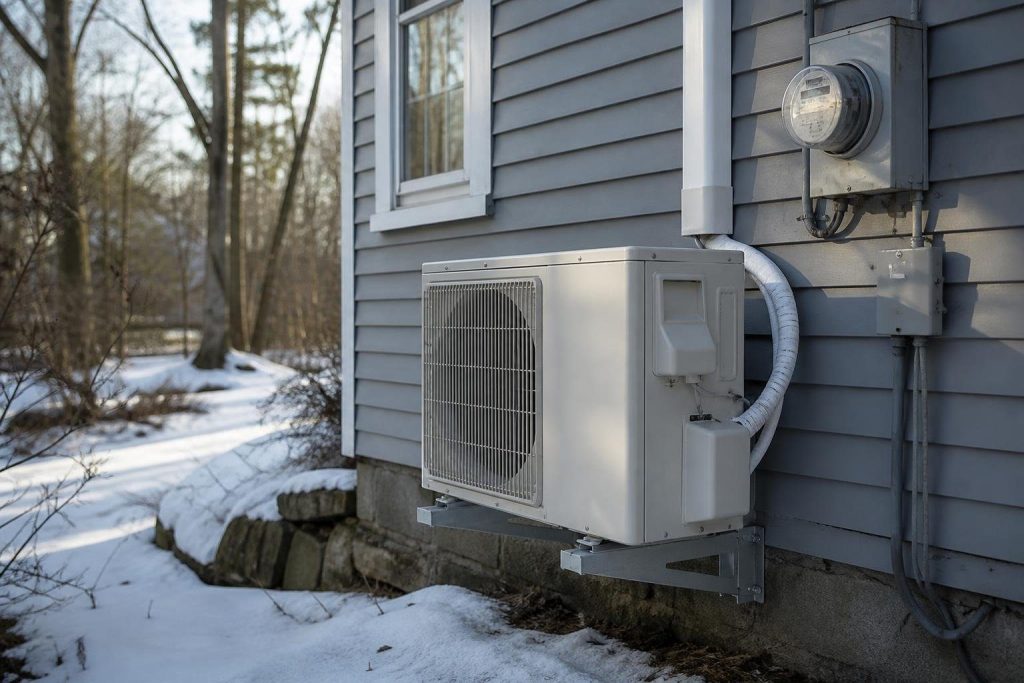
Utility heat pump rebates run from $500 to $16,000 in the three programs below, and each has a tier open to any income. They are run by utilities and state efficiency programs under their own rules, so Program Notice 26-2 does not govern them. Examples, from each program’s own page:
- Mass Save (Massachusetts, archived copy of July 16, 2026): $2,650 per ton for whole-home systems and $1,125 per ton for partial-home, each capped at $8,500; $250 per ton up to $2,500 for basic installs; income-based offers up to $16,000. A Heat Pump Installer Network contractor is required.
- TVA EnergyRight (seven-state Tennessee Valley region): $800 for a ducted heat pump at 17 SEER2 or higher and $500 at 15 SEER2, through a Quality Contractor Network installer.
- Efficiency Maine: its worked example for a two-indoor-unit system shows rebates of $2,000 at any income, $4,000 for moderate income and $6,000 for low income.
Mass Save counts tons as AHRI-rated cooling capacity divided by 12,000 Btu/h. A 3-ton whole-home system earns 3 x $2,650 = $7,950; a 4-ton system computes to $10,600 but is capped at $8,500. Size by load calculation, not by rebate: our guide to sizing in tons shows how.
Efficiency floors matter as much as dollars. TVA’s lowest tier sits above the federal SEER2 minimum, and Efficiency Maine rebates only the units with the best cold-temperature performance, the niche of cold climate heat pumps. The ENERGY STAR Rebate Finder lists utility offers by ZIP code.

How do you claim a heat pump rebate?
Line up the rebate before the equipment goes in. In California, for example, the reservation must be approved before the heat pump is installed.
- Find what exists for your address: your state energy office, your electric and gas utilities, and the ENERGY STAR Rebate Finder.
- Check income. HEEHR needs proof of household income below 150% of AMI; utility tiers usually do not.
- Check your existing heat. Under the May 2026 DOE rules, HEEHR covers replacing electric equipment, not gas, oil or propane systems.
- Hire from the program’s contractor list, since Mass Save, TVA and Wisconsin all require one, and get the rebate written on the quote. Our heat pump installation guide covers what the job should include.
- Get the reservation or pre-approval in writing before work starts.
- Keep the AHRI certificate, invoice and income documents until the payment clears.
On the money side, the statute bars combining a HEEHR rebate with any other federal grant or rebate for the same project, so ask how your state treats utility money before you count on both. Rebates lower the net price on a heat pump cost estimate; if the balance still needs a loan, read our HVAC financing checklist first.
How we researched this
Researched October 13, 2026. We read the statute (42 U.S.C. 18795 and 18795a on govinfo.gov), the enrolled text of Public Law 119-21, DOE Program Notices 26-1 and 26-2, four state program pages and three utility pages and cited them. DOE’s state tracker could not be read: it returns a 404. Mass Save and Puget Sound Energy block automated access, so Mass Save is cited from an Internet Archive copy and PSE was excluded. Vendor rebate calculators and contractor blogs were excluded as sources, and no installed prices are quoted because no federal series publishes them. No Reddit material was used. Programs change monthly; every status above is dated.
Frequently asked questions
Is the federal heat pump tax credit still available in 2026?
No. Public Law 119-21 ended the Section 25C credit for property placed in service after December 31, 2025. A heat pump installed in 2026 earns no federal credit, whatever the purchase date. Rebates from utilities and state programs are separate and were not ended by that law.
Do heat pumps qualify for federal tax credits?
Only if installed by December 31, 2025. ENERGY STAR lists the old 25C terms as 30% of cost up to $2,000 for qualifying heat pumps purchased and installed from 2023 through 2025. Nothing is available for equipment placed in service in 2026 or later.
Are there still incentives for heat pumps?
Yes. Utilities still pay rebates, such as Mass Save’s 2026 whole-home rate of $2,650 per ton and TVA EnergyRight’s $800 for a 17 SEER2 ducted heat pump. Income-qualified households may also get up to $8,000 through a state HEEHR program where one is open.
Can the IRA rebate pay to replace my gas furnace with a heat pump?
Not since May 29, 2026. DOE Program Notice 26-2 removed HEEHR rebates for fuel-switching and limits them to upgrading existing electric equipment. The notice does let a home keep its fossil-fuel system when a heat pump is added, so ask your state how it applies that rule.
Can I combine a utility rebate with the IRA heat pump rebate?
Possibly. The statute, 42 U.S.C. 18795a(c)(8), bars combining a HEEHR rebate with any other federal grant or rebate for the same project. Utility rebates are not federal, so stacking depends on each state program’s rules. Get both amounts on the contractor’s quote before signing.
Who counts as low or moderate income for heat pump rebates?
Under 42 U.S.C. 18795a, a household qualifies below 150% of area median income as reported by HUD. Below 80% of AMI, the rebate can cover up to 100% of project cost; from 80% to 150%, up to 50 percent. Households above 150% of AMI are not eligible for HEEHR.
Sources
- U.S. Congress. “Public Law 119-21,” secs. 50402 and 70505. https://www.govinfo.gov/content/pkg/PLAW-119publ21/html/PLAW-119publ21.htm. Accessed October 2026.
- GPO. “42 U.S.C. 18795a, High-efficiency electric home rebate program.” https://www.govinfo.gov/link/uscode/42/18795a. Accessed October 2026.
- GPO. “42 U.S.C. 18795, Home energy performance-based, whole-house rebates.” https://www.govinfo.gov/link/uscode/42/18795. Accessed October 2026.
- U.S. DOE. “Home Energy Rebates Program Notice 26-2.” https://www.energy.gov/documents/program-notice-26-2. Accessed October 2026.
- U.S. DOE. “Home Energy Rebates Program Notice 26-1.” https://www.energy.gov/documents/program-notice-26-1. Accessed October 2026.
- U.S. DOE. “Home Energy Rebates Program.” https://www.energy.gov/cmei/scep/home-energy-rebates-program. Accessed October 2026.
- ENERGY STAR. “Air Source Heat Pumps” tax credit page and “Rebate Finder.” https://www.energystar.gov/rebate-finder. Accessed October 2026.
- Focus on Energy. “IRA HEAR.” https://www.focusonenergy.com/ira-hear. Accessed October 2026.
- TECH Clean California. “HEEHRA Rebates.” https://techcleanca.com/incentives/heehrarebates/. Accessed October 2026.
- Colorado Energy Office. “Home Energy Rebates.” https://energyoffice.colorado.gov/home-energy-rebates. Accessed October 2026.
- Hawaii State Energy Office. “eHALE Energy Saver.” https://energy.hawaii.gov/ehale-rebates/. Accessed October 2026.
- Mass Save. “Air Source Heat Pumps” (Internet Archive copy, July 16, 2026). https://www.masssave.com/residential/rebates-offers-services/heating-and-cooling/heat-pumps. Accessed October 2026.
- TVA EnergyRight. “Ducted Heat Pump Rebate.” https://energyright.com/residential/rebates/heat-pump/. Accessed October 2026.
- Efficiency Maine. “Heat Pumps.” https://www.efficiencymaine.com/heat-pumps/. Accessed October 2026.
Leave a Reply