Last reviewed: September 2026 · By the HVAC Brief Editorial Team · Our sourcing and editorial standards
Installing a heat pump differs from installing an air conditioner in four ways: it is sized against the heating load as well as the cooling load, it needs a plan for backup heat, it needs electrical capacity for that backup, and the outdoor unit has to be set up to drain during defrost.
Get those wrong and the system still runs. It just runs expensive backup heat more often than it should, which is the most common complaint about a badly installed heat pump.
Sizing is a two-season problem
An air conditioner is sized to the cooling load. A heat pump has to satisfy both, and in most of the country the heating load is larger, so one of the two drives the selection.
- A room-by-room load calculation for heating and cooling, not a rule of thumb.
- Capacity at the design temperature, not at the rating condition. Heat pump output falls as outdoor temperature drops, and the manufacturer’s extended performance data shows by how much.
- The balance point, the outdoor temperature below which the heat pump alone cannot keep up. That is where backup heat starts.
- Cooling sanity check. Sizing purely to the heating load in a cold climate can oversize cooling, producing short cycles and poor dehumidification in summer.
Our sizing guide covers what a proper calculation includes.
Backup heat and the electrical panel
Most ducted heat pumps include electric resistance strips for cold weather and defrost. They are the most expensive heat in the house, so both their size and their control settings matter.
| Decision | What to ask |
|---|---|
| Backup type | Electric strips, or a gas furnace in a dual fuel arrangement |
| Backup size | Sized to the balance point, not to the whole load by default |
| Electrical service | Whether the panel has capacity for the strip circuits |
| Lockout setting | The outdoor temperature above which backup heat is blocked |
| Thermostat | Must control auxiliary and emergency heat, and switchover on dual fuel |
At 2025/26 season prices, electric resistance heat cost about $52.10 per million Btu against $23.70 from a minimum-efficiency heat pump. Backup heat running when it does not need to is the single biggest source of surprise bills. See what heat costs by fuel and thermostat setup.
The outdoor unit
A heat pump runs all winter, which creates two requirements an air conditioner never has.
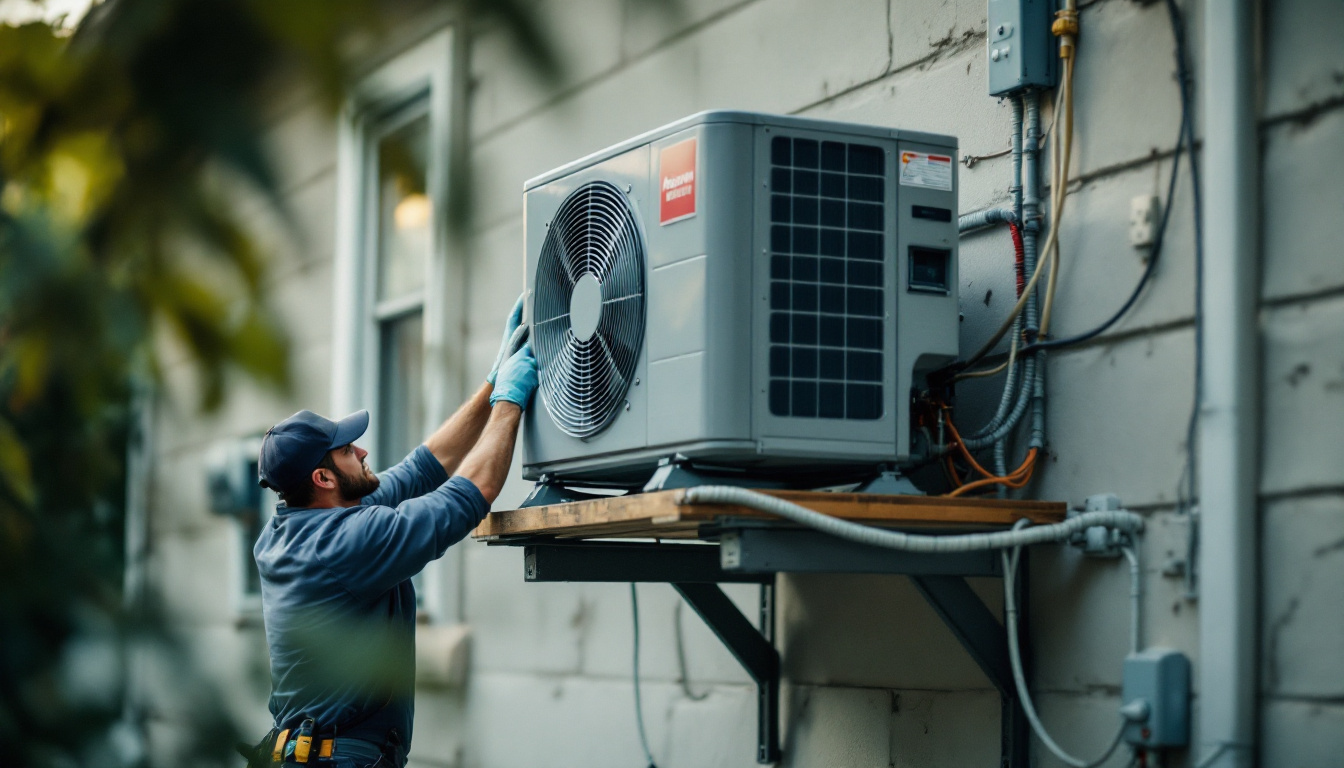
- Height off the ground. The unit should sit on a stand or bracket above expected snow depth, with clearance for defrost meltwater to drain away rather than refreeze around the base.
- Drainage below. Gravel or a drain, not a dished pad that collects ice.
Ice at the base of the unit is the classic symptom of neither being done; see heat pump faults and normal behaviour.
Ducts, if there are ducts
A heat pump delivers a larger volume of cooler air than a furnace. Ducts sized for a furnace can be too restrictive, which shows up as noise, poor room-to-room balance and a system that leans on backup heat.
Static pressure should be measured before the equipment is chosen, not after the complaint. See ductwork and airflow. Where there are no ducts, a ductless system is usually the better route.
Commissioning
Ask for these readings on the invoice: refrigerant charge verified by weight or by superheat and subcooling, airflow or static pressure, temperature split in both heating and cooling modes, auxiliary heat lockout setting, and confirmation that the thermostat is configured for a heat pump rather than a conventional system.
That last item is a frequent and expensive setup error: a heat pump wired as a conventional system can run backup heat whenever there is a call for heat.
Frequently asked questions
What is different about installing a heat pump?
It is sized against both the heating and cooling loads, it needs backup heat sized to the balance point, the electrical panel must support that backup, and the outdoor unit needs height and drainage for defrost water. The thermostat also has to be configured for heat pump operation.
Does a heat pump need a new electrical panel?
Sometimes. Electric backup heat strips draw substantial current, and older panels may not have the capacity. Ask for the electrical load calculation before the quote is final; a dual fuel arrangement with an existing gas furnace avoids the strips entirely.
Can a heat pump use my existing ductwork?
Often, but it should be verified rather than assumed. Heat pumps move more air at lower supply temperatures than furnaces, so ducts sized for a furnace can be restrictive. Static pressure should be measured before equipment selection.
Why is my new heat pump expensive to run?
The usual cause is backup heat running more than it should, from a lockout set too high, a thermostat configured as a conventional system, or undersized equipment for the heating load. Resistance backup cost about $52.10 per million Btu in 2025/26 against $23.70 for the heat pump itself.
Methodology and limitations
Efficiency minimums are from 10 CFR 430.32(c). Installed base is EIA RECS 2020 table HC6.1. Shipment share is from AHRI’s July 2026 release. Running costs use EIA season average prices and federal minimum efficiencies, as set out on our fuel cost page.
- We publish no installed prices, because no federal series measures them.
- Performance at design temperature is manufacturer data and varies by model.
- Electrical requirements depend on the specific equipment and existing service.
Sources
- Code of Federal Regulations, 10 CFR 430.32(c), heat pump efficiency standards.
- US Energy Information Administration, Residential Energy Consumption Survey 2020, table HC6.1.
- Air-Conditioning, Heating, and Refrigeration Institute, July 2026 shipment release.
The HVAC Brief is an independent trade publication. We do not sell equipment, take manufacturer advertising, or accept payment for placement in our research. Corrections welcome.
Leave a Reply