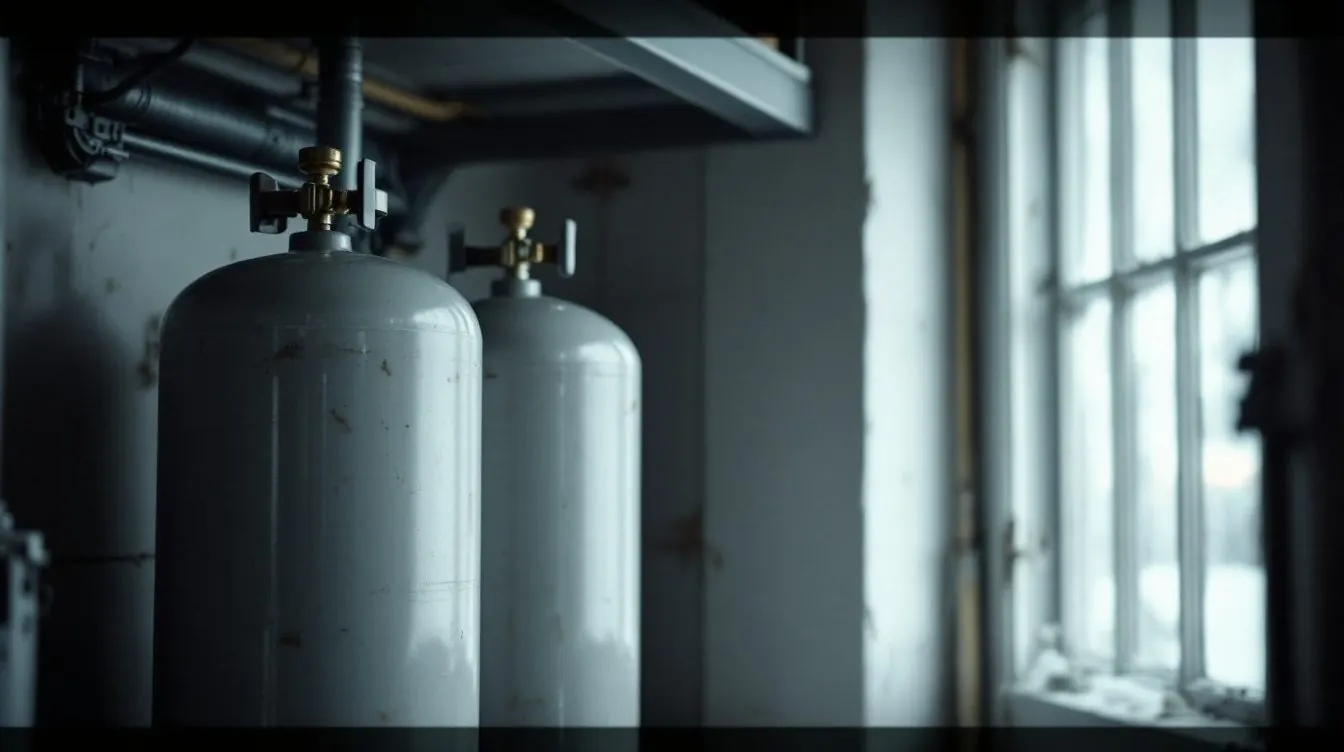
Does refrigerant go bad? No. Refrigerant is a stable chemical that circulates in a sealed loop and is not used up, and Chemours gives its refrigerants an indefinite shelf life when stored properly. What goes bad is what gets into the loop: moisture, air, acid from overheated oil, or the wrong gas.
The industry purity standard, AHRI 700, does not test refrigerant for age at all; it tests for contaminants. The molecule does not wear out, the charge gets dirty or escapes. The table sorts what people blame from what the documents say happens.
| What people think goes bad | What actually changes | Evidence | How a technician checks it |
|---|---|---|---|
| The refrigerant “wears out” with use | Nothing; it is not consumed | Chemours SDS: “Stable if used as directed” | None; AHRI 700 has no age test |
| The system “used up” its charge | Refrigerant escaped through a leak | EPA lets recovered gas go back into the same system “without restriction” | Leak search, then a weighed charge |
| Old gas turned to “sludge” | Overheated oil and refrigerant broke down after a compressor burnout | J&E Hall R-080: burnout heat makes oil and refrigerant “form acids and sludge” | Oil acid test kit; suction line filter drier |
| Wet refrigerant | Moisture got in during a repair; POE oil turns it into acid | AHRI 700 water limit: 10 ppm by weight for R-22 and R-410A | Drier change; deep vacuum |
| “Air in the lines” | Non-condensable gas collects in the vapor space | AHRI 700 limit: 1.5% by volume at 25.0 °C | Standing pressure vs PT chart |
| A bad batch or wrong gas | Mixed, mislabeled or illegally imported product | AHRI 700 allows 0.5% of all other volatile impurities | Laboratory analysis |
Compiled by The HVAC Brief from AHRI 700-2017 with Addendum 1, the Chemours Freon 407A SDS, J&E Hall R-080 and EPA’s Section 608 page (sources 1, 4, 5, 7).
Does refrigerant go bad over winter in a cold outdoor unit?
No. Cold does not degrade refrigerant, and no maker storage limit we found sets a low temperature. The Chemours safety data sheet for Freon 407A, a blend of R-32, R-125 and R-134a, lists a recommended storage temperature of below 126 °F (52 °C), says to keep cylinders out of direct sunlight, and states that “the product has an indefinite shelf life when stored properly” (Chemours SDS, distributor copy). Heat is the storage risk, not frost.
AHRI 700 gives R-410A a bubble point of -51.4 °C at atmospheric pressure, which we converted to -60.5 °F, so inside a sealed system on a winter day it is still a pressurized mix of liquid and vapor, unchanged. A heat pump that runs short in December lost charge through a leak, and the methods technicians use to find refrigerant leaks are the next step.
Does R-22, R-12, R-134a or R-410A refrigerant go bad faster than the others?
None has an age limit, and AHRI 700 holds them to the same contaminant ceilings whether new, reclaimed or repackaged. What differs is behavior after a leak: single compounds such as R-22 boil at one temperature, while blends boil across a range called glide.
| Refrigerant | Boiling or bubble point at 1 atm | Glide (dew minus bubble) | Max water | Max acidity (as HCl) | Max non-condensables |
|---|---|---|---|---|---|
| R-12 | -29.8 °C (-21.6 °F) | 0.0 K | 10 ppm | 1 ppm | 1.5% |
| R-22 | -40.8 °C (-41.4 °F) | 0.0 K | 10 ppm | 1 ppm | 1.5% |
| R-134a | -26.1 °C (-15.0 °F) | 0.0 K | 10 ppm | 1 ppm | 1.5% |
| R-32 | -51.7 °C (-61.1 °F) | 0.0 K | 10 ppm | 1 ppm | 1.5% |
| R-410A | -51.4 °C (-60.5 °F) | 0.0 K | 10 ppm | 1 ppm | 1.5% |
| R-454B | -50.9 °C (-59.6 °F) | 0.9 K | 10 ppm | 1 ppm | 1.5% |
| R-407C | -43.6 °C (-46.5 °F) | 7.0 K | 10 ppm | 1 ppm | 1.5% |
HVAC Brief calculation: boiling, bubble and dew points and limits from AHRI Standard 700-2017 with Addendum 1, Tables 1A and 2A; °F = °C × 9/5 + 32; glide = dew point minus bubble point. Script kept with this article.
R-410A shows a 0.0 K glide in AHRI’s data, so a leak leaves the remaining charge essentially unchanged. R-407C, a blend that AHRI 700 lists as 23.0/25.0/52.0% R-32, R-125 and R-134a, glides 7.0 K, so a large vapor leak can shift the remaining mix outside AHRI’s allowable band of 21.0 to 25.0% R-32. That is the one sense in which a charge can “go off”: its recipe changed, it did not decay. For R-22 itself the real limit is supply, not shelf life, which our page on whether you can still get R-22 covers.
What actually contaminates refrigerant inside an AC or heat pump?
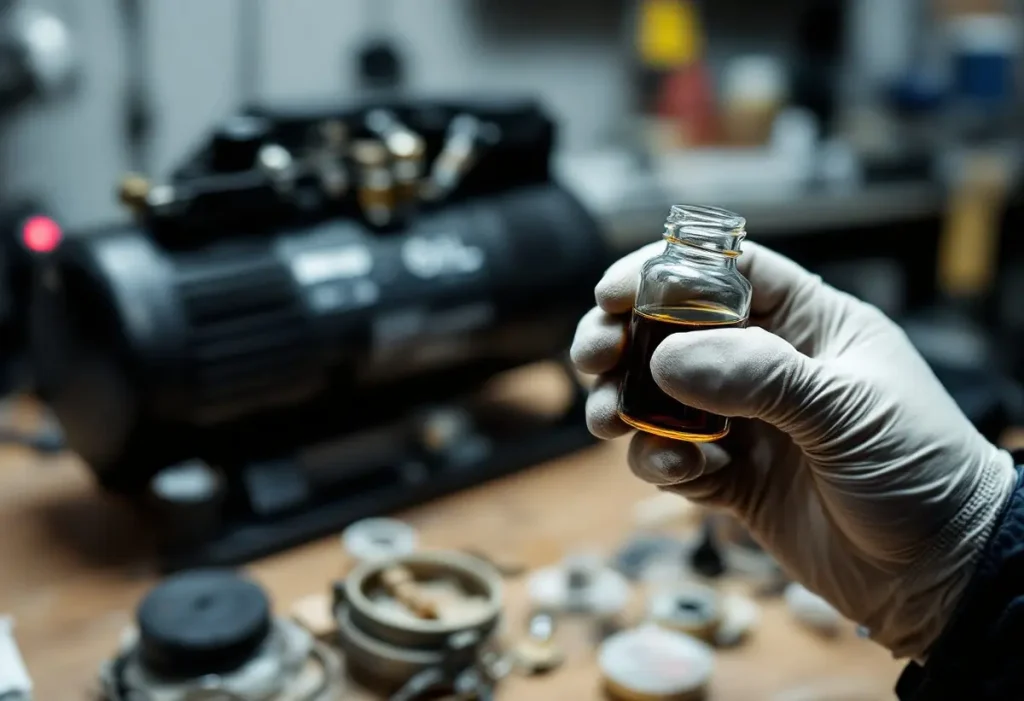
Moisture, air and acid, all from outside the refrigerant. Copeland’s bulletin AE11-1297 says polyol ester (POE) oil, used with R-410A, is “extremely hygroscopic” and will “hydrolyze in the presence of water, thereby creating acids” (Copeland AE11-1297 R7). Water gets in when a system is opened and not evacuated properly, so the refrigerant oil chemistry matters more than the gas.
Acid and sludge come from heat. J&E Hall’s clean-up procedure R-080 says a hermetic motor burnout “causes a percentage of the oil and refrigerant to break down and form acids and sludge,” and that these will “probably attack the replacement compressor motor windings” unless removed (J&E Hall R-080). It prescribes a suction line filter drier, new oil and an oil acid test after 24 to 48 hours. The filter drier is the part that holds the line: Copeland bases drier water capacities on an equilibrium point dryness of 50 ppm water for R-410A.
Stop line. Do not open a refrigerant circuit, vent a cylinder or sniff a burnt-smelling compressor. The Chemours SDS warns the vapor “may displace oxygen and cause rapid suffocation” and that escaping liquid can cause frostbite. Ask the technician for the oil acid test result, the vacuum reached in microns, and the weight of refrigerant added.
Does AC refrigerant run out or get used up over time?
No. Nothing in a sealed system consumes refrigerant, so a low system has a leak. EPA’s Section 608 guidance says “recovered refrigerant can be returned to the same system or other systems owned by the same person without restriction” (EPA). If a contractor proposes a yearly top-up, read why an AC should not need a recharge before paying for one.
Does refrigerant go bad in a can or cylinder on the shelf?
Not chemically; the Chemours shelf-life line above applies to cans too. What a can loses is contents. For car AC refrigerant sold in containers of two pounds or less and made or imported on or after January 1, 2018, 40 CFR 82.154(c)(2) requires a self-sealing valve with a leakage rate that “must not exceed 3.00 grams per year” (eCFR).
We calculated what that ceiling means for the largest can the rule covers: 2 lb is 907 g, so 3.00 g per year is at most 0.33% per year, or 3.3% over ten years. Cans made before 2018 carry no such limit.
Does refrigerant go bad in a car, and what about old R-12?
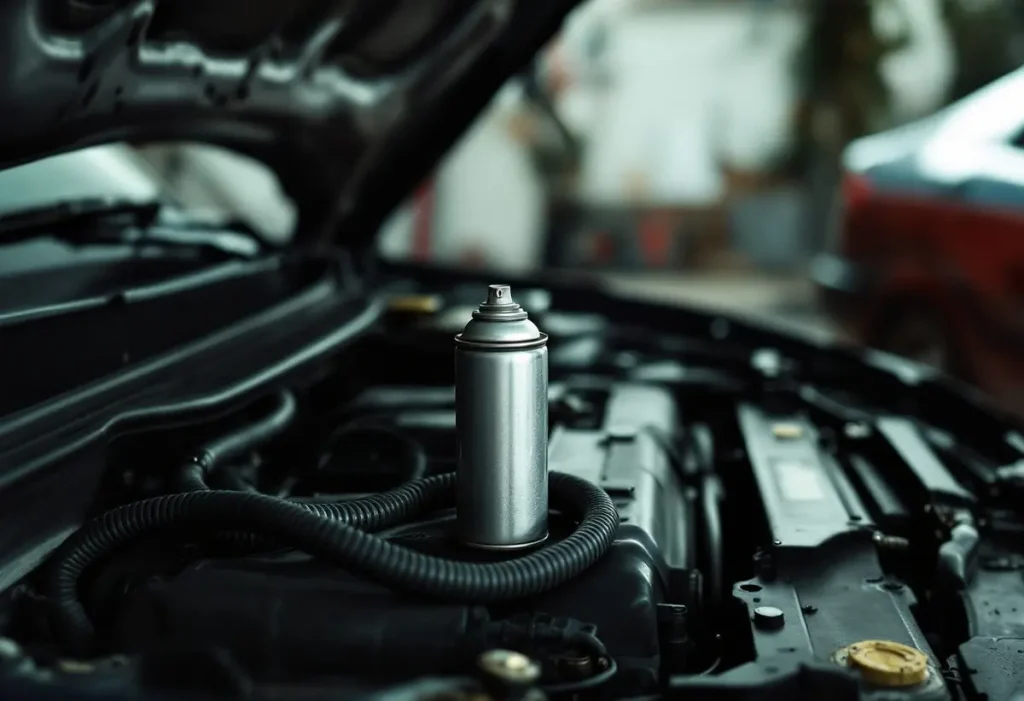
No; car systems lose charge through leaks. EPA says automakers began switching from CFC-12 (R-12) to HFC-134a with 1992 model year vehicles, that all new US vehicles with AC used HFC-134a by the 1995 model year, and that HFO-1234yf is now “used in the majority of light-duty vehicles” (EPA MVAC). A sealed can of R-12 or R-134a is still good. Under 40 CFR 82.154(d)(2), refrigerant used only in an MVAC may be recycled and sold for use only in another MVAC.
Can you reuse old refrigerant, or does it have to be reclaimed?
You can reuse it in the same owner’s equipment; it must be reclaimed before it changes hands. Under 40 CFR 82.154(d), used refrigerant may not be sold unless a reclaimer certified under 40 CFR 82.164 has processed it. That reclaimer must bring every batch to the specifications in appendix A of subpart F, “based on AHRI Standard 700-2016,” and may release no more than 1.5 percent of the refrigerant during reclamation (eCFR 82.164).
Removing it is a certified job: refrigerant recovery uses an EPA certified machine, and releasing freon instead of recovering it is a federal violation.
Can refrigerant you buy already be bad: mixed, wet or smuggled gas?
Yes, and this is a purchasing problem, not chemistry. AHRI 700 sets the purity bar for new, reclaimed and repackaged product alike: at most 0.5% by weight of all other volatile impurities, which covers other refrigerants mixed in (AHRI 700, distributor copy). Gas that skipped the legal supply chain was never tested against it. EPA reported seven settlements for illegal HFC imports under the AIM Act in fiscal 2025, including one over more than 50,000 kg of HFCs, which carried a civil penalty of $427,000 (EPA FY2025 results).
A technician who suspects a bad cylinder can compare its standing pressure against the saturation value on a refrigerant pressure chart at a known temperature: AHRI 700 notes that non-condensable gases concentrate in the vapor phase, so excess pressure points to air. Composition needs a laboratory. For names and types, read what refrigerant is and why “Freon” is a brand.
Frequently asked questions
How long is refrigerant supposed to last?
As long as the circuit stays sealed. Refrigerant is not consumed by running, and Chemours gives its refrigerants an indefinite shelf life when stored below 126 °F (52 °C). A system that needs refrigerant added has a leak, and the leak, not the age of the gas, is what a technician should repair.
Does R22 refrigerant go bad?
No. R-22 is held to the same AHRI 700 limits as newer gases: 10 ppm water, 1 ppm acidity and 1.5% non-condensables, with nothing in the standard about age. What has changed is availability, so stored or reclaimed R-22 that still meets AHRI 700 remains usable in an R-22 system.
Does 410A refrigerant go bad?
No. AHRI 700 lists the bubble and dew point of R-410A both at -51.4 °C, so it has no glide and a leak does not change the remaining mix. Its weakness is the POE oil it travels with, which Copeland says absorbs moisture and forms acids: a wet R-410A system is a repair problem, not old gas.
Is refrigerant toxic to breathe?
In a large release, yes. The Chemours SDS for Freon 407A says it “may displace oxygen and cause rapid suffocation,” that the vapor is heavier than air, and that it “may cause cardiac arrhythmia.” A big leak in a closed basement means leaving the room, ventilating and calling a certified technician.
How we researched this
Researched 14 November 2026. We read AHRI Standard 700-2017 with Addendum 1 (A-Gas copy; AHRI’s 2019 PDF refused our request, and federal rules cite the 2016 edition), Chemours SDSs for Freon 407A and 409A, Copeland AE11-1297 R7, J&E Hall R-080, 40 CFR 82.154 and 82.164, and three EPA pages. We converted Celsius to Fahrenheit and computed glide and can leakage. Contractor blogs, forums and vendor articles were excluded as sources for any figure; prices were not used.
Sources
- AHRI. “Standard 700-2017 with Addendum 1: Specifications for Refrigerants (distributor copy, A-Gas).” https://www.agas.com/media/25nfszp5/ahri_standard_700_2017_add_1-1.pdf. Accessed November 2026.
- eCFR. “40 CFR 82.154 Prohibitions.” https://www.ecfr.gov/current/title-40/chapter-I/subchapter-C/part-82/subpart-F/section-82.154. Accessed November 2026.
- eCFR. “40 CFR 82.164 Reclaimer certification.” https://www.ecfr.gov/current/title-40/chapter-I/subchapter-C/part-82/subpart-F/section-82.164. Accessed November 2026.
- US EPA. “Stationary Refrigeration Service Practice Requirements.” https://www.epa.gov/section608/stationary-refrigeration-service-practice-requirements. Accessed November 2026.
- Chemours. “Safety Data Sheet, Freon 407A (R-407A) Refrigerant, version 8.4 (distributor copy, Sid Harvey Z1153).” https://www.sidharvey.com/documents/Z1153.pdf. Accessed November 2026.
- Copeland. “Application Engineering Bulletin AE11-1297 R7: Liquid Line Filter Driers (October 2024).” https://webapps.copeland.com/online-product-information/Publication/LaunchPDF?Index=AEB&PDF=1297. Accessed November 2026.
- J&E Hall. “Publication R-080: System Clean Up After Compressor Motor Burn Out (2019).” https://jehall.com/files/ww/HSQE/r-080-system-clean-up-after-compressor-motor-burn-out.pdf. Accessed November 2026.
- US EPA. “Refrigerant Transition and Environmental Impacts (MVAC).” https://www.epa.gov/mvac/refrigerant-transition-environmental-impacts. Accessed November 2026.
- US EPA. “Enforcement and Compliance Assurance Results FY 2025: Protecting Our Borders.” https://www.epa.gov/enforcement/enforcement-and-compliance-assurance-results-fy-2025-protecting-our-borders. Accessed November 2026.
Leave a Reply