A gas fireplace pilot light won’t stay lit when the safety magnet in the gas valve stops getting enough millivolts. The usual causes: a pilot flame that misses the thermocouple, a loose or worn thermocouple (SIT and Empire say replace it below 14 to 15 mV), a weak thermopile on B-vent units, or an ODS pilot choked by dust.
Does the pilot die the moment you let go of the knob, or minutes later?
When the pilot goes out tells you which part of the millivolt circuit failed; each row is what the makers’ own charts list.
| When it goes out | Causes the makers list | What to check first | What settles it |
|---|---|---|---|
| Will not light | No spark, gas shutoff closed, air in the line, empty propane tank, clogged ODS (Sure Heat, Empire) | Spark gap 1/8 in. (Vermont Castings) | Hold knob while air purges; clean ODS |
| Dies when you release the knob | Flame missing the thermocouple, loose nut, worn thermocouple, shutoff not fully open (Sure Heat, Empire) | Flame on the tip; nut hand tight plus 1/4 turn | Replace thermocouple below 14 to 15 mV; else the valve |
| Drops out at random | Pilot too low or blowing, vent terminal recycling flue gas, low gas pressure (Vermont Castings, GHP) | Pilot size; outdoor vent cap | Adjust pilot; clear terminal; supplier checks pressure |
| Everything quits after minutes | Vent-free: fresh air, line pressure, dirty ODS (Sure Heat). Direct vent: vent leak, glass gasket (Empire). Log sets: hot thermocouple base (Rasmussen) | Window open; doors and damper open | Clean ODS air hole; fix vent or gasket |
| Pilot on, burner will not fire | Weak thermopile, switch wiring, plugged burner orifice (Empire, SIT) | Jumper the switch wires at the valve | Replace thermopile below minimum; else valve |
Compiled by The HVAC Brief from the SIT, Empire, Vermont Castings, Sure Heat, GHP and Rasmussen troubleshooting charts (Sources 1 to 7).
Sure Heat lists seven causes for “ODS/pilot lights but flame goes out,” and only one is a bad thermocouple; the last is the safety interlock, which needs one minute to reset (Sure Heat manual).
Thermocouple or thermopile: which part actually holds your pilot open?
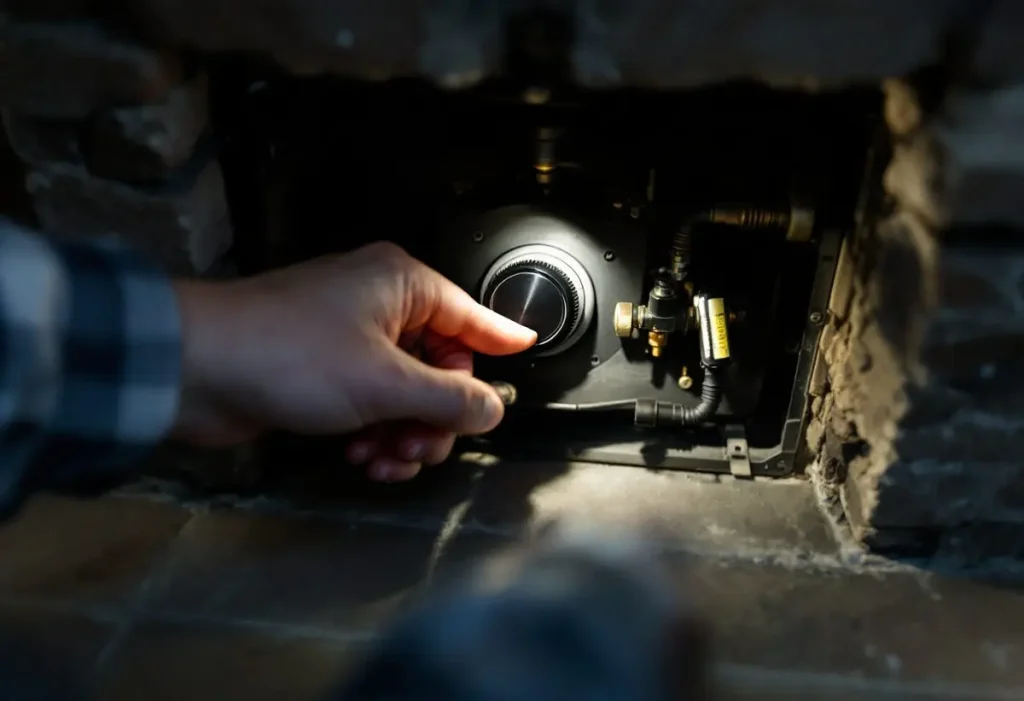
On a Millivolt Plus valve the thermocouple holds the pilot and the thermopile fires the burner; on a B-vent True Millivolt valve one thermopile does both. SIT ships its 820 Nova valve in three setups (SIT troubleshooting guide):
SIT calls the Millivolt Plus “a split system millivolt control for use in direct vented appliances,” while the True Millivolt “uses a single thermo-generator to power both the safety magnet circuit, and the main operator.” On that valve a new thermocouple cannot help: there is none. SIT’s check is to pull the wires off the operator and read TH/TP to TP; above 110 mV with a magnet that will not hold means a bad valve.
On a vent-free ODS pilot, Rasmussen says the small thermocouple “shuts the entire unit down, including the pilot, when the pilot flame becomes unstable or goes out,” while the larger thermopile powers the valve (Rasmussen thermopile note). The ventless gas heater guide covers the oxygen trip point and why an ODS is not a carbon monoxide alarm.
What millivolt readings mean a bad thermocouple or thermopile?
Replace a thermocouple below about 14 to 15 mV, or a thermopile below your manual’s minimum, which runs from 150 to 350 mV across three documents.
| Test (pilot lit, knob held in PILOT) | SIT 820 Nova mV guide | Empire DVS 30 manual | Vermont Castings 36XDV (SIT 820 valve) |
|---|---|---|---|
| Thermocouple, open circuit | 18 to 28 mV good; replace below 14 mV | Replace below 15 millivolts | Over 10 mV at the valve, read through an interrupter block |
| Thermopile, pilot only, switch off | 500 to 750 mV after about three minutes (set-up step 7) | 350 millivolts minimum | 250 to 300 millivolts, minimum 150 |
| Thermopile, wall switch on | Above 300 mV with a jumper; above 175 mV through the switch wiring | Greater than 200 millivolts | Greater than 100 mV |
| Condemn the valve when | Magnet will not hold with more than 6 mV (vented) or 8.5 mV (vent-free) at the magnet | Thermocouple makes more than 15 millivolts and the pilot still drops | Reading is good and the pilot does not stay on |
Compiled by The HVAC Brief from SIT’s 820 Nova mV guide, Empire form 13369 and Vermont Castings form 10009383. Your own manual’s figure wins.
Empire’s homeowner friendly test: disconnect the thermocouple at the valve, put one meter lead on its end and the other on its copper sheath, light the pilot and hold the knob in (Empire manual, ManualsDir copy). The thermopile reads across TH/TP and TP with the switch off. Vermont Castings reads the thermocouple at the valve through an interrupter block, which is not supplied with the fireplace (Vermont Castings manual).
SIT’s valve spec puts the main operator floor at 325 mV open circuit (SIT 820 Nova instructions). A dealer page ranking for this query says under 20 mV confirms a bad thermocouple; SIT still calls 18 mV good.
Why does the fireplace shut off after 2 to 15 minutes of burning?
A pilot that quits minutes into a burn is usually reacting to heat, air or venting, not a dead part. Rasmussen says a log set that burns 5 to 15 minutes then goes out has working parts: “Had either the thermocouple or the valve been faulty, you would not be able to hold a pilot flame at all” (Rasmussen). The thermocouple base has heated up as much as its tip, so the voltage vanishes. Its fixes: glass doors and the fireplace damper wide open, logs moved so they do not radiate onto the base, and no sand piled near the pilot.
On a direct vent unit, Empire blames a leaking inner vent pipe, a loose glass gasket, a blocked vent cap, or a horizontal vent pitched down more than 1/4 inch; Vermont Castings adds a vent terminal recycling flue gases. After a storm, check the cap first, as with a furnace vent blocked by snow.
For vent-free logs, Sure Heat traces “Heater shuts off in use (ODS operates)” to fresh air, low line pressure or a dirty ODS. Sure Heat and GHP both warn that above 4,500 feet the pilot may go out, and GHP lists “pilot will not stay lit” first among low gas pressure signs (GHP VFL2 manual).
How do you clean a gas fireplace pilot and thermocouple without damaging them?
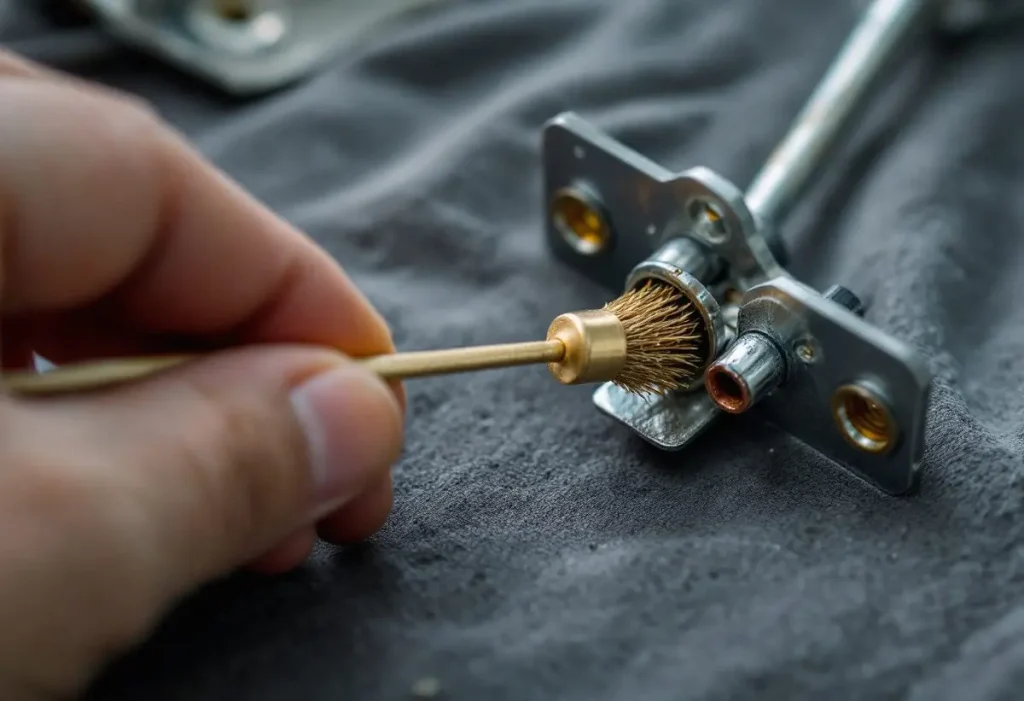
Use air and very fine emery cloth on a cold unit, never a wire or needle, which Sure Heat says can damage the ODS/pilot. Its pilot air inlet hole sits about two inches from the flame; blow through it with canned air at no more than 30 PSI. Rasmussen sizes those holes at 1/16 to 1/8 inch and calls them the number one vent-free issue (Rasmussen ODS note). Sure Heat suggests cleaning every three months in use.
SIT’s method for the sensors: let the tips cool, clean the upper 3/8 inch with very fine emery cloth, clean the valve connections, and retighten the thermocouple hand tight plus 1/4 turn. Relight by the label; SIT says to hold the knob for at least thirty (30) seconds after the pilot lights. If it survives only a long hold, measure it.
Pilot lit but the fireplace won’t turn on: thermopile or wall switch?
Jumper the valve before buying a thermopile. Empire places a jumper across the switch wires at the valve; if the burner lights, the switch, receiver or wiring is at fault. SIT warns that if the reading through the thermostat wiring drops below 150 mV, excessive resistance exists in that circuit. If the jumper does nothing and the thermopile passes, Empire points to the valve or a plugged burner orifice.
When should you stop and leave the pilot to a gas technician?
Stop if you smell gas, if the knob will not pop up, if any part has been under water, or if the pilot still dies after several tries; GHP’s VFL2 manual sends each of those to a qualified technician or gas supplier. Sure Heat says “Discontinue use!” for tall yellow flames. A flue gas odor is covered in our page on exhaust smell in the house, and alarm siting in CO detector placement.
A technician reads inlet and outlet pressure at the valve test ports (SIT’s outlet pressure setting range is 3.5 to 6 in. w.c. on natural gas), runs the loaded thermocouple test, and fits the exact valve or ODS assembly; Rasmussen replaces the whole ODS, not single parts. The same thermocouple logic runs a furnace standing pilot and a water heater pilot.
Frequently asked questions
Why is my gas fireplace pilot light not lighting at all?
Check spark and gas first. Vermont Castings wants a 1/8 inch gap between electrode and pilot, and Empire lists closed shutoff valves, low pressure and an empty propane tank. On a new line, Sure Heat says to keep holding the knob and repeat ignition until the air is purged.
How long do you hold the pilot button on a gas fireplace?
Follow your label. SIT’s 820 Nova instructions say to hold the knob fully depressed for at least thirty (30) seconds after the pilot lights, and GHP’s VFL2 manual says the same. If the pilot goes out, GHP says to wait one minute before trying again and to call a technician after several failed tries.
Should a gas fireplace pilot light always be on?
Only on a standing pilot fireplace. On remote vent-free sets with an IPI/CPI switch, Sure Heat’s chart says a pilot that stays on with the burner off means the switch is in the wrong position. A standing pilot burns gas around the clock; the gas fireplace guide prices it.
Can you replace a gas fireplace pilot assembly yourself?
Makers reserve it for qualified service people. Sure Heat answers a bad thermocouple with “Replace pilot assembly” and says only a qualified service person should service the heater. Rasmussen warns its ODS pilots may not fit other brands because of thread differences, and SIT lists a wrong pilot orifice as a cause of pilot drop out.
Can low gas pressure make a fireplace pilot keep going out?
Yes. GHP’s service hints list “pilot will not stay lit” first among the signs of low gas pressure, followed by delayed burner ignition. Its VFL2 log set needs at least 6 in. w.c. inlet pressure on natural gas and 11 in. w.c. on propane, and GHP warns against propane tanks under 100 lb. capacity.
How we researched this
In November 2026 we read the nine maker documents listed below. We excluded dealer and parts retailer pages for numbers, including a 20 mV cutoff and a 25 to 30 mV rule no maker document supports, and give no repair prices because no federal source publishes them.
Sources
- SIT. “820 Nova mV Trouble-Shooting Guide.” https://cdn.shopify.com/s/files/1/1331/0683/files/Nova_SIT_820_troubleshooting_guide.pdf. Accessed November 2026.
- SIT. “820 Nova Instructions.” https://d3munzpmppxgon.cloudfront.net/1003/resources/820%20instructions.pdf. Accessed November 2026.
- Empire Comfort Systems. “DVS 30 Troubleshooting,” ManualsDir copy. https://www.manualsdir.com/manuals/75509/dvs-30-2.html?page=30. Accessed November 2026.
- Vermont Castings. “36XDV Troubleshooting,” ManualsDir copy. https://www.manualsdir.com/manuals/71499/vermont-casting-36xdv.html?page=39. Accessed November 2026.
- Sure Heat Manufacturing. “American Elm Vent Free Log Manual.” https://images.homedepot-static.com/catalog/pdfImages/53/530fcf7d-a812-46db-9132-e6e62f0c3b16.pdf. Accessed November 2026.
- GHP Group. “VFL2 Vent-Free Log Manual.” https://images.homedepot-static.com/catalog/pdfImages/30/3077e40a-c163-4ca3-bd84-32d098d0b0fe.pdf. Accessed November 2026.
- Rasmussen. “Set burns for a short period then goes out.” https://rasbox.helpjuice.com/518070-alterna/set-burns-for-a-short-period-then-goes-out. Accessed November 2026.
- Rasmussen. “#1 Vent-Free Issue: Nuisance Shutdown ODS Pilot.” https://rasbox.helpjuice.com/518070-alterna/1-vent-free-issue-nuisance-shutdown-or-difficulty-lighting-ods-pilot. Accessed November 2026.
- Rasmussen. “Millivolt Vent-Free Burner Shuts Down.” https://rasbox.helpjuice.com/518161-troubleshooting/87-millivolt-vent-free-burner-shuts-down-but-pilot-flame-still-on. Accessed November 2026.
Leave a Reply