Does bipolar ionization work? Bipolar ionization has strong maker lab results, but independent tests are mixed. A 2024 lecture hall study found no drop in airborne bacteria, a 2021 test found some VOCs rose, and EPA still calls it an emerging technology.
Key Takeaways
- EPA says little research tests bipolar ionization “outside of lab conditions” and recommends UL 2998 devices (EPA, updated October 1, 2026).
- An in-duct ionizer raised oxygenated VOCs such as acetone and ethanol in a chamber and an occupied office (Zeng et al., 2021).
- Over three weeks of on and off testing, a Virginia Tech lecture hall study found no significant change in culturable airborne bacteria (Kormos et al., 2024).
- EPA researchers measured at most a 0.88 log10 cut in airborne MS2 virus with a mock HVAC system (Ratliff et al., 2023).
- UL 2998 requires ozone below 0.005 ppm, one tenth of the 0.050 ppm limit California applies to electronic air cleaners (UL Solutions).
- On March 10, 2022 a federal judge let a fraud claim against Global Plasma Solutions proceed (D. Del. opinion).
What is bipolar ionization, and what do makers claim?
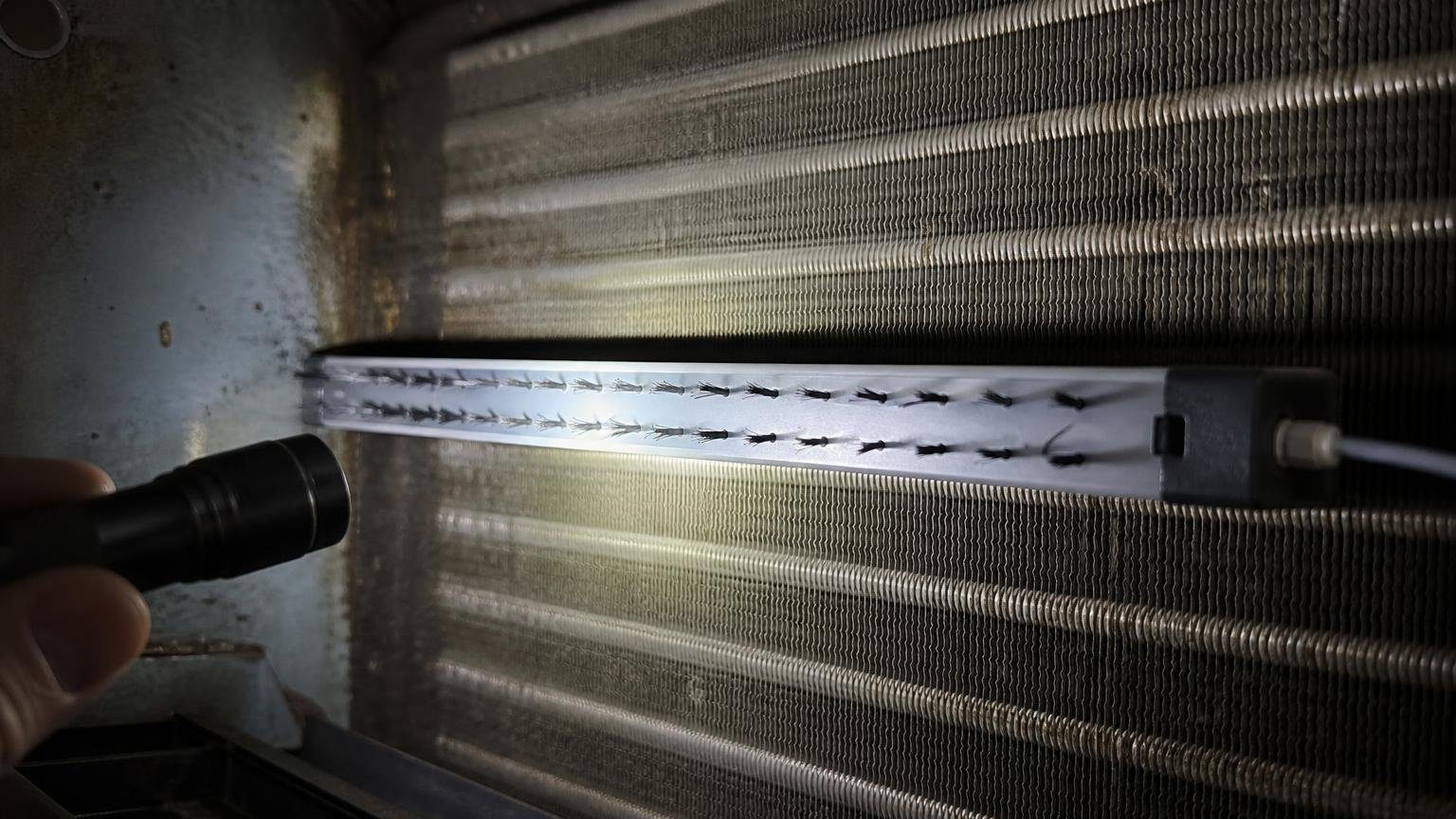
Bipolar ionization is an air treatment that uses high voltage emitters to release positive and negative ions into the airstream, usually from a unit mounted in the duct or inside the air handler. Makers say the ions cluster small particles so filters catch them, and react with viruses, bacteria and VOCs. A different in-duct technology, the electronic air cleaner, charges particles and collects them on plates.
Needlepoint bipolar ionization (NPBI) is the Global Plasma Solutions brand name for its version, which the company says runs at lower energy than corona discharge ionizers. The claims below are the makers’ own, quoted from their websites in October 2026.
- Global Plasma Solutions says its testing shows NPBI “can boost a MERV 8 filter to MERV 13 equivalent performance for virus-sized particles,” cites “over 300,000 installations worldwide,” and says it works “without producing ozone or other harmful byproducts.”
- AtmosAir says its products have been found to provide “99%+ Reduction in Human Coronavirus 229E” and “90% Reduction in Volatile Organic Compounds.”
Does bipolar ionization work? What independent studies found
It depends on the test. Maker-linked chamber work shows large virus reductions, an EPA chamber with a mock HVAC system showed a modest one, and two independent tests in occupied buildings found little benefit. No study we found shows a health outcome, such as fewer infections, in a building with an ionizer.
| Study | Setting | Who ran it | Result |
|---|---|---|---|
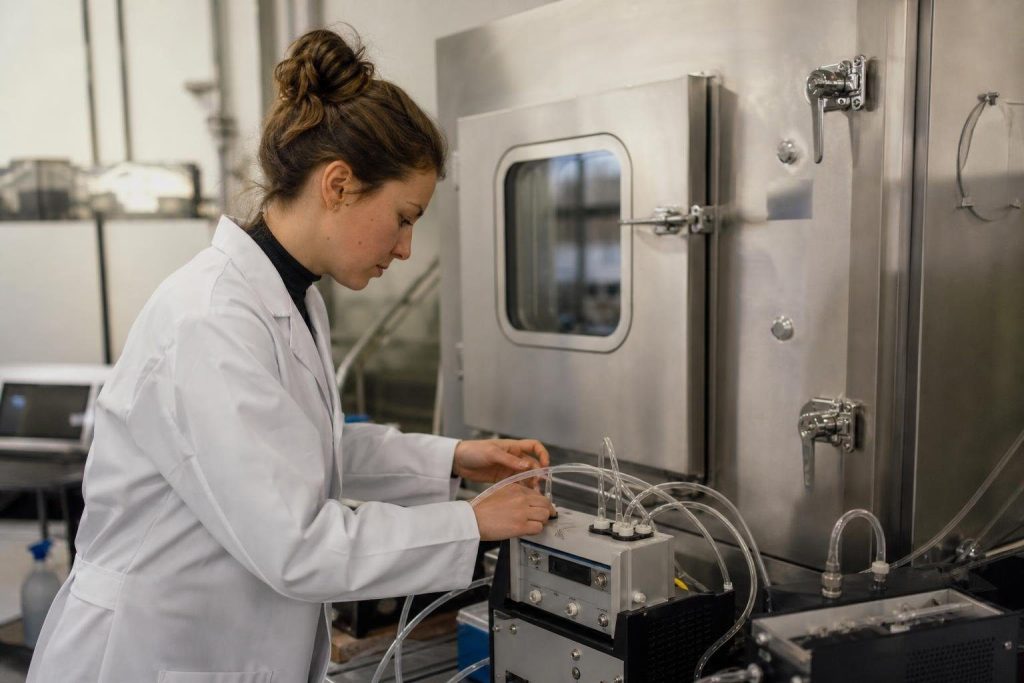
| Sobek and Elias, PLoS One, 2023 | Room-size BSL-3 chamber, commercial NPBI device | Lead author at Global Plasma Solutions | Virus infectivity down 88.3 to 99.98% in 30 minutes at “real-world” doses; 49.5 to 61.2% at excess doses |
| Ratliff et al., Building and Environment, 2023 | Operational-scale chamber with a mock recirculating HVAC system | EPA Office of Research and Development | At most 0.88 log10 reduction of airborne MS2 virus; no significant effect on surfaces |
| Zeng et al., Building and Environment, 2021 | Furnished chamber plus an occupied office air handler | Illinois Tech, Portland State, Colorado State | Negligible net change in PM2.5 loss rate; some VOCs fell, others rose |
| Kormos et al., ACS ES&T Air, 2024 | Occupied university lecture hall, in-duct system | Virginia Tech, Kansas, Portland State | No significant difference in culturable airborne bacteria, ionizer on or off |
The Sobek and Elias paper argues that high test doses make devices look worse, so it tested both. The EPA team flagged a method gap: “There is currently no standard test method for evaluating air treatment technologies,” so lab results do not compare directly.
A 0.88 log10 reduction works out to roughly 87% fewer viable virus particles over the test, our arithmetic. In the lecture hall study, the authors concluded the ionizer “was not effective at reducing levels of culturable airborne bacteria in this study.”
Does bipolar ionization create ozone or other byproducts?
Some ionizers emit ozone, and a zero ozone rating does not rule out other byproducts. EPA says bipolar ionization “has the potential to generate ozone and other potentially harmful by-products indoors” unless the design and maintenance prevent it.
The California Air Resources Board has required electronic in-duct air cleaners to meet its 0.050 ppm ozone limit since October 2020. CARB adds that it “does not evaluate the effectiveness of air cleaners at removing pollutants.” UL 2998 is stricter on ozone and also says nothing about efficacy.
Correction: zero ozone is not zero byproducts
Global Plasma Solutions says NPBI works “without producing ozone or other harmful byproducts.” The independent Zeng et al. test of a commercial in-duct unit (the paper does not name the brand) found xylenes fell but “oxygenated VOCs (e.g., acetone, ethanol) and toluene” rose, in both the chamber and an occupied office. UL 2998 tests ozone only, so it cannot settle that question.
What do EPA, CDC and ASHRAE say about bipolar ionization?
All three treat bipolar ionization as unproven in real buildings, and none bans it. Each tells buyers to demand performance data and zero ozone certification.
| Body | What it says | Date checked |
|---|---|---|
| EPA | “An emerging technology”; evidence for safety and effectiveness “less documented” than for filtration; recommends UL 2998 devices | Page updated October 1, 2026 |
| CDC | Ionization has “a less-documented track record” for moving air in HVAC systems; request proof “under real-world, as-used conditions”; verify UL 2998 | Page updated May 12, 2023 (archived copy) |
| ASHRAE Epidemic Task Force | Systems “range from ineffective to very effective”; rigorous peer-reviewed studies “do not currently exist”; some may emit ozone “at high levels” | Live page, October 2026 |
The ASHRAE guidance adds that “manufacturer data should be carefully considered.” The CDC page notes that a less-documented track record “does not necessarily imply the technologies do not work as advertised.” That is the fair reading: unproven is not the same as disproven.
What happened in the bipolar ionization lawsuit?
The best known case is Garner v. Global Plasma Solutions, a proposed class action filed in federal court in Delaware in 2021 (No. 1:21-cv-00665). The buyer alleged that GPS marketed its ionizers as cleansing the air of the COVID virus while, in the court’s summary, “outside testing reached mixed results.”
In a March 10, 2022 opinion, Circuit Judge Bibas, sitting by designation, let the fraud claim proceed and dismissed the warranty, consumer protection and unjust enrichment claims, with leave to amend. That ruling took the complaint’s allegations as true, as courts do at that stage. It was not a finding that the devices fail. We could not confirm the final outcome from a primary document.
Bipolar ionization vs UV light vs filtration: which is proven?
Filtration and ventilation have the stronger record: ASHRAE’s task force suggests MERV 13 filters, which remove at least 85% of 1 to 3 micron particles, and EPA tells homeowners to choose a filter “rated MERV 13 or higher” for better filtration. Ionization sits in ASHRAE’s emerging technology bucket, while UV-C has published dose targets.
A denser filter adds resistance, so check your system’s static pressure before upgrading, and read why the highest MERV is not always best.
For filter sizes and change intervals, see our furnace and AC filter guide. For fresher air rather than cleaner recirculated air, the answer is an ERV or HRV, not any add-on cleaner.
Ionizers, filters and UV lamps do not bring in outdoor air. Coil and in-duct UV lamps raise their own questions, covered in our UV and air purifier review.

Should you add a bipolar ionizer to your HVAC system?
For most homes, an ionizer is an optional extra, not the first fix. Get filtration and real ventilation right first, then judge an ionizer on its paperwork. CDC’s advice was to use “technologies that are known to work and will not cause harm.” If a contractor quotes one, ask these questions in order:
- Is the exact model validated to UL 2998, and is it listed by CARB if you live in California?
- Who ran the efficacy test: the maker, a lab paid by the maker, or an independent group?
- Was it tested in a sealed chamber or in an occupied building, at what airflow and with what virus or particle dose?
- Were VOCs and aldehydes measured, or only ozone?
- What maintenance does it need, and what happens if it is skipped?
As with duct cleaning sold on health claims, ask for the data before you buy.
How we researched this
On October 13, 2026 we read the four peer-reviewed studies above (abstracts via PubMed and the DOI record), the live EPA, ASHRAE, UL and CARB pages, an archived CDC page and the Delaware court opinion. Maker claims are quoted and labelled as claims. Reddit was skipped because this is a health and safety topic. Unverifiable items, including any advertising-review (NAD) or FTC action on ionizer claims, were excluded.
Frequently asked questions
Is it safe to be in a room with a bipolar ionizer?
It depends on the unit. EPA warns bipolar ionization can generate ozone and other potentially harmful by-products, and recommends a UL 2998 device, which must keep ozone below 0.005 ppm. That rating covers ozone only. One independent test found oxygenated VOCs such as acetone rose with an in-duct unit running.
Does bipolar ionization kill mold?
No independent study we found shows it controls mold in a home. EPA’s ionizer page says ion generators “do not remove gases or odors,” and ASHRAE says rigorous peer-reviewed studies on these devices do not currently exist. Mold follows moisture, so keeping indoor humidity in range does more.
Are HVAC ionizers worth it?
For most homes the money goes further on filtration and ventilation first. ASHRAE’s task force says MERV 13 filters remove at least 85% of 1 to 3 micron particles, a measured result. Ionizer results range, in ASHRAE’s words, “from ineffective to very effective,” and the occupied building tests were weak.
Does needlepoint bipolar ionization work?
Needlepoint bipolar ionization is one design of the same technology. A study led by a Global Plasma Solutions scientist reported 88.3 to 99.98% virus infectivity cuts in a sealed chamber. An independent three week lecture hall test of an in-duct system found no significant drop in culturable airborne bacteria.
Does EPA approve bipolar ionization?
No. EPA calls it an emerging technology and recommends UL 2998 devices, but does not certify that ionizers work. CDC noted that, depending on the claims made, such devices “may be regulated as pesticide devices by the EPA and require efficacy data.” CARB certifies ozone only and does not evaluate effectiveness.
Is an ionizer or a UV light better for HVAC?
They do different jobs. ASHRAE publishes a minimum in-duct UV-C dose target of 1,500 µJ/cm2 for air disinfection, while it groups ionizers with emerging technologies that lack rigorous peer-reviewed studies. A UV lamp aimed at the coil targets growth on that coil. Neither replaces filtration or ventilation.
Sources
- Zeng et al. “Evaluating a commercially available in-duct bipolar ionization device.” Building and Environment 195 (2021). https://doi.org/10.1016/j.buildenv.2021.107750. Accessed October 2026.
- Kormos et al. “Bipolar Ionization Did Not Reduce Airborne Bacteria in a Lecture Hall.” ACS ES&T Air (2024). https://pmc.ncbi.nlm.nih.gov/articles/PMC11650565/. Accessed October 2026.
- Ratliff et al. “Large-scale evaluation of microorganism inactivation by bipolar ionization and photocatalytic devices.” Building and Environment 227 (2023). https://pmc.ncbi.nlm.nih.gov/articles/PMC9652099/. Accessed October 2026.
- Sobek and Elias. “Bipolar ionization rapidly inactivates real-world, airborne concentrations of infective respiratory viruses.” PLoS One (2023). https://pmc.ncbi.nlm.nih.gov/articles/PMC10664916/. Accessed October 2026.
- US EPA. “Air Cleaners, HVAC Filters, and Respiratory Viruses.” https://www.epa.gov/indoor-air-quality-iaq/air-cleaners-hvac-filters-and-coronavirus-covid-19. Accessed October 2026.
- US EPA. “What are ionizers and other ozone generating air cleaners?” https://www.epa.gov/indoor-air-quality-iaq/what-are-ionizers-and-other-ozone-generating-air-cleaners. Accessed October 2026.
- ASHRAE. “Filtration / Disinfection.” https://www.ashrae.org/technical-resources/filtration-disinfection. Accessed October 2026.
- CDC. “Ventilation in Buildings” (archived copy, December 2023). https://web.archive.org/web/20231231231050/https://www.cdc.gov/coronavirus/2019-ncov/community/ventilation.html. Accessed October 2026.
- UL Solutions. “Zero Ozone Emissions Validation.” https://ul.com/services/zero-ozone-emissions-validation. Accessed October 2026.
- California Air Resources Board. “List of CARB-Certified Air Cleaning Devices.” https://ww2.arb.ca.gov/list-carb-certified-air-cleaning-devices. Accessed October 2026.
- US District Court, District of Delaware. “Garner v. Global Plasma Solutions, Memorandum Opinion.” https://www.ded.uscourts.gov/sites/ded/files/opinions/21-665.pdf. Accessed October 2026.
- Maker claims: Global Plasma Solutions, https://gpsair.com/resources/how_ionization_works; AtmosAir, https://atmosair.com/. Accessed October 2026.
Leave a Reply