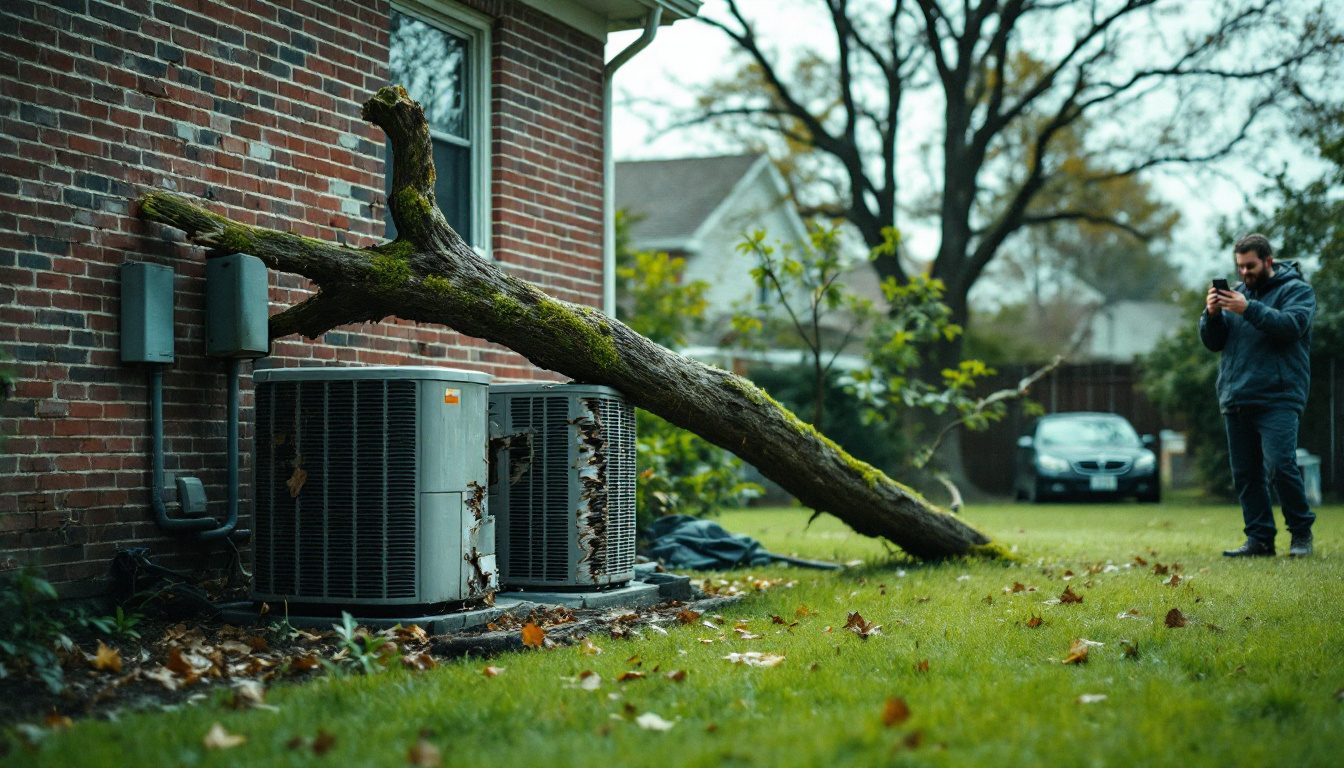
Does homeowners insurance cover HVAC? Yes, when a covered peril such as fire, lightning, wind, hail, a falling tree or theft damages it. No, when the system wears out, breaks down mechanically or fails from neglect. Standard policies exclude those causes, which is the gap equipment breakdown endorsements and home warranties are sold to fill.
Key Takeaways
- The Maryland Insurance Administration guide lists “neglect, wear and tear and deterioration” among common HO-3 exclusions.
- Virginia’s rule 14VAC5-342-60 lets insurers exclude “mechanical breakdown” and limits the HVAC freezing exclusion to homes empty four or more consecutive days.
- Flood is a separate policy: NFIP building coverage lists furnaces and pays up to $250,000.
- The FTC says home warranties “are really service contracts”; the California Department of Insurance licenses the sellers yet says a warranty is not insurance.
- Wind and hail caused 42.5% of US homeowners losses in 2023, per ISO data published by the Insurance Information Institute.
Does homeowners insurance cover HVAC systems?
Homeowners insurance covers HVAC damage when a covered peril caused it, and not when age, wear or a part failing on its own did. The cause decides the claim, not which component broke.
The most common policy is the special form, or HO-3. The NAIC consumer shopping guide says it “covers your home against all perils except those specifically listed as exclusions” and calls it “the most common type of homeowners insurance coverage.” So the exclusion list is what matters for a furnace or condenser.
Shares of all homeowners losses, not HVAC alone:
An old system that simply stops is not a claim. If your unit is near the service lives in our equipment age analysis, budget for replacement and check what your HVAC warranty pays for.
Is your HVAC system dwelling or personal property?
Central air conditioners, furnaces, heat pumps and boilers are normally insured as part of the dwelling, because they are built into the house. The NAIC says all homeowners policies cover the structure “including attached structures, fixtures and built-in appliances.” A window or portable unit is personal property.
The split matters. An HO-3 covers personal property only against named perils, the Maryland guide says, and the NAIC guide notes it pays for personal property at actual cash value, which subtracts depreciation.
Flood insurance draws the same line: FEMA puts furnaces under building coverage and “portable and window air conditioners” under contents.
Which perils does homeowners insurance cover for HVAC equipment?
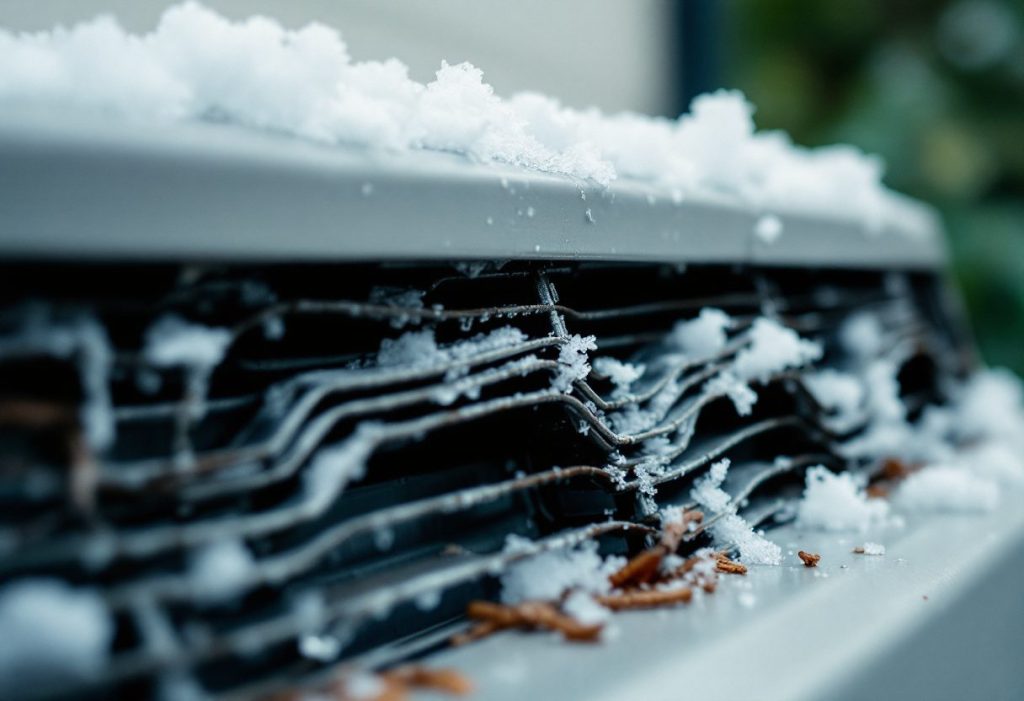
Fire, lightning, windstorm, hail, falling objects, theft and vandalism are the perils most likely to produce a paid HVAC claim. The NAIC says policies “typically include coverage for fire, lightning and extended coverage,” which takes in windstorm, hail, vandalism and theft.
| Cause of damage | Typical HO-3 outcome for central equipment | What decides it |
|---|---|---|
| Fire or lightning | Usually covered | Named in standard policy forms |
| Windstorm or hail (dented condenser coil) | Usually covered | Your deductible |
| Falling tree or limb | Usually covered | Sudden physical damage to the unit |
| Theft or vandalism (copper stripped from a condenser) | Usually covered | Vacancy can void vandalism cover |
| Power surge | Depends | Lightning or utility surge, and your policy wording |
| Freezing | Covered with conditions | Whether heat was maintained or the system drained |
| Flood or surface water | Not covered | Needs a separate flood policy |
| Wear, rust, age, mechanical breakdown | Not covered | Standard exclusion; an endorsement may add it |
| Neglect or poor maintenance | Not covered | Neglect exclusion |
Why won’t homeowners insurance cover HVAC wear and tear or breakdown?
Homeowners insurance excludes HVAC wear and tear and mechanical breakdown because those losses are expected, not sudden. Virginia’s homeowners content rule, 14VAC5-342-60, lets insurers exclude “wear and tear; … deterioration; … latent defect; mechanical breakdown; rust.”
The same rule adds: “If a covered cause of loss ensues, insurers shall provide coverage for the ensuing loss.” A compressor that dies of age is excluded; a fire that follows can be covered.
Neglect is the other common denial: Maryland lists it, and Virginia allows a faulty maintenance exclusion. Records from a documented annual tune-up are your best evidence.
Does home insurance cover AC damage from a power surge or lightning?
Home insurance usually covers AC damage from a lightning strike, because lightning is a named peril in standard policy forms. A surge from the utility grid is less certain and turns on your policy wording. Whether a dedicated protector at the condenser is worth adding is covered in our guide to AC surge protectors.
The Maryland guide’s named peril list, which an HO-3 applies to personal property such as a window unit, includes “sudden and accidental injury from artificially generated electrical currents.” For a central system, coverage depends on whether the insurer treats the failure as sudden damage or as excluded mechanical breakdown.
Equipment breakdown coverage targets that gap. The NAIC guide defines it as coverage “that pays to repair or replace a home system that breaks down, such as … central air or heating systems.” If a storm kills your outdoor condenser, get the cause in writing.
Does homeowners insurance cover a frozen furnace or heat pump?
Homeowners insurance generally covers freezing damage to a furnace, boiler or heat pump if you kept the heat on or drained the system. If you did neither, the claim can be denied.
Virginia’s rule shows how narrow the exclusion can be: it applies “only to a dwelling that is vacant, under construction, or unoccupied for four or more consecutive days,” and only if the owner failed to “exercise due diligence to maintain heat” or to “drain the systems and appliances and shut off the water supply.” Other states’ policies may be stricter.
The DC Department of Insurance, Securities and Banking warns you may not be covered for “plumbing, heating, air conditioning” losses if “the insured did not take precautions to maintain the property to prevent freezing.” It suggests rooms no lower than 55 degrees; exposed lines may need heat tape.
Common mix-up
An air conditioner that ices over in July is not the freezing peril. Summer icing is a symptom of an airflow or refrigerant fault, explained in our guide to why an AC freezes up. The fault behind it is the kind of mechanical failure policies exclude.
Is flood damage to HVAC equipment covered?
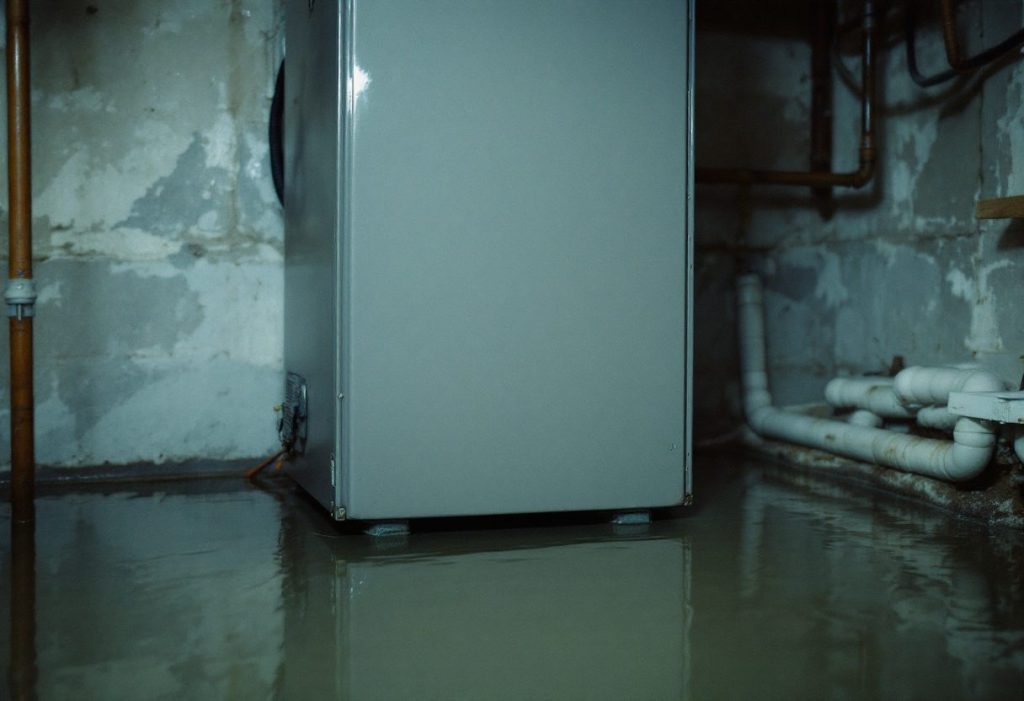
Flood damage to HVAC equipment is not covered by a standard homeowners policy. It needs a flood policy, most often from FEMA’s National Flood Insurance Program. FEMA’s FloodSmart site says “most homeowners and renters insurance does not cover flood damage.”
NFIP building policies cover up to $250,000 and list “furnaces and water heaters” under building coverage; contents policies cover up to $100,000. Coverage usually starts 30 days after purchase.
FEMA’s basement fact sheet lists “central air conditioners,” furnaces and heat pumps as covered in basements if “connected to a power source, where appropriate, and/or installed in their functioning location.”
Home warranty vs homeowners insurance for HVAC: which pays for what?
Homeowners insurance pays when something happens to your HVAC system; a home warranty pays when the system wears out. The FTC says home warranties “are really service contracts,” and California’s Department of Insurance says they “do not overlap or replace a homeowners’ insurance policy.”
| Product | What it pays for | Who oversees it | Watch for |
|---|---|---|---|
| Homeowners policy (HO-3) | Sudden damage from a covered peril | State insurance department | Wear, breakdown and flood exclusions |
| Equipment breakdown endorsement | A home system that breaks down, such as central air or heating | State insurance department | Its definition of breakdown |
| Home warranty (service contract) | Wear and tear, deterioration and some defects, per contract | State agencies, such as California’s insurance department | Service fees, payout limits, excluded systems |
| NFIP flood policy | Flood damage, with furnaces under building coverage | FEMA | 30 day wait; basement equipment rules |
The FTC’s February 2023 alert warns a home warranty may duplicate “coverage you already have” and carry “deductibles or fees you need to pay each time products are serviced.” Forms “are not standardized,” the California Department of Insurance notes.
Oversight is state by state; in California it sits with the insurance department. A contractor maintenance plan is different again: it buys service visits, not repair coverage.
How do you file an HVAC insurance claim?
Make the system safe, document the damage, get the cause in writing and report promptly.
- Shut off power at the breaker or outdoor disconnect; book urgent service if the house is losing heat in a freeze.
- Photograph the damage, its source and the data plate; FEMA advises recording “manufacturer, model, and serial number.”
- Get a written diagnosis naming the cause (lightning, hail, freezing), not only the failed part.
- Check your declarations page. The NAIC guide notes that deductibles “can be a dollar amount or a percentage.”
- Report the claim and keep emergency repair receipts.
- Ask how replacement is paid. The NAIC guide warns that many policies pay “only the home’s ACV until you begin or complete repairs.”
If denied, ask the insurer to cite the policy language it relied on, and contact your state insurance department if you disagree. Paying for a new system yourself? Read our HVAC financing checklist first.
How we researched this
In October 2026 we read state regulator guides and rules (Maryland, Virginia, DC, Texas, California), NAIC consumer material, FEMA flood pages and FTC guidance; 13 sources consulted, 10 cited. Loss shares are Insurance Information Institute figures from ISO data.
Excluded: insurer and aggregator blogs, and all premium or endorsement prices, since no federal series exists. The ISO HO 00 03 form is copyrighted, so we quote regulators. No Reddit: legal and financial topic. Not legal advice; your policy controls.
Frequently asked questions
Does homeowners insurance cover an old HVAC system?
Not when age is the cause. The Maryland Insurance Administration lists wear and tear and deterioration among common HO-3 exclusions. If hail or another covered peril damages an old unit, the claim can still be paid, though a window unit is often settled at actual cash value, minus depreciation.
Does homeowners insurance cover furnace replacement?
Only when a covered peril caused the damage, such as fire, lightning or a falling object. Freezing damage is usually covered if you kept the heat on or drained the system. Virginia’s rule, for example, limits the freezing exclusion to homes empty four or more consecutive days without those precautions.
Is a stolen or vandalized AC condenser covered?
Usually, at an occupied home. The NAIC lists theft and vandalism among standard covered perils. Virginia lets insurers exclude vandalism when the dwelling is vacant, so an empty rental or a house for sale may be limited. Check your policy’s vacancy wording.
What is equipment breakdown coverage?
An add-on to a homeowners policy. The NAIC consumer guide defines it as coverage that pays to repair or replace a home system that breaks down, naming central air and heating systems. It targets failures a standard HO-3 excludes; read its definition of breakdown.
Is a home warranty better than homeowners insurance for HVAC?
They do different jobs. The California Department of Insurance says home warranties cover wear and tear, deterioration or defects, while homeowners policies cover damage from major events. The FTC warns a warranty can carry service fees each time products are serviced, so compare the fee with your likely repairs.
Does flood insurance cover my furnace or air conditioner?
Yes, with a flood policy. FEMA’s NFIP lists furnaces under building coverage, up to $250,000, and portable and window air conditioners under contents. In basements, central air conditioners and heat pumps are covered if connected and installed in place. Coverage usually starts 30 days after purchase.
Sources
- Maryland Insurance Administration. “A Consumer Guide to Homeowners Insurance (archived copy).” https://insurance.maryland.gov/Consumer/Documents/publications/homeownersinsguide.pdf. Accessed October 2026.
- National Association of Insurance Commissioners. “A Shopping Tool for Homeowners Insurance (copy hosted by the Colorado Division of Insurance).” https://doi.colorado.gov/sites/doi/files/documents/Buyers%20Guide%20Homeowners%20Insurance.pdf. Accessed October 2026.
- National Association of Insurance Commissioners. “Homeowners Insurance.” https://content.naic.org/insurance-topics/homeowners-insurance. Accessed October 2026.
- Virginia State Corporation Commission, Bureau of Insurance. “14VAC5-342-60. Exclusions applicable to property coverages.” https://law.lis.virginia.gov/admincode/title14/agency5/chapter342/section60/. Accessed October 2026.
- DC Department of Insurance, Securities and Banking. “If My Frozen Pipes Burst, Am I Covered by Insurance?.” https://disb.dc.gov/node/1381911. Accessed October 2026.
- FEMA National Flood Insurance Program. “What you need to know about buying flood insurance.” https://www.floodsmart.gov/whats-covered. Accessed October 2026.
- FEMA. “What Does Flood Insurance Cover in a Basement?.” https://www.fema.gov/node/627771. Accessed October 2026.
- Federal Trade Commission. “So what’s the deal with home warranties?.” https://consumer.ftc.gov/consumer-alerts/2023/02/so-whats-deal-home-warranties. Accessed October 2026.
- California Department of Insurance. “Home Protection Contracts.” https://www.insurance.ca.gov/01-consumers/105-type/Home-Protection-Contracts.cfm. Accessed October 2026.
- Insurance Information Institute. “Facts + Statistics: Homeowners and renters insurance.” https://www.iii.org/fact-statistic/facts-statistics-homeowners-and-renters-insurance. Accessed October 2026.
Leave a Reply