Last reviewed: September 2026 · By the HVAC Brief Editorial Team · Our sourcing and editorial standards
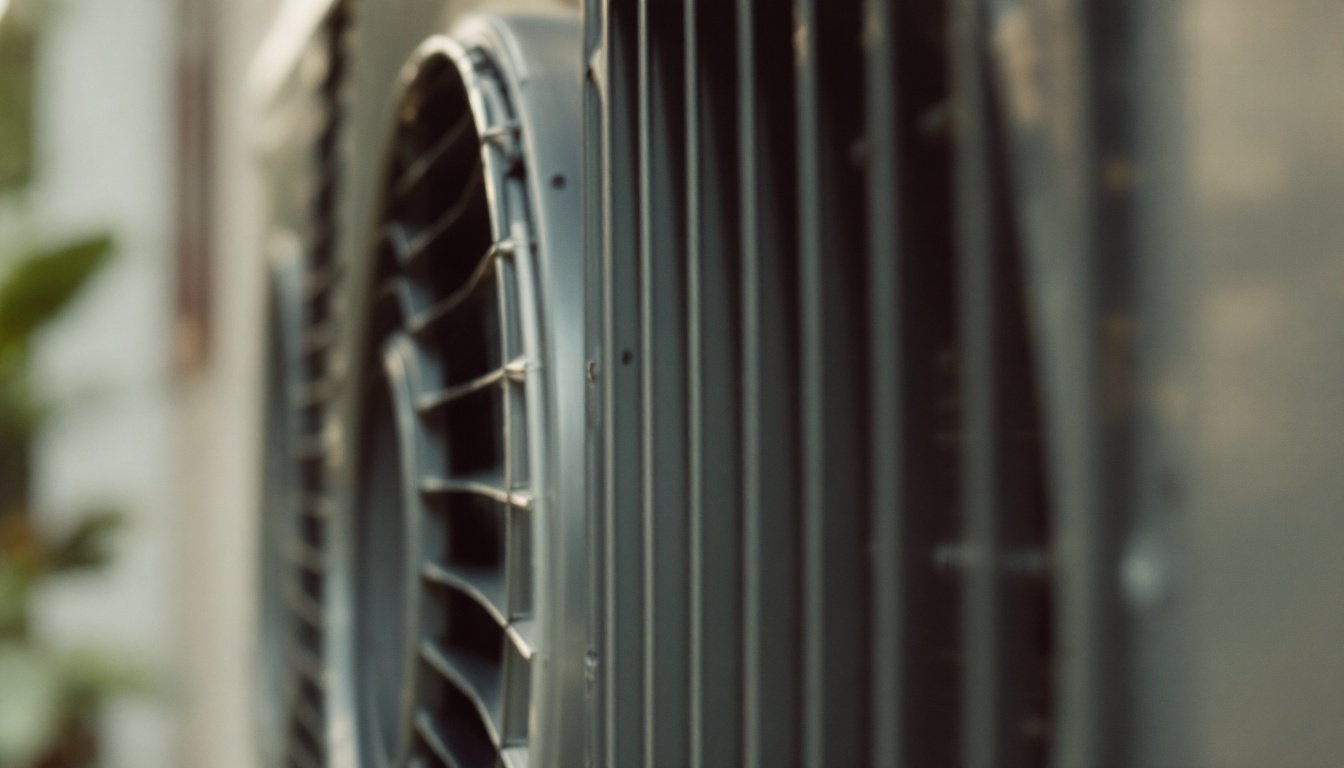
The condenser is the outdoor half of your air conditioner, and its job is to dump the heat your house just gave up. The cabinet contains the compressor, the condenser coil and a fan that pulls outdoor air across that coil.
Because its whole function is rejecting heat to outdoor air, anything blocking airflow across the coil degrades the entire system. That is why the most common condenser problem is not a failed part but a dirty one.
What is inside the outdoor unit
| Component | Function | Common failure |
|---|---|---|
| Compressor | Raises refrigerant pressure and temperature | Expensive failure, often decides replace over repair |
| Condenser coil | Releases heat to outdoor air | Blocked by dirt, grass, cottonwood or debris |
| Condenser fan | Pulls air across the coil | Motor failure, or capacitor preventing start |
| Capacitor | Provides starting torque | Common wear item, stops compressor or fan starting |
| Contactor | Switches power to the unit | Electrical wear item |
Why a blocked coil matters more than it looks
Heat rejection depends on air moving freely across the coil fins. Restrict that airflow and head pressure rises, capacity falls, the compressor works harder and runs hotter, and efficiency drops across every hour of operation.
- Keep the fins clear. Vegetation, fencing and stored items too close to the cabinet restrict airflow.
- Watch seasonal debris. Cottonwood, grass clippings and leaves mat against fins quickly.
- Do not stack things on top. Most units discharge air upward through the top.
- Straighten bent fins carefully or not at all. Damaged fins reduce surface area permanently.
Clearance around the unit is the one piece of condenser maintenance a homeowner can reliably do. Anything involving the refrigerant circuit or electrical components is a service call.
A condenser fan that does not start can be a failed capacitor, a failed fan motor, or a contactor not pulling in. Those are different repairs at very different costs, and they are distinguished by measurement rather than by observation. A capacitor is a cheap wear part; a compressor is the failure that usually decides replacement.
Condenser versus compressor versus condensing unit
These get used interchangeably and they are not the same. The condenser is strictly the coil that rejects heat. The compressor is the pump inside the cabinet. The condensing unit is the whole outdoor assembly containing both. When a quote says the condenser needs replacing, ask which of the three is meant, because the cost difference is large.
Frequently asked questions
What does an AC condenser do?
It releases the heat collected from inside your house to the outdoor air. Refrigerant arrives as hot high pressure vapour, passes through the condenser coil while a fan draws outdoor air across it, and condenses back into liquid as it gives up that heat. The coil, compressor and fan sit in the outdoor cabinet.
Why is my condenser fan not spinning?
Common causes are a failed capacitor, a failed fan motor, or a contactor not closing. These are different repairs at very different costs and are distinguished by electrical measurement rather than observation. A capacitor is an inexpensive wear part, while motor replacement costs more.
Is the condenser the same as the compressor?
No. The condenser is the coil that rejects heat to outdoor air. The compressor is the pump that raises refrigerant pressure. The condensing unit is the entire outdoor cabinet containing both. The three are often used interchangeably, and the cost of replacing each differs considerably.
How much clearance does an outdoor unit need?
Enough for air to move freely across the coil and discharge from the top without recirculating. Manufacturer instructions specify the requirement for a given model. In practice the failures we see described are vegetation grown against the fins, fencing built too close, and items stacked on top of the cabinet.
Methodology and limitations
This page describes standard split system architecture and component function. We publish no repair prices, as no federal series measures HVAC component repair costs.
- No failure frequencies are claimed. No federal source measures residential HVAC component failure rates.
- Clearance requirements are set by manufacturer instructions for the specific model.
- Electrical and refrigerant work is not owner serviceable.
The HVAC Brief is an independent trade publication. We do not sell equipment, take manufacturer advertising, or accept payment for placement in our research. Corrections welcome.
Leave a Reply