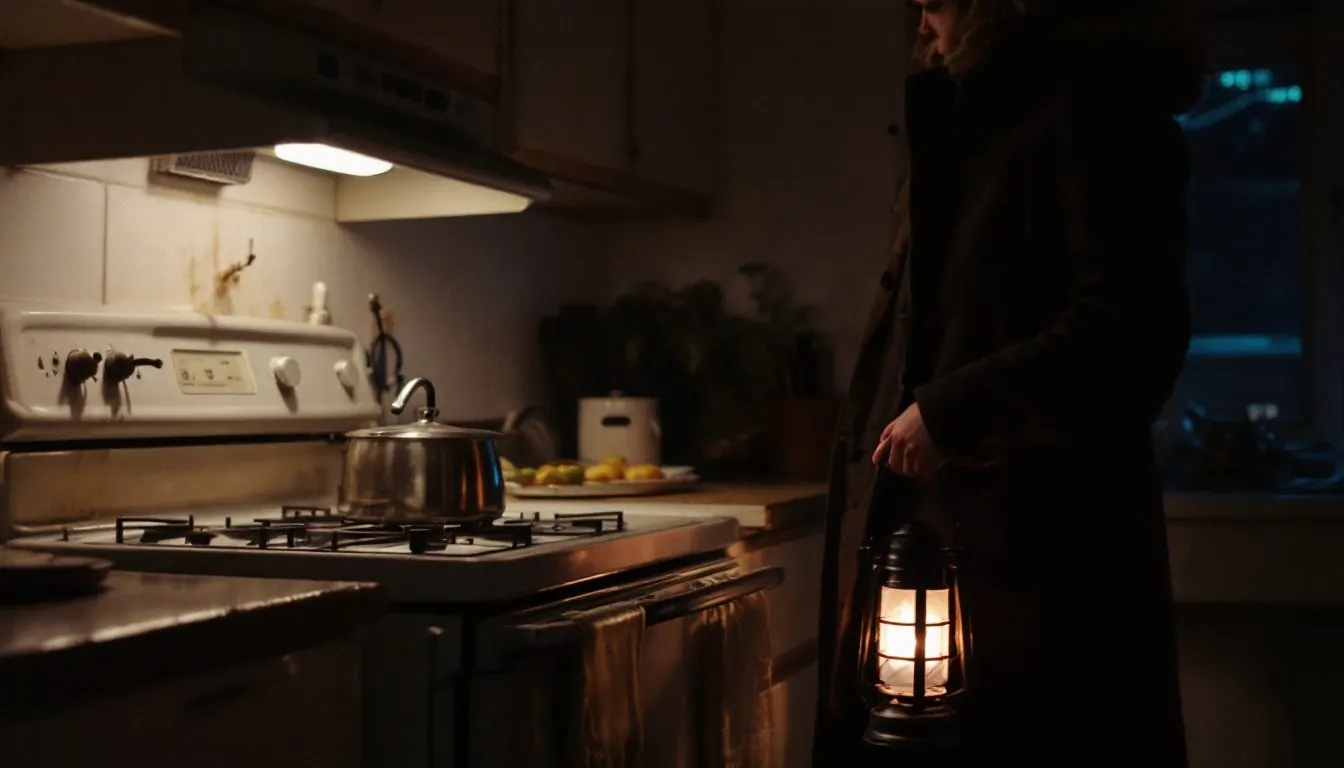
No. It is not safe to heat your house with the oven. A gas oven releases its combustion gases, carbon monoxide included, into the kitchen, and the CDC says never heat your home with one. An electric oven makes no carbon monoxide, but every maker manual we read forbids room heating, and its 2,500 W element heats no better than a space heater.
| What you are tempted to run | Carbon monoxide into the room? | What the maker or agency says | Verdict |
|---|---|---|---|
| Gas oven, door open | Yes, unvented | CDC: “Never heat your house with a gas oven.” Frigidaire built-in gas range manual: doing so “may result in carbon monoxide poisoning and overheating of the oven” | Never |
| Gas cooktop burners left on | Yes | Ready.gov: “Never use a gas stovetop or oven to heat your home.” | Never |
| Electric oven, door open | No | LG LRE3025 manual: “NEVER use your appliance for warming or heating the room.” | No: fire and burn risk |
| Gas or electric oven during a power outage | Gas: yes | Frigidaire: “Do not attempt to operate the appliance during a power failure.” | Never |
| Listed plug-in space heater with tip-over switch | No | DOE: buy one with a tip-over safety switch | Safer short term, if the power is on |
Why is a gas oven dangerous to heat your house with?
A gas oven is dangerous as a heater because it is an unvented burner: whatever the flame makes, including carbon monoxide (CO) and nitrogen dioxide, ends up in the air you breathe. A furnace sends the same gases up a sealed flue; a range has no such pipe. The CDC’s carbon monoxide page lists gas ranges among the products whose fumes contain CO and tells households plainly: “Never heat your house with a gas oven.”
The makers agree. The Kenmore Elite 790.7535 manual reads “Never use your appliance for warming or heating the room. Doing so may result in CARBON MONOXIDE poisoning.” Bosch’s dual fuel range manual adds “overheating the appliance” to the list, and the Bosch gas range manual notes that “the burning of gas cooking fuel” can “generate small amounts of Carbon Monoxide” even in normal cooking.
Carbon monoxide is not the only gas. The EPA’s nitrogen dioxide page names unvented gas stoves as a primary indoor source and says that in homes with gas stoves “indoor levels often exceed outdoor levels.” A kitchen sealed against the cold is the worst case for both gases, and a range hood that exhausts outdoors only helps while its fan has power.
How many deaths does CPSC tie to gas ranges used for heat?
In 2022, CPSC staff estimated 16 deaths from gas ranges that were known or suspected to have been used to heat an enclosed space, out of 274 non-fire CO deaths tied to consumer products that year. The CPSC 2022 annual estimates report (published May 2026) lists ranges and ovens as their own product row, and 2022 was the highest year in the series.
| Year | Estimated CO deaths, ranges or ovens | Of which natural gas | Of which LP gas |
|---|---|---|---|
| 2018 | 9 | 2 | 1 |
| 2019 | 3 | 3 | no reports |
| 2020 | 3 | 3 | no reports |
| 2021 | 11 | 8 | 3 |
| 2022 | 16 | 4 | 8 |
| 2020 to 2022 average | 10 a year (4% of consumer product CO deaths) | 5 | 4 |
CPSC counts only non-fire deaths, so burns and fires from an open oven are not in these figures, and estimates move as records arrive: the earlier 2021 report put 2021 gas range deaths at 10, while the 2022 report revises that year to 11. Our carbon monoxide death statistics report breaks down the furnaces, generators and portable heaters behind the other rows.
Is it safe to heat your house with an electric oven?
An electric oven is safer than a gas one because it burns nothing, so it adds no carbon monoxide. It is still not safe as a room heater, and the makers say so: LG’s LRE3025 electric range manual puts “NEVER use your appliance for warming or heating the room” in its WARNING list, next to its warning that weight on an open door can tip a range.
The open door is the problem. The same LG manual warns that oven doors, door windows and the surfaces near vent openings “get hot and may cause burns,” and that heating elements “may be hot even though they are dark in color.” Run as a heater, that hot glass sits at knee height for hours. The oven’s thermostat also measures the air inside the box, not the room, so it has no idea whether the kitchen is 55 F or 75 F. The Bosch gas range manual says its oven “will automatically shut off after 12 hours.”
Is it cheaper to heat your house with the oven than with a space heater?
No. An electric oven and a plug-in space heater are both resistance heaters, so every kilowatt-hour turns into the same 3,412 Btu of heat and costs the same. The oven just uses more at once, and heats the kitchen, not the room you sit in.
| Element | Watts | Heat output | Cost per hour, nonstop |
|---|---|---|---|
| Frigidaire FCFE308CB bake element | 2500 Watts | 8,530 Btu/h | $0.45 |
| Frigidaire CFEF3054U bake element | 2,600 Watts | 8,871 Btu/h | $0.47 |
| Frigidaire FCFE308CB broil element | 3500 Watts | 11,942 Btu/h | $0.64 |
| Plug-in space heater rated 1,500 W | 1,500 | 5,118 Btu/h | $0.27 |
| Any of the above, per 10,000 Btu delivered | 10,000 Btu | $0.53 |
The last row is the point: per unit of heat, the oven and the heater cost exactly the same, because resistance heat is resistance heat. What the oven lacks is everything that makes a space heater acceptable for a few hours: a room thermostat, a tip-over switch, which DOE’s Energy Saver page tells buyers to look for, and a size that fits next to where you sit. Our space heater running cost breakdown works the same math by state, and the cost of heat by fuel table answers the separate gas versus electric versus propane question for a whole house.
Can I use my oven to heat my house in an emergency or power outage?
No, and an outage makes it worse. With the power off, a gas range cannot run its fans or hood, and Frigidaire’s built-in gas range manual says “Do not attempt to operate the appliance during a power failure.” Ready.gov’s power outage page repeats the rule twice: “Do not use a gas stove or oven to heat your home,” adding that an oven or stovetop “can also increase the risk of fires, burns and could damage the appliance.”
Our hour by hour power outage plan covers sealing a room, pipes and when to leave for a warming center. If the power is on but the furnace is out, a listed electric heater in the room you occupy beats the oven on every count above; the options are costed in our guide to heating a room without central heat. Our report on terracotta pot heaters runs the wattage on the candle trick.
What should you check before the oven goes on because the furnace quit?
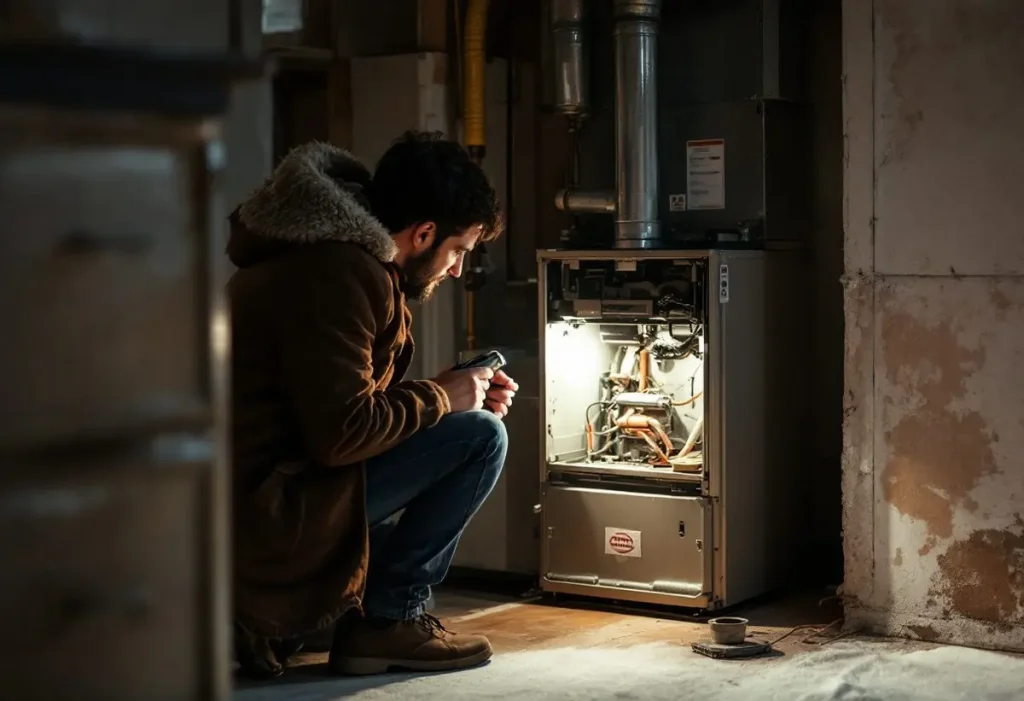
Most no-heat calls start with four checks a homeowner can make before anyone is called: thermostat set to HEAT and above room temperature, the furnace switch and breaker on, the filter not clogged, and on a high-efficiency furnace the PVC intake and exhaust clear of snow. Our step-by-step guide to turning a furnace back on walks through that order. If the burner lights and drops out, a technician reads the flame sensor signal in microamps and checks the pressure switch circuit.
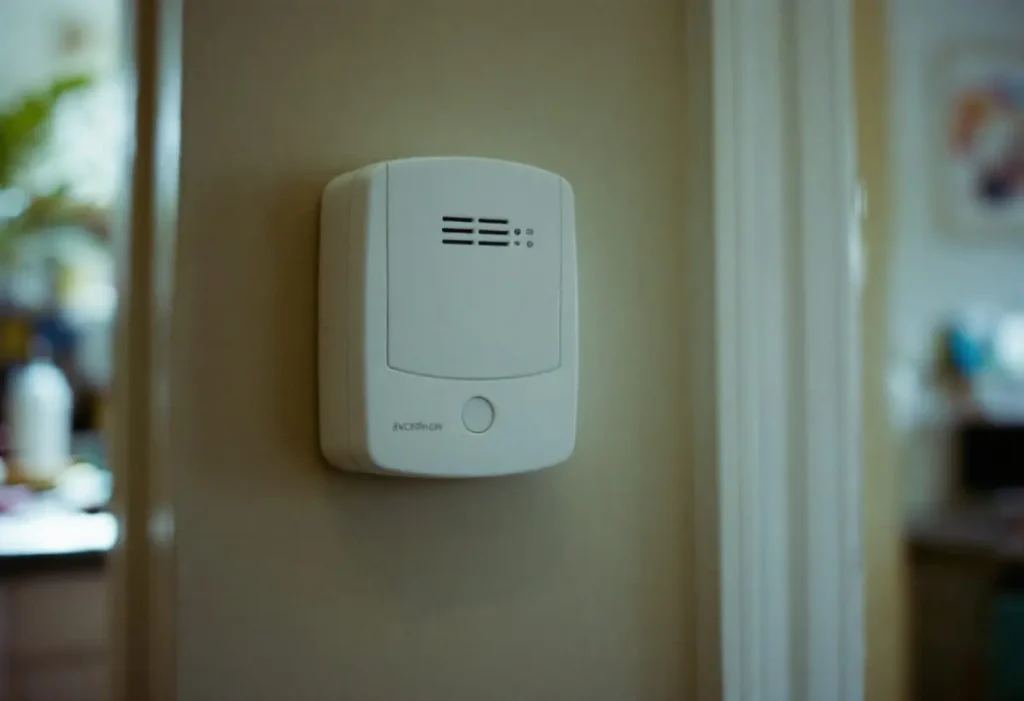
Whatever runs tonight, put a working CO alarm on that level. CPSC advises battery-operated or battery-backup alarms “on every level of the home and outside sleeping areas,” and lists the warning signs: headache, dizziness, weakness, nausea, vomiting, sleepiness and confusion. If an alarm sounds or anyone has those symptoms, CPSC’s instruction is to “get outside to fresh air immediately, and then call 911.” Our CO detector placement guide gives the mounting heights and clearances.
Frequently asked questions
Is it safe to heat your house with a gas stove?
No. A gas cooktop burner is just as unvented as the oven, so its carbon monoxide and nitrogen dioxide stay in the house. Ready.gov says “Never use a gas stovetop or oven to heat your home,” and CPSC estimated 16 CO deaths in 2022 from gas ranges known or suspected to have been used to heat an enclosed space.
What is the healthiest way to heat a house?
The healthiest heat is heat whose combustion gases never enter the living space: a sealed, vented furnace or boiler, or electric heat such as a heat pump, which burns nothing. EPA says venting combustion sources to the outdoors and keeping gas appliances correctly installed and maintained are the most effective ways to cut nitrogen dioxide exposure, the same steps that reduce carbon monoxide.
Will a carbon monoxide alarm protect me if I use the gas oven for heat?
An alarm warns you; it does not make the oven safe. CDC notes that people who are sleeping or under the influence “can die from CO poisoning before they have symptoms,” which is why CPSC wants alarms on every level and outside sleeping areas. The fix is to stop the source: turn the oven off, get outside and call 911 if the alarm sounds.
How we researched this
On November 21, 2026 we read the CDC carbon monoxide basics page and its gas oven PSA (archived copies; cdc.gov refused direct fetches), Ready.gov’s power outage page, CPSC’s carbon monoxide information center and the full CPSC non-fire CO death reports for 2021 and 2022, EPA’s nitrogen dioxide page, DOE’s small space heater page (archived copy), EIA Electric Power Monthly Table 5.6.A, and the safety sections of five range manuals: Kenmore Elite 790.7535, Frigidaire built-in gas range 318205852, Bosch gas range, Bosch dual fuel range and LG LRE3025. Bake and broil wattages come from two Frigidaire spec sheets. We excluded the ranking contractor and restoration blogs (no sources cited), a Consumer Reports survey figure seen only in syndication, and any oven CO emission limit, since we could not open the standard.
Sources
- CDC. “About Carbon Monoxide Poisoning.” Archived copy. https://web.archive.org/web/20260104125514/https://www.cdc.gov/carbon-monoxide/about/index.html. Accessed November 2026.
- CDC. “Don’t Heat Your Home with a Gas Oven.” Archived copy. https://web.archive.org/web/20261116111133/https://www.cdc.gov/natural-disasters/psa-toolkit/dont-heat-your-home-with-a-gas-oven.html. Accessed November 2026.
- U.S. Consumer Product Safety Commission. “Non-Fire Carbon Monoxide Deaths Associated with the Use of Consumer Products, 2022 Annual Estimates.” May 2026. https://www.cpsc.gov/s3fs-public/Non-Fire-Carbon-Monoxide-Deaths-Associated-with-the-Use-of-Consumer-Products-2022-Annual-Estimates.pdf. Accessed November 2026.
- U.S. Consumer Product Safety Commission. “Non-Fire Carbon Monoxide Deaths Associated with the Use of Consumer Products, 2021 Annual Estimates.” February 2025. https://www.cpsc.gov/s3fs-public/Non-Fire-Carbon-Monoxide-Deaths-Associated-with-the-Use-of-Consumer-Products-2021-Annual-Estimates-FY24.pdf. Accessed November 2026.
- U.S. Consumer Product Safety Commission. “Carbon Monoxide.” Archived copy. https://web.archive.org/web/20261114021943/https://www.cpsc.gov/Safety-Education/Safety-Education-Centers/Carbon-Monoxide-Information-Center. Accessed November 2026.
- Ready.gov. “Power Outages.” https://www.ready.gov/power-outages. Accessed November 2026.
- U.S. EPA. “Nitrogen Dioxide’s Impact on Indoor Air Quality.” https://www.epa.gov/indoor-air-quality-iaq/nitrogen-dioxides-impact-indoor-air-quality. Accessed November 2026.
- U.S. Department of Energy. “Small Space Heaters.” Archived copy. https://web.archive.org/web/2025id_/https://www.energy.gov/energysaver/portable-heaters. Accessed November 2026.
- U.S. EIA. “Electric Power Monthly, Table 5.6.A, Average Price of Electricity to Ultimate Customers by End-Use Sector, by State, August 2026 and 2025.” https://www.eia.gov/electricity/monthly/epm_table_grapher.php?t=epmt_5_6_a. Accessed November 2026.
- Kenmore. “Kenmore Elite Use & Care Guide, Model 790.7535.” https://c.searspartsdirect.com/doc/1701030L. Accessed November 2026.
- Frigidaire. “All about the Use & Care of your Built-In Range, 318205852 Rev. C.” https://frigidaire.bynder.com/m/2d624a7beaf648bd/original/318205852en-pdf.pdf. Accessed November 2026.
- Bosch. “Use and Care Manual, Bosch Gas Ranges with European Convection.” https://c.searspartsdirect.com/mmh/lis_pdf/OWNM/L0609469.pdf. Accessed November 2026.
- Bosch. “Use and Care Manual, Dual Fuel Range.” https://media3.bosch-home.com/Documents/9000695885_A.pdf. Accessed November 2026.
- LG. “LRE3025 Electric Range Owner’s Manual.” https://content.abt.com/documents/44074/LRE3025SS_manual.pdf. Accessed November 2026.
- Frigidaire. “FCFE308CB Specifications Sheet.” https://frigidaire.bynder.com/m/3ee9232c59ffe5d5/original/FCFE308CB_EN-pdf.pdf. Accessed November 2026.
- Frigidaire. “CFEF3054U Specifications Sheet.” https://frigidaire.bynder.com/m/3c807dc137369c00/original/CFEF3054U_EN-pdf.pdf. Accessed November 2026.
Leave a Reply