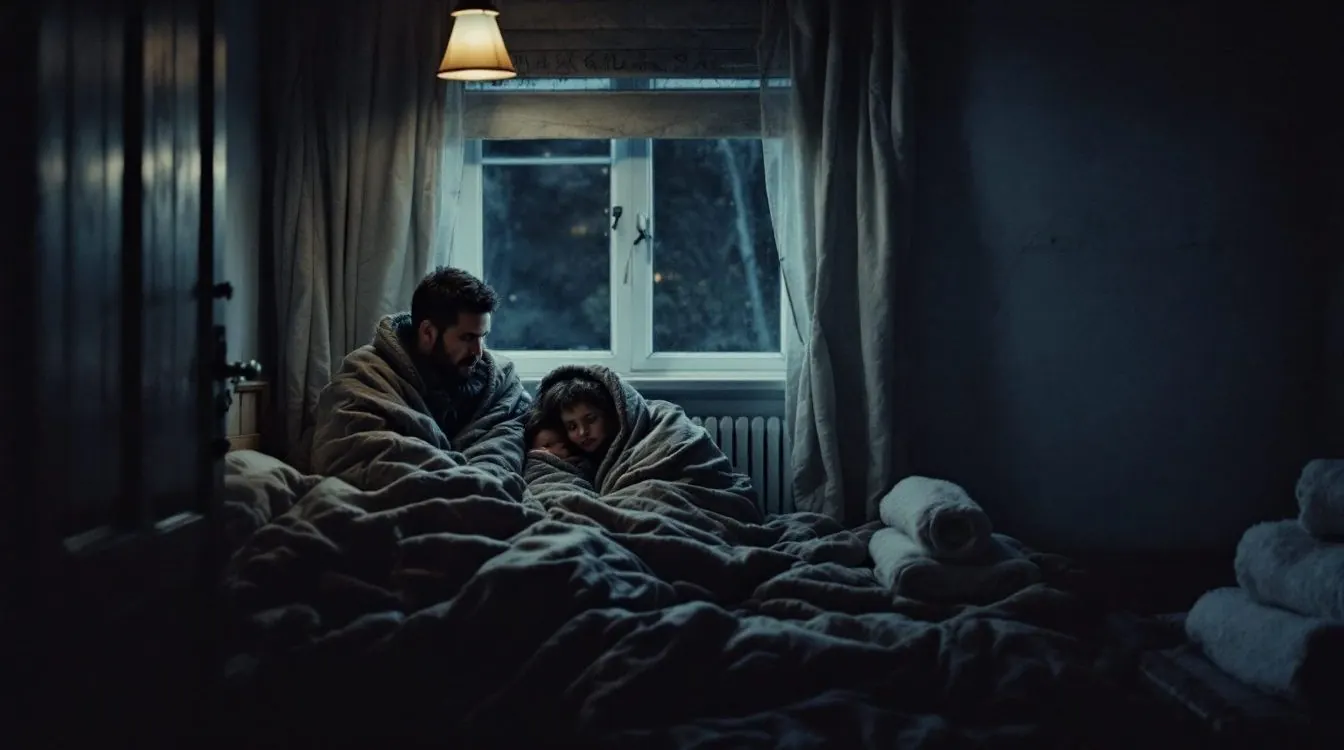
To keep a house warm during a power outage, move everyone into one interior room, shut its door, block the gaps with towels, cover the windows and add only heat that cannot poison you. In RMI modeling of a Minnesota cold snap, a typical 1950s home fell below 40°F in 8 hours, so start in hour one.
Central heating stops with the grid. The Goodman GMS95 gas furnace installation manual, for example, lists a 120 volt silicon nitride igniter and requires a 115 volt line connection to the furnace, so with the grid down it cannot light or move air. Restarting it later is covered in furnace not working after a power outage; this page is about the hours before that.
How long will a house stay warm without power in a cold snap?
From under a day to almost a week, set by insulation and air leakage. RMI and Redwood Energy modeled one single family house with five envelopes through a real 2017 Duluth, Minnesota cold event in which outdoor air ran from 5 to -25°F over seven days. The hours before each fell below 40°F were 8, 23, 45, 61 and 152.
We set those hours against a three day outage. RMI reported a 90 percent reduction in severe cold stress hours between the 1950s model and the Passive House model.
| Modeled home | Hours above 40°F (RMI) | Hours below 40°F in a 72 h outage | Crosses 40°F on |
|---|---|---|---|
| Typical 1950s home | 8 | 64 | Day 1, hour 8 |
| Typical 1980s home | 23 | 49 | Day 1, hour 23 |
| 2009 IECC code home | 45 | 27 | Day 2 |
| DOE Zero Energy Ready Home | 61 | 11 | Day 3 |
| Passive House | 152 | 0 | Day 7 |
Duluth at -25°F is a worst case; the same houses last longer in milder cold. In an older, leaky house, the first night matters. How long outages actually run in your state is in our power outage statistics by state.
Which room should you retreat to, and how do you seal it in the first hour?
Pick the room with the fewest exterior walls and windows, put everyone in it and close the door. Public Health Seattle and King County advises staying together in one room with the door closed to keep in body heat, and covering windows and doors with blankets.
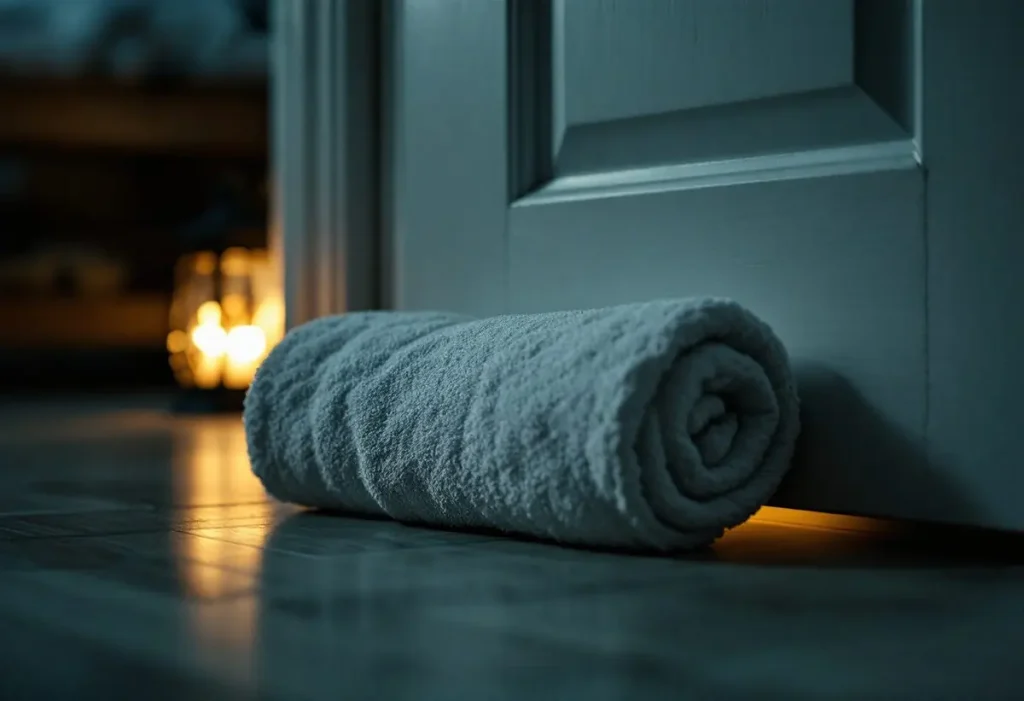
Consumer Reports adds: on a sunny day pick a room with south facing windows, tape clear plastic over windows so sunlight still enters, and pitch a tent indoors with sleeping bags overnight. Rolled towels go at the bottom of doors. Before the storm, the fixes in how to stop drafts from windows pay off.
Dress the people, not the house: King County and the American Red Cross both recommend several layers of loose, lightweight clothing, plus hats and mittens indoors.
Which heat sources work without electricity, and which ones kill?
Few heaters run with the grid down, and improvised ones cause the deaths. After the February 2021 Texas storm, the Texas Department of State Health Services (DSHS) confirmed 19 carbon monoxide deaths from generators, grills, heaters, vehicles run in enclosed spaces and ice blocking the vents of gas heating equipment, plus 10 fire deaths, some from space heaters too close to things that burn.
| Heat source | Works with no grid power? | Main hazard | What the document says |
|---|---|---|---|
| Gas furnace or boiler | No | None while off | Goodman: 120 V igniter, 115 V line connection |
| Millivolt (standing pilot) gas fireplace | Yes, flame only | CO if vent is blocked | Empire: thermopile is self-generating; valve does not need 24 or 110 volts. The optional blower is wired to house power through a junction box |
| Electronic ignition gas fireplace | Only on battery backup | CO if vent is blocked | Empire: AC powered with battery back up; run the pilot in CPI mode to conserve battery in an outage |
| Wood stove or fireplace | Yes | Fire, CO | Consumer Reports: never go to bed with a fire burning |
| Indoor rated propane heater | Yes | CO, oxygen depletion | Consumer Reports: indoor rated only, window open slightly, never while sleeping |
| Gas range or oven | Not a heater | CO, fire | Ready.gov: never use a gas stovetop or oven to heat your home |
| Charcoal grill or camp stove | Yes | CO | Ready.gov: outdoors only, at least 20 feet from windows |
| Car idling in attached garage | Yes | CO | Texas DSHS: among the 2021 CO deaths |
| Candles | Yes | Fire | Red Cross: avoid; use battery lights |
A direct vent millivolt gas fireplace is the best heat in the house during an outage; clear snow and ice from its outdoor vent cap first, since iced vents were a Texas CO cause. Venting types are explained in our gas fireplace guide. Portable fuel heaters have their own pages: indoor propane heaters covers the ANSI Z21 listing and vent openings, and kerosene heaters covers the state bans.
Any fuel burning heat needs a CO alarm that works without grid power: Ready.gov says to install CO detectors with battery backup in central locations on every level. Where to mount them is in carbon monoxide detector placement. The Red Cross keeps anything that can catch fire at least 3 feet from a heater.
Can a portable generator run the furnace, and how must it be connected?
Yes, but only through a transfer switch or interlock, never through a plug in a wall outlet. OSHA says never attach a portable generator to a building’s wiring unless it has a properly installed open transition transfer switch, installed by a qualified electrician; Consumer Reports also names an interlock device. King County warns that a generator plugged into the main panel can kill utility workers restoring the line.
Without one, run cords to individual appliances. Consumer Reports says a recreational generator of 1,800 to 2,000 watts can run a large space heater and charge phones. If the heater’s label reads 1,500 W, it delivers 1,500 x 3.412 = 5,118 Btu/h, enough for one closed room, not a house. Ready.gov sets the distance: generators and fuel at least 20 feet from windows, doors and attached garages. Why furnaces lock out on some generators, and how to restart them, is on the furnace after a power outage page.
How do you keep pipes from freezing while the heat is off?
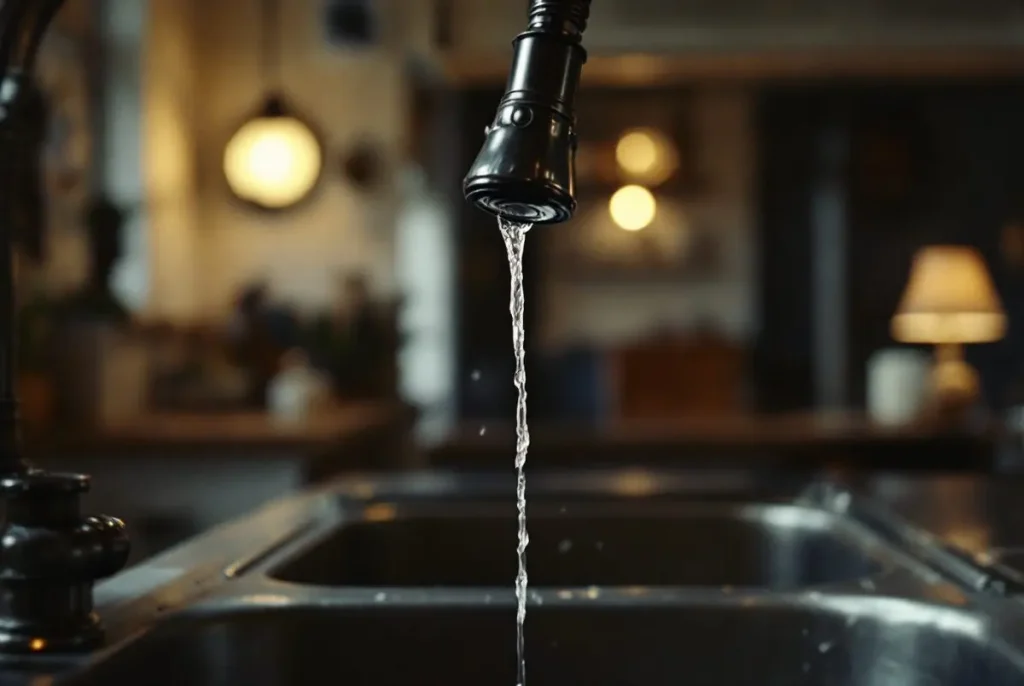
Let the cold water drip at faucets fed by exposed pipes, open sink cabinet doors and keep the garage door shut, per the American Red Cross. Even a trickle helps stop a pipe freezing.
The Red Cross lists the pipes that freeze first: those against exterior walls with little or no insulation, and supply lines in basements, crawl spaces, attics, garages and kitchen cabinets. With the heat on, it says never to set the thermostat below 55°F when away; in an outage you cannot hold that, so watch those locations first. The outdoor temperatures at which pipes actually start to freeze are traced in what temperature pipes freeze, and if a line does freeze, use the methods in how to thaw frozen pipes. The Red Cross rules out thawing with a blowtorch, kerosene or propane heater, or charcoal stove.
Whether your water heater still makes hot water for warm bottles depends on its ignition type, sorted out in no hot water after a power outage.
At what indoor temperature should you leave for a warming center?
Plan to leave before your room drops below 50°F, sooner with infants, older adults or anyone ill. RMI’s proposed thresholds treat 64°F as the minimum safe temperature for vulnerable people, 50 to 60°F as mild cold stress, 40 to 50°F as moderate and below 40°F as severe.
Of 246 confirmed storm deaths, DSHS counted 158 from hypothermia, and 107 (67.7%) of those were aged 60 or older. Listed risk factors included too few clothing layers and refusing to go to warming centers. Ready.gov’s instruction is direct: go to a community location with power if cold is extreme; King County lists a friend’s home with power, a library, community center or mall.
Frequently asked questions
What is the best way to keep a house warm during a power outage?
Concentrate people and heat in one closed interior room and stop the leaks around it, then add a safe heat source if you have one. RMI modeling shows envelope quality sets the clock: a typical 1950s home fell below 40°F in 8 hours, a 2009 code home in 45. A millivolt gas fireplace or a properly vented wood stove is the strongest no-power option.
How do you stay warm during a power outage in a winter storm?
Wear loose layers, hats and mittens indoors, stay dry, and share one room with the door closed, as King County and the Red Cross advise. Consumer Reports suggests an indoor tent and sleeping bags at night. If the room keeps falling, go to a warming center: hypothermia caused 158 of the 246 Texas deaths in the February 2021 storm.
Can I heat my house with a gas stove when the power is out?
No. Ready.gov says never use a gas stovetop or oven to heat your home because it raises the risk of carbon monoxide poisoning and fire, and the Red Cross gives the same rule. Even when a range burner lights with a match, it is not vented or built to run for hours as a heater. In Texas in 2021, 19 people died of CO poisoning during the storm.
Why do you fill a bathtub with water during a power outage?
A full tub gives you water for flushing toilets and washing if the supply stops, which happens when a well pump loses power or a supply pipe freezes. Frozen pipes are a real outage risk: the American Red Cross lists pipes against poorly insulated exterior walls and in crawl spaces, attics and garages as the first to freeze.
How do you keep a house warm during an ice storm?
Add one check to the usual outage steps: ice on vents. Texas DSHS found ice obstructing vents of gas heating equipment among the causes of the 19 CO deaths in the February 2021 storm. Clear ice and snow from the fireplace or furnace vent terminals outside before relying on any gas appliance, and keep a battery powered CO alarm in the room you use.
How we researched this
Researched November 20, 2026. We read RMI’s hours of safety article and 2022 EESI slides, the Texas DSHS 2021 storm mortality report, Ready.gov, two American Red Cross pages, the OSHA generator fact sheet, and the Empire Tahoe and Goodman GMS95 manuals, plus the top ranking articles. RMI’s full PDF brief did not download. We excluded Reddit and Facebook threads and any furnace wattage we could not trace to a maker rating. The 72 hour table is our arithmetic on RMI’s numbers.
Sources
- RMI. “Surviving the Next Polar Vortex.” https://rmi.org/surviving-the-next-polar-vortex/. Accessed November 2026.
- Gartman, M., RMI. “Hours of Safety” briefing slides, EESI, April 2022. https://www.eesi.org/files/Michael_Gartman_Slides_041322.pdf. Accessed November 2026.
- Texas Department of State Health Services. “February 2021 Winter Storm Related Deaths, Texas.” https://www.dshs.texas.gov/sites/default/files/news/updates/SMOC_FebWinterStorm_MortalitySurvReport_12-30-21.pdf. Accessed November 2026.
- Ready.gov (FEMA). “Power Outages.” https://www.ready.gov/power-outages. Accessed November 2026.
- American Red Cross. “Winter Storm Safety.” https://www.redcross.org/get-help/how-to-prepare-for-emergencies/types-of-emergencies/winter-storm.html. Accessed November 2026.
- American Red Cross. “Frozen Pipes.” https://www.redcross.org/get-help/how-to-prepare-for-emergencies/types-of-emergencies/winter-storm/frozen-pipes.html. Accessed November 2026.
- OSHA. “Grounding Requirements for Portable Generators” fact sheet. https://osha.gov/OshDoc/data_Hurricane_Facts/grounding_port_generator.pdf. Accessed November 2026.
- Empire Comfort Systems. “Tahoe Direct Vent Millivolt Gas Fireplace Installation Instructions.” https://cdn.shopify.com/s/files/1/0669/3791/3622/files/Tahoe-CF-DEL-II2.pdf. Accessed November 2026.
- Goodman. “GMS95 Gas Furnace Installation Instructions.” https://s3.amazonaws.com/s3.supplyhouse.com/product_files/Goodman-GMS951155DXA-Install-Instructions.pdf. Accessed November 2026.
- Consumer Reports. “5 Ways to Stay Warm During a Winter Power Outage.” https://www.consumerreports.org/home-garden/emergency-preparedness/ways-to-stay-warm-during-winter-power-outage-a1049480018/. Accessed November 2026.
- Public Health Seattle and King County. “Brrrr! How to stay warm and safe when the power is out.” https://publichealthinsider.com/2022/12/21/brrrr-how-to-stay-warm-and-safe-when-the-power-is-out/. Accessed November 2026.
Leave a Reply