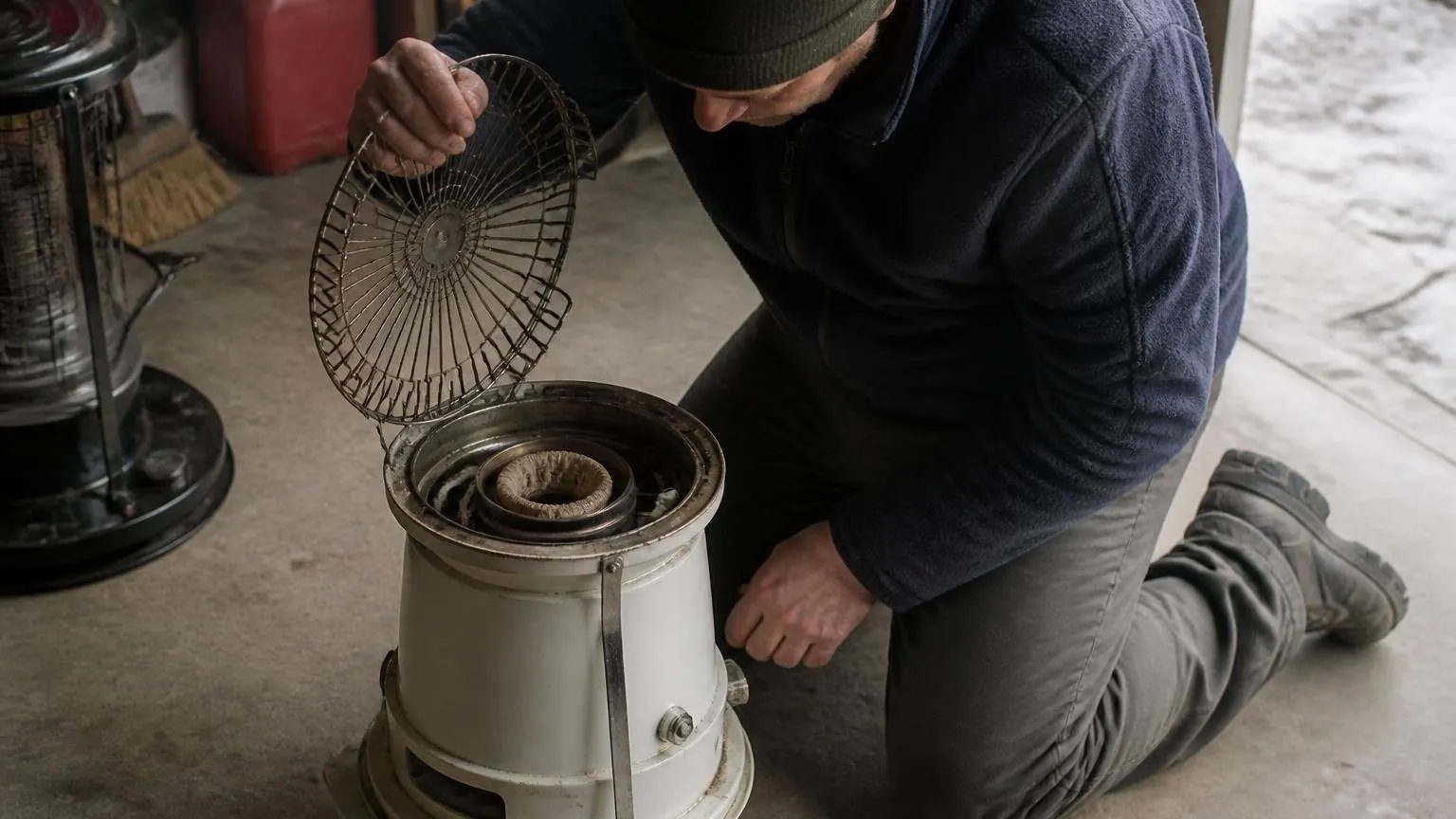
A kerosene heater won’t light for one of three reasons, checked in this order: the igniter coil does not glow (dead C cells or a broken filament), the glowing coil is not meeting the top of a fully raised wick, or the wick cannot feed vapor because it is unsoaked, tar-crusted or wet with water.
The manuals agree on that order but not on the numbers: a Toyotomi wick is ready after 30 minutes of soaking, a Sengoku or Dyna-Glo wick needs 60.
| Heater (manual) | Igniter power | Soak before lighting | Wick height | Replacement wick | Wait before relighting | Dry burn |
|---|---|---|---|---|---|---|
| Dyna-Glo WK95C8, WK95C8B, WK95C8C and Master Forge WK95C8M (23,800 Btu/h) | 2 C cells; Type B plug, 2.5V DC, 1A | 60 minutes minimum | 3/8 in. (10 mm) | 2114-0053-00 | 10 minutes | Within 7 days of first use, then every 2 tankfuls or weekly |
| Dyna-Glo WK11C8 (10,500 Btu/h) | 2 C cells; Type B plug, 2.5V DC, 1A | 60 minutes minimum | 5/16 in. (8 mm) | 2114-0034-00 | 10 minutes | Within 7 days of first use, then every 2 tankfuls or weekly |
| Sengoku HeatMate HMN-110, CTN-110, MGN-110 (10,000 Btu/h) | 4 C cells (LR14) | 60 minutes | 1/2 in. (13 mm) maximum | OS-65B | 5 minutes after the safety shutoff trips | Within 5 to 7 days, then every 5 or 6 tankfuls |
| Toyotomi Toyoset Omni 230 (23,000 Btu/h, 1999 manual) | 2 C cells; igniter coil part 20451618 | About 30 minutes | 8 mm (5/16 in.); do not use outside 7 to 8 mm | 22741513 | 3 minutes | Weekly wick inspection and cleaning |
Compiled by The HVAC Brief from the GHP WK95C8, Master Forge WK95C8M, GHP WK11C8, Sengoku HMN-110 and Toyotomi Omni 230 (archived copy) manuals. Wicks are model specific: GHP warns a wick “designed for another brand or model heater” can create a fire hazard.
Fuel grade, ventilation and legality are covered in the kerosene heater safety guide. Propane Buddy heaters fail at a pilot and thermocouple instead: see Mr. Heater Big Buddy won’t stay lit.
Does the igniter coil glow orange when you press the lever?
If the coil stays dark, start with the batteries: 2 “C” cells at the rear on GHP’s Dyna-Glo and Master Forge heaters, 4 C cells on Sengoku’s HMN-110. If fresh cells change nothing, GHP says a coil filament that is “broken, bent, or doesn’t glow when engaged via the ignition lever” must be replaced, and to check for a broken or disconnected wire.
GHP specifies a Type B plug rated 2.5V DC, 1A, removed with the batteries out by pushing in and turning clockwise. Toyotomi says to replace the batteries when the coil “no longer glows sufficiently to light the wick,” and fit coil part 20451618 only if that fails. A top-ranking parts-seller FAQ says to use only non-alkaline batteries; none of the five manuals says that, and Sengoku names “LR14 or Type C.”
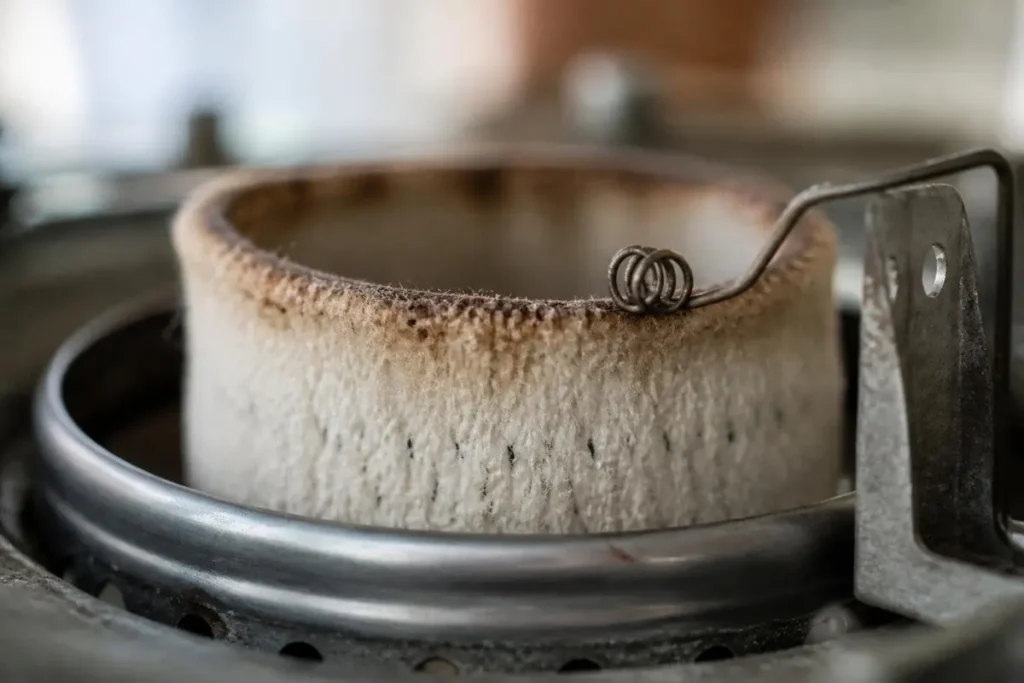
The coil glows but the wick won’t catch: is it touching the top of the wick?
A glowing coil lights the wick only at the top edge of a fully raised wick. GHP says the plug “should be within 1~2mm of the wick when the ignition lever is fully engaged,” and lists a plug touching the side of the wick as a no-light cause, fixed by lowering the wick until the plug makes “contact with top of wick.” Sengoku agrees: the top, “not with the side of wick.”
Toyotomi says the coil “should glow and touch the wick,” and if lighting is difficult, to let up on the lever “very slightly.” So the parts-seller claim that the coil must sit above the wick and never touch it matches none of the three makers.
If the wick sits below its rated height, the coil glows in empty air, the third panel. Toyotomi says not to run the Omni 230 at all outside a 7 to 8 mm wick height.
Why won’t the wick raise or the knob turn?
Usually the tip-over shutoff has tripped and is holding the wick down, or tar or water has glued the wick in its sleeve. GHP’s pendulum device “retracts a latch from the wick control shaft ratchet” so a spring drops the wick. To reset it, push the shutoff to re-engage the device, “Then dial the wick up via the wick adjuster knob.” The WK95C8 manual calls this control the “safety reset lever” on one page and the “manual shut-off knob” on another.
On the Toyotomi Omni 230, turning the knob clockwise until it stops engages the extinguisher, with a sound “like the winding of a clock.” Toyotomi blames a hard knob on a dirty wick, poor kerosene or a damaged mechanism (dealer repair); GHP’s “Wick Adjuster Sticks” row names water and carbon or tar. After a DIY wick swap, remove the clothes pin GHP suggests for locking the tip-over plates.
Why won’t a new or just-refilled kerosene heater light?
A dry wick is the usual cause. GHP requires a soak of “a minimum 60 minutes” on first fill and whenever the tank ran empty, warning that “Premature ignition can destroy your wick.” Sengoku also says 60 minutes; Toyotomi says about 30. Toyotomi also calls for a 15 minute burn-in outdoors or in a garage the first time, to burn off factory oil.
It lights, then flickers out: is it water, old fuel or a carbon-crusted wick?
A wick that catches and dies within minutes is starving, and the manuals blame fuel first. GHP’s “Flame Flickers or Dies” row lists water in the kerosene (drain, replace the wick, refill with water-clear or red dyed 1-K) and carbon or tar on the wick (dry burn). GHP says “even a small amount of water” stops a heater working properly.
Old fuel counts as bad fuel. GHP says kerosene kept from one season to the next “WILL NOT BURN PROPERLY,” and Toyotomi caps storage at 6 months. Sengoku says bad kerosene carbons the wick within 3 to 20 hours, after which the flame “will die out soon.”
A wick turned below its wick-stop setting “can produce odor and carbon monoxide,” per GHP, so place an alarm by the carbon monoxide detector placement rules. Relighting too soon also fails: GHP asks for 10 minutes, Sengoku 5 after a safety trip, Toyotomi 3. If flames appear outside the cabinet, CPSC Publication 5052 says not to move the heater: use the manual shutoff, and if that fails, leave and call the fire department.
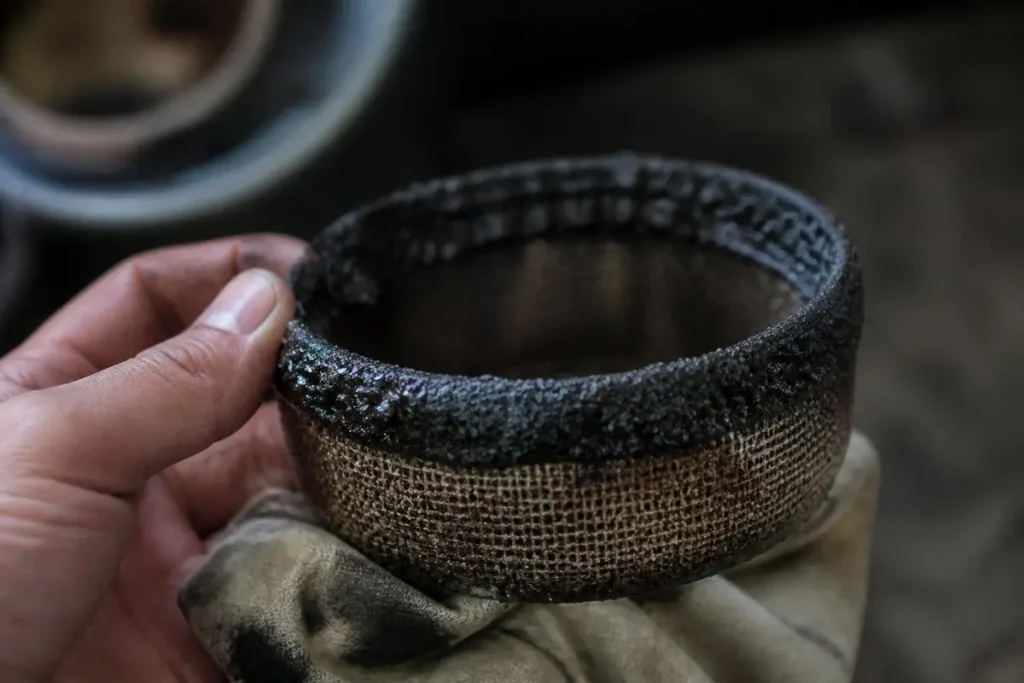
How do you dry burn the wick, and when does it need replacing?
A dry burn burns tar off the wick top by running the tank dry at full wick height. GHP’s steps, done outdoors because of the odor:
- With the tank nearly empty, burn until the flame starts to die, then raise the wick fully and let it burn out.
- Wait 60 minutes, relight (a match is fine) and let it burn out again.
- Once cool, remove the cabinet and brush the ash off the wick top with an old toothbrush.
- Pinch any hard spots with small pliers, add a little fuel, wait an hour and repeat.
- Refill, then soak 60 minutes before the next lighting.
It will not rescue a wet wick: GHP says carbon removal “will NOT be effective” on water-contaminated fuel. Replace the wick when, after repeated cleanings, it is slow to light, hard to move, smells of kerosene or gives low heat. Toyotomi’s Omni 230 adds a wick life extender dial; each step raises maximum wick height about 2 mm, for use once dry burning stops restoring the flame.
Torpedo kerosene heater won’t ignite: pump pressure, spark plug or photocell?
A forced-air (torpedo) kerosene heater has no wick: a pump sprays fuel through a nozzle, a spark plug lights it, and a photocell shuts it down without flame. The Master B35CED troubleshooting table lists, when the motor runs but it won’t ignite: wrong pump pressure, a carboned or misgapped spark plug, a dirty fuel filter or nozzle, water in the tank, and a bad ignitor. If it lights then shuts off, add dirty air and lint filters and a dirty photocell lens.
| Master B35CED family model | Pump pressure, psi | Spark plug gap, in. |
|---|---|---|
| 35,000 Btu/h | 2.9 | .055 |
| 70,000 Btu/h | 5.2 | .075 |
| 100,000 Btu/h | 3.9 | .075 |
| 150,000 Btu/h | 4.8 | 0.110 |
Compiled by The HVAC Brief from the Master B35CED manual pages on the spark plug and pump pressure (gauge part HA1180). Other models differ: read your data plate before turning the relief valve.
Some torpedoes use a high-pressure pump instead. The John Deere AC-400 manual sets its magnet pump to 125 PSI and blames air in the pump, often with a grinding sound, for no ignition. The fix: open the air vent screw 3 full turns, let it try for 3 to 5 seconds, restart, then close the screw once lit, much like bleeding an oil furnace pump. It shows “E1” for these faults and lists diesel jelling below 35°F. A clogged tip acts like a dirty oil burner nozzle: mist, wet fuel, no flame.
Frequently asked questions
Can you manually light a kerosene heater?
Yes, on wick heaters. GHP’s Dyna-Glo manual says to raise the wick to its maximum height, lift the burn chamber with the burner knob, touch a lit match to the exposed top edge of the wick, lower the chamber and rock it side to side to seat it. Leave no match head behind: GHP says debris can unseat the burner and cause smoke, odor or fire.
Why won’t my kerosene heater shut off?
Tar and carbon on the wick stop it dropping into the heater body. GHP warns this “can result in the flame not extinguishing completely,” and Sengoku says a stiffened wick may not go out “despite pushing the shut off button.” If it keeps burning, CPSC says not to carry the heater; use the manual shutoff, and if the fire grows, leave and call the fire department.
How do you know when your kerosene heater needs a new wick?
GHP’s manual lists the signs that survive repeated dry burns: slow to light, hard movement of the wick adjuster knob, kerosene odor while burning, low heat output, slow warm-up or a damaged wick. Sengoku says a carbonized wick “will feel like a bristle brush.” Any wick soaked in water-contaminated fuel has to be replaced, not cleaned.
How we researched this
On November 26, 2026 we read the troubleshooting, ignition and wick pages of five wick heater manuals (GHP WK95C8 and WK11C8, Master Forge WK95C8M, Sengoku HMN-110, Toyotomi Omni 230), CPSC Publication 5052, and the Master B35CED and John Deere AC-400 forced-air manuals. We excluded forum and video fixes, a parts retailer FAQ that conflicts with the manuals, and brands such as DuraHeat whose manuals we could not open.
Sources
- GHP Group. “Portable Kerosene Heater Owner’s Manual, Models WK95C8, WK95C8B, WK95C8C.” https://pdf.lowes.com/productdocuments/d98ac480-6b19-4a56-bac3-81867b413439/61753399.pdf. Accessed November 2026.
- LF, LLC. “Master Forge Convection Wick Heater WK95C8M Manual.” https://pdf.lowes.com/productdocuments/ced94ae7-9902-4bd5-9eac-c1bba1263ccc/67609658.pdf. Accessed November 2026.
- GHP Group. “Portable Kerosene Heater Owner’s Manual, Model WK11C8.” https://assets.northerntool.com/products/526/documents/manuals/52654.pdf. Accessed November 2026.
- Sengoku L.A. “Manual, Models MGN-110, CTN-110, HMN-110.” https://sengokula.com/wp-content/uploads/2021/06/CTN-110-Manual.pdf. Accessed November 2026.
- Toyotomi U.S.A. “Toyoset Omni 230 Owner’s Manual (Rev. 4/99),” archived copy. https://web.archive.org/web/2025id_/https://toyotomiusa.com/wp-content/uploads/2021/05/Omni-230-Type-E.pdf. Accessed November 2026.
- U.S. Consumer Product Safety Commission. “CPSC Stresses Kerosene Heater Safety,” Publication 5052. https://www.cpsc.gov/s3fs-public/5052.pdf. Accessed November 2026.
- Master. “B35CED Owner’s Manual,” pages 8, 10 and 11. https://www.manualslib.com/manual/787560/Master-B35ced.html?page=8. Accessed November 2026.
- John Deere. “AC-400 Kerosene Portable Heater Operator’s Manual.” https://www.deere.com/assets/pdfs/common/products/home-workshop/heaters/37-1114-JD-SPACE-HEATER-AC-400_E-F-S.pdf. Accessed November 2026.
Leave a Reply