What is natural ventilation? Natural ventilation is outdoor air moved through open windows, doors and vents by wind and rising warm air, with no fan. To ventilate a room, open windows on opposite sides, or one low and one high, and only when the outdoor air is clean, cooler and dry.
Key Takeaways
- IRC 2021 Section R303.1 sets window glass at 8 percent of a habitable room’s floor area, with 4 percent openable (ICC).
- CDC NIOSH targets 5 or more air changes per hour of clean air, and open windows count toward it (CDC NIOSH, 2024).
- Most residential forced-air systems do not bring outdoor air in mechanically, so homes rely on infiltration and windows (EPA).
- AirNow rates AQI 101 to 150 as Unhealthy for Sensitive Groups, a sensible point to close up (AirNow).
- DOE says it works best in dry climates with cool nights and may feed mold in humid ones (DOE Energy Saver, archived copy).
- Windowless bathrooms need exhaust instead: 50 cfm intermittent or 20 cfm continuous (DOE Building America Solution Center).
What is natural ventilation, and how does it move air?
Natural ventilation is the exchange of indoor and outdoor air through openings, driven by wind pressure and the stack effect. EPA defines it as air movement through open windows and doors, separate from fans and from infiltration through cracks.
Wind does most of the work, pushing air in through windward windows and drawing it out through leeward, downwind ones, as DOE explains. The Whole Building Design Guide (archived copy) models wind-driven flow as a coefficient times the smaller opening’s area times wind speed, with the coefficient near 0.8 when wind hits an opening head on and about 0.4 at a 45 degree angle.
The stack effect is the backup engine: cool air enters low, warms, rises and leaves high, pulling more air in behind it. Our explainer on what ventilation means in HVAC terms separates this from simple air circulation. Greenhouses run the same two forces through roof and side vents at a far larger scale, covered in our greenhouse ventilation guide.
How do you ventilate a room with cross ventilation?
To ventilate a room with cross ventilation, open a window on the breeze side and an equal or larger one on the far side, then clear the path. Check the outdoor air first: DOE warns that natural ventilation does not filter or condition anything it lets in.
- Check the outdoor air. Look up the AQI on AirNow. DOE advises closing windows on hot days when outdoor temperatures are higher than indoor temperatures.
- Open the windward window. The side the wind hits pushes air in.
- Open the outlet as wide or wider. WBDG’s formula uses the smaller opening, so a cracked outlet throttles the flow.
- Offset the openings. WBDG recommends windows across the room but offset, so air sweeps the whole room. Open interior doors.
- Add a fan at the outlet. CDC advises a fan as close as possible to an open window, blowing outside.
Depth limits this method: WBDG estimates the maximum naturally ventilated width at about 45 ft. For comfort, WBDG says air moving at 160 feet per minute can feel up to 5°F cooler, which a ceiling fan set to the right summer direction supplies.
To force the exchange at night, a whole house fan works the same way. The DOE Building America Solution Center recommends at least 4 square feet of open, screened window per 1,000 CFM of fan airflow.
How do you ventilate a room with only one window?
With only one window, put a fan in it blowing out and open the room’s door, so replacement air is drawn from the rest of the house.
Without a fan, open a double-hung window at both the top and bottom sash, applying DOE’s low-in, high-out stack principle to one opening. CDC notes that even a window cracked open slightly can help.
EPA also counts a window air conditioner run with the vent control open as outdoor ventilation. A single-hose portable unit instead pulls replacement air from elsewhere in the house, as our guide to portable versus window units explains.
How much natural ventilation does a room need?
The US model code answer is window size: IRC 2021 Section R303.1 requires glass of at least 8 percent of a habitable room’s floor area, with 4 percent openable. A 12 by 12 ft bedroom (144 sq ft) needs 11.5 sq ft of glass and 5.8 sq ft that opens, depending on the edition your jurisdiction adopted.
Exception 1 waives the openable part, except in kitchens, when a whole-house system or one delivering 0.35 air changes per hour is installed.
For air quality, CDC NIOSH sets a performance target instead: 5 or more air changes per hour of clean air, from any mix of ventilation and air cleaning. ACH equals cfm x 60 divided by room volume, so that bedroom, at 1,152 cubic feet with an 8 ft ceiling, needs about 96 cfm.
Why it matters: EPA’s Report on the Environment says Americans spend about 90 percent of their time indoors, where some pollutant concentrations are often 2 to 5 times higher than typical outdoor levels.
When should you keep the windows closed?
Keep the windows closed when the outdoor air is dirtier, hotter or wetter than indoors. CDC lists poor air quality, asthma, young children and fall risk as reasons not to open them.
| Outdoor condition | What the federal source says | Windows |
|---|---|---|
| AirNow AQI 0 to 50 (Good) | Air pollution poses little or no risk | Open |
| AirNow AQI 51 to 100 (Moderate) | Air quality is acceptable | Open, unless you are sensitive |
| AirNow AQI 101 to 150 | Unhealthy for Sensitive Groups | Close if anyone sensitive lives there |
| AirNow AQI 151 to 200 and above | Unhealthy; Hazardous at 301 and higher | Close |
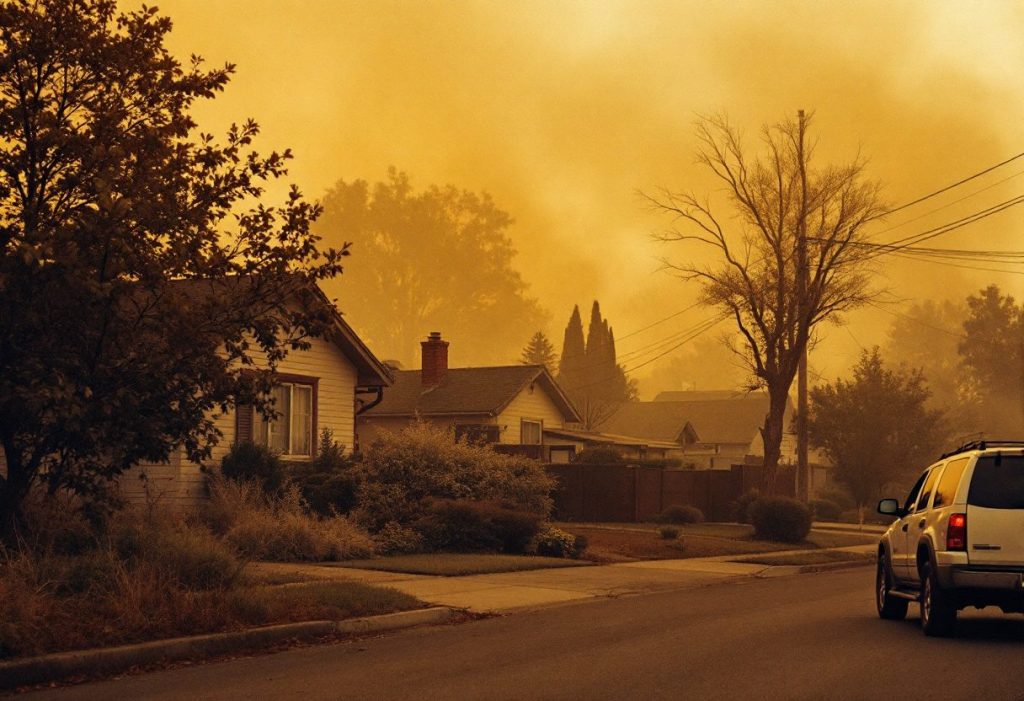
| Wildfire smoke, stay-indoors advisory | EPA: keep windows and doors closed | Close; air out when air improves |
| Outdoors hotter than indoors | DOE: close windows and exterior doors on hot days | Close until evening |
| Humid climate, muggy night | DOE: may contribute to mold and mildew | Limit; watch indoor humidity |
EPA’s mold guidance sets indoor relative humidity below 60 percent, ideally 30 to 50 percent. If a hygrometer climbs past that after a night of open windows, a properly sized dehumidifier beats more outdoor air.
Wildfire smoke changes the rules
During a smoke event, EPA’s wildfire guidance says to keep windows and doors closed, set a central system to recirculate and close a window unit’s outdoor damper. It warns a single-hose portable unit “can bring more smoke inside.” Air out the house when the air clears, even briefly, and use higher-efficiency HVAC filters to catch what still gets in.
How do you ventilate a room without windows?
A windowless room cannot ventilate naturally, so it must borrow house air or exhaust it outdoors. An open or undercut door brings in only house air; EPA says exhaust fans ducted outdoors remove contaminants directly from the room.
- Bathrooms: the DOE Building America Solution Center calls for 50 cfm intermittent or 20 cfm continuous and says operable windows should not be relied on. See our bathroom exhaust fan guide.
- Kitchens: the 2021 IRC accepts a local exhaust system in place of an openable window; see our range hood ventilation breakdown.
- Interior offices: keep the door open and run nearby exhaust fans.
- Basements: moisture and radon make them a separate case, covered in our basement ventilation guide.
An air purifier is filtration, not ventilation. CDC’s home guidance (archived copy) says ventilation moves air while filtration traps particles. A HEPA unit whose Clean Air Delivery Rate matches the room’s square footage counts toward the 5 ACH target but adds no outdoor air; see our look at UV lights and air purifiers.
Natural, passive or mechanical ventilation: which does your house need?
Passive ventilation is another name for natural ventilation; mechanical systems use fans so airflow does not depend on weather. Most houses need both.
| Strategy | What moves the air | Works best | Main limit |
|---|---|---|---|
| Cross ventilation | Wind pressure, windward to leeward | Breezy, mild, dry weather | About 45 ft of depth (WBDG); no filtering |
| Stack ventilation | Warm air rising, low inlet to high outlet | Large indoor and outdoor temperature gap | Weak on still, warm days |
| Window fan or whole house fan | Fan exhaust through open windows | Cool evenings in dry climates | Needs open window area; brings in pollen and smoke |
| Bath and kitchen exhaust | Fan ducted outdoors at the source | Moisture, odors, cooking | Room by room only |
| Whole-house mechanical (ERV or HRV) | Fans on a schedule, often with heat recovery | Tight homes, every season | Installed cost and upkeep |
The trigger is airtightness: under IRC 2021 R303.4, a home testing at 5 air changes per hour or less with a blower door at 50 pascals must have whole-house mechanical ventilation. Our comparison of ERV and HRV systems covers the two main options.
How we researched this
Researched October 8, 2026. We consulted 17 sources and cited 13: federal agencies, the Whole Building Design Guide and the ICC’s text of IRC 2021 Section R303. Removed DOE and CDC pages are cited as archived copies.
Excluded: the UK “one twentieth of floor area” rule top pages repeat (not US code) and vendor blogs. Forum threads supplied questions only, never quotes or numbers. Room examples are our arithmetic. No prices appear; no federal series publishes them.
Frequently asked questions
Is natural ventilation the same as passive ventilation?
Yes. Both terms mean air moving through windows, doors and vents without a fan, driven by wind and the stack effect, according to DOE. Infiltration through cracks is a separate, uncontrolled path that EPA says occurs in all homes to some extent.
Should a window fan blow in or out?
Out, in most cases. CDC recommends a fan as close as possible to an open window, blowing outside, so stale air leaves and replacement air enters elsewhere. With two windows, a second fan blowing in on the windward side strengthens cross ventilation if outdoor air is clean.
How long should you open windows to air out a room?
No federal agency sets a number of minutes. CDC frames it as air changes: aim for 5 or more per hour of clean air, calculated as cfm times 60 divided by room volume. After guests leave, CDC suggested ventilating for an extra hour.
Does cracking a window help in winter?
Yes. The Whole Building Design Guide says stack ventilation is especially effective in winter, when the indoor and outdoor temperature gap peaks. EPA notes that more ventilation can increase energy costs, so short, wide openings beat a window left cracked all day.
Should I open windows during wildfire smoke?
No. EPA says to keep windows and doors closed when officials advise staying indoors, switch a central system with a fresh air intake to recirculate, and close a window unit’s outdoor damper. When outdoor air improves, even briefly, EPA says to air out the house.
Is opening windows at night a good idea in humid climates?
Often not. DOE says natural ventilation works best in dry climates with cool nights and may contribute to mold and mildew in humid ones. EPA recommends indoor relative humidity below 60 percent, so check a hygrometer before making night venting a habit.
Does a bedroom legally need a window that opens?
Usually. IRC 2021 Section R303.1 requires openable area of at least 4 percent of floor area unless whole-house ventilation or a system delivering 0.35 air changes per hour is installed. Separate emergency escape rules may still require an operable window, depending on local code.
Sources
- US EPA. “Improving Indoor Air Quality.” https://www.epa.gov/indoor-air-quality-iaq/improving-indoor-air-quality. Accessed October 2026.
- US EPA. “Report on the Environment: Indoor Air Quality.” https://www.epa.gov/report-environment/indoor-air-quality. Accessed October 2026.
- US EPA. “Wildfires and Indoor Air Quality (IAQ).” https://www.epa.gov/indoor-air-quality-iaq/wildfires-and-indoor-air-quality-iaq. Accessed October 2026.
- US EPA. “Mold Course Chapter 2.” https://www.epa.gov/mold/mold-course-chapter-2. Accessed October 2026.
- AirNow (EPA). “AQI Basics.” https://www.airnow.gov/aqi/aqi-basics/. Accessed October 2026.
- CDC NIOSH. “How Much Ventilation Is Enough?” https://www.cdc.gov/niosh/ventilation/prevention/Aim-for-5.html. Accessed October 2026.
- CDC. “Improving Ventilation in Your Home” (archived copy). https://web.archive.org/web/2025/https://www.cdc.gov/coronavirus/2019-ncov/prevent-getting-sick/improving-ventilation-home.html. Accessed October 2026.
- US DOE Energy Saver. “Natural Ventilation” (archived copy). https://web.archive.org/web/20260101032413/https://www.energy.gov/energysaver/natural-ventilation. Accessed October 2026.
- US DOE Energy Saver. “Ventilation Systems for Cooling” (archived copy). https://web.archive.org/web/2025/https://www.energy.gov/energysaver/ventilation-systems-cooling. Accessed October 2026.
- DOE Building America Solution Center. “Bathroom Exhaust Fans.” https://basc.pnnl.gov/resource-guides/bathroom-exhaust-fans. Accessed October 2026.
- DOE Building America Solution Center. “Whole-House Fans.” https://basc.pnnl.gov/resource-guides/whole-house-fans. Accessed October 2026.
- Whole Building Design Guide. “Natural Ventilation” (archived copy). https://web.archive.org/web/20260120040642/https://www.wbdg.org/resources/natural-ventilation. Accessed October 2026.
- International Code Council. “Significant Changes to the IRC 2021 Edition, R303.1.” https://www.iccsafe.org/wp-content/uploads/2021_SigChanges_IRC_303.1.pdf. Accessed October 2026.
Leave a Reply