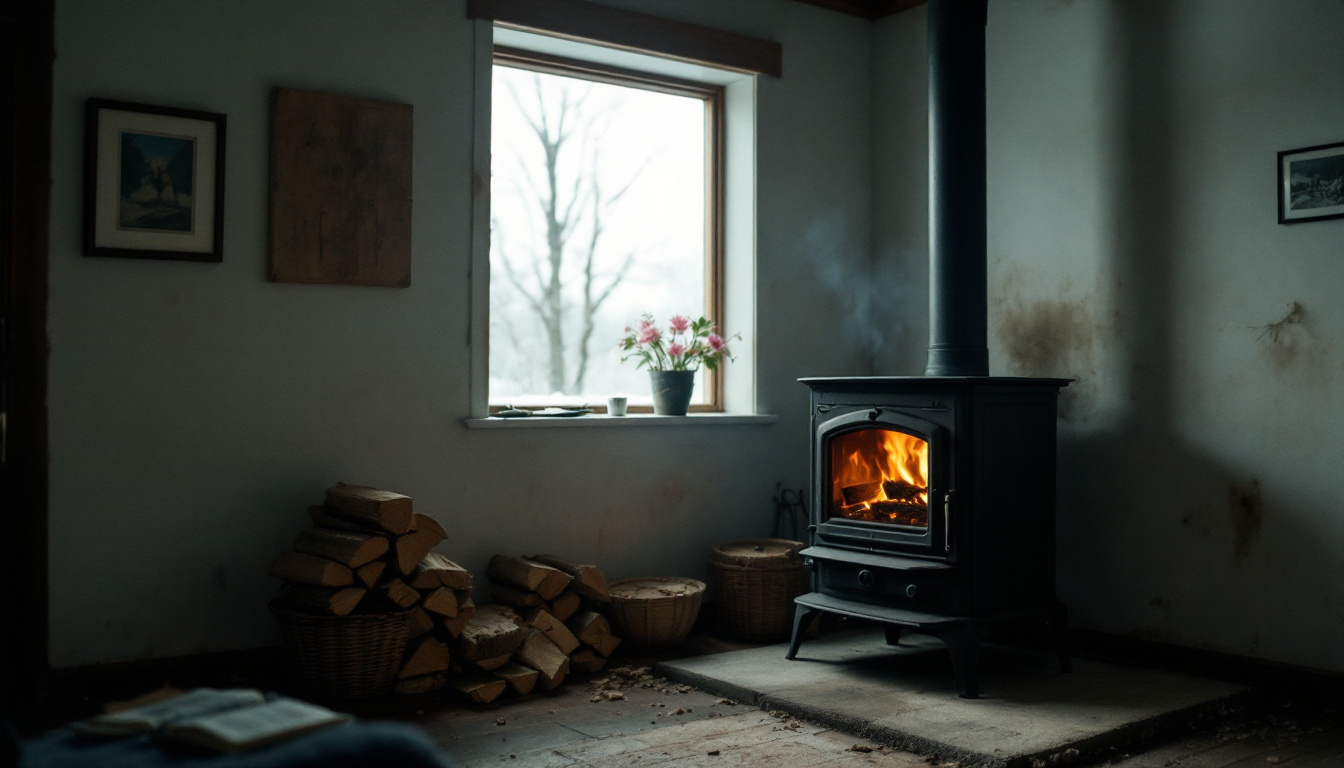
What is an EPA certified wood stove? It is a wood stove whose model line passed a laboratory particulate test: since May 15, 2020, no more than 2.0 grams per hour on crib wood, or 2.5 grams per hour under the cord wood option, under 40 CFR part 60 subpart AAA.
Key Takeaways
- The Step 2 limit in 40 CFR 60.532 is 2.0 g/hr on crib wood and 2.5 g/hr on cord wood, effective May 15, 2020.
- EPA’s certified wood heater database listed 151 wood stove and 104 pellet stove models on September 18, 2026.
- Certification tests emissions, not efficiency: those models range from 59% to 83% overall efficiency, median 74%.
- 2.25 million US homes heated mainly with wood in 2020, while 8.83 million burned it as secondary heat, per EIA RECS table HC6.1.
- Wood pellets averaged $261.19 per ton in June 2026, about $15.83 per million Btu of fuel.
What does the federal wood stove rule actually require?
It sets a particulate ceiling per model line, tested in an accredited laboratory, and nothing else. The rule is 40 CFR part 60 subpart AAA, rewritten in 2015 in two steps: Step 1 from May 15, 2015, Step 2 from May 15, 2020.
Crib wood is a standardized stack of dimensional lumber; cord wood is split firewood. The higher cord wood limit reflects a harder test fuel, not a dirtier stove. Wood and pellet stoves are among the secondary heat sources counted in our analysis of secondary heating, used in 44% of heated US homes.
| Rule and appliance | Particulate limit, weighted average | Test fuel | Citation |
|---|---|---|---|
| Wood heater, 2015 standard | 4.5 g/hr | Crib wood | 40 CFR 60.532(a) |
| Wood heater, 2020 standard | 2.0 g/hr | Crib wood | 40 CFR 60.532(b) |
| Wood heater, 2020 cord wood option | 2.5 g/hr | Cord wood | 40 CFR 60.532(c) |
| Hydronic heater, 2020 standard | 0.10 lb per million Btu heat output | Crib wood | 40 CFR 60.5474(b)(2) |
| Hydronic heater, 2020 cord wood option | 0.15 lb per million Btu heat output | Cord wood | 40 CFR 60.5474(b)(3) |
Wood and pellet stoves are room heaters under subpart AAA. Outdoor boilers and furnaces sit in subpart QQQQ, set on heat output, much as a hot water system moves heat differently from warm air. Fireplaces, masonry heaters, cook stoves and camp stoves fall outside the limits.
What does EPA certified mean, and what does it not mean?
It means one model line passed a laboratory emissions test and carries a permanent label. It does not mean the stove is efficient, will perform that way in your house, or was installed safely.
Under 40 CFR 60.536 the permanent label must be at least 3.5 inches by 2 inches and carry the manufacture date, model, serial number and emission value. Its wording is prescribed: “Certified to comply with 2020 particulate emission standards using crib wood,” or cord wood.
EPA requires manufacturers to test and report overall efficiency, yet subpart AAA sets no efficiency floor, so the database holds stoves at 59% and at 83% side by side.
What do the certified wood stove models show?
We pulled every currently certified room heater from EPA’s database on September 18, 2026.
| Measure | Wood stoves | Pellet stoves |
|---|---|---|
| Models certified | 151 | 104 |
| Median particulate | 1.5 g/hr | 1.1 g/hr |
| Particulate range | 0.3 to 2.4 g/hr | 0.08 to 1.9 g/hr |
| Median efficiency (HHV) | 74% | 77% |
| Efficiency range | 59% to 83% | 51% to 86% |
| Median carbon monoxide | 1.2 g/min | 0.17 g/min |
The cleanest check is the ceiling. Seven wood stove models report above 2.0 g/hr, all seven cord wood certified, topping out at 2.4 g/hr. No crib wood model exceeds 1.9.
Of the 151 models, 119 were crib wood certified and 31 cord wood. Read a rating with its test method, much as a cooling rating only means something alongside its test conditions.
How does a pellet stove differ from a wood stove?
A pellet stove burns a manufactured fuel on a motorized feed, so it behaves like an appliance rather than a fire, which drives the emissions gap, the electricity need and the fuel rules. Chimney fires are the most common heating fire: NFPA estimates about 13,100 confined chimney or flue fires a year and 3,000 fireplace and chimney fires that spread further, the costliest heating fires per incident; see home heating fire statistics.
Pellet fuel is regulated in a way cordwood is not. Under 40 CFR 60.532(e), owners may burn “only pellets that have been specified in the owner’s manual and graded under a licensing agreement with a third-party organization approved by the EPA,” namely the Pellet Fuels Institute, ENplus or CANplus.
Pellet stoves also need electricity, because augers and blowers do what chimney draft does in a wood stove. They vent through sealed pipe rather than a full masonry flue, and a hopper holds steady output.
A wood stove with a working chimney heats through an outage, which is why many households keep one as backup alongside plug in heaters for a single room.
How many US homes actually heat with wood?
Far more homes burn wood than heat with it. In the 2020 Residential Energy Consumption Survey, 2.25 million US homes used wood as their main heating fuel, 1.94 million with a heating stove. 8.83 million more burned it as secondary heat.
That group is mostly fireplaces: 5.68 million, against 3.13 million with a heating stove. Roughly 5.1 million of the 123.53 million US homes run a wood heating stove, set against the dominance of gas and electricity in the national mix.
Use is rural: RECS put 5.1 million of the 11.1 million wood burning households in rural areas, averaging 91.8 million Btu against 65.1 million in the West. Main heat households averaged 85.0 million Btu in 2020.
Carbon monoxide, in federal numbers
Wood stoves are a smaller carbon monoxide risk than the warnings imply, which does not make alarms optional. CPSC estimated 274 non fire carbon monoxide deaths from consumer products in 2022: 20 from solid fuels, 18 of them charcoal, an estimated 1 from wood, against 71 from gasoline generators.
What does pellet fuel cost per million Btu?
Wood pellets averaged $261.19 per ton in domestic sales in June 2026, the latest month in EIA’s Densified Biomass Fuel Report, released September 14, 2026. That is a fuel price, not a heat price.
EIA’s RECS methodology assumes a 40 pound bag holds 330,000 Btu, putting a ton at 16.5 million Btu, so $261.19 a ton is about $15.83 per million Btu of fuel. At the median certified pellet stove efficiency of 77%, delivered heat runs roughly $20.56 per million Btu; at 51%, about $31.
That is a national average for domestic sales, not a delivered retail price, and June is not a heating month. Cordwood has no federal price series. Compare delivered heat costs by system and the federal forecast for household heating bills.
What does a safe wood stove installation require?
The manufacturer’s listed clearances, the right chimney or vent, and a professional who will pull a permit. The federal emissions rule sets no clearance distance: that is a building code matter, not an air quality one.
Subpart AAA does require the manual to give “guidance on proper installation, include stack height, location and achieving proper draft.” Non catalytic stoves must carry the statement “It is against federal regulations to operate this wood heater in a manner inconsistent with operating instructions in this manual.”
- Match the appliance to its listed vent: a wood stove needs a chimney sized and lined for it, a pellet stove its own sealed pipe. Reusing the wrong flue is the common failure.
- Hold the listed clearances to combustibles for that exact model, including the connector pipe. The number comes from the manual, not a rule of thumb.
- Use a credentialed installer, and have the appliance, chimney and vent inspected and cleaned every year, as EPA recommends, like any pre season check on combustion equipment.
- Burn wood below 20% moisture. EPA advises splitting to 6 inches or smaller, stacking off the ground with only the top covered, and seasoning six months for softwood, a year for hardwood. Unseasoned wood is prohibited under 40 CFR 60.532(f).
- Size the stove to the space, not upward. An oversized stove gets damped down, which makes the most smoke, the logic behind capacity for a central system and insulating before settling on equipment size.
EPA identifies fine particles, PM2.5, as the biggest health threat in wood smoke, linking them to heart attacks, stroke and heart failure in those already at risk. A stove that spills smoke on reload has a draft problem no filter in the central system will fix.
How we researched this
Research date: September 18, 2026. Regulatory text was read from the current eCFR XML for 40 CFR part 60 subparts AAA and QQQQ and appendix I. Limits, label wording, prohibited fuels and manual requirements are quoted from it.
Model counts and performance statistics are our own summary of EPA’s Certified Wood Heater Database (room heaters), queried September 18, 2026. We returned all records, removed duplicate rows, and confirmed the counts matched EPA’s totals of 151 and 104. Efficiency is a laboratory value.
Household counts come from EIA RECS 2020 tables HC6.1 and CE7.2. One limitation matters: EIA estimates wood use from household self reports, not supplier billing records, unlike every other fuel in RECS. Cost per million Btu is our calculation from the EIA pellet price and conversion assumption.
Excluded: Reddit and all user forums, because this is a combustion and carbon monoxide safety topic where anonymous anecdote carries no evidentiary weight. Also excluded: dealer installed price quotes and cordwood prices, because no federal or national laboratory series publishes them, and manufacturer efficiency marketing.
Frequently asked questions
Is it illegal to use an older uncertified wood stove?
No. The federal standard applies to manufacture, import and retail sale, not to appliances already installed, and 40 CFR 60.536(h) exempts noncommercial owners from the label and manual rules when reselling. Local air districts sometimes restrict use or removal at sale.
Does EPA certification mean a wood stove is efficient?
No. Subpart AAA sets particulate limits and contains no minimum efficiency. Manufacturers must test and report overall efficiency, but a model passes on emissions alone. Among the 151 certified wood stove models in EPA’s database, efficiency runs from 59% to 83%, median 74%.
Are pellet stoves cleaner than wood stoves?
By the certified medians, yes. In EPA’s database the median pellet stove reports 1.1 g/hr of particulate against 1.5 g/hr for the median wood stove, and 0.17 g/min of carbon monoxide against 1.2 g/min. Pellet fuel is dry, uniform and graded. Individual models vary widely.
Can I burn any brand of wood pellets in a pellet stove?
Not under the federal rule. 40 CFR 60.532(e) allows only pellets specified in the owner’s manual and graded under a licensing agreement with an EPA approved third party organization. The rule names the Pellet Fuels Institute, ENplus and CANplus; ungraded pellets fall outside the certified conditions.
How much firewood does a wood heated home use in a year?
EIA found households using wood for main space heating consumed an average of 85.0 million Btu in 2020. At EIA’s assumption of 20 million Btu per cord, that is roughly 4.25 cords a year. These are self reported figures, not metered ones.
Do I need a carbon monoxide alarm with a wood stove?
Yes, and many jurisdictions require one wherever a fuel burning appliance is installed. Appendix I to 40 CFR part 60 requires manuals to address use of smoke detectors and carbon monoxide monitors. Federal data puts wood appliances low among CO sources, but a blocked flue produces CO in any combustion appliance.
Sources
- eCFR. “40 CFR Part 60 Subpart AAA, New Residential Wood Heaters.” https://www.ecfr.gov/current/title-40/part-60/subpart-AAA. Accessed September 2026.
- eCFR. “40 CFR Part 60 Subpart QQQQ, Hydronic Heaters and Furnaces.” https://www.ecfr.gov/current/title-40/part-60/subpart-QQQQ. Accessed September 2026.
- eCFR. “Appendix I to Part 60, Owner’s Manual.” https://www.ecfr.gov/current/title-40/part-60/appendix-Appendix%20I%20to%20Part%2060. Accessed September 2026.
- EPA. “Certified Wood Stove Database.” https://cfpub.epa.gov/oarweb/woodstove/index.cfm. Queried September 18, 2026.
- EIA. “2020 RECS Table HC6.1, Space heating.” https://www.eia.gov/consumption/residential/data/2020/hc/pdf/HC%206.1.pdf. Accessed September 2026.
- EIA. “2020 RECS Table CE7.2, Wood consumption.” https://www.eia.gov/consumption/residential/data/2020/c&e/xls/ce7.2.xlsx. Accessed September 2026.
- EIA. “2020 RECS CE Methodology.” https://www.eia.gov/consumption/residential/data/2020/pdf/2020%20RECS%20CE%20Methodology_Final.pdf. Accessed September 2026.
- EIA. “Monthly Densified Biomass Fuel Report.” https://www.eia.gov/biofuels/biomass/. Accessed September 2026.
- CPSC. “Non-Fire Carbon Monoxide Deaths, 2022 Annual Estimates.” May 2026. https://www.cpsc.gov/s3fs-public/Non-Fire-Carbon-Monoxide-Deaths-Associated-with-the-Use-of-Consumer-Products-2022-Annual-Estimates.pdf. Accessed September 2026.
- EPA. “Best Wood-Burning Practices.” https://www.epa.gov/burnwise/best-wood-burning-practices. Accessed September 2026.
- EPA. “Wood-Burning Installation and Maintenance.” https://www.epa.gov/burnwise/wood-burning-installation-and-maintenance. Accessed September 2026.
- EPA. “Wood Smoke and Your Health.” https://www.epa.gov/burnwise/wood-smoke-and-your-health. Accessed September 2026.
- EPA. “Energy Efficiency and Your Wood Appliance.” https://www.epa.gov/burnwise/energy-efficiency-and-your-wood-burning-appliance. Accessed September 2026.
Leave a Reply