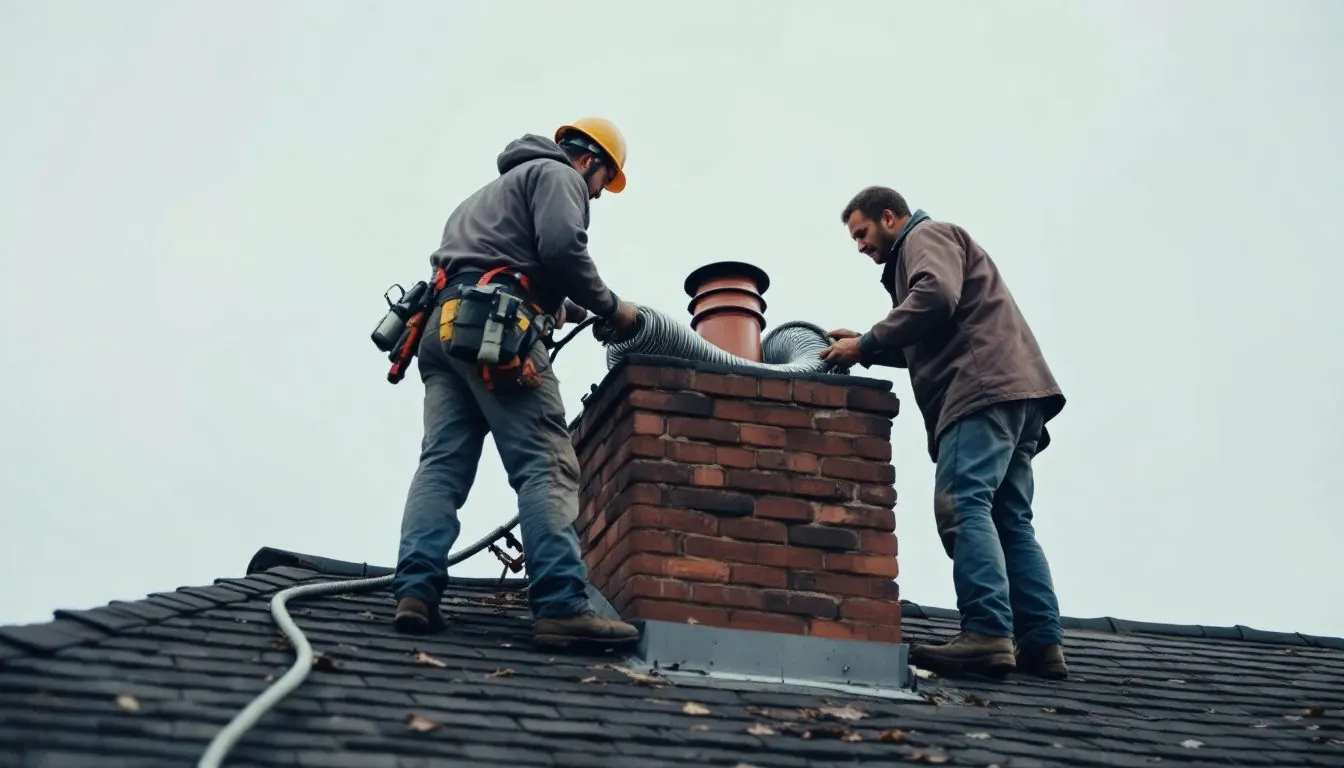
Do you need a chimney liner? Yes, in most homes. Model codes say masonry chimneys “shall be lined,” and the chimney liner must suit the fuel: clay tile or a UL 1777 listed system for most appliances, a gas-only listed liner for Category I gas, and the maker’s own vent for condensing units.
Key Takeaways
- IRC Section R1003.11 says “Masonry chimneys shall be lined”: clay to ASTM C315, a UL 1777 listed system or material rated to 1,800°F (2021 Seattle Residential Code).
- Category I gas appliances may use a liner listed for gas only, with a permanent gas-only label (Fuel Gas Code Section 503.5.3).
- DOE says to reline when a new furnace or boiler is 80% AFUE or higher, or when a 90+ AFUE unit leaves a water heater alone in the flue (DOE Energy Saver, archived copy).
- Corrugated metal liners lose 20 percent of Type B table capacity; a single draft hood flue may not exceed seven times the outlet area (Sections 504.2.7 and 503.5.5).
- Oil chimneys are resized under NFPA 31 when appliances change (IRC Section M1801.3.1).
- Fires confined to the chimney or flue were 49.43% of US residential heating fires in 2017 to 2019 (U.S. Fire Administration).
What is a chimney liner, and does code require one?
A chimney liner is the flue lining inside a masonry chimney: clay tile, a listed metal liner or another approved material that carries combustion gases to the roof. Code requires one. IRC Section R1003.11, read through Seattle’s public 2021 adoption, says “Masonry chimneys shall be lined” with material suited to the connected appliance.
Fuel Gas Code Section 503.5.3 agrees, requiring clay flue lining, a UL 1777 listed liner, or material that resists vent gases “at temperatures up to 1,800°F.” DOE adds that “Many older chimneys have deteriorated liners or no liners at all and must be relined during furnace or boiler replacement.”
IRC Section R1003.18 requires 2 inches of airspace between an interior masonry chimney and combustibles. A UL 1777 liner listed for contact with combustibles is the exception for chimneys built tight to framing.
Which chimney liner type matches your fuel?
The fuel and vent category pick the liner: clay tile or a UL 1777 system for wood, oil and most gas, a gas-only listed liner for Category I gas, and the maker’s specified vent for condensing Category II, III and IV appliances.
| Appliance | Liner options the code allows | Standard or listing | Code section |
|---|---|---|---|
| Wood stove, insert or fireplace | Clay tile, UL 1777 liner, listed factory-built chimney, approved material | ASTM C315, UL 1777 | IRC R1003.11.1 |
| Pellet stove | Same, or a pellet vent listed for masonry chimneys | UL 1777 or listed pellet vent | IRC R1003.11.4 |
| Oil appliance approved for Type L vent | Same, or a listed chimney liner | UL 641 | IRC R1003.11.5 |
| Gas, draft hood or Category I (80% furnace, tank water heater) | Clay tile, UL 1777 liner, or a liner listed for gas only with a gas-only label | UL 1777 or gas-only listing | IFGC 501.13, 503.5.3 |
| Gas, Category II, III or IV (condensing or positive pressure) | Venting specified by the appliance maker, or a special gas vent | UL 1738 | IFGC 501.14, 503.4.2 |
| Listed combination gas and oil appliance | Type L vent or chimney, flue sized to the maker’s instructions | UL 641 for Type L | IFGC Table 503.4, 503.5.7.4 |
Maker documents split metal liners the same way. DuraVent’s DuraFlex catalog says “DuraFlex SS is used for appliances that use oil, wood, or wood-pellets for fuel; DuraFlex AL is for a non-condensing gas appliance.” Its installation manual rules out “Category II, III and IV Gas appliances” unless listed to UL 1738.
IRC Section M1801.12 bars a solid fuel appliance from a chimney passageway “venting another appliance.” Our fireplace insert comparison covers inserts in an existing flue, and the wood stove certification explainer covers the appliance side.
When does a chimney need a new liner?
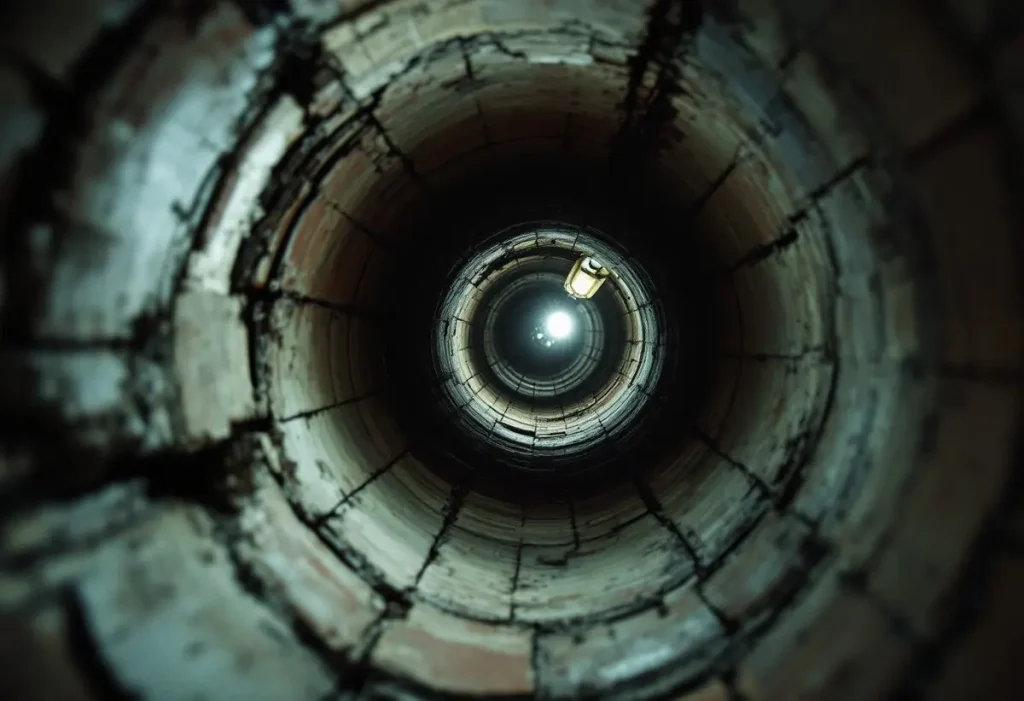
A chimney needs a new liner when an appliance is added, removed or replaced, or when inspection finds damage. Fuel Gas Code Section 501.15 applies whenever an appliance “is permanently disconnected from an existing chimney or vent” or connected during a new installation.
- New furnace or boiler at 80% AFUE or more. DOE says these “have a greater risk of depositing acidic condensation in chimneys.”
- New 90+ AFUE unit or heat pump that vents elsewhere. DOE says the water heater “will now vent through an oversized chimney.”
- Fuel change. Section 503.5.9 requires an accessible cleanout when a chimney that carried liquid or solid fuel products is reused for gas.
- Damage. An unsafe chimney must be “repaired, rebuilt, lined, relined or replaced” under Section 503.5.6.3.
- Missing clearance. Section 501.15.4 accepts a UL 1777 liner listed for reduced clearances.
Our oil to gas conversion guide walks through the chimney step of a fuel switch, and the boiler replacement explainer covers boiler swaps.
Why does an orphaned water heater need a chimney liner?
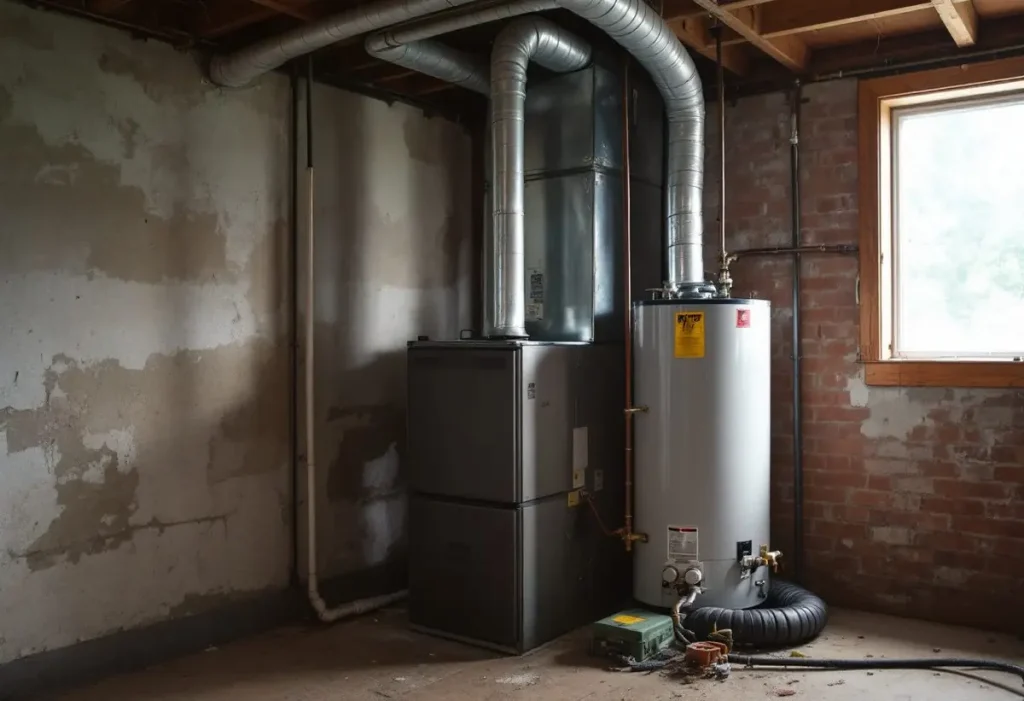
A water heater left alone in a chimney sized for two appliances may not make enough heat to draft. PNNL’s Building America Solution Center says it “doesn’t generate enough heat for a now-oversized flue,” and DOE says the oversized chimney “can lead to condensation and inadequate draft.”
Section 501.15.1 requires the chimney to be “resized as necessary to control flue gas condensation.” DOE says the new liner “should be sized for the water heater alone, or the water heater in some cases can be vented directly through the wall.” PNNL, writing about tankless conversions, advises a furnace draft test after a water heater leaves a shared flue; see our water heater installation checklist.
Lennox’s 2024 SL280UHV instructions say “Unlined masonry chimneys are prohibited,” and venting a fan-assisted furnace alone “into a tile-lined masonry chimney (interior or outside wall) is PROHIBITED” until it is lined. Our furnace vent pipe rules cover the connector.
Myth: a chimney that drafted for decades will keep drafting
The draft came from the furnace’s heat. DOE warns that chimney problems can let byproducts “such as carbon monoxide, spill into your home,” so pair relining with alarms placed per our carbon monoxide detector placement guide.
How is a chimney liner sized?
Size a chimney liner to the appliance, not the chimney. For draft hood and Category I gas appliances, Fuel Gas Code Section 503.5.5 allows the vent tables or an area rule: a single appliance’s flue may be no smaller than the draft hood outlet and no larger than seven times its area.
Listed corrugated metal liners are sized from the Type B vent tables with maximum capacity reduced by 20 percent, which includes one long-radius 90-degree turn at the bottom (Section 504.2.7).
Worked example, hypothetical water heater with a 4 inch draft hood outlet: the outlet is about 12.6 square inches, so seven times is about 88 square inches. IRC Table R1003.14(2) lists a 12 by 12 inch clay flue at 102 square inches, which fails; an 8 by 12 tile at 67 square inches passes.
For a clay-tile-lined exterior masonry chimney, Table 504.2(6) marks every vent configuration “Not recommended” where the local 99% winter design temperature is -11°F or lower.
What do the rules say about chimney liner insulation, labels and clearances?
Install a listed liner exactly to its listing, and check these code details before the inspection.
- Labels. Gas-only liners read “This chimney liner is for appliances that burn gas only” (Section 503.5.3).
- Space around the liner. Section 503.5.10 says it “shall not be used to vent another appliance.” Our combustion air explainer covers where that air comes from instead.
- Cleanout. IRC Section R1003.17 requires one within 6 inches of the base of each flue.
- Insulation for wood. DuraVent says its liners venting solid fuel need one inch of TherMix or 1/2 inch of ProFoil to meet UL 1777 at zero clearance; gas and oil need none.
- Height. IRC Section R1003.9 requires 3 feet above the roof penetration and 2 feet above anything within 10 feet.
For the damper on a relined fireplace flue, see our fireplace damper guide.
What does a Level 2 chimney inspection check before relining?
A Level 2 inspection is the check made before relining. The Chimney Safety Institute of America’s Level 2 procedure says NFPA 211 defines three inspection levels and recommends Level 2 when appliances change, at a sale, before relining and after a chimney fire.
CSIA states that “Video scanning (or similar inspection) of the chimney interior is required during a Level Two inspection.”
The U.S. Fire Administration estimates an annual average of 34,200 US residential building heating fires in 2017 to 2019. Fires confined to the chimney or flue made up 49.43% of them, the largest incident type in its table.
How we researched this
On October 31, 2026 we read the 2021 Seattle Residential Code Chapters 10 and 18 and Fuel Gas Code Chapter 5, public adoptions of the 2021 IRC and IFGC; no cited section carries a Seattle amendment. ICC’s site blocks automated reading and NFPA 211 is paywalled, so NFPA 211 appears only as restated. We opened 17 documents and cite 10. Excluded: installed prices (no federal series), 316Ti and AL29-4C claims (unverified), and Reddit (carbon monoxide safety topic).
Frequently asked questions
Is a chimney liner required by code?
Yes, for masonry chimneys. IRC Section R1003.11 says “Masonry chimneys shall be lined,” and Section 503.5.3 requires clay lining, a UL 1777 listed liner or material rated for vent gases up to 1,800°F. Local adoptions differ, so confirm with your building department.
Can a gas furnace vent into an unlined chimney?
Generally no. Section 503.5.3 requires masonry chimneys serving gas appliances to be lined, and Lennox’s 2024 SL280UHV manual says “Unlined masonry chimneys are prohibited.” Lennox also bars venting a fan-assisted furnace alone into a tile-lined chimney until it is relined.
Do I need a chimney liner for a gas water heater?
Often, once the furnace leaves the chimney. DOE says the water heater then vents through an oversized flue that “can lead to condensation and inadequate draft,” and the new liner should be sized for the water heater alone.
Can I use an aluminum chimney liner?
Only for non-condensing gas. DuraVent’s catalog says its DuraFlex AL “is for a non-condensing gas appliance,” while its stainless liners serve oil, wood and pellets. A gas-only liner must carry the gas-only label required by Section 503.5.3.
Can a condensing furnace use a chimney liner?
Not a standard one. Section 501.14 sends Category II, III and IV venting to the appliance maker’s instructions, and special gas vents are listed to UL 1738. DuraVent says its UL 1777 liners should not vent these appliances unless listed to UL 1738.
Can two appliances share one chimney liner?
Gas appliances can if sized together. Section 503.5.5 sets the flue for two draft hood appliances at no less than the larger outlet plus 50 percent of the smaller. A wood stove cannot share: IRC Section M1801.12 bars solid fuel from a flue venting another appliance.
Sources
- City of Seattle. “2021 Seattle Residential Code, Chapter 10: Chimneys and Fireplaces.” https://www.seattle.gov/documents/Departments/SDCI/Codes/SeattleResidentialCode/2021SRCChapter10.pdf. Accessed October 2026.
- City of Seattle. “2021 Seattle Residential Code, Chapter 18: Chimneys and Vents.” https://www.seattle.gov/documents/Departments/SDCI/Codes/SeattleResidentialCode/2021SRCChapter18.pdf. Accessed October 2026.
- City of Seattle. “2021 Seattle Fuel Gas Code, Chapter 5: Chimneys and Vents.” https://www.seattle.gov/documents/Departments/SDCI/Codes/FuelGasCode/2021SFGCChapter5.pdf. Accessed October 2026.
- U.S. Department of Energy. “Furnaces and Boilers” (Energy Saver, archived copy). https://web.archive.org/web/2025id_/https://www.energy.gov/energysaver/furnaces-and-boilers. Accessed October 2026.
- Pacific Northwest National Laboratory. “Gas-Fired Tankless Water Heaters” (Building America Solution Center). https://basc.pnnl.gov/resource-guides/gas-fired-tankless-water-heaters. Accessed October 2026.
- U.S. Fire Administration. “Heating Fires in Residential Buildings (2017-2019).” https://www.usfa.fema.gov/downloads/pdf/statistics/v21i10.pdf. Accessed October 2026.
- Chimney Safety Institute of America. “Standard Operating Procedure, Level 2 Inspection, Masonry Chimney Attached to a Building Heating Appliance.” https://web.csia.org/external/wcpages/wcmedia/documents/CSIA_Level2_MasonryChimney%20Revision%20Final.pdf. Accessed October 2026.
- DuraVent. “Flexible Chimney Liners Installation Instructions.” https://cdn.shopify.com/s/files/1/0100/7917/4734/files/DuraFlex_Installation_Manual.pdf. Accessed October 2026.
- DuraVent. “DuraFlex Flexible Stainless Steel Relining for Masonry Chimneys” (catalog). https://duravent.com/literature/DV_DF_CT-001E_04-23.pdf. Accessed October 2026.
- Lennox. “SL280UHV Installation Instructions, 508245-01.” https://www.lennox.com/dA/0891b8032a/508245-01b.pdf. Accessed October 2026.
Leave a Reply