Last reviewed: August 2026 · By the HVAC Brief Editorial Team · Our sourcing and editorial standards
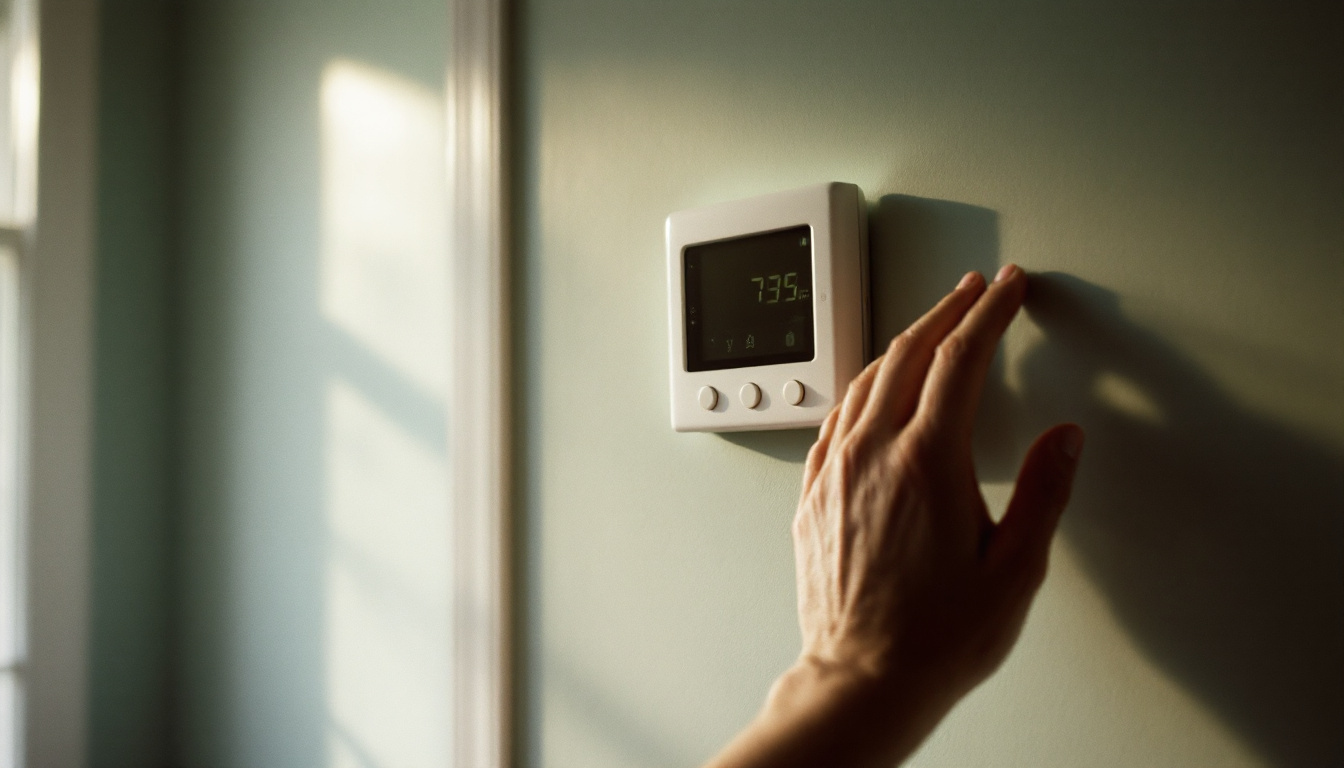
A thermostat is a switch with a temperature sensor. It does not control how hard your system runs, only whether it runs. Most conventional residential equipment is single stage: it is either on at full output or off.
That is why turning the setpoint far past your target does not heat or cool a house faster. The equipment produces the same output either way; only the run time changes.
What a thermostat actually does
It compares measured temperature against setpoint and closes a circuit when the difference crosses a threshold. On a single stage system that call is binary. On two stage or variable capacity equipment the control can request different output levels, which is a property of the equipment, not of the thermostat.
| Belief | What actually happens |
|---|---|
| Setting it lower cools the house faster | Output is unchanged on single stage equipment. Only run time changes. |
| Leaving it at one setting all day is cheaper | Depends on setback depth and duration, not a universal rule |
| A smart thermostat makes a system efficient | It changes when the system runs, not how efficiently it runs |
| The reading is the house temperature | It is the temperature at that one location on that one wall |
| Closing vents helps the thermostat | It raises static pressure and reduces airflow |
Placement matters more than features
- Direct sun on the thermostat makes it read high, so the system overcools that zone.
- An exterior wall biases the reading toward outdoor conditions.
- Near a supply register the sensor reads conditioned air rather than room air, which causes short cycling.
- In a hallway rather than a living space the sensor controls to a space nobody occupies.
- Near a heat source, a lamp, a television or a kitchen, biases the reading upward.
A poorly placed thermostat produces comfort complaints that look like equipment problems. So does a duct problem, which is why the diagnosis order matters. See ductwork and airflow.
The percentage savings quoted in marketing are not measured by any federal source. What a smart thermostat does is change the schedule the equipment runs on. Whether that saves money depends on your previous behaviour: a household already using setbacks has less to gain than one that never adjusted the setpoint.
Frequently asked questions
Does setting the thermostat lower cool the house faster?
No. Most residential equipment is single stage, meaning it produces the same output whenever it runs. Setting the target far below your desired temperature does not increase output, it only makes the system run longer, and it risks overshooting past the temperature you actually wanted.
Do smart thermostats save money?
The specific percentage claims are not measured by any federal source. A smart thermostat changes when equipment runs rather than how efficiently it runs, so savings depend on prior behaviour. A household that already used setbacks has less to gain than one that never adjusted the setpoint.
Where should a thermostat be placed?
On an interior wall in an occupied living space, away from direct sun, supply registers, exterior walls and heat sources such as lamps or kitchens. Poor placement biases the reading and produces comfort complaints that resemble equipment faults.
Why does my system short cycle?
Common causes include an oversized system reaching setpoint too quickly, a thermostat mounted near a supply register so it reads conditioned air, or restricted airflow. Short cycling reduces dehumidification and increases wear, and it is usually a sizing, placement or airflow problem rather than a thermostat defect.
Methodology and limitations
This page describes control behaviour rather than publishing savings figures, because no federal source measures thermostat savings at household level.
- No percentage saving is claimed for any thermostat type or schedule.
- Behaviour described applies to conventional residential systems. Variable capacity equipment modulates output and behaves differently.
- Nothing here is engineering advice for a specific installation.
Sources
- US Department of Energy, 10 CFR 430.32, for equipment staging and efficiency rating context.
The HVAC Brief is an independent trade publication. We do not sell equipment, take manufacturer advertising, or accept payment for placement in our research. Corrections welcome.
Leave a Reply