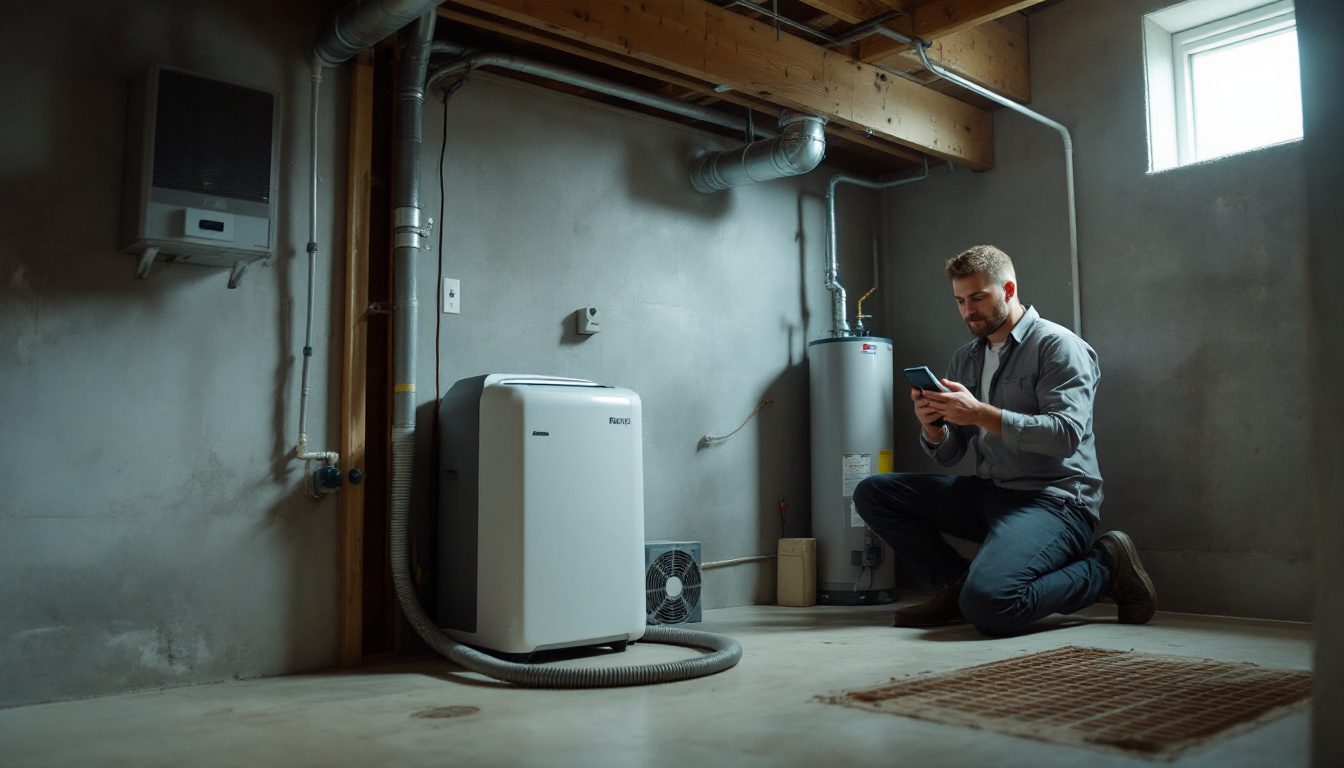
How do you ventilate a basement? Basement ventilation starts with drying, not airflow: stop water entry, hold humidity below 60 percent and test for radon. Then add balanced or supply air, or a dehumidifier. Avoid exhaust-only fans, which depressurize the basement and can pull in radon or backdraft a gas water heater.
Key Takeaways
- EPA advises indoor humidity below 60 percent, ideally 30 to 50 percent (EPA).
- EPA says fix a home at 4 pCi/L of radon or higher; nearly 1 in 15 US homes is elevated (EPA Citizen’s Guide, 2016).
- DOE warns exhaust ventilation may draw in radon and water heater or furnace flue gases (DOE Energy Saver, archived copy).
- A 1946 National Bureau of Standards study found ventilated basements gain condensation on humid days (NBS LC 813).
- ENERGY STAR sizes a musty space under 2,000 sq ft at 20 to 30 pints per day (ENERGY STAR).
- 16 percent of new US single-family homes completed in 2025 had a basement; 53 percent in the Northeast (Census Bureau).
What does basement ventilation actually need to fix?
Basement ventilation has two jobs: removing moisture and diluting pollutants such as radon. Moisture is usually the daily problem, and EPA’s mold guidance puts it plainly: the key to mold control is moisture control, with indoor humidity below 60 percent and ideally 30 to 50 percent.
Basements are damp for a physical reason: a 1946 National Bureau of Standards circular notes that soil more than 2 or 3 ft down varies by only a few degrees from the local annual mean temperature, so basement walls and floors run cooler than summer air.
Ventilation swaps air; it does not warm a wall or stop seepage. Our explainer on what ventilation does and does not do in HVAC draws the same line.
The Census Bureau foundation table puts the West at 16 percent. Basement ventilation is mostly a Northeast and Midwest question.
How to ventilate a basement, step by step
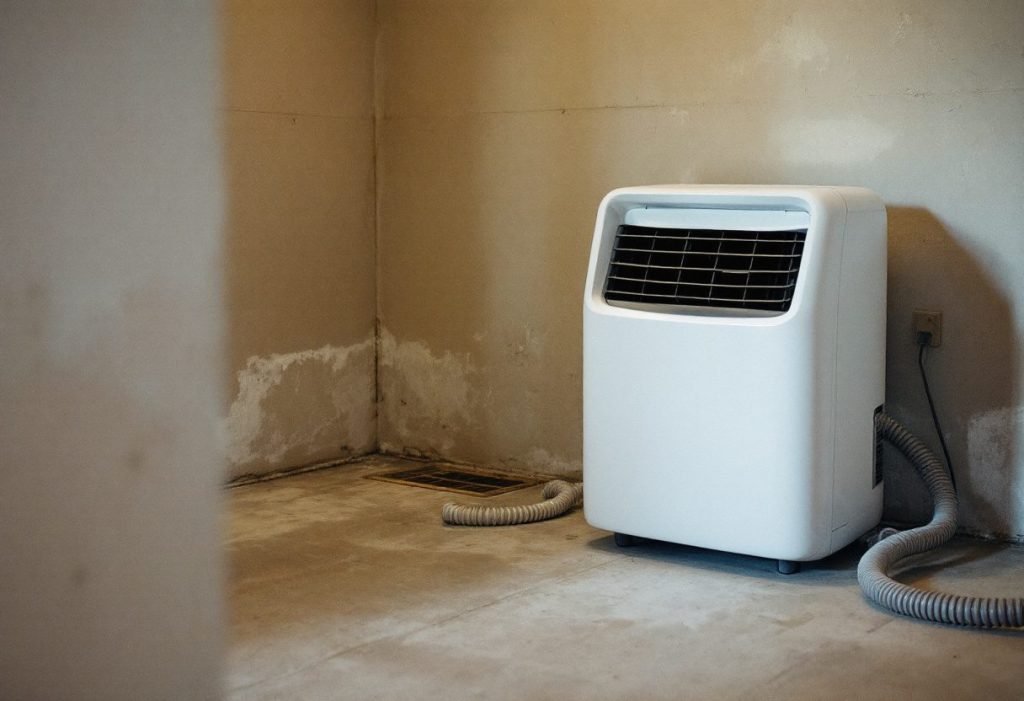
To ventilate a basement safely, work in this order: stop liquid water, measure humidity, test radon, check gas appliances, then choose equipment. Starting with a fan risks more radon or a backdrafting water heater.
- Stop bulk water. EPA says the ground should slope away from the foundation; ENERGY STAR adds extending downspouts. Dry wet materials within 24 to 48 hours.
- Measure relative humidity for a week. EPA puts a humidity meter at $10 to $50. Readings above 60 percent mean a drying problem.
- Test for radon. EPA puts the kit in the lowest lived-in level, with windows closed at least 12 hours before a short-term test.
- List every combustion appliance. Note any water heater, furnace or boiler with a draft hood or chimney; a fan can backdraft these.
- Choose the method from the table below.
- Verify the result. Recheck humidity, retest radon, and have a technician run a spillage test with every exhaust fan running.
A basement bedroom or office also needs outdoor air for its occupants. Our guide to choosing between an ERV and an HRV covers sizing, and a blower door test during an energy audit shows how leaky the shell is first.
Which basement ventilation system fits your basement?
Choose a basement ventilation system by its effect on air pressure. DOE’s whole-house ventilation guidance (archived copy) sorts systems into exhaust, supply and balanced, and pressure decides whether soil gas gets pulled in.
| Method | Pressure effect | Moisture effect | Radon and combustion risk | Best use |
|---|---|---|---|---|
| Open windows | Varies with wind | Condensation on humid days (NBS) | Radon returns within about 12 hours of closing (EPA) | Cool, dry days only |
| Exhaust-only fan | Depressurizes (DOE) | Pulls humid air into walls (DOE) | May draw in radon and flue gases (DOE) | Short spot use with makeup air |
| Supply fan or HVAC supply | Pressurizes (DOE) | Does not dry incoming air (DOE) | Prevents backdrafting (DOE); can help hold radon out (EPA) | Hot or mixed climates |
| Balanced ERV or HRV | Neutral when balanced (DOE) | Does not dehumidify (DOE) | HRVs cut radon best ventilating only the basement (EPA) | Finished, occupied basements |
| Dehumidifier | None | Removes moisture directly | No effect on radon (EPA study) | Humidity above 60 percent |
| Radon soil depressurization | Lowers pressure under the slab | Dried basement air in an EPA study | Most reliable radon fix (EPA) | Radon at 4 pCi/L or more |
Most basements need two rows: a dehumidifier for water and, where people sleep or work, balanced ventilation. Crawl spaces follow different code rules; see our guide to vented and sealed crawl spaces.
Why can a basement ventilation fan pull in radon and flue gases?
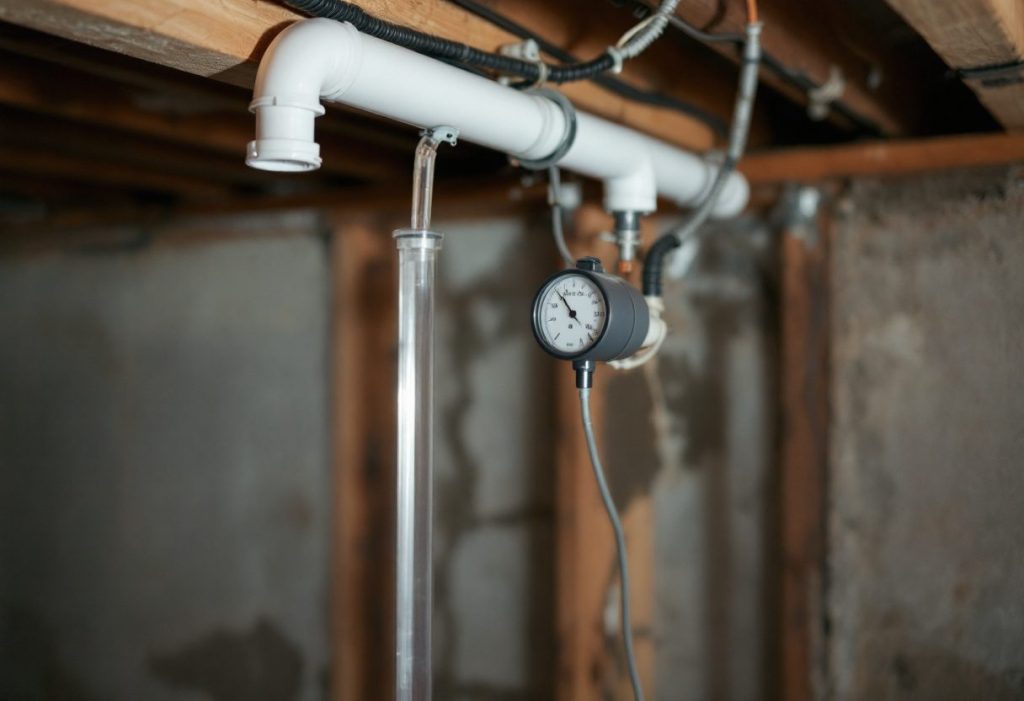
An exhaust-only basement ventilation fan lowers the basement’s air pressure, and replacement air comes from wherever it can: foundation cracks, the soil and the chimney of an atmospheric water heater or furnace. DOE lists radon and furnace or water heater flue gases among the pollutants exhaust systems may draw in.
The basement starts behind. EPA’s Consumer’s Guide to Radon Reduction explains that indoor pressure is usually lower than soil pressure, so a home acts like a vacuum on radon. An exhaust fan widens that gap.
DOE notes that bath fans, range fans and clothes dryers also depressurize the home while they run. Our guide on when a big range hood needs makeup air covers the same arithmetic.
DOE’s Building America Solution Center rule for combustion appliance zone testing: with an atmospheric appliance in the basement, remove exhaust devices or provide makeup air. The test runs exhaust fans at maximum speed and checks for spillage at the draft hood after 5 minutes of burner operation.
Safety point
Do not add an exhaust fan near a draft-hood water heater, furnace or boiler until a technician has run a spillage test with the fan on. BASC recommends sealed-combustion equipment inside the pressure boundary. Spilled flue gas can carry carbon monoxide; follow our CO alarm placement rules for the basement level.
Should you open basement windows in summer?
Usually not on hot, humid days. The National Bureau of Standards’ Letter Circular 813 found that ventilation does not warm basement walls quickly, so on warm days with high absolute humidity, water may condense on the walls and floors of ventilated basements.
Its rule still holds: ventilate at night or on cool days, when the wall temperature is above the outdoor dew point. Compare the forecast dew point with a thermometer reading on the foundation wall before opening up.
Windows are also a weak radon tool: EPA reports radon most often returns within about 12 hours of closing up. For cross ventilation technique, see our guide to natural ventilation through windows.
When is a dehumidifier the better answer than more air?
When relative humidity sits above 60 percent, a dehumidifier usually wins: it removes water without changing pressure or importing humid air. Ventilation only dries a basement when outdoor air is drier than indoor air.
| ENERGY STAR condition | Relative humidity | Space under 2,000 sq ft | Space over 2,000 sq ft |
|---|---|---|---|
| Slightly to moderately damp, musty odor | 50 to 75% | 20 to 30 pints/day | 30+ pints/day |
| Very damp, damp spots on walls and floor | 75 to 90% | 25 to 40 pints/day | 40+ pints/day |
| Wet, walls or floor sweat, seepage | 90 to 100% | 30 to 50 pints/day | 50+ pints/day |
Sizing comes from ENERGY STAR’s dehumidifier guidance, which warns that frost can form on the coils below 65 degrees F; buy a low-temperature model for a cool basement. A certified unit uses 20% less energy than a similar conventional one.
The current ENERGY STAR Version 6.0 criteria, effective October 1, 2025, require 2.01 L/kWh for a 25.01 to 50 pint portable. Our dehumidifier sizing and running cost guide turns that into annual cost.
It has limits: in an EPA-funded study, a unit set to 50% RH did not reach 50% in its first cycle and had no effect on block-wall moisture or radon.
Can a radon system help dry a basement?
Sometimes, yes. An EPA-funded study monitored three houses near Harrisburg, Pennsylvania over an 18-month period; active soil depressurization produced significant moisture reductions in basement air and walls, especially during non-summer months.
The systems raised ventilation rates 60% to over 200% at two houses, and between 46% and 72% of the air leaving the radon pipe came from the basement. That is why EPA says a contractor may want combustion appliances checked for backdrafting.
Treat drying as a bonus: three houses is a small sample and results may differ in other climates. If your radon test reads 4 pCi/L or more, EPA calls subslab depressurization the most common and usually the most reliable fix; our guide to how a radon fan, pipe and vent work together explains the layout.
How we researched this
Researched October 8, 2026. We consulted 12 sources and cite 10, all federal: EPA, DOE, ENERGY STAR, the Census Bureau and the National Bureau of Standards. We read top-ranking pages for gaps but took no numbers from them.
Excluded: vendor pages (no primary data), installed prices (no federal series) and Reddit (radon and backdrafting are safety topics).
Frequently asked questions
Do basements need ventilation?
A basement needs moisture control first and fresh air second. EPA says the key to mold control is moisture control, with humidity below 60 percent. A storage basement may need only drainage fixes and a dehumidifier. A finished basement where people sleep or work also needs outdoor air, ideally from a balanced system that does not depressurize the space.
Will an exhaust fan help a damp basement?
Often not. DOE says exhaust ventilation depressurizes a home and, in climates with warm humid summers, can draw moist air into wall cavities where it may condense. The same pressure drop can pull radon from the soil and flue gas from a draft-hood water heater.
What humidity should a basement be?
EPA advises keeping indoor humidity below 60 percent, ideally between 30 and 50 percent. ENERGY STAR describes a space at 50 to 75 percent with a musty odor as slightly to moderately damp, and sizes a dehumidifier at 20 to 30 pints per day for a space under 2,000 sq ft.
Can basement ventilation increase radon?
Yes, if it removes more air than it brings in. EPA explains that a home’s air pressure is usually lower than the soil’s, so the house acts like a vacuum on radon. An exhaust-only fan widens that gap. Test before and after any change, with the kit in the lowest lived-in level, and fix the home at 4 pCi/L or higher.
How do you ventilate a basement without windows?
Use a mechanical system rather than windows. DOE says a balanced system, properly designed, neither pressurizes nor depressurizes the home, which makes a paired ERV or HRV the safest choice below grade. EPA adds that HRVs reduce radon most effectively when they ventilate only the basement.
Does a basement bathroom or laundry need its own exhaust fan?
Yes, for local moisture, run for short periods. DOE notes that bath fans, range fans and clothes dryers depressurize a home while they operate, so a basement with a draft-hood water heater needs makeup air or a spillage test with them running. Our bathroom fan sizing and venting guide gives the code airflow.
Sources
- US Environmental Protection Agency. “A Brief Guide to Mold, Moisture and Your Home.” https://www.epa.gov/mold/brief-guide-mold-moisture-and-your-home. Accessed October 2026.
- US Environmental Protection Agency. “A Citizen’s Guide to Radon (2016).” https://www.epa.gov/sites/default/files/2016-12/documents/2016_a_citizens_guide_to_radon.pdf. Accessed October 2026.
- US Environmental Protection Agency. “A Consumer’s Guide to Radon Reduction (2016).” https://www.epa.gov/sites/default/files/2016-12/documents/2016_consumers_guide_to_radon_reduction.pdf. Accessed October 2026.
- Turk and Hughes, report to US EPA. “Exploratory Study of Basement Moisture During Operation of ASD Radon Control Systems (2007, revised 2008).” https://www.epa.gov/sites/default/files/2014-08/documents/moisturestudy.pdf. Accessed October 2026.
- US DOE Energy Saver. “Whole-House Ventilation (archived copy).” https://web.archive.org/web/20260101021416/https://www.energy.gov/energysaver/whole-house-ventilation. Accessed October 2026.
- DOE Building America Solution Center (PNNL). “Combustion Appliance Zone (CAZ) Testing.” https://basc.pnnl.gov/resource-guides/combustion-appliance-zone-caz-testing. Accessed October 2026.
- ENERGY STAR. “Dehumidifiers.” https://www.energystar.gov/products/dehumidifiers. Accessed October 2026.
- ENERGY STAR. “Dehumidifiers Key Efficiency Criteria (Version 6.0).” https://www.energystar.gov/products/dehumidifiers/key_efficiency_criteria. Accessed October 2026.
- US Census Bureau. “Type of Foundation in New Single-Family Houses Completed.” https://www.census.gov/construction/chars/xls/foundation_cust.xls. Accessed October 2026.
- National Bureau of Standards (now NIST). “Dampness in Basements and Ground Floors, Letter Circular LC 813 (1946).” https://nvlpubs.nist.gov/nistpubs/Legacy/LC/nbslettercircular813.pdf. Accessed October 2026.
Leave a Reply