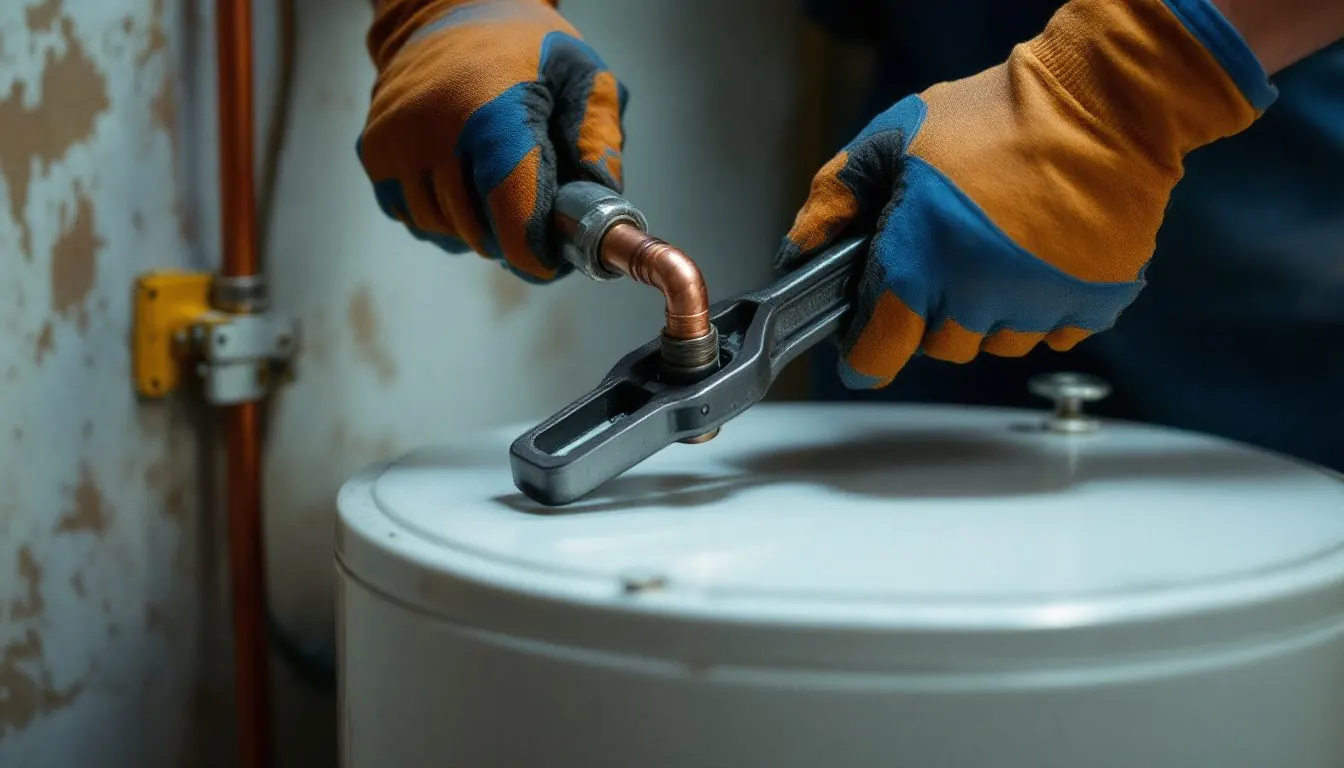
A dielectric union is a union with a plastic insulator and rubber gasket that joins copper or brass to steel with no metal contact, so galvanic corrosion cannot start at the joint. Code rarely demands one: the 2021 IRC accepts either a brass (copper alloy) fitting or a dielectric fitting between copper and galvanized pipe.
Which codes require a dielectric union, and which accept a brass fitting instead?
Only one model code section we read makes a dielectric fitting the sole answer: refrigerant piping between dissimilar metals in the 2021 International Mechanical Code. Every plumbing section lets the installer choose brass instead. The table puts the wording side by side.
| Joint | Code and section | What the text accepts | Dielectric union mandatory? |
|---|---|---|---|
| Copper or copper alloy tubing to galvanized steel pipe | 2021 IRC P2906.18.1 | A copper alloy fitting or dielectric fitting | No |
| Stainless steel to a different piping material | 2021 IRC P2906.18.4 | A compression or mechanical sealing joint, or a dielectric fitting | No |
| Copper or copper alloy to threaded pipe | 2025 California Plumbing Code 605.16.1 (UPC based) | Copper alloy adapter, copper alloy nipple of minimum 6 inches, dielectric fitting or dielectric union to ASSE 1079 or IAPMO PS 66 | No |
| Stainless steel to other piping | 2025 California Plumbing Code 605.16.3 | Compression mechanical joint, dielectric fitting or dielectric union to ASSE 1079 or IAPMO PS 66 | No |
| Dissimilar metallic refrigerant piping | 2021 IMC 1108.1.1 | A dielectric fitting or dielectric union conforming to the dielectric tests of ASSE 1079 | Yes, fitting or union |
| Hydronic piping of different materials | 2021 IMC 1203.1.1 | Approved adapter fittings; no dielectric wording | No |
| A.O. Smith power vent water heater on copper | Maker manual 100341461 | Recommends di-electric unions or couplings | Recommended by maker |
Compiled by The HVAC Brief from the 2021 Seattle Residential Code chapter 29 and Seattle Mechanical Code chapters 11 and 12 (IRC and IMC text as adopted in Seattle), the 2025 California Plumbing Code as published by GoCodeBook, and A.O. Smith manual 100341461.
The IRC wording sits in Seattle’s reprint of 2021 IRC chapter 29: joints between copper and galvanized pipe “shall be made with a copper alloy fitting or dielectric fitting”, with the copper joined to the fitting and the fitting screwed to the threaded pipe. The California Plumbing Code 605.16 names the brass nipple option outright and sets its minimum length at 6 inches (152 mm). Your adopted edition and local amendments govern, and the inspector decides what counts as approved.
Is a dielectric union needed on a water heater with copper lines?
Code text does not single out water heaters, but A.O. Smith does. Its residential power vent manual (100341461, March 2021) says: “To protect against untimely corrosion of hot and cold water fittings, it is recommended that di-electric unions or couplings be installed on this water heater when connected to copper pipe.” The same manual lists 3/4 in NPT water connections and warns not to solder lines directly to the heater, because the heat harms the dip tube and heat traps.
That makes the practical order simple: sweat or press the copper onto the union’s brass tail first, then thread the steel body onto the tank nipple. The steel nipple and tank are what the joint protects, along with the magnesium or aluminum anode rod, which only shields the tank interior. The rest of the inspector’s checklist, from relief line to expansion control, is in our water heater installation guide.
Which way does a dielectric union go: steel side or copper side?
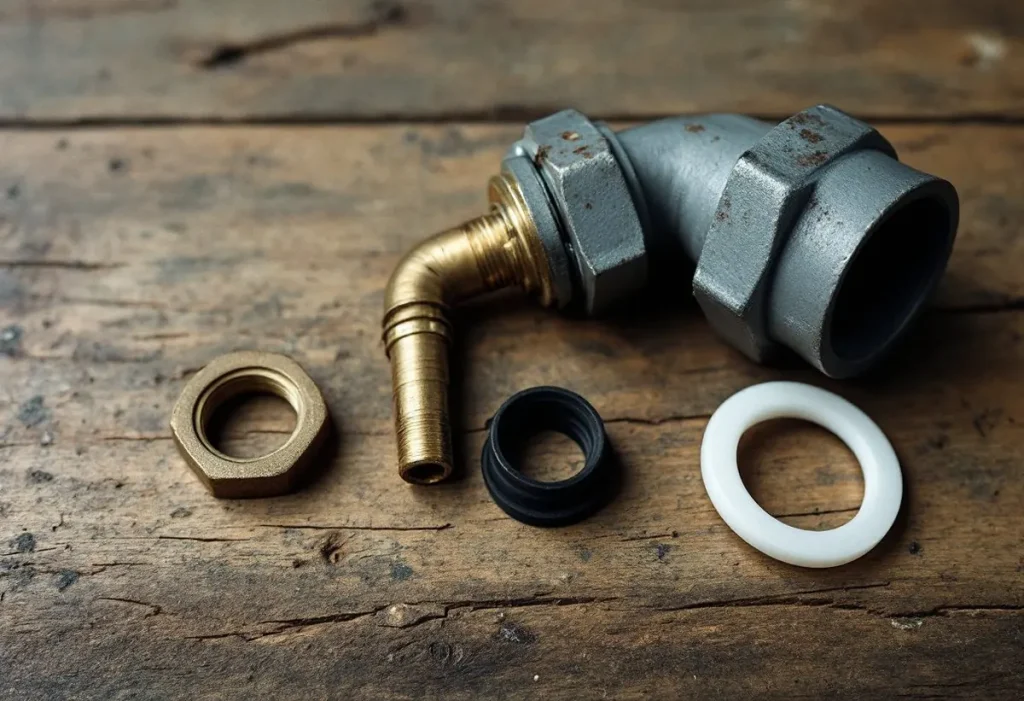
The threaded steel half goes on the steel pipe and the brass half goes on the copper. On the Watts LF4001E, a female iron pipe thread to solder union, the steel adapter takes the threaded pipe and the lead free brass tailpiece takes the copper; a polysulfone insulator and EPDM gasket sit between them. Watts says each union is factory certified to withstand a minimum of 600 volts on a dry line with no flashover, which is the electrical break that stops galvanic and stray current.
Because that 600 volt break also interrupts the metal water pipe as a conductor, ask the electrical inspector whether a bonding jumper around the heater is expected in your jurisdiction before you close up the job.
What pressure and temperature can a dielectric union gasket take?
Most residential dielectric unions top out at 180°F. That ceiling, not the pressure rating, is what limits them on boilers and hot process lines. The spec sheets we opened:
| Union (maker sheet) | Ends and sizes | Pressure | Temperature | Insulator / gasket |
|---|---|---|---|---|
| Watts LF4001E | FIP x solder, 1/2 to 2 in | 250 psi | 180°F | Polysulfone / EPDM |
| Legend T-571NL | FNPT x sweat, 1/2 to 2 in | 200 psi CWP | 180°F | ABS / EPDM |
| Legend T-571, optional steam gasket | FIP x sweat | 60 psi saturated steam | 275°F | Fiber reinforced ABS / epichlorohydrin |
| Jomar LFDU solder x MIP | 1/2 to 1 in | 250 psi | -20°F to 180°F | Nylon 66 / Buna-N |
| NIBCO Webstone H-0110W | FIP x SWT, 1/2 to 2 in | 200 psi CWP | 200°F | POM / EPDM |
| NIBCO Webstone H-81 press | FIP x press, 1/2 to 2 in | 250 psi CWP | 180°F | Nylon / EPDM |
Compiled by The HVAC Brief from the Watts ES-LF4001E, Legend T-571 and T-571NL, Jomar LFDU and NIBCO Webstone H-x110 spec sheets. Ratings are the makers’ own.
Two things stand out. Jomar uses a Buna-N gasket where Watts and Legend use EPDM, and Legend sells high temperature gaskets and inserts “for steam and hydronic heating applications” because its standard part stops at 180°F. NIBCO’s Webstone sheet heads the H-0110W “w/ Nylon Insulator Ring” but lists POM (acetal) in its parts table; ask the supplier which you are getting.
Why do dielectric unions leak or rust shut?
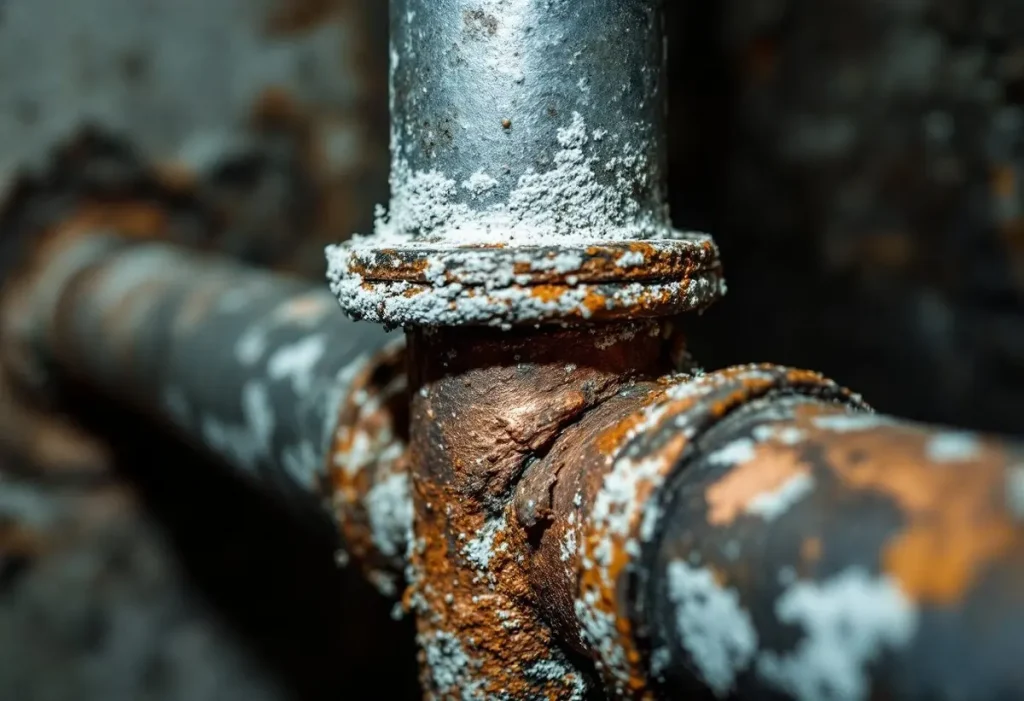
Most failures trace to heat, temperature or hidden corrosion, and each has a published warning:
- Soldering heat. NIBCO’s Webstone sheet says “Do not silver braze or overheat”; the NIH technical bulletin on dielectric fittings (Issue 80, September 2018) says welding should be done before the fittings go in, because heat can damage the isolating sleeve.
- Running above the rating. A loop or tank held above 180°F exceeds every EPDM union in the table except the Webstone H-0110W.
- Corrosion you cannot see. The NIH bulletin shows a dielectric union corroded inside a pipe that looked normal from outside, and notes insulation hides it further.
- A steel body is still steel. Watts footnotes that its steel and malleable iron parts are zinc plated, so the body can rust like any galvanized fitting.
A leak at the top of a tank heater is usually one of these fittings rather than the tank; our water heater leak locator covers the swab test for threads.
Do you need a dielectric union for brass to galvanized, or stainless to copper?
Brass to galvanized needs no dielectric union: brass is the transition the 2021 IRC accepts in P2906.18.1. Stainless steel to copper, or carbon steel to stainless, falls under P2906.18.4, which accepts a compression or mechanical sealing joint or a dielectric fitting. That matters on stainless indirect water heater tanks piped in copper. The 2025 California code adds the requirement that any dielectric union meet ASSE 1079 or IAPMO PS 66.
Does HVAC piping need a dielectric break on refrigerant, boiler or fan coil lines?
Refrigerant lines do, by code. IMC 1108.1.1 as printed in the 2021 Seattle Mechanical Code says joints between dissimilar metallic piping “shall be made with a dielectric fitting or a dielectric union conforming to dielectric tests of ASSE 1079”. For copper line sets brazed into copper fittings there is no dissimilar joint; the rule bites at steel or other metal transitions, a point we touch on in where refrigerant lines can run.
Hydronic piping does not. IMC 1203.1.1 asks only for “approved adapter fittings” between different materials, so on a boiler loop or a fan coil unit (FCU) branch the engineer’s specification or the local amendment decides. If the design supply temperature tops 180°F, the standard EPDM unions above are out of range; a high temperature gasket such as Legend’s optional steam set is the documented alternative.
Frequently asked questions
What happens if you don’t use a dielectric union?
Where copper meets steel with water inside, all three conditions the NIH Division of Technical Resources lists for galvanic corrosion are present: dissimilar metals, direct contact and an electrolyte. The steel side corrodes. Code does not force a union to stop that: the 2021 IRC also accepts a copper alloy fitting, and the 2025 California Plumbing Code accepts a brass nipple at least 6 inches long.
Are dielectric unions obsolete?
Not in code text. The 2021 IRC (P2906.18.1 and P2906.18.4), the 2021 IMC refrigeration section 1108.1.1 and the 2025 California Plumbing Code 605.16 still name dielectric fittings or unions. What has changed is the alternatives: the same sections accept a copper alloy fitting or brass nipple, which many plumbers prefer because there is no gasket to age.
What size dielectric union does a water heater need?
Match the heater’s threaded connections. The A.O. Smith residential power vent manual (100341461) lists 3/4 in NPT water connections, so the usual part is a 3/4 in FIP by 3/4 in sweat or press union. Watts lists its LF4001E in 1/2 to 2 in sizes, all rated 250 psi at 180°F.
Is a dielectric union the same as a dielectric nipple?
They solve the same problem with a different part. A union breaks apart with a nut and seals on a gasket, which is why Watts, Legend and Jomar publish gasket materials and temperature limits. A nipple has no nut to undo. A.O. Smith’s manual only says di-electric unions or couplings, so check what your heater’s manual names.
Can you use a ProPress dielectric union?
Yes, press-end dielectric unions exist. NIBCO’s Webstone H-81 series pairs a female pipe thread with a copper press end in 1/2 to 2 in sizes, rated 250 psi CWP at 180°F max. The sheet says the press models 1.25 in and larger meet ASSE 1079-2012, so check the size you buy if your inspector asks for a listing.
How we researched this
Researched 14 November 2026. We read the 2021 Seattle Residential Code chapter 29 and Seattle Mechanical Code chapters 11, 12 and 15 (IRC and IMC text as adopted in Seattle), the 2025 California Plumbing Code section 605.16 as published by GoCodeBook (a restatement; we did not read the IAPMO UPC itself), A.O. Smith manual 100341461, spec sheets from Watts, Legend, Jomar and NIBCO Webstone, and the NIH Division of Technical Resources bulletin. We did not read ASSE 1079 itself, which is paywalled. We excluded Reddit, forum and contractor blog claims, retail price listings, and the 2021 IPC, whose text we could not open; IPC section numbers are therefore not given.
Sources
- City of Seattle. “2021 Seattle Residential Code, Chapter 29, Water Supply and Distribution.” https://seattle.gov/documents/Departments/SDCI/Codes/SeattleResidentialCode/2021SRCChapter29.pdf. Accessed November 2026.
- City of Seattle. “2021 Seattle Mechanical Code, Chapter 11, Refrigeration.” https://seattle.gov/documents/departments/sdci/codes/mechanicalcode/2021smcchapter11.pdf. Accessed November 2026.
- City of Seattle. “2021 Seattle Mechanical Code, Chapter 12, Hydronic Piping.” https://seattle.gov/documents/departments/sdci/codes/mechanicalcode/2021smcchapter12.pdf. Accessed November 2026.
- GoCodeBook. “2025 California Plumbing Code 605.16, Joints Between Various Materials.” https://gocodebook.com/library/us/ca/ca-plumbing-code/chapter-6-water-supply-and-distribution/605.16-joints-between-various-materials. Accessed November 2026.
- A.O. Smith. “Installation Instruction and Use and Care Guide, Residential Gas Water Heaters, Power Vented, 100341461.” https://www.aosmithatlowes.com/media/1373/100341461.pdf. Accessed November 2026.
- Watts. “ES-LF4001E, Series LF4001E Dielectric Unions” (copy hosted by Industrial Stores). https://www.industrialstores.com/media/industrialstores/product/attachments/1550169197LF4001E-data.pdf. Accessed November 2026.
- Legend Valve. “T-571 and T-571NL Forged Steel Dielectric Union Submittal Sheets.” https://res.cloudinary.com/consolidated-supply/resource/raw/legend_301104_specification_sheet.pdf. Accessed November 2026.
- Jomar Valve. “Lead Free Brass x Galvanized Steel Dielectric Union, Solder x MIP.” https://www.jomarvalve.com/specsheets/LFDU-Brass-SolderxSteel-MIP.pdf. Accessed November 2026.
- NIBCO Webstone. “H-x110 Dielectric Unions.” https://res.cloudinary.com/dzhpkjoqj/Nibco/H-x110_ZSpec.pdf. Accessed November 2026.
- National Institutes of Health, Office of Research Facilities. “Dielectric Fittings, Technical Bulletin Issue 80, September 2018.” https://orf.od.nih.gov/TechnicalResources/Documents/Technical%20Bulletins/18TB/Dielectric%20Fittings%20Sep%202018%20%2D%20Technical%20Bulletin_508.pdf. Accessed November 2026.
Leave a Reply