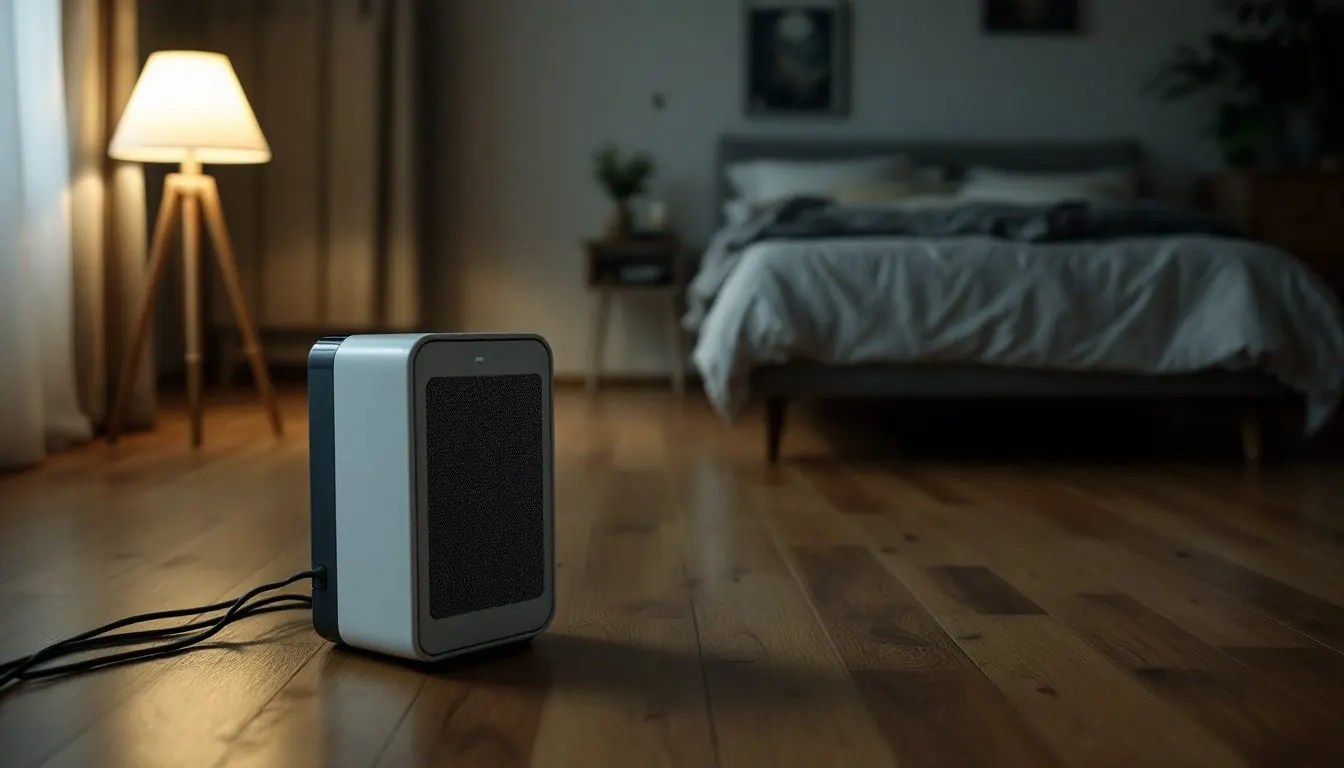
Is it safe to sleep with a space heater on? No, not by the federal standard: CPSC says to turn heaters off when sleeping, and NFPA says to turn portable heaters off when going to bed. Heating fires that start between midnight and 6 a.m. are 13% of fires but 43% of deaths. Fuel-burning heaters are never safe overnight.
Can you leave your space heater on overnight? Find your setup in this table
For most setups, no; for the best electric setup, lower risk but still against federal advice. CPSC’s January 2026 winter release puts it in four words: “Turn off heaters when sleeping.”
| Your setup tonight | Sleep with it running? | What decides it |
|---|---|---|
| Unvented kerosene heater | No | DOE: not recommended indoors (carbon monoxide); most states ban them in homes |
| Vent-free propane or natural gas heater | No | DOE: same CO warning; California bans unvented natural gas heaters in homes |
| Electric heater within 3 feet of the bed, curtains or clothes | No | USFA: too close to combustibles, the leading fire factor (48%) |
| Electric heater on an extension cord or power strip | No | CPSC and Lasko: wall outlet only |
| Electric heater whose manual lists no tip-over switch | No | Lasko 6462 manual lists a thermal overload protector only |
| Electric heater with tip-over and overheat shutoff, 3 feet clear, wall outlet, timer set | Lowest risk of the electric options, still against CPSC and NFPA advice | Lasko CD09475: tip-over switch, overload protector, 8 hour auto off |
| Electric blanket or heated mattress pad instead | Follow its own manual | Heats the sleeper; the heater stays off |
How much deadlier is a heater fire that starts while you are asleep?
About four to five times deadlier per fire. NFPA’s 2022 Home Heating Fires report (2016 to 2020 averages) found heating fires starting between midnight and 6 a.m. were 13% of fires but 43% of deaths, because sleepers react later. The report’s body text gives 39% for the same share, so we calculated both.
NFPA counts fixed and portable space heaters in 33% of non-confined heating fires but 88% of the deaths. The U.S. Fire Administration’s study of portable heaters (2017 to 2019) found 1,100 residential fires and 65 deaths a year; the fires most often started in bedrooms (34%), where bedding was the leading first item ignited (16%). Our home heating fire statistics report has the full breakdown.
| Group | Share of fires | Share of deaths | Deaths share per fire share | Compared with the rest |
|---|---|---|---|---|
| Heating fires starting midnight to 6 a.m. (NFPA key findings) | 13% | 43% | 3.31 | 5.0 times the rest of the day (0.66) |
| Same, using the 39% in NFPA’s body text | 13% | 39% | 3.00 | 4.3 times the rest of the day (0.70) |
| Fixed or portable space heaters, non-confined fires (NFPA) | 33% | 88% | 2.67 | 14.9 times other heating equipment (0.18) |
Portable heater fires do not cluster at night: USFA found them fairly even through the day, lowest from 3 to 4 a.m. The danger is that nobody is awake when one starts, and smoke alarms were present in only 41% of portable heater fires in occupied homes.
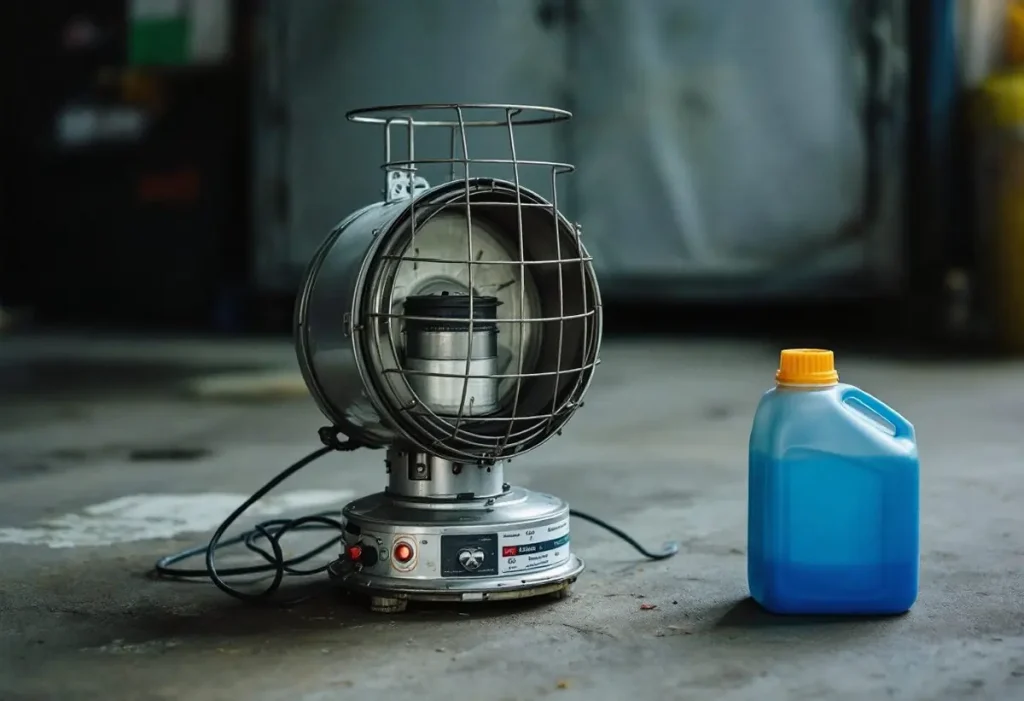
Why are kerosene, propane and vent-free gas heaters never safe to sleep with?
Because they exhaust into the room and a sleeper cannot notice carbon monoxide. DOE’s Energy Saver guide says unvented combustion space heaters “are not recommended for use inside your home because of the risk of carbon monoxide poisoning” and that most states have banned unvented kerosene heaters for home use; California bans unvented natural gas heaters in homes.
Our pages on the kerosene heater and propane heater indoor use cover ventilation and oxygen depletion sensors; neither makes one an overnight heater. DOE says to install a CO detector with any combustion space heater; see carbon monoxide detector placement.
Does a tip-over switch and overheat shutoff make an electric heater safe overnight?
They remove two failure modes, not the main one. NFPA credits tip-over cut-off and coil guarding standards with helping heating fires fall from over 70,000 a year in 2000 to 2003 to 42,000 in 2020. But USFA’s leading cause, a heat source too close to combustibles (48%), happens with the heater upright and working normally.
Not every heater has both, so read the manual’s safety section. The Lasko CD09475 lists a tip-over switch “to prevent operation if the heater is tipped over” plus a thermal overload protector. The Lasko 6462 lists only the overload protector, which stays off until you unplug the heater and let it cool 10 minutes. Neither describes anything that detects a blanket sliding toward the grille.
How far from the bed does a space heater have to be?
At least 3 feet on every side, by CPSC’s safety sheet, which names beds first. Makers are looser: Lasko asks for 3 feet in front and 1 foot at the sides and rear; De’Longhi asks for 3 feet in front and on top of the MG15T oil-filled radiator. Use CPSC’s 3 feet all round, measured from where the comforter ends up at 3 a.m.
Lasko also says not to place the heater on soft surfaces, like a bed, and De’Longhi says to never cover it during operation. A heater on a cluttered nightstand fails CPSC’s stable, level surface rule.
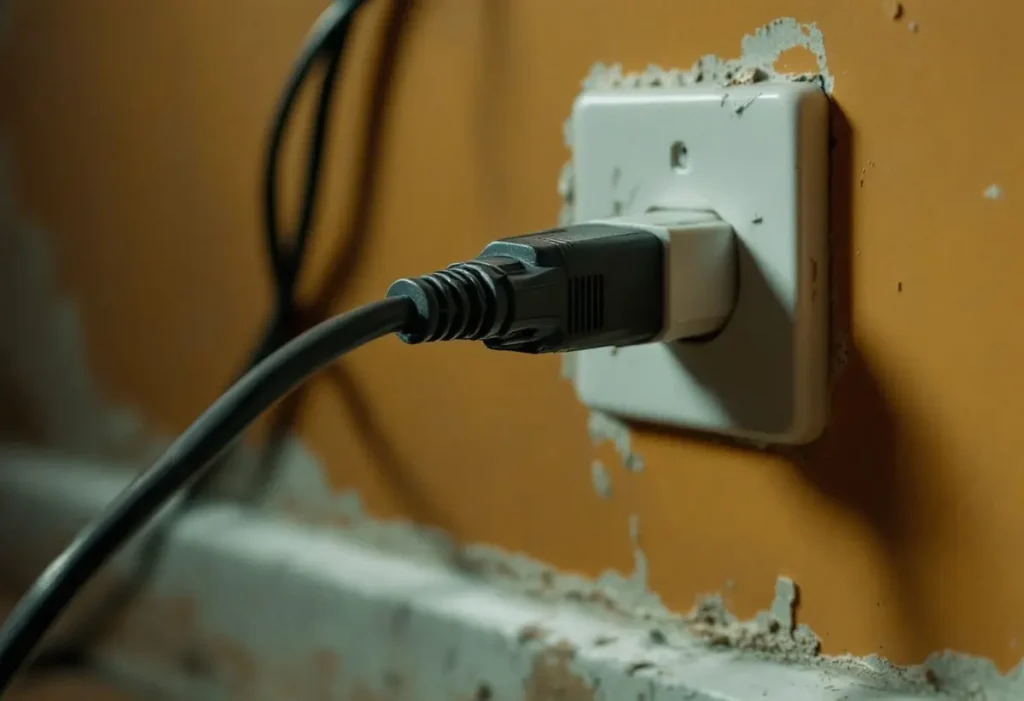
Can a bedroom space heater run on an extension cord or power strip?
No. CPSC says never to power the heater with an extension cord or power strip, or run the cord under rugs. Both Lasko manuals also rule out surge protectors and cord reels. De’Longhi’s MG15T leaflet is the outlier: if you must, a grounded No. 14 AWG cord rated for at least 1875 watts. Follow the stricter federal rule.
CPSC says a hot cord or plug means disconnect the heater, and a hot outlet means an electrician. A 1,500 watt heater (high on the Lasko 6462 and De’Longhi MG15T) is a big load for one bedroom circuit; our guide to a space heater tripping the breaker does the amp math.
If the bedroom is too cold to sleep in, what should run overnight instead?
Heat the room before bed, then switch the heater off. The Lasko CD09475 timer runs 1, 2 or 4 hours, and the heater turns off after 8 hours if no timer is set: a backstop for dozing off, not a plan.
An electric blanket warms the bed instead of the room; a 1,500 watt heater left on 8 hours uses 12 kWh, priced in our space heater running cost breakdown.
If the furnace is down, our guide to heat a room without central heating compares the options, and the best temperature for sleeping is cooler than most people expect.
CPSC’s 2026 release says to put smoke alarms on every level and inside each bedroom. An oil-filled radiator keeps radiating after it cycles off, but CPSC’s sheet covers it too: “Never leave the heater operating while unattended or while you are sleeping.”
Is a space heater safe in a baby’s or an older parent’s bedroom overnight?
No, and the maker says so. The Lasko CD09475 manual warns that hyperthermia can kill: “DO NOT leave product running unattended in a confined space around infants, or individuals with reduced physical, sensory, or mental capabilities.”
NFPA asks for a 3-foot “kid-free zone” around space heaters, and the Lasko 6462 manual says never to leave children unattended when the heater is on or plugged in. Warm the nursery before bedtime, then take the heater out.
Frequently asked questions
Is it safe to sleep with a space heater plugged in but turned off?
Unplug it. The Lasko 6462 manual says to always unplug the heater when not in use and not to rely on the on/off switch as the sole means of disconnecting power. Unplugging takes the cord and outlet out of the night.
Is it safe to fall asleep with a space heater on if it has a timer?
Safer than without one, but CPSC still says to turn heaters off when sleeping. The Lasko CD09475 timer runs 1, 2 or 4 hours, and the heater shuts off after 8 hours if no timer is set. Pick the shortest setting, with 3 feet clear on every side.
How likely is a space heater to start a fire?
CPSC estimates portable heaters are involved in an average of 1,600 fires a year, with 70 deaths and 150 injuries, from 2020 to 2022. An older CPSC estimate quoted by DOE gives more than 1,700 fires. USFA found 48% of these fires began with the heater too close to something that burns.
What is the safest heater to leave on overnight?
None, by CPSC and NFPA advice. The least risky portable choice is electric, with a tip-over switch and overheat shutoff, 3 feet clear, on a wall outlet and a timer. Unvented fuel-burning heaters are the worst; DOE calls sealed combustion vented heaters much safer, but those are installed appliances.
Do space heaters raise the electric bill a lot?
They can. A 1,500 watt heater on high uses 1.5 kWh every hour, so 8 hours overnight is 12 kWh. Multiply 12 kWh by the price per kWh on your bill to get the nightly cost; a 1 hour timer instead cuts the use to 1.5 kWh.
How we researched this
Research date: 20 November 2026. We read NFPA’s 2022 “Home Heating Fires” report (archived copy; the live NFPA tables file returned a server error), USFA’s portable heater fire report (Vol. 21, Issue 11), CPSC sheet NSN 15-11 and release 26-217 (archived copy; the live page refused automated access), DOE Energy Saver (archived copy), and the Lasko 6462, Lasko CD09475 and De’Longhi MG15T manuals. Ratios in the second table are our arithmetic. We excluded retailer and lifestyle articles, did not cite UL 1278 because we could not read its text, and did not estimate risk per heater-night: no federal source counts heater-nights.
Sources
- U.S. Consumer Product Safety Commission. “7 Highly Effective Portable Heater Safety Habits” (NSN 15-11). https://www.cpsc.gov/s3fs-public/PortableElectricHeaterSafetyNSN.pdf. Accessed November 2026.
- U.S. Consumer Product Safety Commission. “Keep Warm and Safe This Winter: Tips for Using Generators, Furnaces and Space Heaters,” Release 26-217, 23 January 2026 (archived copy). https://web.archive.org/web/20261024092112/https://www.cpsc.gov/Newsroom/News-Releases/2026/Keep-Warm-and-Safe-This-Winter-Tips-for-Using-Generators-Furnaces-and-Space-Heaters. Accessed November 2026.
- National Fire Protection Association. “Home Heating Fires,” Richard Campbell, December 2022 (archived copy). https://web.archive.org/web/20261113210644/https://content.nfpa.org/-/media/Project/Storefront/Catalog/Files/Research/NFPA-Research/US-Fire-Problem/Fire-causes/osHeating.pdf. Accessed November 2026.
- U.S. Fire Administration. “Portable Heater Fires in Residential Buildings (2017-2019),” Topical Fire Report Series Vol. 21, Issue 11. https://www.usfa.fema.gov/statistics/reports/fire-causes/portable-heater-fires-residential-buildings-v21i11.html. Accessed November 2026.
- U.S. Department of Energy, Energy Saver. “Small Space Heaters” (archived copy). https://web.archive.org/web/2025id_/https://www.energy.gov/energysaver/portable-heaters. Accessed November 2026.
- Lasko Products. “Model 6462” heater operating manual. https://pdf.lowes.com/operatingguides/046013766236_oper.pdf. Accessed November 2026.
- Lasko Products. “Model CD09475 Ceramic Desktop Heater User Manual.” https://scene7.samsclub.com/is/content/samsclub/0004601379793_PDF. Accessed November 2026.
- De’Longhi. “Electric Oil Filled Radiators, Type MG15T: Important Instructions.” https://dls.delonghigroup.com/files/docs/5/A1-5785004700.pdf. Accessed November 2026.
Leave a Reply