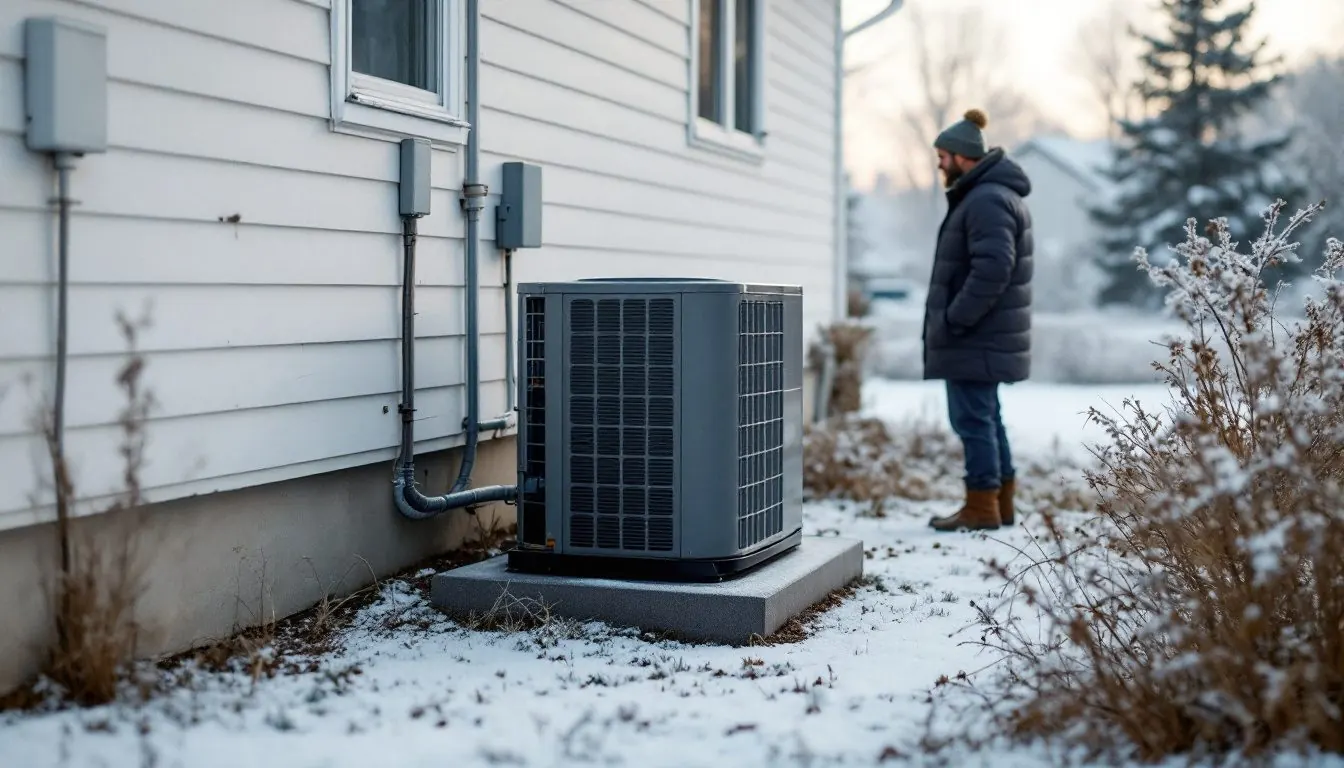
A heat pump running constantly in cold weather is usually normal: below its balance point (about 10 to 21°F for the two real 3 ton units we worked through) the house loses heat faster than the unit makes it, so it runs nonstop by design. Nonstop running on a mild 45°F day, or lukewarm air, points to a fault.
At what outdoor temperature does a heat pump start running nonstop?
At its balance point, where the house’s heat loss equals the heat pump’s output. Heat loss climbs as it gets colder while capacity falls, a drop the ENERGY STAR ratings for 8,857 certified models measure at 47, 17 and 5°F.
We took two real 3 ton outdoor units from the ENERGY STAR certified air source heat pump dataset and ran them against one example house. The Goodman GSZH503610 is single stage and is rated at 34,400 Btu/h at 47°F, 20,000 at 17°F and 17,600 at 5°F (AHRI 208511690). The Carrier Infinity 20 27VNA036 is continuously variable and is rated at 35,600, 30,600 and 25,200 Btu/h (AHRI 215679803). Our example house loses 30,000 Btu/h at 5°F and nothing at 65°F: 500 Btu/h per degree.
| Outdoor temperature | House heat loss (Btu/h) | Goodman GSZH5036 capacity | Share of the hour the Goodman must run | Carrier 27VNA036 capacity | Carrier load as share of full speed |
|---|---|---|---|---|---|
| 47°F | 9,000 | 34,400 | 26%, about 16 min per hour | 35,600 | 25% |
| 35°F | 15,000 | 28,600 | 52%, about 31 min | 33,600 | 45% |
| 25°F | 20,000 | 23,800 | 84%, about 50 min | 31,900 | 63% |
| 17°F | 24,000 | 20,000 | Nonstop, 4,000 short | 30,600 | 78% |
| 5°F | 30,000 | 17,600 | Nonstop, 12,400 short | 25,200 | Nonstop, 4,800 short |
HVAC Brief calculation: ENERGY STAR rated capacities, interpolated in straight lines between rated points and rounded to 100 Btu/h, against our example house (500 Btu/h per °F below 65°F). Run share ignores defrost and cycling losses, so real runs are slightly longer.
The single stage Goodman crosses the load line at about 21°F; the variable speed Carrier holds out to about 10°F. Below those temperatures each one runs 100% of the time and the electric strips make up the gap. At 5°F the Goodman is 12,400 Btu/h short, which is 3.6 kW of strip heat (12,400 divided by 3,412 Btu per kWh), the sizing math worked out in our page on whether you need heat strips. A leakier house or a smaller unit pushes the balance point warmer.
Is it bad for a heat pump to run continuously in winter?
No. Continuous running in cold weather is how the equipment is meant to work, and makers say so in their owner’s manuals. The Northeast Energy Efficiency Partnerships (NEEP) consumer guide puts it plainly: “Cold climate heat pumps are designed to run almost continuously, at a very low level. The lower the speed, the more efficient they are.” It adds: “Don’t assume that they cost you more just because they run a lot.”
Carrier’s owner’s manual for the 25VNA Infinity variable speed heat pump warns owners: “You may notice your system runs for longer periods of time.” Carrier’s manual for its two stage split system heat pumps says that when the unit is sized correctly, “nearly 80% of the time it’s running, it is operating in low-stage.”
Long runs also feel different from a furnace. The 25VNA manual says that during heating the heat pump delivers “a constant flow of air” at around 95 to 105°F, “compared to sudden blasts of hot air provided by a typical furnace.” That gentler, steadier air is a large part of why owners read a heat pump running constantly as a failing one.
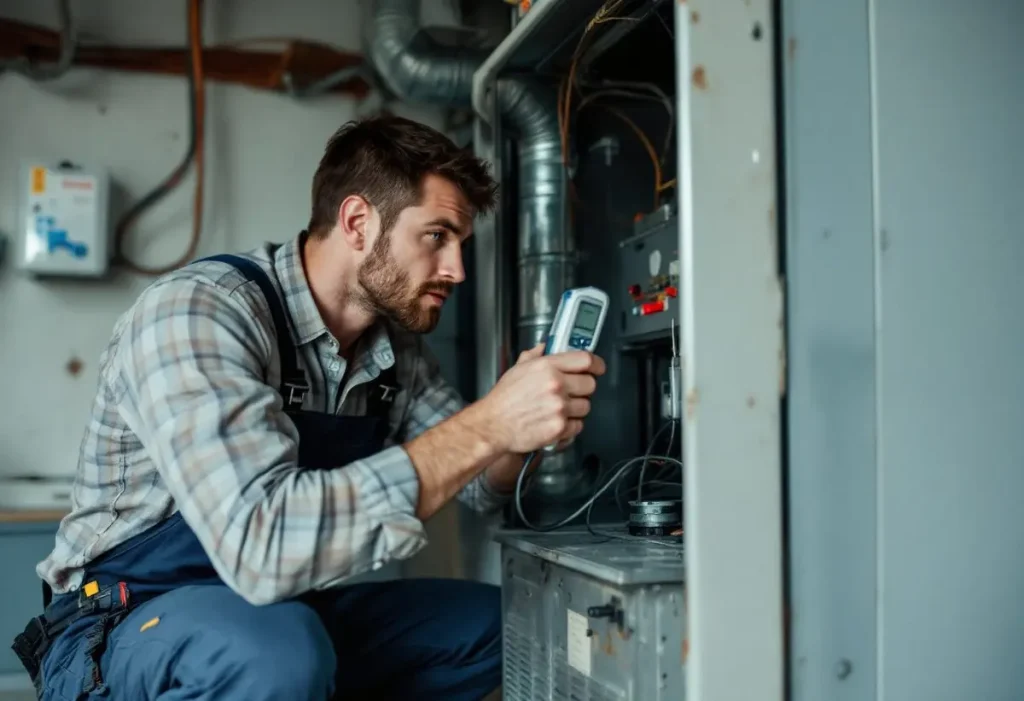
Running nonstop at 45°F, or blowing lukewarm air: which fault is it?
On a mild day the heat pump has lost capacity or is losing heat on the way: in the calculation above, the example house needs only about a quarter of either unit’s output at 47°F.
| What you see | Normal or fault? | The check or reading that settles it |
|---|---|---|
| Runs nonstop below about 20°F, house holds setpoint | Normal: below balance point | Thermostat shows AUX on the coldest hours; supply air warm |
| Variable speed unit hums at low speed for hours | Normal | Carrier 25VNA and NEEP describe long low speed runs |
| Runs nonstop for an hour or two after a night setback | Normal recovery, but costly | Stops once setpoint is reached; DOE advises against deep setback |
| Runs nonstop above 40°F and house falls behind | Fault | Refrigerant charge and indoor airflow, measured |
| Outdoor coil iced solid, ice survives defrost | Fault | Defrost control, sensor and outdoor fan |
| Cool air in HEAT, outdoor coil never frosts | Fault | Reversing valve position and coil temperatures |
| Fan runs nonstop, compressor cycles | Setting, not a fault | Fan switch set to ON instead of AUTO |
Compiled by The HVAC Brief from the Carrier 25VNA and split system owner’s manuals, the NEEP consumer guide, DOE Energy Saver and NIST Technical Note 1848.
The faults with the biggest effect have been measured. In NIST Technical Note 1848, a lab heat pump 30% short of refrigerant lost an average of 22% of its refrigerant side heating capacity at 47°F, and simulated annual energy use rose by about 20% at that undercharge level. NIST’s simulations also found that each extra 10% of duct leakage into an attic raised energy use by 12% in heating climates. DOE Energy Saver lists the same suspects: “poor airflow, restrictive or leaky ducts, incorrect refrigerant charge, and improper wiring of electric resistance auxiliary heat strips.”
Airflow is the one an owner can check. DOE calls for “about 400 cubic feet per minute (cfm) airflow for each ton” of capacity, and a clogged filter is the most common way to lose it; the filter size and MERV guide covers replacement. For ice, the defrost cycle page lists what a normal cycle looks like and how long it lasts.
Heat pump running constantly in summer: is the weather to blame?
On the hottest afternoons, yes. Carrier’s 25VNA manual says “On extremely hot days, your heat pump will run for longer periods at a time than on moderate days,” and lists other loads that lengthen runs: frequent door opening, laundry, hot showers, extra people, and open drapes on the sunny side.
If it still runs nonstop at 85°F, check the filter, outdoor coil dirt and refrigerant charge. If it runs with the thermostat at OFF, the steps for an AC that won’t turn off apply to a heat pump in cooling mode too.
Is it the fan or the compressor that keeps running?
Check this first. Carrier’s split system manual describes the fan switch as either “Automatic (turns on and off as heating is needed) or On (runs continuously).” On ON, the indoor blower never stops; set it to AUTO.
To tell whether the compressor is running, stand at the outdoor unit: in heating the fan spins and blows air colder than outdoors, and the line set hums. Then put a thermometer in a supply register. Carrier gives about 95 to 105°F as normal heat pump supply air; air near room temperature with the outdoor unit running means the compressor is not moving heat. If the thermostat shows AUX or EM all the time, read our explainer on auxiliary heat versus emergency heat before you switch modes.
How do I stop my heat pump from running constantly?
Below the balance point, do not try: shutting it off or choosing emergency heat swaps compressor heat for electric strips at one unit of heat per unit of electricity. NEEP’s advice for very cold weather is “Don’t shut your heat pump off” and, if anything, turn it up a bit.
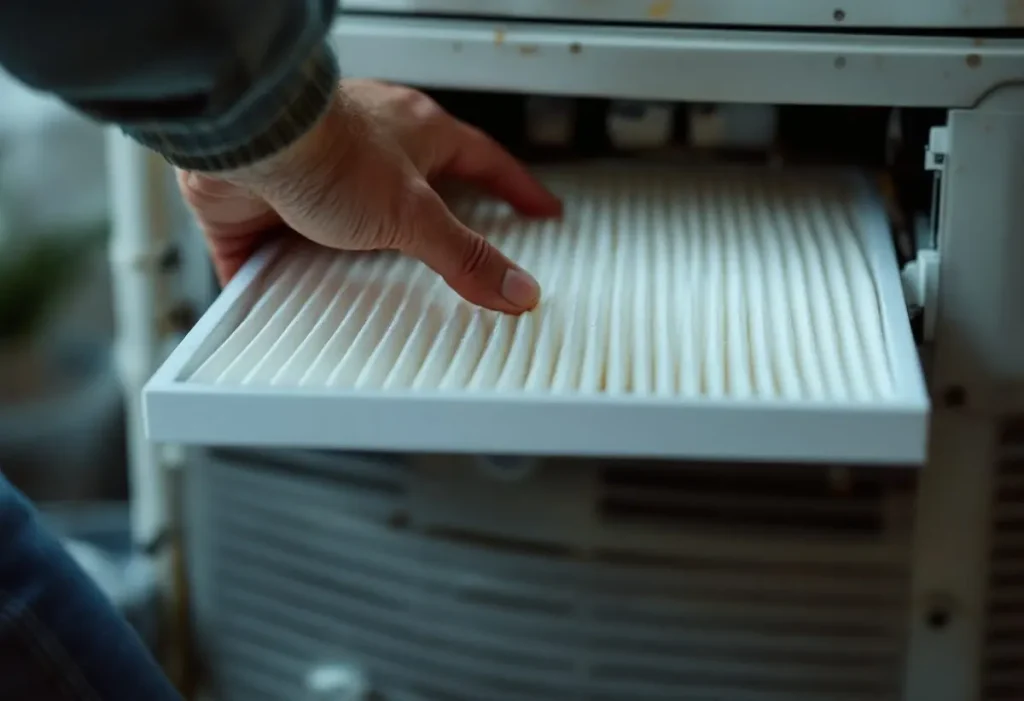
What does help: hold one temperature. DOE Energy Saver warns that “when a heat pump is in its heating mode, setting back its thermostat can cause the unit to operate inefficiently, thereby canceling out any savings achieved by lowering the temperature setting.” Keep snow off the outdoor unit and the filter clean, NEEP’s two airflow jobs for owners. If the house sits at the balance point on most winter days, a cold climate heat pump with a higher 5°F rating moves it lower.
Stop at the panels. Refrigerant charge, the reversing valve, capacitors and the 240 volt circuits are technician work. Ask for three readings: superheat or subcooling against the maker’s charging chart, the measured airflow in cfm per ton against DOE’s 400, and the temperature rise across the indoor coil compared with the manual’s figure.
Frequently asked questions
How long should a heat pump run constantly in winter?
Through every hour colder than its balance point. In our calculation, a single stage 3 ton Goodman GSZH5036 in a house losing 30,000 Btu/h at 5°F runs nonstop below about 21°F and about 50 minutes per hour at 25°F. A variable speed Carrier 27VNA036 reaches full speed nonstop only below about 10°F.
Why is my heat pump water heater constantly running?
A heat pump water heater heats slowly and often runs for hours after a large draw. DOE says it needs a space that stays between 40 and 90°F all year with at least 1,000 cubic feet of air around it, and that it will not work efficiently in a cold space. A cramped closet or cold garage stretches run times.
Why does my heat pump keep running with the thermostat off?
If the outdoor unit runs with the thermostat set to OFF, the most likely cause is a contactor stuck closed or a shorted thermostat wire still sending a call. Turn off the outdoor disconnect. If only the indoor fan runs, check that the fan switch is on AUTO, the setting Carrier’s split system manual describes as on and off with demand.
Should I turn my heat pump down at night?
Only slightly, if at all. DOE Energy Saver says setting back a heat pump in heating mode “can cause the unit to operate inefficiently,” which can cancel the savings, because recovery often brings on the electric strips. NEEP adds that deep setbacks of cold climate heat pumps “may cost you energy and money” and recommends keeping indoor settings steady.
Is it safe to run a heat pump in freezing rain?
Yes, keep it running. Carrier’s 25VNA manual says frost on the outdoor coil in winter is melted automatically by the defrost cycle, and units in snow areas are raised on support feet. NEEP says to keep snow and debris away from the outdoor unit and never cover it. Call for service if ice survives repeated defrosts.
How we researched this
In November 2026 we read two Carrier owner’s manuals (25VNA and 25HPB), the NEEP owner guide, NIST Technical Note 1848 and three archived DOE Energy Saver pages, and pulled capacities from the ENERGY STAR dataset by AHRI number. The house heat loss is an example, not a measured home. We excluded contractor blogs and forums, including their uncited 20 to 30°F balance point ranges.
Sources
- U.S. EPA ENERGY STAR. “ENERGY STAR Certified Air Source Heat Pumps” (dataset w7cv-9xjt; AHRI 208511690 and 215679803). https://data.energystar.gov/Active-Specifications/ENERGY-STAR-Certified-Air-Source-Heat-Pumps/w7cv-9xjt. Accessed November 2026.
- Carrier. “25VNA Infinity Variable Speed Heat Pump with Greenspeed Intelligence, Owner’s Manual.” https://www.partstown.com/modelManual/CRR-OM25VNA-02-English_om.pdf. Accessed November 2026.
- Carrier. “Owner’s Manual, Split System Heat Pump Using R-410A Refrigerant” (25HPB). https://econtent.adhq.com/dam/Original/135/Carrier_25HPB618A003_User_Manual.pdf. Accessed November 2026.
- Northeast Energy Efficiency Partnerships. “Getting The Most Out of Your Heat Pump.” https://neep.org/sites/default/files/GettingTheMostFromYourHeatPumpConsumerGuide.pdf. Accessed November 2026.
- Domanski, P., Henderson, H., Payne, W. V. “Sensitivity Analysis of Installation Faults on Heat Pump Performance.” NIST Technical Note 1848. https://nvlpubs.nist.gov/nistpubs/TechnicalNotes/NIST.TN.1848.pdf. Accessed November 2026.
- U.S. Department of Energy, Energy Saver. “Programmable Thermostats” (archived copy). https://web.archive.org/web/2025id_/https://www.energy.gov/energysaver/programmable-thermostats. Accessed November 2026.
- U.S. Department of Energy, Energy Saver. “Air-Source Heat Pumps” (archived copy). https://web.archive.org/web/2025id_/https://www.energy.gov/energysaver/air-source-heat-pumps. Accessed November 2026.
- U.S. Department of Energy, Energy Saver. “Heat Pump Water Heaters” (archived copy). https://web.archive.org/web/2025id_/https://www.energy.gov/energysaver/heat-pump-water-heaters. Accessed November 2026.
Leave a Reply